 Save
The cupboard above the refrigerator is useful, but its height and warmth make it better for some items than others. Treat it as overflow storage for lightweight, occasional-use kitchen goods instead of a daily pantry. This guide shows how to organize it so the space is practical, safer to reach, and easier to keep tidy.
Step 1: Empty the cupboard and check the space
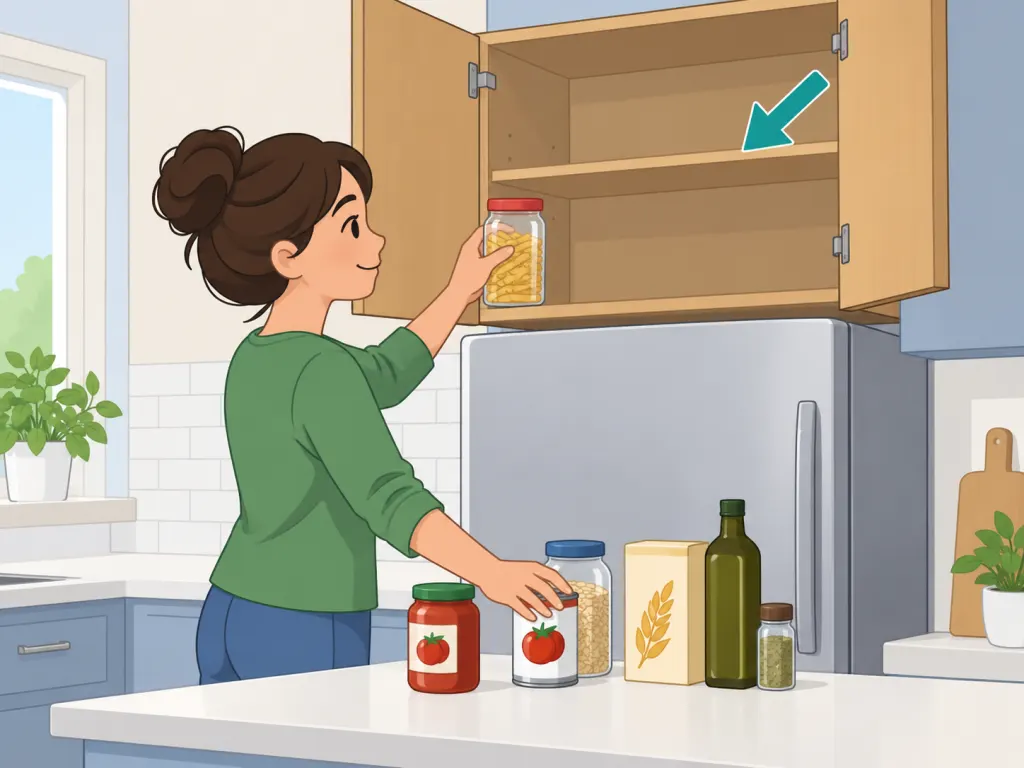
Take everything out so you can see the full height, depth, and shelf layout. Wipe the shelves, check whether the cabinet feels unusually warm after the fridge has been running, and note any awkward corners before you put items back. ENERGY STAR recommends allowing air circulation around refrigerators, so avoid storing anything that blocks vents or crowds the refrigerator area around the cabinet where airflow matters.
Step 2: Keep daily items somewhere easier to reach
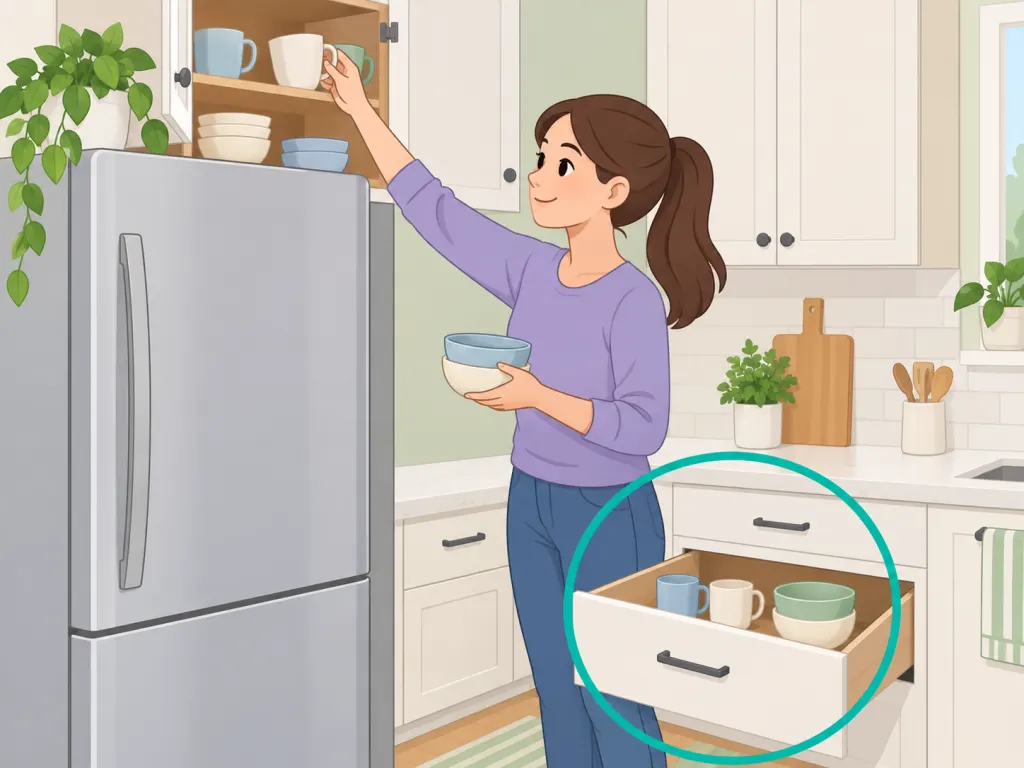
Use this cupboard for things you need occasionally, not the mugs, cereal, pans, or lunch containers you grab every day. A high cabinet works best when opening it is a planned action rather than part of every meal. If you use something several times a week, move it to a lower shelf or drawer.
Step 3: Choose lightweight, low-use kitchen items
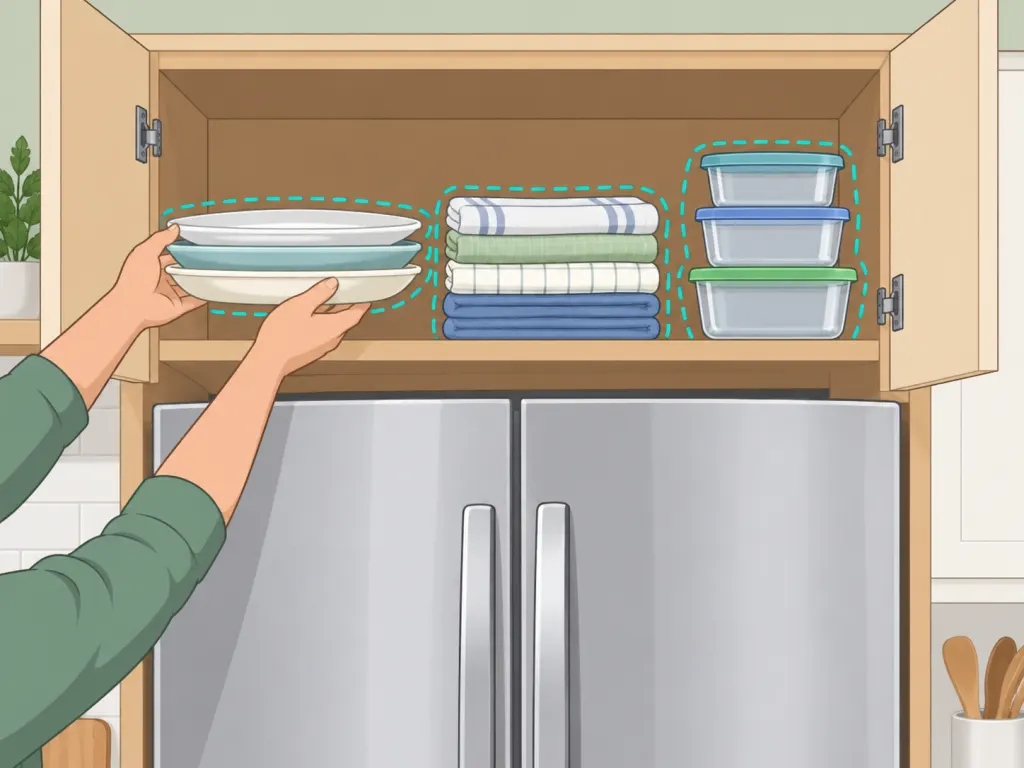
Good candidates include holiday serving pieces, picnic dishes, spare food storage containers, cake decorating tools, extra towels, tablecloths, and lightweight baking pans. Avoid heavy appliances, stacks of cast iron, glass jars, or anything awkward to control overhead. The goal is to make every pull-down item light enough to handle with one steady grip.
Step 4: Store pantry foods only if the cabinet stays cool and dry
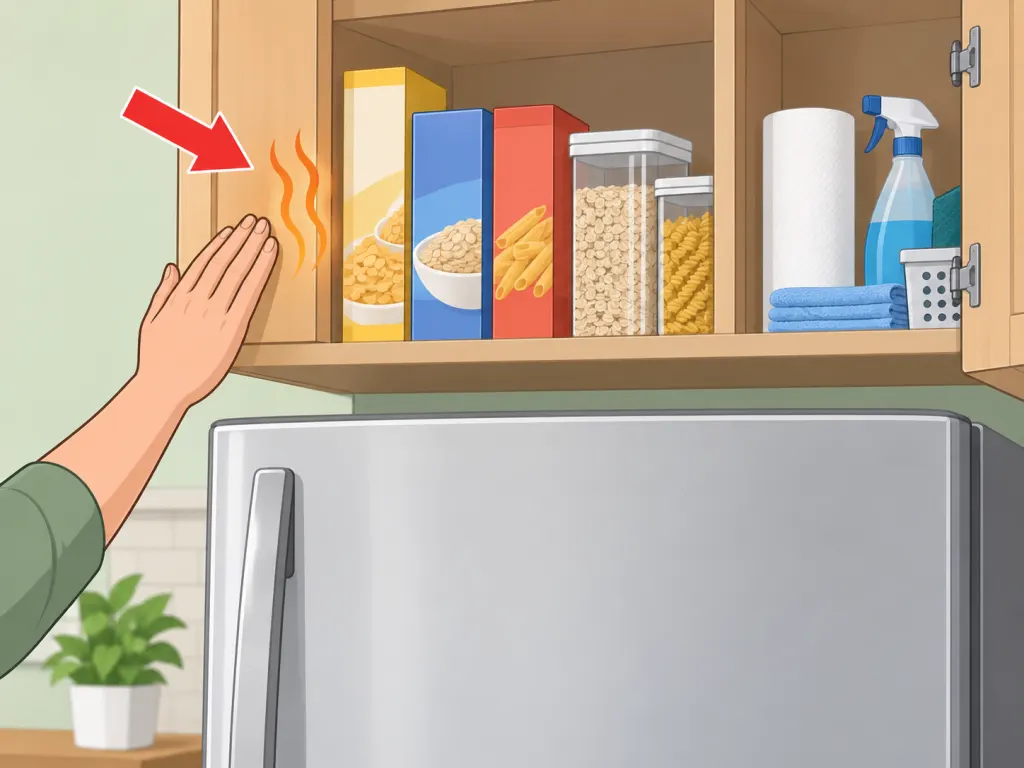
If the cabinet feels warm, use it for nonfood items instead. USDA FSIS says shelf-stable foods should be kept in a cool, dry place, and FoodSafety.gov notes that heat can make many foods spoil more quickly, especially near ranges or refrigerator exhausts. If the spot is cool enough, use it for sealed dry goods you do not need often, such as backup pasta, unopened crackers, or emergency pantry items.
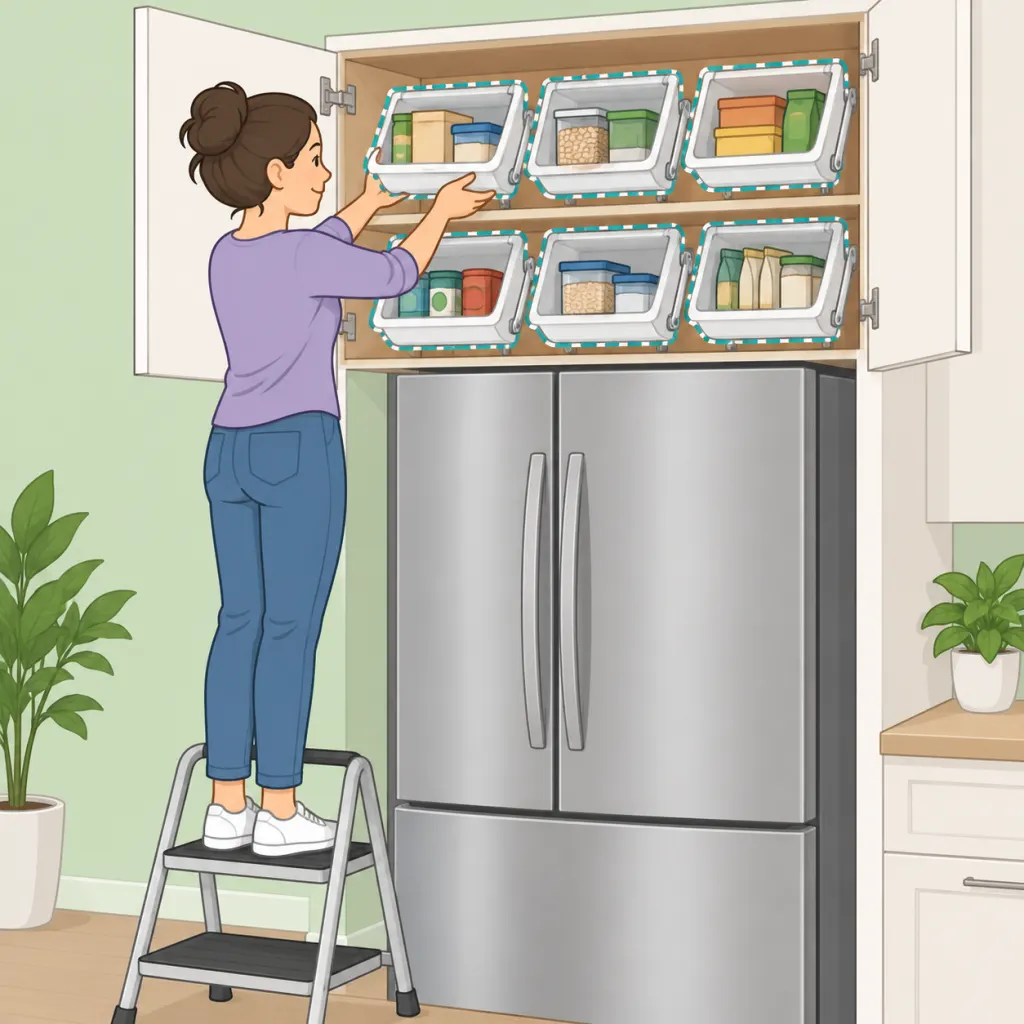
Put each category into a handled bin, shallow tray, or basket so you can pull down one container instead of reaching around loose items. Label the front with plain category names like “party supplies,” “baking extras,” or “backup pantry.” Clear or open-front bins make it easier to see what is inside without climbing up repeatedly.
Step 6: Put the easiest items at the front
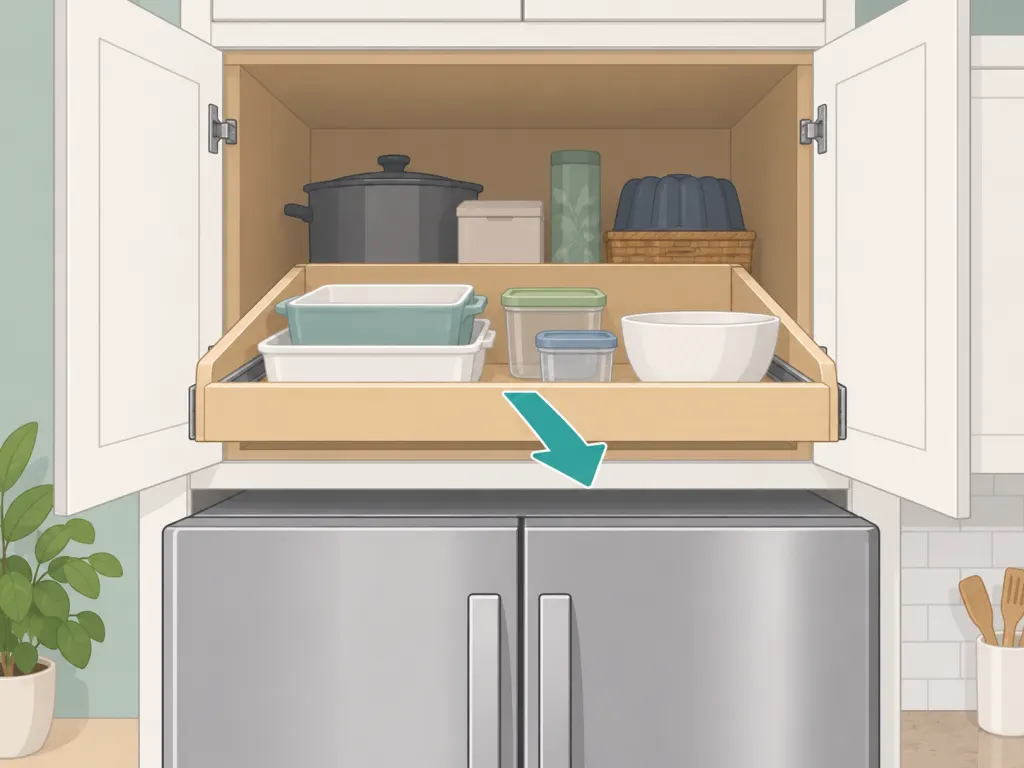
Place the items you are most likely to need toward the front edge and keep the rarely used pieces farther back. If the cupboard is deep, use long bins that slide forward rather than stacking items in layers. Keep fragile pieces separated with a towel or divider so they do not shift when the bin moves.
Step 7: Use a stable step stool before reaching
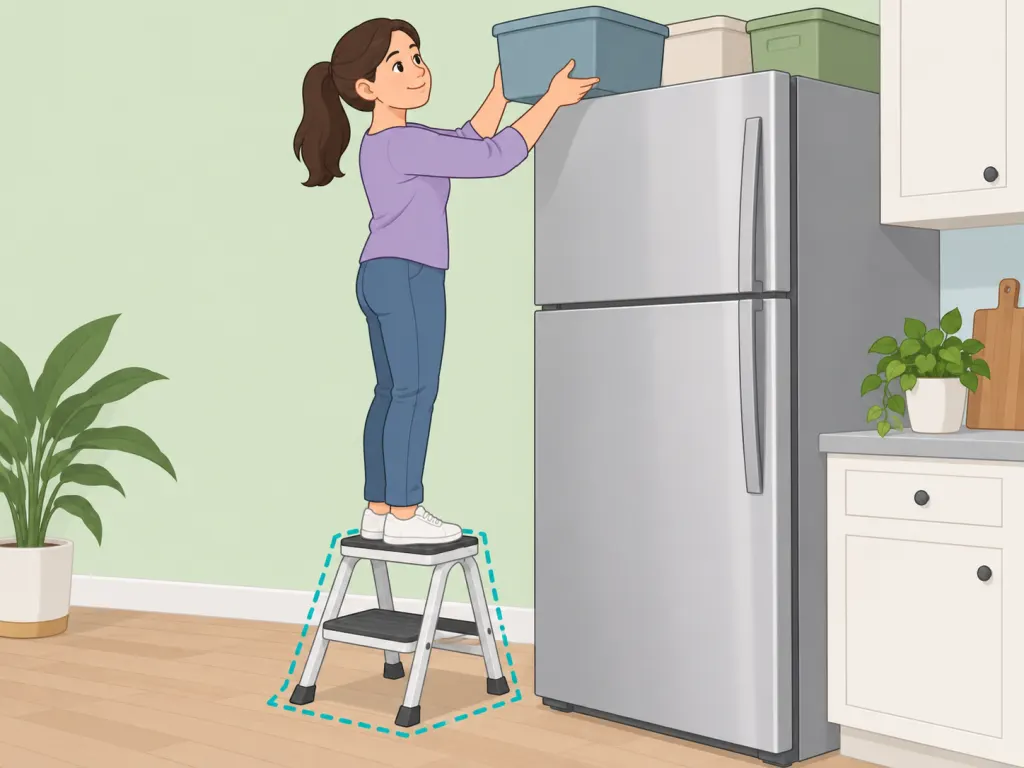
Stand on a sturdy step stool or small step ladder instead of stretching from the floor or standing on a chair. CDC NIOSH advises using the right ladder for the job and avoiding overreaching when working above shoulder height because ladder use requires careful setup. Keep one hand free when possible, and bring down a whole bin before sorting through it.
Step 8: Review the cupboard every few months
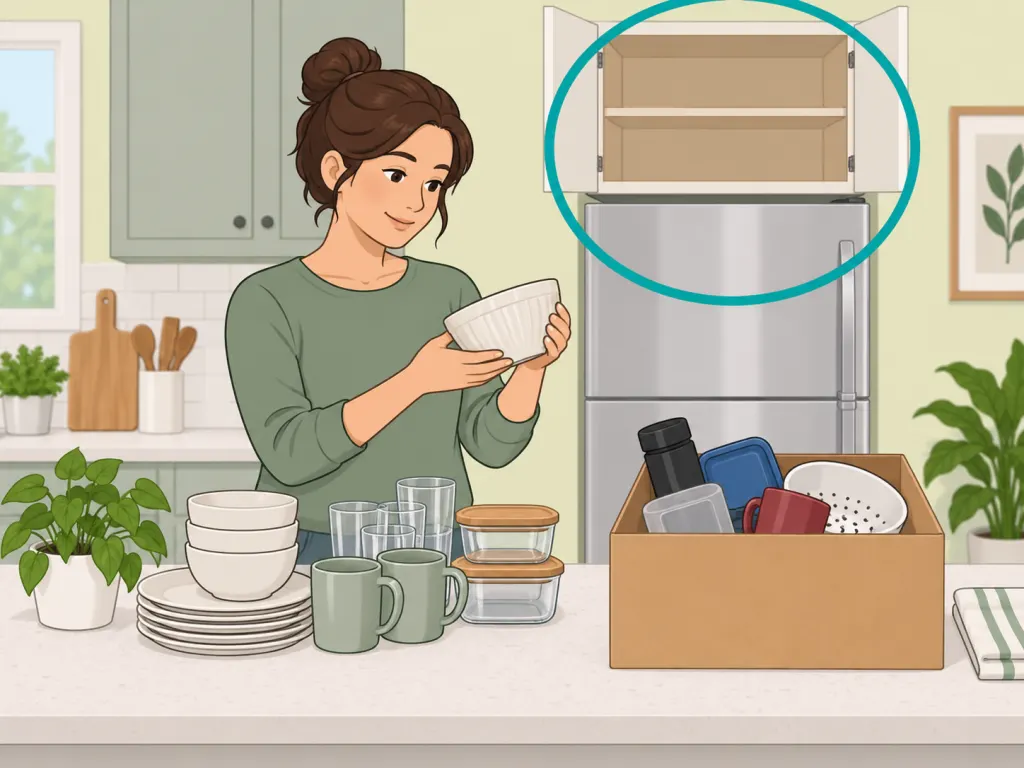
Check the cabinet seasonally so it does not become a forgotten storage zone. Use older shelf-stable foods first, discard expired or damaged packages, and move unused kitchen tools to a donation box if you have not reached for them in a year. A short reset keeps the space useful without letting it turn into clutter.
Wrap-Up
The bottom line: use the cupboard above the fridge for lightweight, low-use items, keep food away if the area gets warm, and rely on labeled bins so you can pull down one group at a time.
Frequently Asked Questions
- → What should I store in the cabinet above my refrigerator?
Store lightweight items you use occasionally, such as serving platters, picnic supplies, cake stands, seasonal linens, extra paper goods, or rarely used baking tools. The best choices are things you can pull down as a group and do not need every day.
- → Can I store food above the fridge?
Only store shelf-stable food there if the cabinet stays cool and dry. If the area feels warm, use another pantry space because USDA FSIS recommends keeping shelf-stable foods in a cool, dry place and avoiding temperature extremes.
- → Is it okay to store wine above the refrigerator?
It is usually better to store wine somewhere cooler and steadier. The top of a refrigerator can be warmer than other cabinets, and heat is not ideal for food or drink quality.
- → How do I reach an over-fridge cabinet safely?
Use a sturdy step stool or small step ladder on a dry, level floor, and pull down one bin or item at a time. Avoid reaching sideways from the stool; climb down and move it instead.
- → How can I organize a very deep cabinet above the fridge?
Use long bins, trays, or baskets that slide out toward you. Put one category in each container, label the front, and keep the heaviest or most awkward items somewhere easier to reach.
- → How often should I clean out this cabinet?
Check it every few months, or at least twice a year. Remove anything you no longer use, wipe up dust or crumbs, and rotate stored pantry items so older packages are used first.
References
This content was developed and refined using reliable sources.
- https://www.fsis.usda.gov/food-safety/safe-food-handling-and-preparation/food-safety-basics/shelf-stable-food
- https://www.foodsafety.gov/keep-food-safe/food-safety-in-disaster-or-emergency
- https://extension.psu.edu/storing-staple-ingredients-in-the-kitchen
- https://www.energystar.gov/products/refrigerators
- https://www.cdc.gov/niosh/falls/ladder/index.html