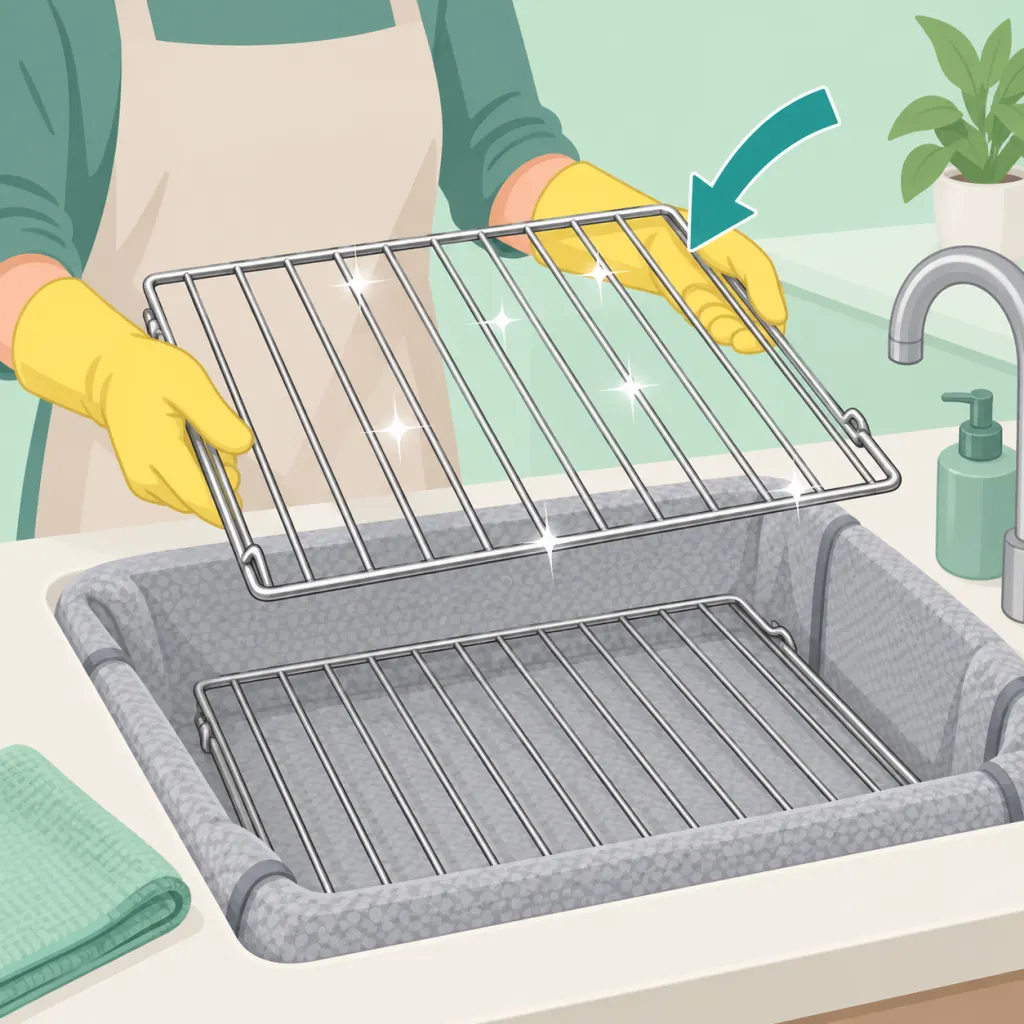
 Save
Oven racks collect baked-on grease and food residue, but you do not need harsh scrubbing to get them usable again. This guide shows a simple soak-and-scrub method using warm water, dish detergent, and baking soda, with safety notes for ventilation and cleaning products. Work slowly, rinse thoroughly, and avoid mixing cleaners.
Step 1: Let the oven and racks cool completely
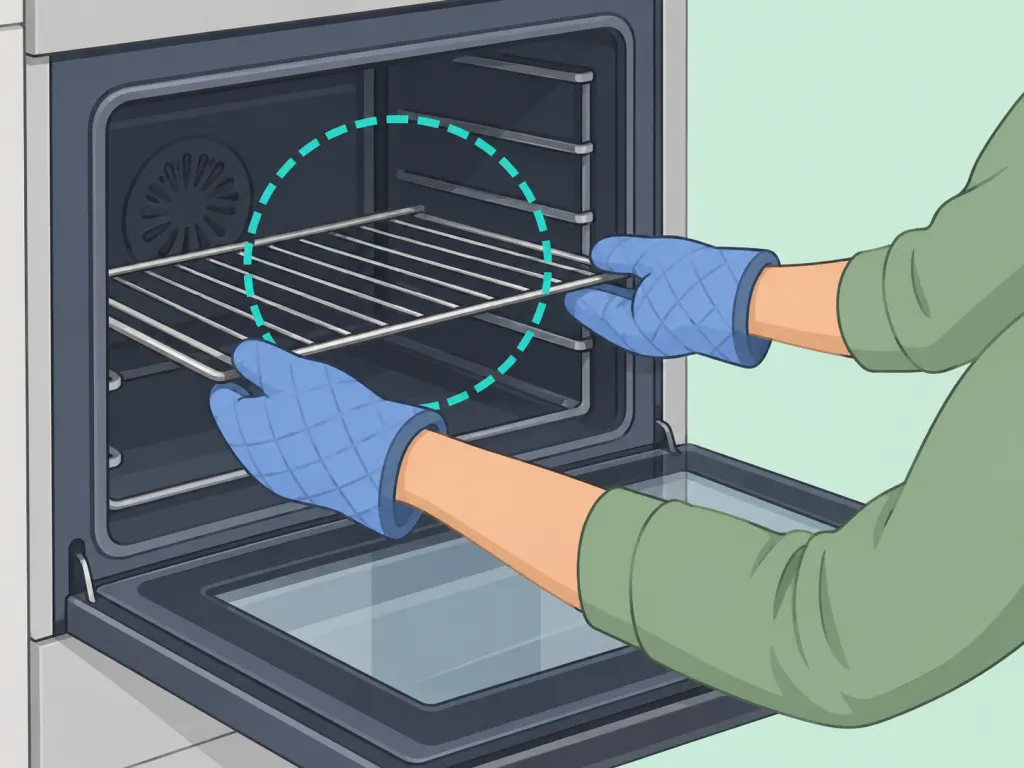
Turn the oven off and wait until the racks are cool enough to handle comfortably. Remove loose crumbs or burnt bits with a dry cloth before you start wet cleaning so they do not spread through the soaking water.
Step 2: Remove the racks and choose a large washing area
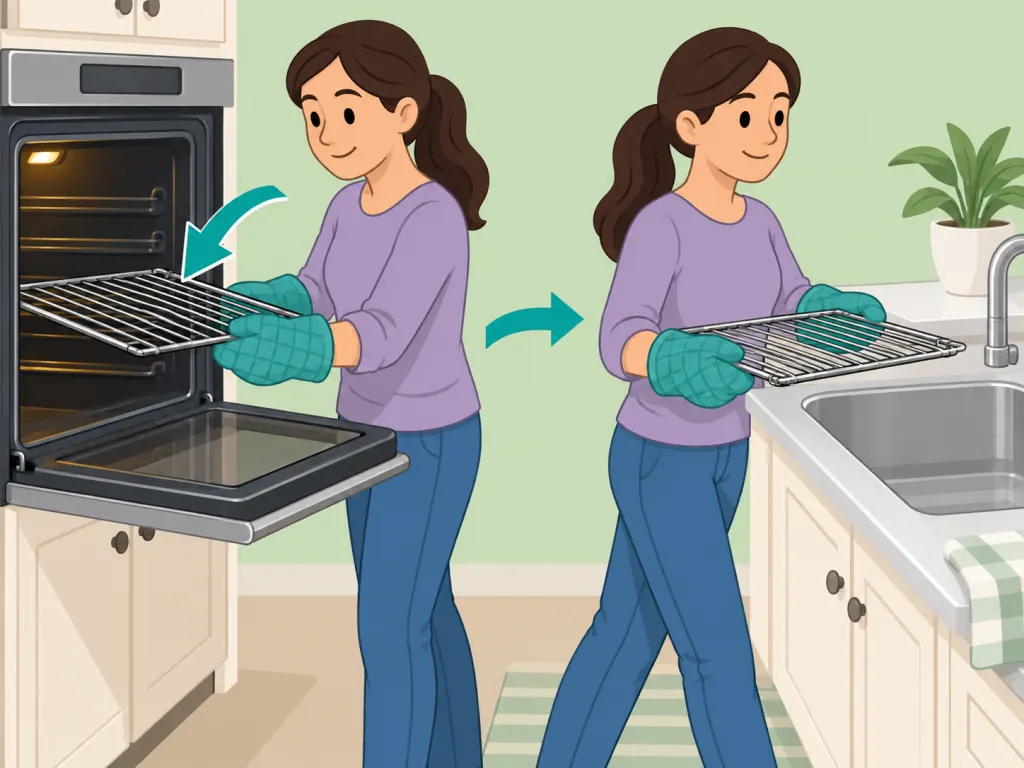
Slide the racks out carefully and carry them to a sink, utility tub, or bathtub that can hold them flat. UGA Extension recommends removing oven racks for deep cleaning and notes that a bathtub can work when the sink is too small.
Step 3: Protect the tub or sink surface
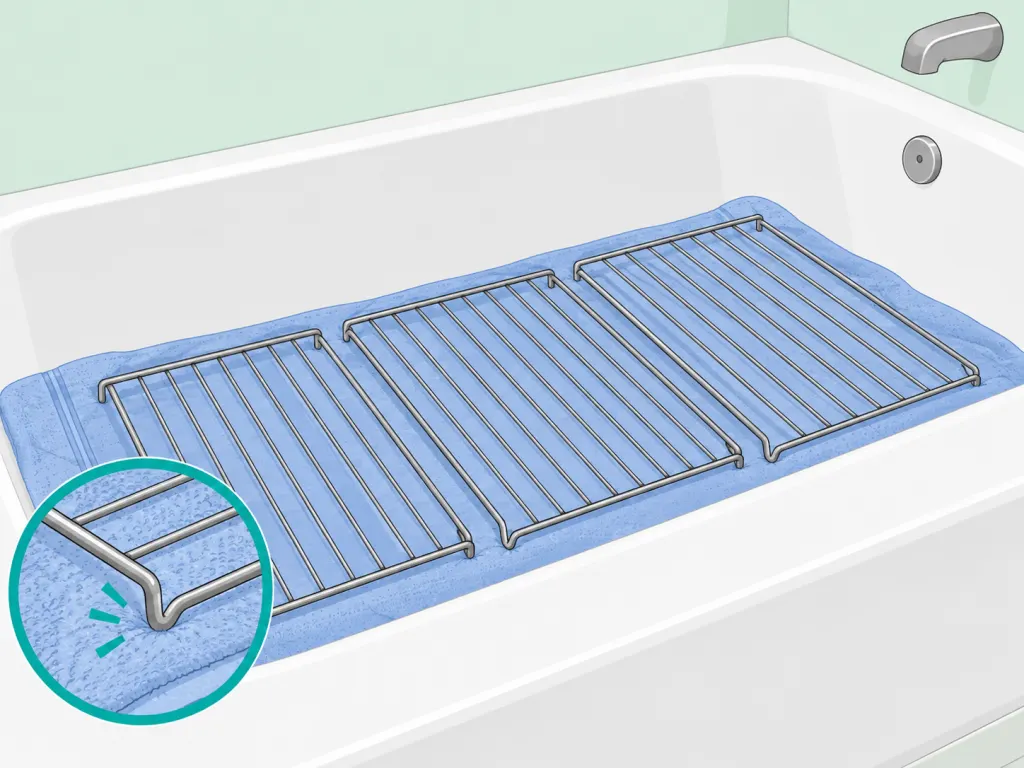
Place an old towel under the racks before adding water, especially if you are using a bathtub or a delicate sink. This simple layer helps keep metal corners from scraping the surface while you soak and scrub.
Step 4: Fill the area with warm water and dish detergent
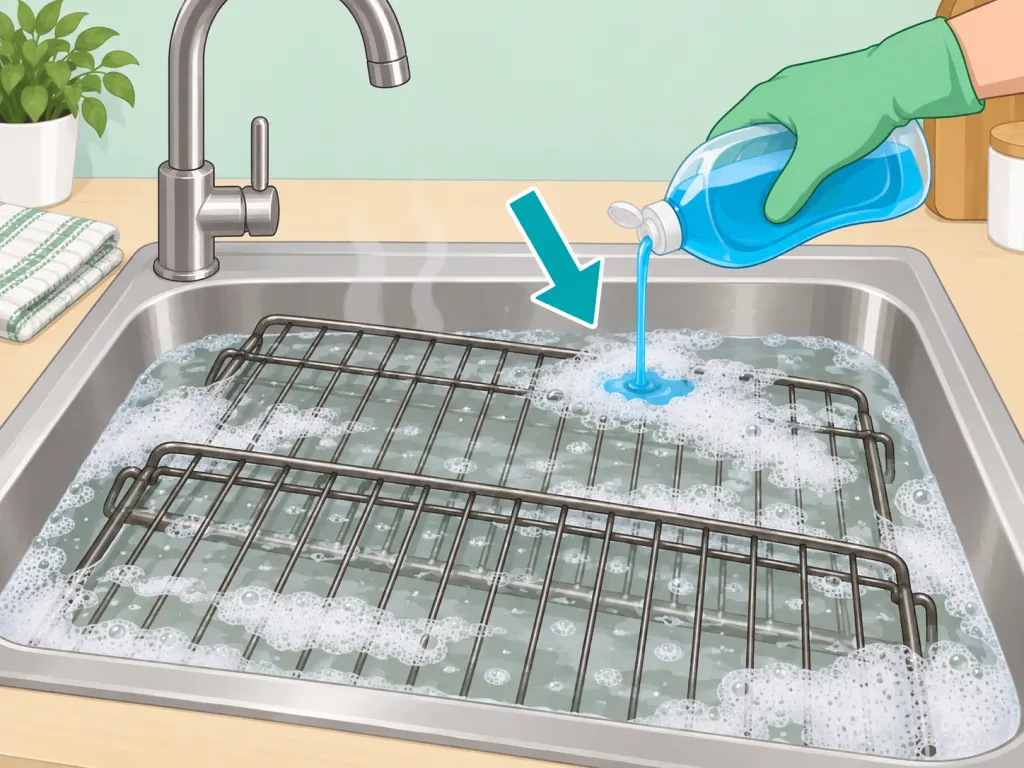
Add enough warm water to cover the racks, then mix in a small amount of dish detergent. Dish detergents are designed to help cut grease, and Utah State University Extension notes that detergents are useful for greasy cleaning jobs.
Let the racks sit in the soapy water so the dried-on grease and food can loosen before scrubbing. For light buildup, a shorter soak may be enough; for heavy residue, leave the racks longer and keep the area out of the way of children or pets.
Step 6: Rub stubborn spots with a baking soda paste
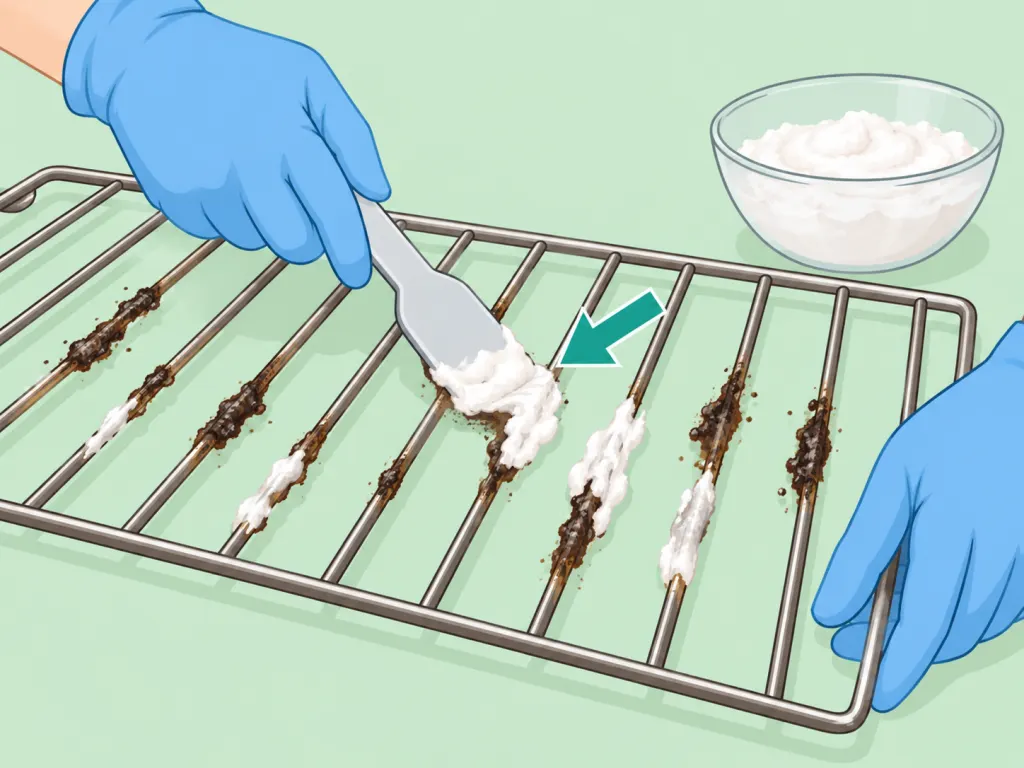
Drain some of the dirty water, then spread a paste of baking soda and water over stuck-on spots. USU Extension describes baking soda as a gentle, non-abrasive cleanser for ovens, making it a good first choice before harsher products.
Step 7: Scrub with a soft pad and rinse thoroughly
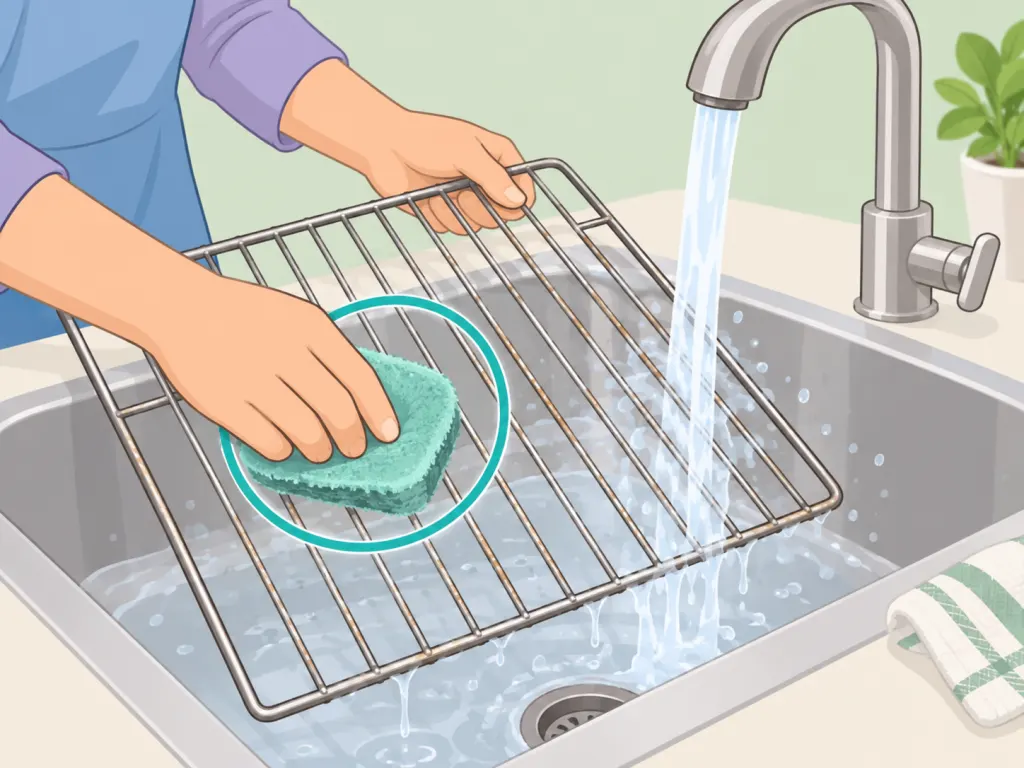
Use a non-scratch scrub pad, sponge, or brush to work along each wire, then rinse the racks under warm water until the water runs clear. UGA Extension advises rinsing away leftover cleaning residue after oven cleaning, and its kitchen cleaning guidance recommends soft cleaning pads for greasy buildup.
Step 8: Ventilate the kitchen before replacing the racks
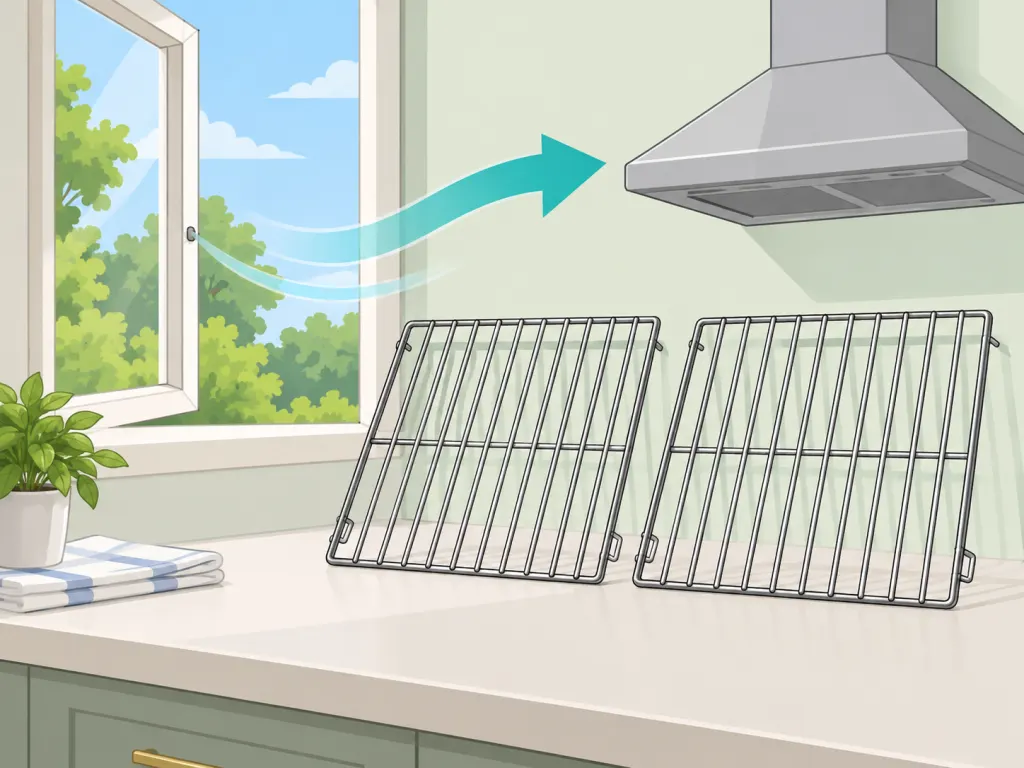
Open a window or run the range hood if you used any cleaner with a noticeable smell, and let the racks dry fully. The EPA says increasing ventilation during and after cleaning helps reduce exposure to cleaning products and byproducts.
Step 9: Get fresh air and seek help if fumes bother you
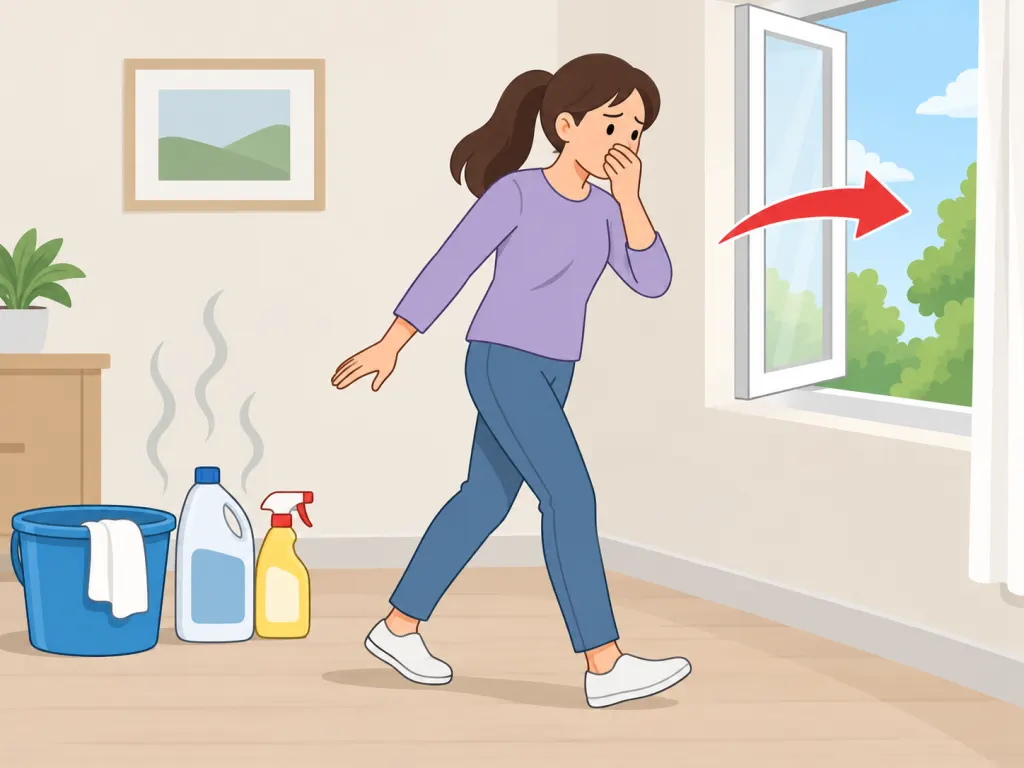
Stop cleaning, leave the area, and get fresh air if you feel eye, skin, throat, or breathing irritation while using cleaning chemicals. CDC guidance for ammonia exposure says to get away, get clean, and get help after exposure, and NIOSH advises seeing a doctor if you think cleaning chemicals are causing health problems.
Wrap-Up
The bottom line: clean oven racks when they are cool, soak them in warm soapy water, use baking soda on stubborn residue, and rinse until no cleaner remains. Good ventilation and careful product use make the job safer and easier.
Frequently Asked Questions
- → Can I clean oven racks in the bathtub?
Yes, if the racks fit and the tub surface is protected. UGA Extension suggests using a bathtub when a sink is too small and lining the bottom with an old towel to help prevent scratches.
- → Can I use baking soda on oven racks?
Yes. Utah State University Extension describes baking soda as a gentle, non-abrasive cleanser for ovens, which makes it useful as a paste on stubborn rack residue.
- → Should I use a commercial oven cleaner?
Use one only if the product label says it is suitable for your rack material, and follow all label directions. The EPA advises using cleaning products according to label instructions and following any ventilation or protective-equipment precautions.
- → Can I mix bleach with dish soap, vinegar, or oven cleaner?
No. The CDC warns not to mix household bleach or disinfectants with other cleaners because the vapors can be dangerous to breathe.
- → How often should I clean oven racks?
Clean them when you see grease, sticky residue, or food spillover. UGA Extension notes that large appliances such as ovens should be cleaned at least monthly when they are used often and spills happen more frequently.
- → Why do my racks still feel slippery after rinsing?
They may still have detergent or loosened grease on the metal. Rinse under warm running water and wipe with a clean cloth until the surface no longer feels slick.
References
This content was developed and refined using reliable sources.
- https://extension.uga.edu/county-offices/banks/family-and-consumer-sciences/green-spring-cleaning.html
- https://site.extension.uga.edu/forsyth/how-clean-and-safe-is-your-kitchen
- https://extension.usu.edu/archive/home-cleaning-chemicals
- https://www.epa.gov/indoor-air-quality-iaq/ventilation-important-indoor-air-quality-when-cleaning-andor-sanitizing
- https://www.cdc.gov/hygiene/about/cleaning-and-disinfecting-with-bleach.html
- https://www.cdc.gov/chemical-emergencies/chemical-fact-sheets/ammonia.html
- https://stacks.cdc.gov/view/cdc/11929