 Save
Window blinds gather dust faster than most surfaces in a room because their horizontal slats act as natural ledges for settling particles. A quick cleaning session takes only a few minutes when you follow the right sequence, but working in the wrong order means dust moves around rather than coming off. This guide covers the fastest effective method for horizontal blinds made from vinyl, aluminum, or faux wood.
Step 1: Close the slats fully before you start
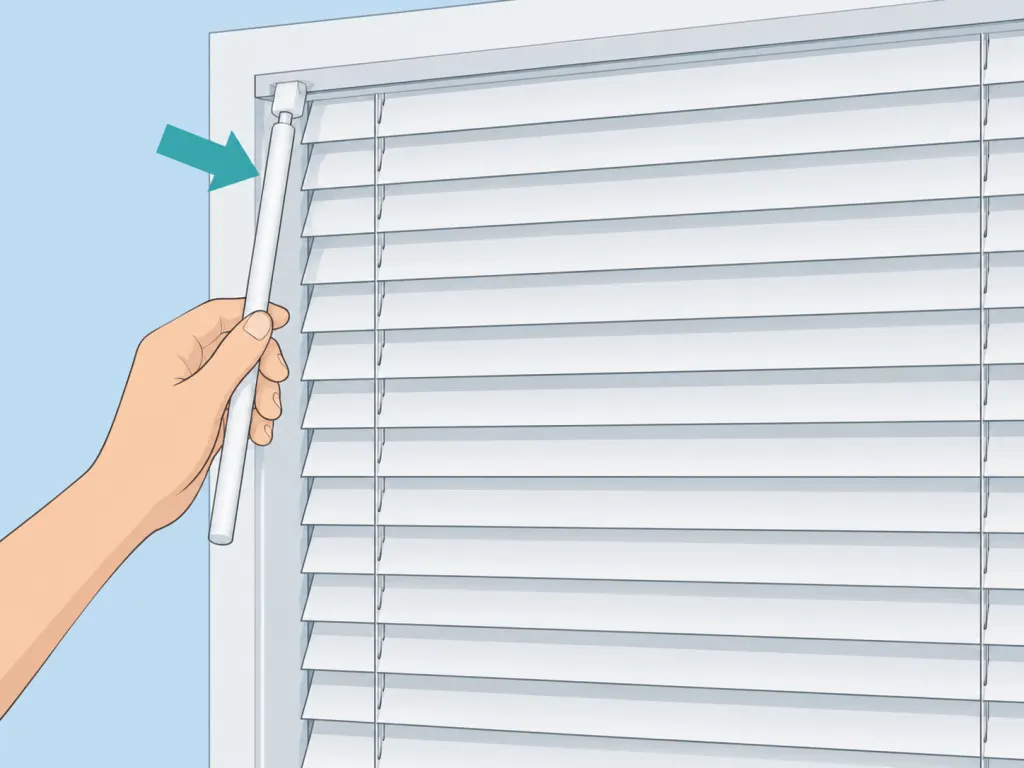
Tilt the slats in one direction using the blinds' rod or tilt mechanism until they lie as flat as possible. Closing them creates a nearly solid surface to wipe, far easier than trying to dust individual open slats, and prevents loose particles from falling into the gaps between louvers before you have a chance to capture them.
Step 2: Dry-dust both faces of the slats from top to bottom
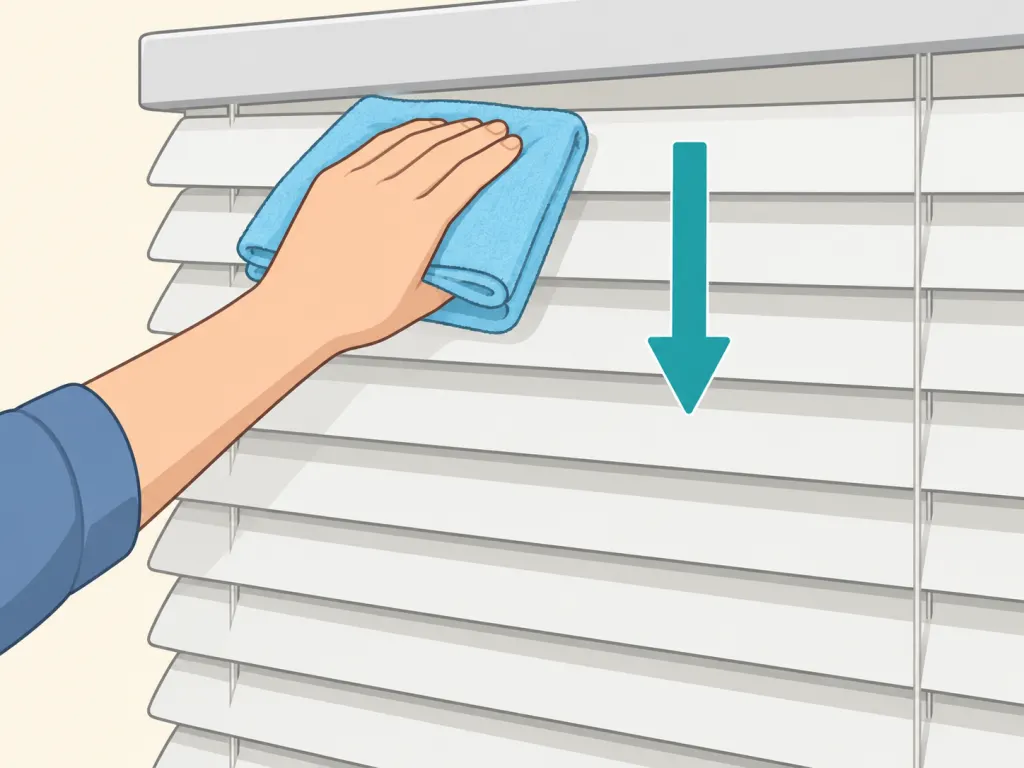
Use a dry microfiber cloth or a vacuum brush attachment set to low suction. Begin at the top slat and work steadily downward so that any loosened dust falls onto slats you have not yet cleaned, not onto ones you have already finished. Once one face is done, tilt the slats the other direction to expose the reverse side and repeat the same top-to-bottom wipe. The U.S. EPA notes that regular cleaning reduces dust-related particles in the home, though it cannot fully eliminate them, making routine maintenance more effective than occasional deep cleans.
Step 3: Wipe grimy slats with a barely damp cloth
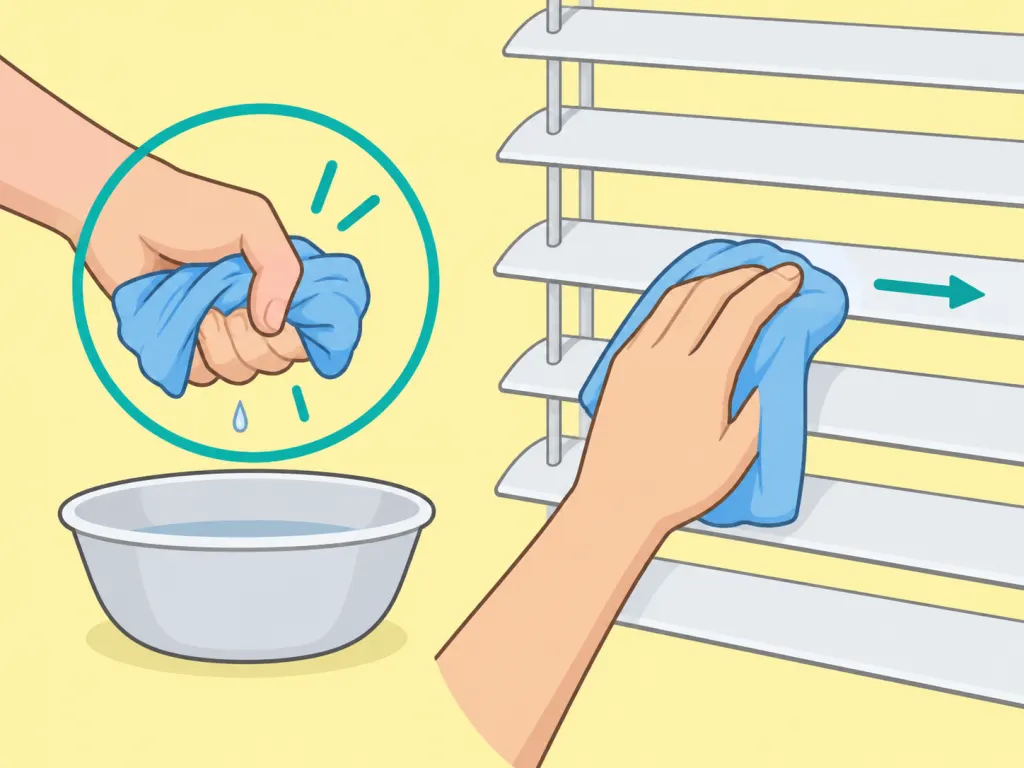
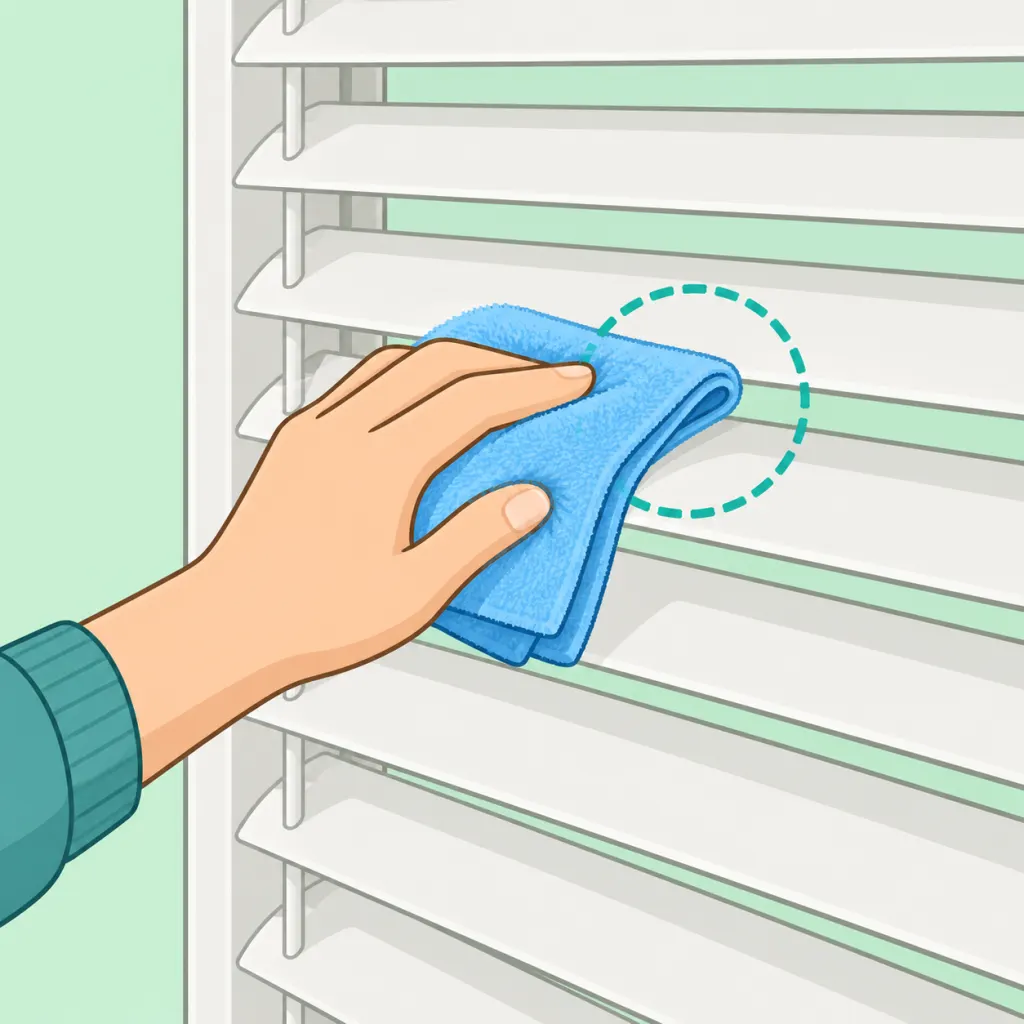
For slats with stuck-on dust, finger marks, or light grime, dampen a clean microfiber cloth with plain water and wring it out thoroughly, the cloth should feel barely moist, not wet. The EPA recommends damp-dusting hard surfaces to capture rather than scatter particles. Wipe each affected slat from one end to the other in a single smooth stroke. Keep the cloth as dry as possible on wood or faux-wood slats, which can warp if they absorb moisture.
Step 4: Clean the headrail, bottom rail, and cords
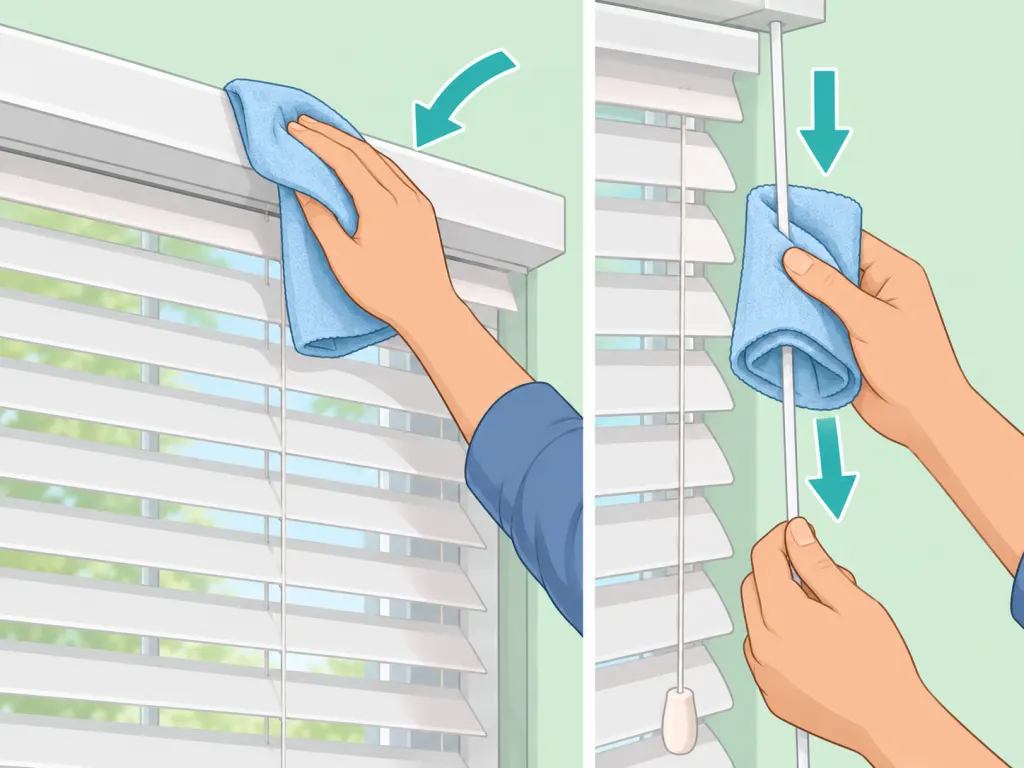
The top rail, bottom rail, and pull cords collect as much dust as the slats themselves but are easy to overlook. The U.S. CPSC identifies window blinds as a recognized site of household dust accumulation, so cleaning all surfaces, including hardware, is worthwhile. Wipe the headrail and bottom rail with a dry or barely damp cloth, then run the cords through a folded section of the cloth from top to bottom to remove clinging particles.
If you used a damp cloth on any slats or rails, tilt the slats open and leave them for a few minutes before raising the blinds or closing them fully. Operating wet slats can trap moisture between overlapping surfaces, which can encourage mildew over time. In normal indoor conditions, horizontal slats dry in just a few minutes with the slats open.
Step 6: Take precautions if you are sensitive to dust
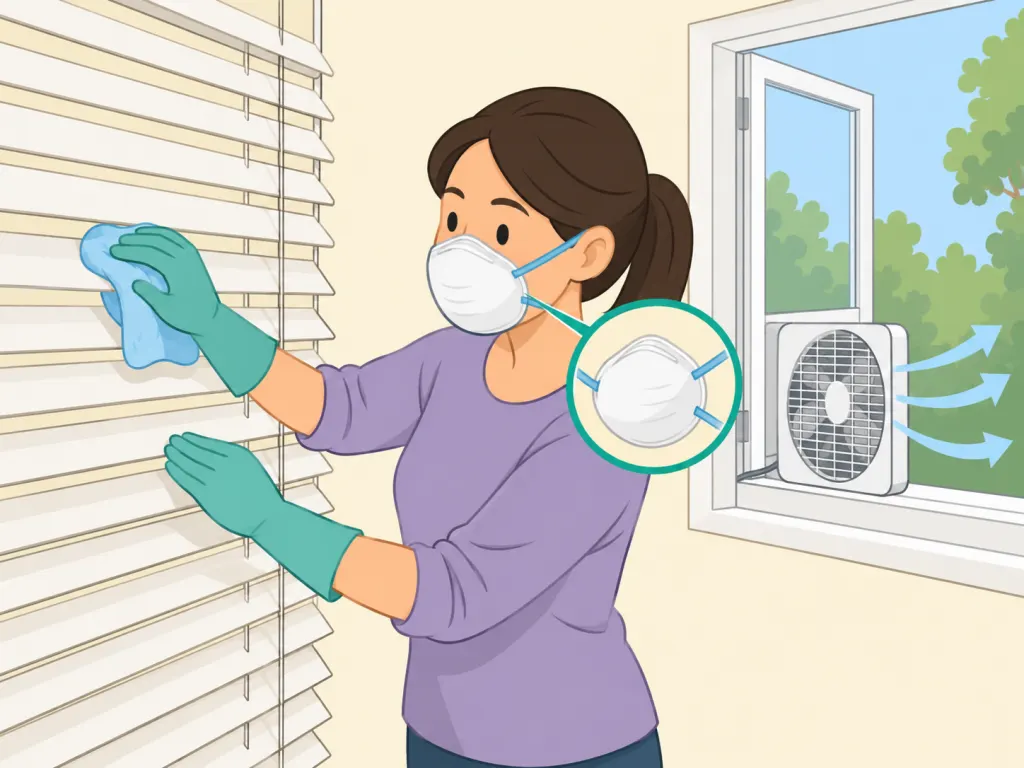
Dusting temporarily stirs particles into the air and can raise the concentration of airborne dust in the room. The CPSC recommends that people with dust sensitivities wear a dust mask while cleaning, or ask a household member without those sensitivities to handle the task. Open a nearby window or run a fan directed outward while you work, and wash your hands when finished. If you experience persistent respiratory symptoms related to household dust, consult a health professional.
Wrap-Up
The bottom line: close the slats to expose the full surface, dry-dust both faces from top to bottom, tackle stuck grime with a barely damp cloth, and finish by wiping the rails and cords. Done in that order, the whole job takes only minutes and the results last longer than if you wipe randomly across open slats.
Frequently Asked Questions
- → How often should I clean my window blinds?
A light dry-dusting every two to four weeks prevents heavy build-up. Homes with pets, high foot traffic, or open windows during pollen season may benefit from weekly dusting. Regular light cleaning is faster and easier than waiting until dust is thick enough to see clearly.
- → Can I take my blinds down and soak them in the bathtub?
Vinyl and aluminum horizontal blinds can usually be soaked briefly in lukewarm water, wiped clean, then hung to dry fully before rehanging. Wood and faux-wood blinds should not be soaked because moisture can warp or crack the slats. Always check the manufacturer's care label first.
- → What is the quickest tool for cleaning blinds?
A dry microfiber cloth is highly effective because its split fibers trap and hold particles rather than pushing them around. A vacuum's brush attachment on low suction works well for heavy dust loads. Purpose-made blind dusters with multiple tines clean several slats in one pass and are useful for routine maintenance.
- → Can I use a cleaning spray or diluted vinegar on my blinds?
Plain water on a well-wrung cloth handles most light grime. A mild diluted dish soap solution works for heavier dirt on vinyl or aluminum slats. Apply any liquid to the cloth first, never spray directly onto the slats, and ventilate the room when using cleaning products. Avoid alcohol-based sprays on painted or coated surfaces.
- → Why do my blinds get dusty so quickly after cleaning?
Dust continuously settles from the air onto horizontal surfaces. Reducing tracked-in dirt, using doormats, removing shoes at the door, and occasionally damp-mopping floors, slows how quickly dust re-accumulates on all surfaces, including blinds. High-traffic rooms and homes with pets will always see faster reaccumulation.
- → Are older vinyl mini blinds safe to clean?
The U.S. Consumer Product Safety Commission found that certain imported vinyl mini blinds manufactured before mid-1996 can release lead dust as the vinyl degrades with heat and light exposure. Households with young children should replace pre-1996 non-glossy vinyl blinds with products labeled 'no lead added.' If you must clean older blinds, use a damp cloth, wash your hands thoroughly afterward, and keep young children away from the area.
References
This content was developed and refined using reliable sources.
- https://www.epa.gov/indoor-air-quality-iaq/inside-story-guide-indoor-air-quality
- https://www.cpsc.gov/safety-education/safety-guides/home/biological-pollutants-your-home
- https://www.cpsc.gov/content/cpsc-finds-lead-poisoning-hazard-for-young-children-in-imported-vinyl-miniblinds
- https://www.epa.gov/indoor-air-quality-iaq/biological-contaminants-and-indoor-air-quality