 Save
Home electrical safety is less about one unusual outlet position and more about recognizing warning signs early. Loose outlets, damaged cords, overloaded power strips, wet electrical equipment, and improvised generator hookups are practical hazards that deserve immediate attention. The U.S. Fire Administration reports that an estimated 24,200 residential building electrical fires were reported to U.S. fire departments in 2021, causing deaths, injuries, and major property loss, which makes small household habits worth taking seriously. https://www.usfa.fema.gov/prevention/home-fires/prevent-fires/appliance-and-electrical/
Start With the Hazards You Can See, Smell, or Feel
A safe home electrical system should feel boring in the best possible way. Plugs should fit snugly, cords should be intact, outlets should stay cool, lights should not flicker for no clear reason, and breakers should not trip repeatedly under normal use. Warning signs are different. Stop and investigate if an outlet is discolored, cracked, warm, buzzing, sparking, loose in the wall, or unable to hold a plug firmly. The U.S. Fire Administration advises replacing wall outlets when plugs do not fit snugly and avoiding overloaded outlets. https://www.usfa.fema.gov/prevention/home-fires/prevent-fires/appliance-and-electrical/
Burning smells deserve particular caution because the source may be hidden behind a wall plate, inside an appliance, or in a damaged cord. If you smell something burning near electrical equipment and there is no visible fire, the CDC advises shutting off the electrical system at the main circuit breaker when it is safe to do so, especially after power has been restored following wet conditions or a disaster. https://www.cdc.gov/natural-disasters/response/what-to-do-protect-yourself-from-electrical-hazards.html
Outlets: Loose Connections Matter More Than Orientation
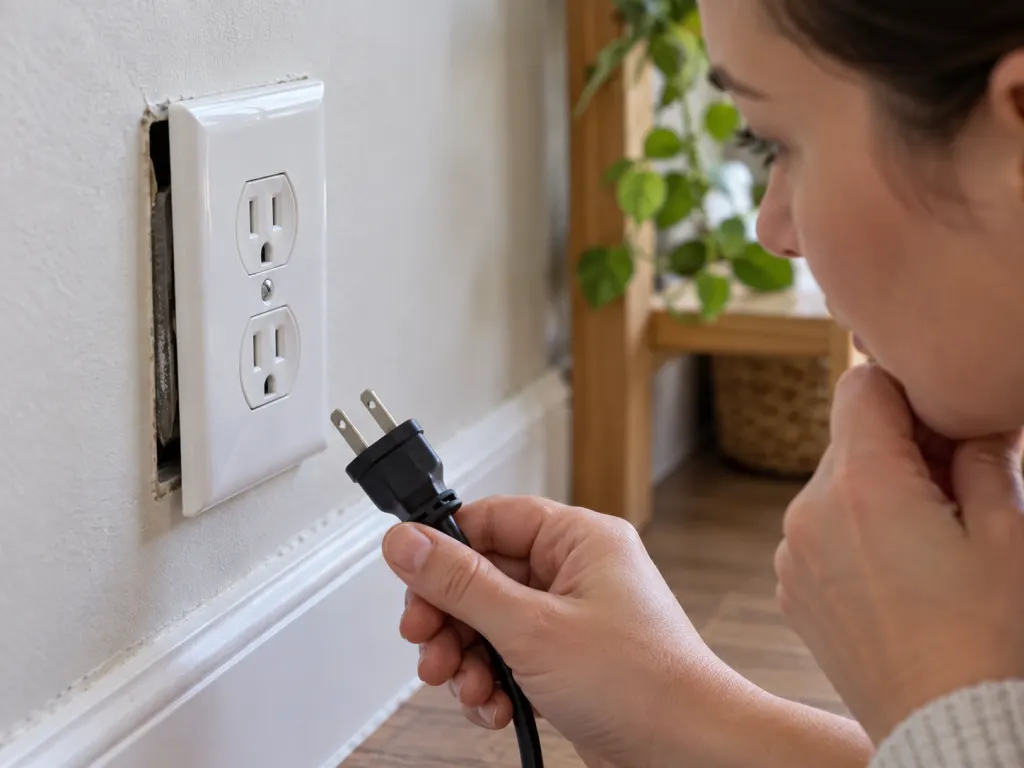
People often notice an outlet with the grounding hole at the top and wonder whether it was installed incorrectly. Orientation alone is not the best household safety test. A receptacle can be ground-up, ground-down, or sideways depending on local practice, the building plan, and the hardware used. The more important questions are practical: does the plug seat fully, does it wobble, does the faceplate move, is there heat or discoloration, and has anyone forced a three-prong plug into a two-slot outlet?
The U.S. Fire Administration gives simple outlet rules that are more useful than guessing from orientation: do not overload outlets, insert plugs fully, never force a three-prong cord into a two-slot outlet, install tamper-resistant outlets where young children are present, and replace receptacles that no longer grip plugs firmly. https://www.usfa.fema.gov/prevention/home-fires/prevent-fires/appliance-and-electrical/
Extension Cords Are Temporary Tools, Not Permanent Wiring
Extension cords are convenient, but they are easy to misuse because they make a room feel as if it has more electrical capacity than it really does. A cord routed under a rug can be pinched, overheated, or damaged without being noticed. A cord used for a refrigerator, washer, dryer, or other major appliance can become overloaded. USFA specifically says major appliances should be plugged directly into a wall outlet and that extension cords should not be used with major appliances because the cord can overheat and start a fire. https://www.usfa.fema.gov/prevention/home-fires/prevent-fires/appliance-and-electrical/
CPSC guidance also explains why cord quality matters. General-use extension cords need safety characteristics such as adequate wire size, strain relief, proper polarization, proper continuity, and, for outdoor cords, a jacket suitable for outdoor use. Missing safety characteristics can create shock or fire risk. https://www.cpsc.gov/Business--Manufacturing/Business-Education/Business-Guidance/Household-Electrical-Products/Extension-Cords
Power Strips and Surge Protectors Have Limits
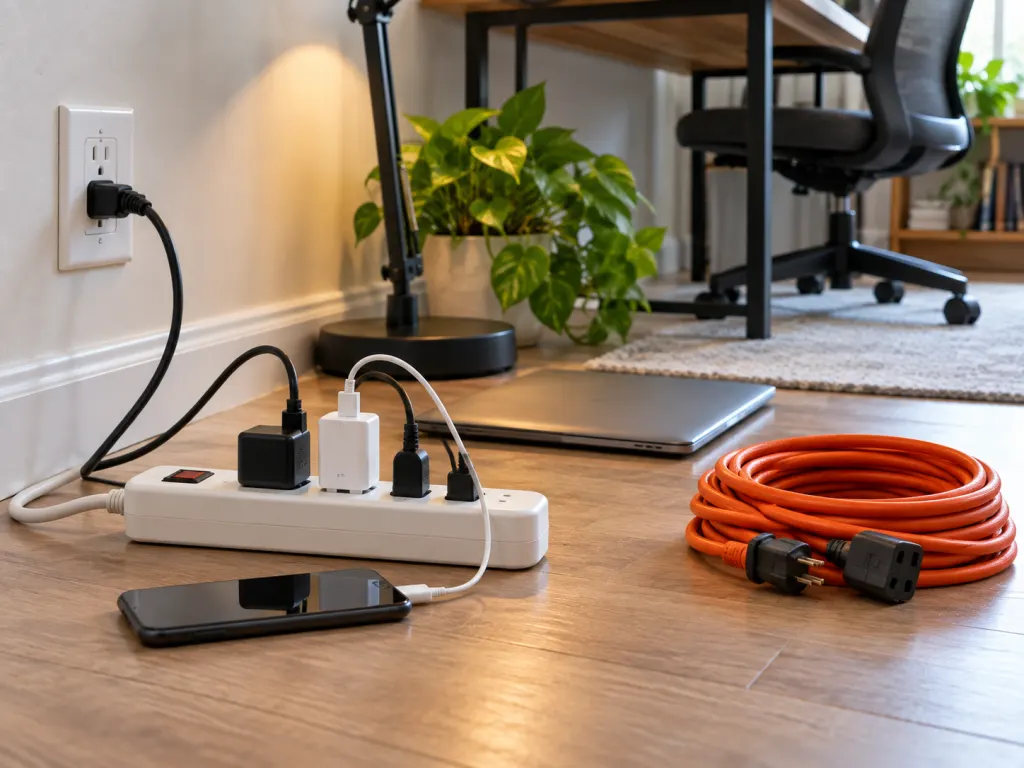
A power strip is not a magic extra circuit. It simply gives more places to plug in devices on the same branch circuit. That is reasonable for low-load electronics when the strip is listed, undamaged, dry, and used within its rating. It is not reasonable for heaters, microwaves, coffee makers, hair dryers, large appliances, or multiple high-draw items at once. USFA advises not overloading power strips and using strips with internal overload protection. https://www.usfa.fema.gov/prevention/home-fires/prevent-fires/appliance-and-electrical/
Look at a power strip as equipment that ages. Retire it if the cord is cracked, the plug is bent, the casing is damaged, the switch feels loose, outlets no longer grip plugs, or there are scorch marks. CPSC recalls show that missing overcurrent protection, sparking, and melting are real hazards in defective power strips, not just theoretical concerns. https://www.cpsc.gov/Recalls/2026/CCCEI-Brand-Power-Strips-Recalled-Due-to-Risk-of-Serious-Injury-or-Death-from-Fire-Sold-by-Middle-Way-Electronics
Water Changes the Risk Picture Quickly
Electricity and water are a serious combination in kitchens, bathrooms, basements, garages, laundry rooms, outdoors, and after storms or flooding. If circuits or equipment have gotten wet or are near standing water, the CDC advises turning off power at the main breaker or fuse panel if it can be done safely, but not entering standing water to reach the switch. A qualified electrician should inspect wet electrical equipment before it is put back into service. https://www.cdc.gov/natural-disasters/response/what-to-do-protect-yourself-from-electrical-hazards.html
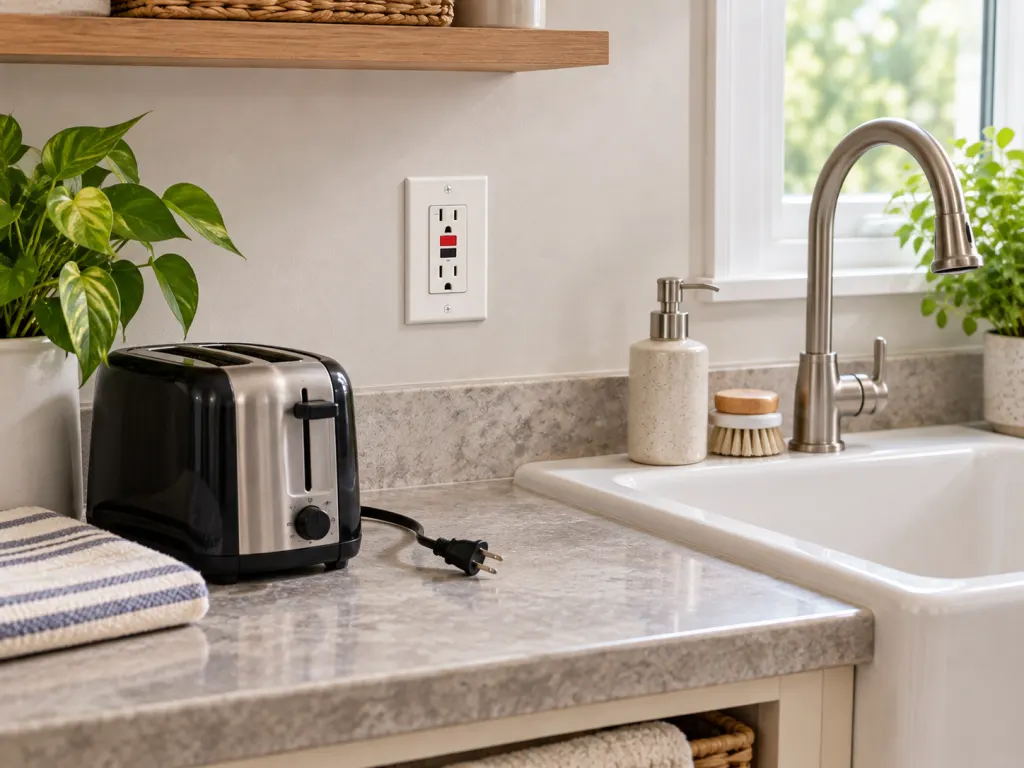
GFCIs, or ground-fault circuit interrupters, are especially important around water because they monitor current flow and interrupt power when a ground fault is detected. CPSC describes receptacle GFCIs, breaker GFCIs, and portable GFCIs, and notes that older homes may not have the same level of protection unless devices were added later. A homeowner can use the test and reset buttons to check a visible GFCI, but installation and troubleshooting belong with someone who knows residential wiring. https://www.cpsc.gov/Newsroom/News-Releases/1991/Electrical-Safety-Month-Inexpensive-Device-Protects-Consumers-Against-Shock-Electrocution
A Practical Room-by-Room Check
You do not need to open a panel or remove outlet covers to do a useful visual check. Walk the home slowly and look for patterns. One damaged cord is a repair task; several overloaded strips in one room may mean the room needs more outlets or a different layout. Repeated breaker trips in the same area are a sign to stop resetting and start diagnosing. A qualified electrician can tell whether the issue is a faulty device, overloaded circuit, damaged receptacle, or wiring problem.
- Kitchen: plug major appliances directly into wall outlets, keep cords away from sinks and hot surfaces, and avoid using one outlet for several heat-producing appliances.
- Bathroom: keep plugged-in items away from water, check GFCI protection, and unplug grooming tools after use.
- Laundry area: avoid pinched cords behind machines, keep dryer vents clean, and replace damaged appliance cords rather than taping them.
- Living room and office: use power strips for low-load electronics only, leave ventilation around chargers and adapters, and remove cords from walkways.
- Garage and outdoors: use equipment rated for the location, keep cords dry and undamaged, and use GFCI protection where appropriate.
- Children's rooms: use tamper-resistant receptacles or properly fitted outlet covers and check that small removable covers cannot become a choking hazard.
Children, Pets, and Curious Hands
Children add another layer of electrical safety planning because outlets are at eye level for toddlers and small objects can end up where adults would never put them. CPSC recommends outlet covers and outlet plates to help protect children from electrical shock and possible electrocution, and says tamper-resistant receptacles are the preferred type when receptacles are being replaced. https://www.cpsc.gov/safety-education/safety-guides/kids-and-babies/Childproofing-Your-Home
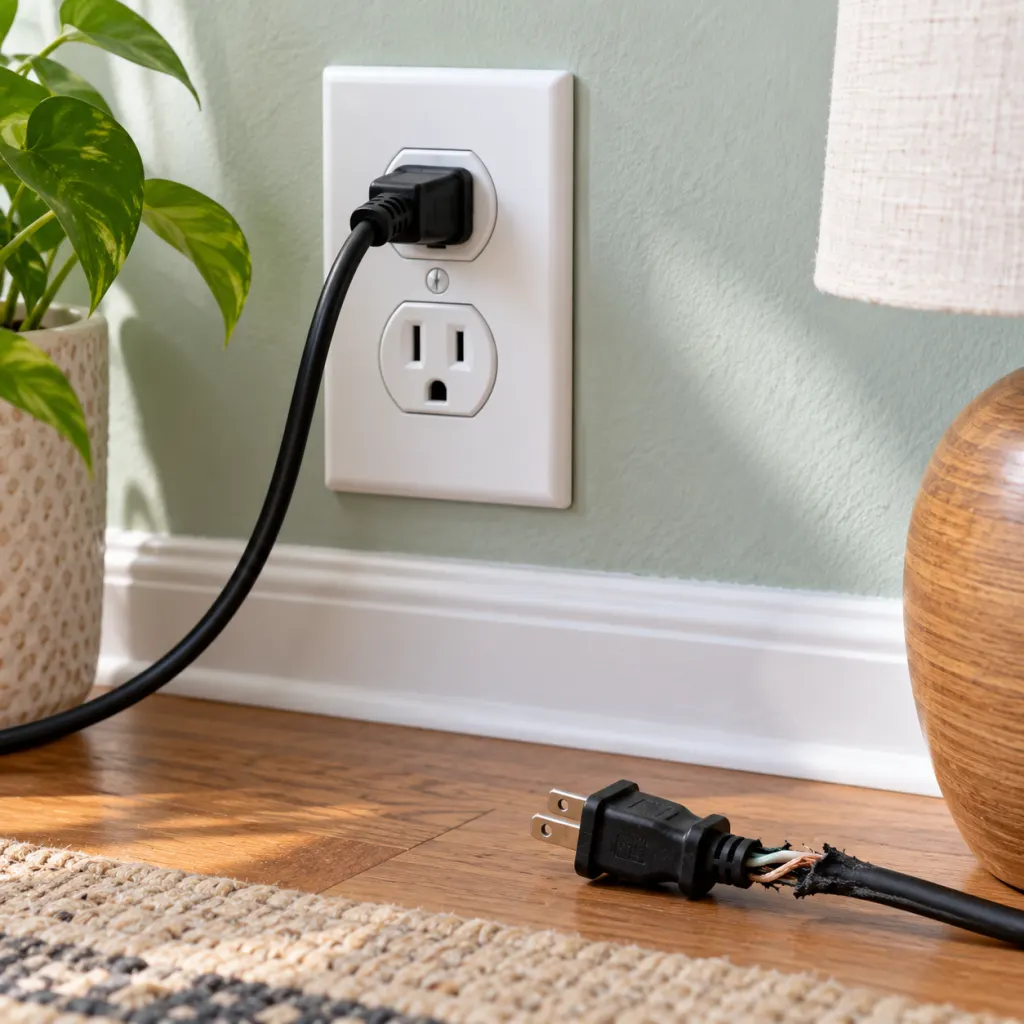
For pets, the most common everyday issue is cord chewing or tugging. Keep cords out of reach where possible, route them behind furniture without pinching them, and retire any cord with damaged insulation. Do not rely on tape as a permanent repair for a cord that has been chewed, crushed, cut, or cracked. The safer choice is replacement or professional repair, depending on the item.
Storms, Lightning, and Generators
During a thunderstorm, indoor behavior changes. The National Weather Service explains that lightning can enter a structure through wires, pipes, or the ground, and then travel through electrical, phone, plumbing, and radio or television reception systems. During active lightning, stay off corded phones, avoid touching electrical equipment or cords, and do not unplug equipment during the storm because that action can put you in contact with the hazard. https://www.weather.gov/safety/lightning-indoors
Generators need special respect because a bad connection can put both household occupants and utility workers at risk. The CDC warns not to connect generators to a home's electrical circuits without approved automatic-interrupt devices, because power returning when a generator is online can create fire hazards and endanger line workers. https://www.cdc.gov/natural-disasters/response/what-to-do-protect-yourself-from-electrical-hazards.html
One product to avoid completely is a male-to-male extension cord, sometimes sold for generator hookups. CPSC warned consumers in 2026 to stop using these cords because exposed prongs can become energized, creating serious fire and electrocution risk, and because they are often used for unsafe backfeeding into residential electrical systems. https://www.cpsc.gov/Newsroom/News-Releases/2026/CPSC-Warns-Consumers-to-Stop-Using-Male-to-Male-Extension-Cords-Secures-Delisting-Commitments-from-e-Commerce-Platforms
When to Stop and Call a Professional
Some electrical jobs are not good do-it-yourself candidates. Call a qualified electrician for repeated breaker trips, warm or discolored outlets, loose receptacles, buzzing panels, old two-prong outlets that need a grounded upgrade, a planned generator transfer setup, wet electrical equipment, or any project that involves opening walls, adding circuits, or changing panel equipment. Also stop using any appliance or cord that gives a shock, sparks, smokes, or smells hot.
A Simple Maintenance Rhythm
The safest system is one you notice before it misbehaves. Once or twice a year, walk through the home and check outlets, cords, power strips, chargers, appliance plugs, smoke alarms, and GFCI test buttons. Add an extra check before holidays, after rearranging furniture, after a water leak, before using outdoor tools, and after any storm that affected power. The goal is not anxiety; it is catching small defects while they are still small.
Think in layers: use the right outlet for the load, keep cords visible and undamaged, keep electricity away from water, respect GFCI protection, avoid makeshift generator connections, and ask for professional help when a pattern repeats. These habits do not require electrical expertise, but they do require taking small warning signs seriously.
Wrap-Up
Electrical hazards at home are usually practical, not mysterious. Pay attention to loose outlets, damaged cords, overloaded strips, wet equipment, missing GFCI protection, and unsafe generator connections. Use extension cords temporarily, plug major appliances directly into wall outlets, keep electricity away from water, and call a qualified electrician when heat, smell, sparks, repeated breaker trips, or damaged wiring appear.
Frequently Asked Questions
- → Is an upside-down outlet dangerous?
Not by itself. Outlet orientation is less important than whether the receptacle is secure, undamaged, cool to the touch, and able to hold a plug snugly. If the outlet is loose, hot, discolored, sparking, or buzzing, stop using it and call a qualified electrician.
- → Can I use an extension cord for a refrigerator or washing machine?
Major appliances should be plugged directly into a wall outlet. Extension cords can overheat when used with high-load appliances, so a missing outlet is a sign to have the setup evaluated rather than stretching a cord across the room.
- → What should I do if an outlet sparks once?
A tiny spark when plugging in some devices can happen, but repeated sparking, a loud pop, smoke, heat, discoloration, or a burning smell is different. Stop using that outlet and have it checked. If there is visible fire, leave the area and call emergency services.
- → How often should I test GFCI outlets?
Use the test and reset buttons according to the device instructions. Many homeowners include GFCI testing in a monthly or seasonal safety check. If a GFCI will not trip, will not reset, or controls important outlets unpredictably, have it inspected.
- → Are power strips safe for everyday use?
They can be reasonable for low-load electronics when they are listed, undamaged, dry, and used within rating. They should not be overloaded, plugged into another strip, used under rugs, or used for heat-producing appliances and major appliances.
References
This content was developed and refined using reliable sources.
- https://www.usfa.fema.gov/prevention/home-fires/prevent-fires/appliance-and-electrical
- https://www.cdc.gov/natural-disasters/response/what-to-do-protect-yourself-from-electrical-hazards.html
- https://www.cpsc.gov/safety-education/safety-guides/kids-and-babies/Childproofing-Your-Home
- https://www.cpsc.gov/Business--Manufacturing/Business-Education/Business-Guidance/Household-Electrical-Products/Extension-Cords
- https://www.cpsc.gov/Newsroom/News-Releases/1991/Electrical-Safety-Month-Inexpensive-Device-Protects-Consumers-Against-Shock-Electrocution
- https://www.cpsc.gov/Newsroom/News-Releases/2026/CPSC-Warns-Consumers-to-Stop-Using-Male-to-Male-Extension-Cords-Secures-Delisting-Commitments-from-e-Commerce-Platforms
- https://www.weather.gov/safety/lightning-indoors
- https://www.cpsc.gov/Recalls/2026/CCCEI-Brand-Power-Strips-Recalled-Due-to-Risk-of-Serious-Injury-or-Death-from-Fire-Sold-by-Middle-Way-Electronics