 Save
Vinegar can be a sensible maintenance cleaner for mops and buckets when the goal is to freshen them, loosen ordinary residue, and reduce stale smells. It should not be treated as a guaranteed sanitizer or disinfectant. For everyday floor-cleaning tools, the best routine is simple: remove debris first, wash or rinse the tool, soak briefly in a diluted white-vinegar solution when appropriate, rinse again, and let the mop and bucket dry completely in open air. The most important safety rule is just as simple: never mix vinegar with bleach, disinfectants, ammonia, or mystery cleaners.
What vinegar can and cannot do
White vinegar is acidic, which is why it can be helpful against some of the problems that make mops and buckets unpleasant between uses: hard-water film, detergent residue, and sour odors. Utah State University Extension describes white vinegar and lemon juice as acidic cleaning ingredients that can help neutralize alkaline substances such as scale from hard water, while also cautioning that homemade formulas can vary and should be tested carefully on hidden areas first https://extension.usu.edu/archive/greener-cleaners. That makes vinegar a useful household cleaner for maintenance, not a magic reset button for neglected tools.
The distinction matters because cleaning, sanitizing, and disinfecting are different jobs. The EPA explains that cleaning removes dirt and organic matter, sanitizing targets bacteria on surfaces, and disinfecting targets viruses and bacteria on surfaces; EPA-registered sanitizer and disinfectant products must meet testing and label requirements https://www.epa.gov/coronavirus-and-disinfectants/whats-difference-between-products-disinfect-sanitize-and-clean. The EPA also states that it does not verify common household ingredients such as vinegar for killing SARS-CoV-2 https://www.epa.gov/coronavirus-and-disinfectants/can-i-use-common-household-substances-kill-novel-coronavirus. For a mop bucket, that means vinegar is best understood as a cleaner and deodorizing aid, not as proof that a tool has been sanitized.
A practical rinse-and-soak routine
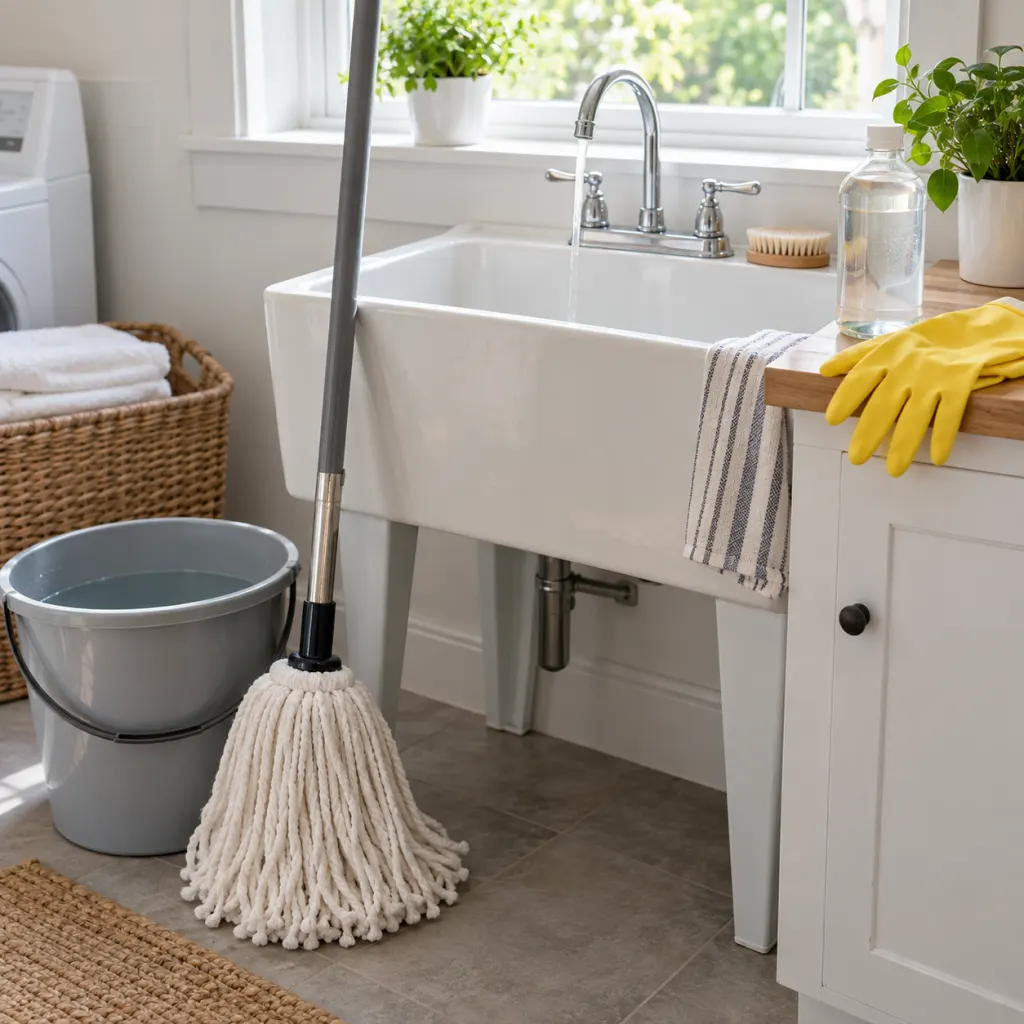
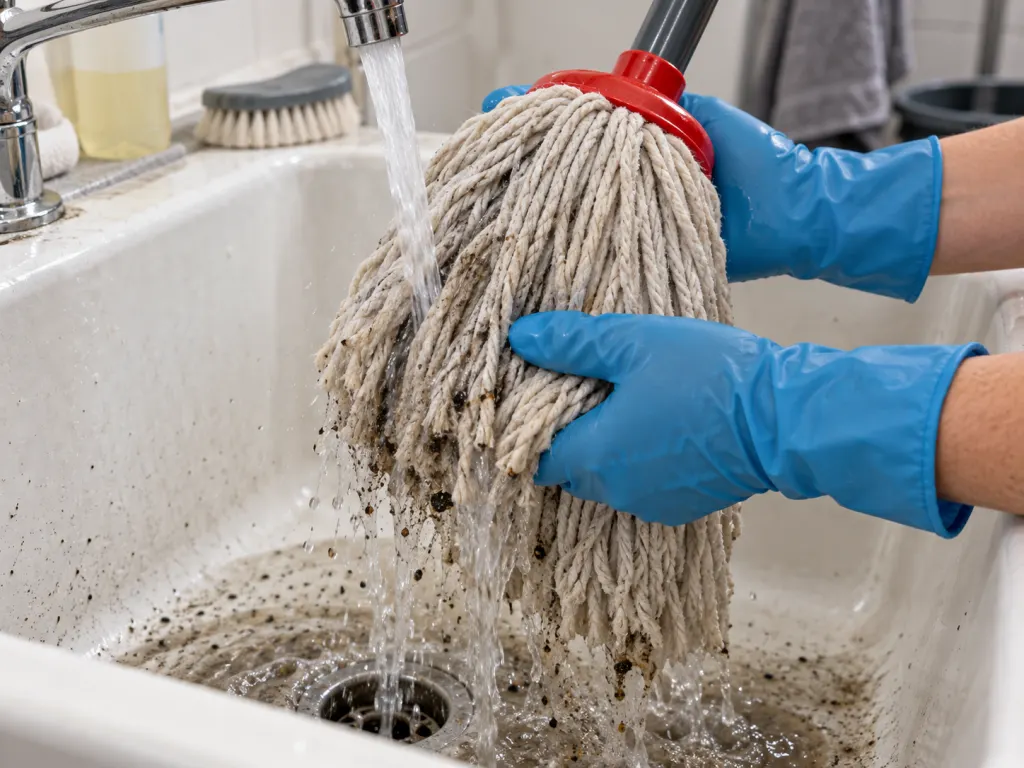
Start by treating the mop and bucket as dirty tools, not as things that clean themselves. Dump the used floor water down an appropriate drain, then rinse the bucket until grit is gone. If the mop head is removable and machine-washable, follow its care label; many microfiber pads, cotton heads, and reusable flat-mop pads clean better when washed separately from linty towels. For non-removable mop heads, rinse under running water while squeezing out visible soil. Vinegar works better after this first rinse because it is not fighting a bucket full of mud, crumbs, hair, and old cleaner.
For routine freshening, fill the bucket with enough warm water to cover the mop head, then add plain distilled white vinegar. A practical household ratio is about 1 cup vinegar to 1 gallon water for a maintenance soak. Swish the mop, let it sit for 15 to 30 minutes, then rinse thoroughly with clean water. This is a cleaning routine, not a disinfection protocol, so there is no need to chase a stronger smell or a longer soak. A mop that still smells sour after rinsing and drying usually needs laundering, a replacement head, or a separate labeled sanitizer rather than more vinegar.
- Rinse out loose dirt before using vinegar.
- Use plain white vinegar rather than flavored vinegar.
- Keep the soak short enough that metal fasteners, springs, and handles are not sitting in acid for hours.
- Rinse the mop after soaking so acidic residue is not carried back onto floors.
- Dry the mop head and bucket fully before storage.
How to handle the bucket itself
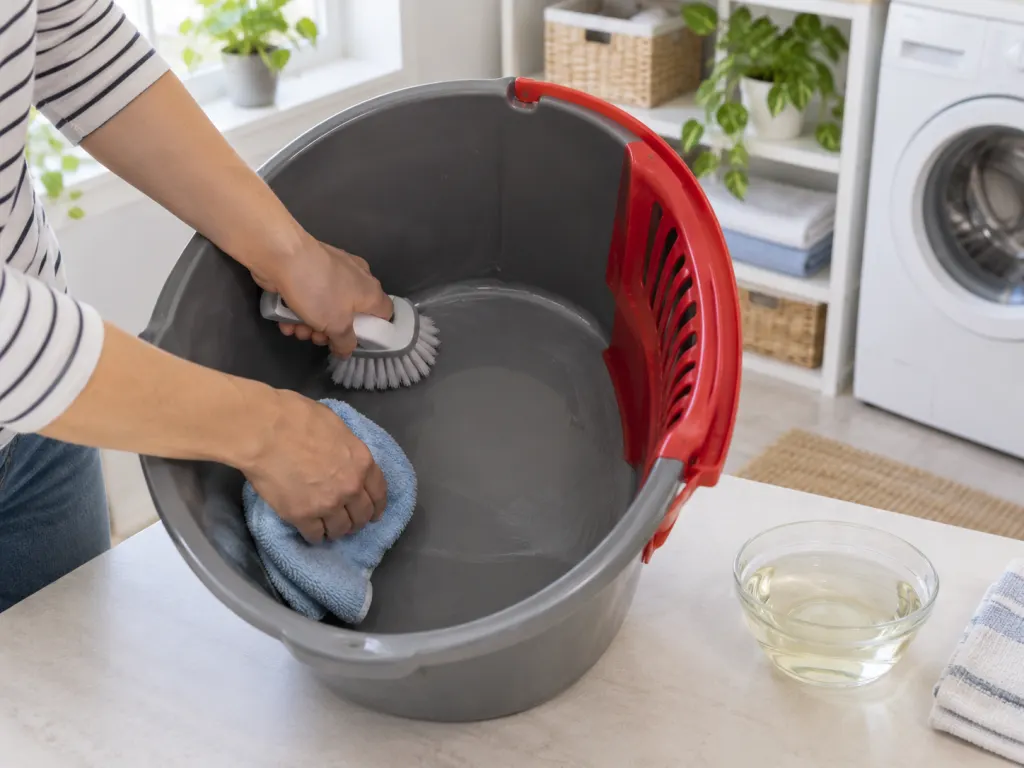
The bucket deserves its own cleaning step because dirty water leaves a ring at the fill line and grit can settle into corners. After dumping and rinsing, wipe the inside with warm water and a small amount of dish detergent if the bucket feels slippery or visibly soiled. Rinse again, then use the diluted vinegar solution on the interior surfaces. Pay attention to the underside of the lip, the wringer basket, and any seam where residue can collect. A soft brush is often more useful than stronger chemistry because it physically lifts the grime that liquid alone may leave behind.
Once the bucket looks clean, rinse it with fresh water and turn it upside down or at an angle so water drains out. Do not snap a damp mop inside a damp bucket and close it in a closet. That habit traps moisture and odor. If the bucket has a removable wringer, separate the pieces occasionally so the hidden surfaces dry. When a bucket has cracked plastic, a sour odor that returns immediately, or rough areas that hold grime, replacement may be more practical than trying to rescue it with stronger cleaners.
Drying matters as much as soaking
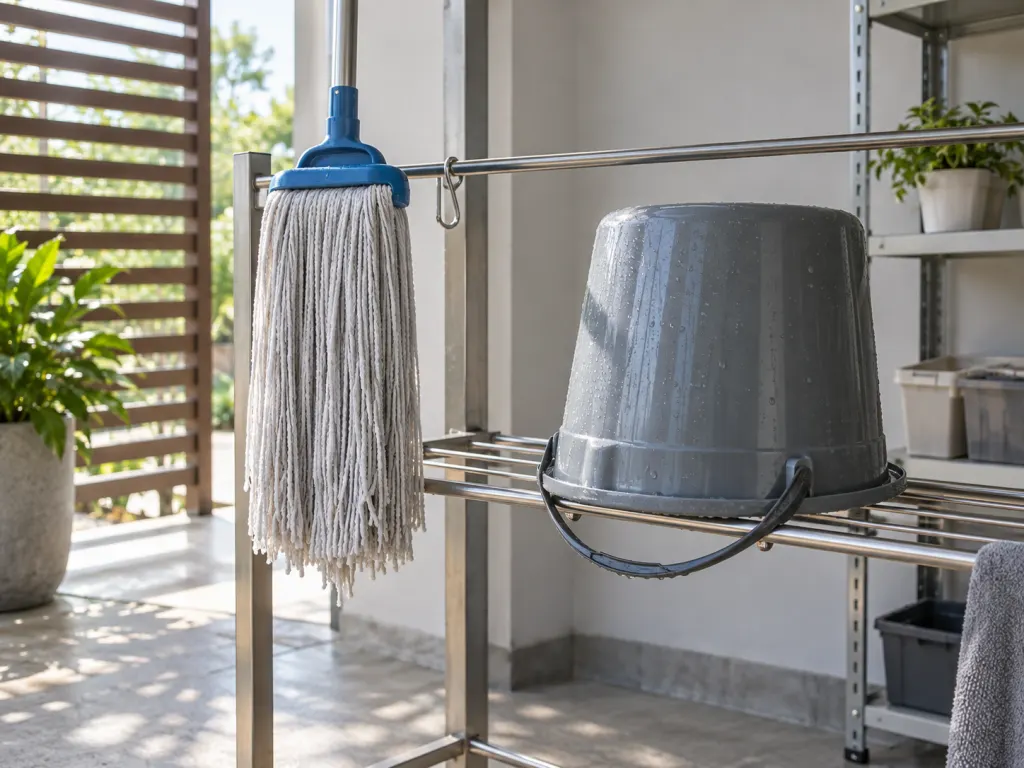
A good vinegar soak can be undone by poor drying. After rinsing, squeeze out as much water as the mop design allows. Hang string mops so air can move through the strands, place flat pads on a rack, and keep sponge mops with the sponge exposed rather than pressed into a closed bucket. Drying in a ventilated place is especially important for thick cotton heads because moisture can linger deep inside even when the outside feels merely damp. Sunlight is optional; airflow is the habit that matters most.
Storage should be boring in the best possible way: clean, dry, upright, and easy to inspect. Avoid storing a mop head-down in standing drips. If the handle leans against a wall, make sure the head is not resting on a damp floor. If your utility closet has poor airflow, let the mop dry in a bathroom, laundry area, garage, or covered outdoor spot before putting it away. The goal is not to perfume the mop; it is to remove soil, rinse away cleaner, and deny moisture the chance to become the next cleaning problem.
When vinegar is the wrong tool
Vinegar is not the right choice when a mop or bucket needs verified sanitizing. University of Minnesota Extension, writing about tools and harvest containers, says surfaces should be cleaned before sanitizing and states plainly that vinegar is not an acceptable sanitizer because it does not adequately sanitize surfaces https://extension.umn.edu/agriculture/farm-operations-and-systems/on-farm-food-safety/cleaning-and-sanitizing-tools-harvest-containers-and-surfaces. A home mop is not a farm harvest container, but the principle transfers well: remove soil first, then use a labeled sanitizer or disinfectant when that level of control is actually needed.
Situations that call for a labeled disinfectant include cleaning after sewage backup, certain bathroom accidents, raw-meat juices on washable floor areas, or cleaning spaces used by someone who has been sick. In those cases, the mop head may need laundering with a suitable cycle, replacement, or treatment according to a product label. The EPA notes that contact time is part of using registered products correctly, meaning the surface must remain wet for the time specified on the label https://www.epa.gov/coronavirus-and-disinfectants/whats-difference-between-products-disinfect-sanitize-and-clean. A quick splash, a pleasant smell, or a social-media cleaning trick is not the same thing as following a tested label.
Choosing vinegar safely
For mop and bucket care, choose ordinary distilled white vinegar, usually sold for food and household use. Avoid high-strength acetic acid products sold for outdoor or specialty uses unless the label specifically fits your job and you have the required protective equipment. EPA materials on minimum-risk pesticide ingredients note that vinegar up to 8% acetic acid can be used as an inert ingredient in certain products, while higher acetic acid concentrations can cause severe burns and eye damage https://www.epa.gov/minimum-risk-pesticides/minimum-risk-pesticides-inert-ingredient-and-active-ingredient-eligibility. Stronger is not automatically better for household tool cleaning.
Essential oils are optional and usually unnecessary. They may make a bucket smell fresher for a short time, but they can also leave oily residue on mop fibers, irritate sensitive skin, or make pets avoid a freshly cleaned area. If scent matters, the safer approach is to clean, rinse, dry, and store the tools properly. A clean mop should smell neutral. A fragrance that covers a stale odor can delay the moment when the mop head really needs washing or replacing.
The one mixture rule to remember
Do not mix vinegar with bleach, disinfectants, ammonia, or other cleaners. The CDC warns that household bleach should not be mixed with other cleaners or disinfectants because dangerous vapors can be released https://www.cdc.gov/hygiene/about/cleaning-and-disinfecting-with-bleach.html. CDC research on household cleaning practices also identified poor knowledge about bleach-and-vinegar mixing and explains that mixing bleach solutions with vinegar or ammonia can generate gases that may seriously harm lung tissue when inhaled https://www.cdc.gov/mmwr/volumes/69/wr/mm6923e2.htm. If you used bleach earlier, rinse the bucket and mop thoroughly and let them air out before any vinegar routine.
This rule also applies to the tempting practice of adding vinegar to a bucket that still smells like the previous floor cleaner. Empty it first. Rinse it. Start again with one cleaning approach at a time. Mixing products can reduce effectiveness, damage materials, and create unnecessary exposure. If a product label tells you to use only water, only a certain dilution, or only a certain surface type, respect the label over any homemade cleaning shortcut.
How often to clean mops and buckets
Frequency depends on use. A mop used once a week on lightly soiled floors can usually be rinsed and dried after every use, then given a vinegar maintenance soak every few uses or whenever odors appear. A mop used for kitchens, bathrooms, pet messes, mud, or shared spaces needs more attention. Wash removable pads after use, clean the bucket each time dirty water sits in it, and replace mop heads that shed, smell after laundering, or no longer release soil in the wash.
Think of vinegar as part of a care cycle rather than a weekly ritual you must perform forever. The cycle is inspect, rinse, wash if needed, vinegar-soak for odor and residue when useful, rinse again, dry, and store. If one step keeps failing, adjust that step. A bucket with a rough interior may need scrubbing. A cotton mop that dries slowly may need a better hanging spot. A microfiber pad that smears floors may be holding detergent residue and need a detergent-free rinse cycle.
A simple decision guide
Use vinegar when the job is ordinary maintenance: dull bucket film, a mop that smells stale after floor cleaning, or a quick freshening after the visible dirt is gone. Skip vinegar when the problem is heavy contamination, a needed sanitizer claim, a product label that says not to use acid, or materials that can be etched or corroded. Use a labeled sanitizer or disinfectant when you need that specific result, and follow the instructions for dilution, protective gear, ventilation, and contact time.
- Routine floor day: rinse the mop, clean the bucket, use vinegar if residue or odor remains, rinse, and dry.
- Sticky cleaner buildup: wash with detergent first, then try a diluted vinegar rinse if the material allows it.
- Need for sanitizing: clean first, then use an appropriate labeled sanitizer instead of relying on vinegar.
- Bleach was used: do not add vinegar; rinse thoroughly and keep products separate.
- Persistent odor: launder or replace the mop head rather than increasing vinegar strength.
Small habits that keep tools cleaner longer
The easiest way to keep mop gear from becoming unpleasant is to use less dirty water for less time. Change the bucket water when it turns gray instead of pushing it through the whole house. Sweep or vacuum before mopping so the mop is not collecting crumbs and hair. Use the right amount of floor cleaner, because excess detergent can leave residue in both the floor and the mop fibers. After mopping, give yourself two extra minutes for the mop and bucket rather than letting the cleanup tools become tomorrow's problem.
Wrap-Up
Vinegar is useful for freshening mops and buckets when it is used as a cleaner, not as a certified sanitizer. Rinse away loose soil first, use a modest dilution of plain white vinegar and water, rinse again, and dry the mop and bucket fully before storage. Keep vinegar away from bleach, disinfectants, ammonia, and unlabeled mixtures. When a job calls for true sanitizing or disinfecting, choose a product labeled for that purpose and follow the label exactly.
Frequently Asked Questions
- → Can I soak a mop in vinegar overnight?
A short soak is usually the better choice. Fifteen to 30 minutes is enough for routine freshening, followed by a clean-water rinse and full drying. Long acidic soaks can be hard on metal parts, adhesives, rubber pieces, and some mop fibers.
- → Does vinegar disinfect a mop bucket?
Do not rely on vinegar when you need verified sanitizing or disinfecting. The EPA distinguishes cleaning from sanitizing and disinfecting, and University of Minnesota Extension states that vinegar is not an acceptable sanitizer for tools and containers. Use a labeled sanitizer or disinfectant when that level of cleaning is needed.
- → Can I mix vinegar with bleach to clean a mop faster?
No. Keep vinegar and bleach separate. CDC guidance warns against mixing bleach with other cleaners or disinfectants because dangerous vapors can be released. Empty and rinse the bucket thoroughly before switching products.
- → Which vinegar is best for mop cleaning?
Plain distilled white vinegar is the most practical choice because it is inexpensive, clear, and less likely to leave color or flavoring residue. Avoid specialty high-strength acetic acid products unless their label specifically fits the job and you can follow all safety directions.
- → Why does my mop still smell after vinegar?
Persistent odor usually means the mop head is still holding soil, detergent residue, or moisture. Wash a removable head according to its care label, rinse more thoroughly, improve airflow while drying, and replace the head if the smell returns immediately after cleaning.
References
This content was developed and refined using reliable sources.
- https://extension.usu.edu/archive/greener-cleaners
- https://www.epa.gov/coronavirus-and-disinfectants/whats-difference-between-products-disinfect-sanitize-and-clean
- https://www.epa.gov/coronavirus-and-disinfectants/can-i-use-common-household-substances-kill-novel-coronavirus
- https://extension.umn.edu/agriculture/farm-operations-and-systems/on-farm-food-safety/cleaning-and-sanitizing-tools-harvest-containers-and-surfaces
- https://www.epa.gov/minimum-risk-pesticides/minimum-risk-pesticides-inert-ingredient-and-active-ingredient-eligibility
- https://www.cdc.gov/hygiene/about/cleaning-and-disinfecting-with-bleach.html
- https://www.cdc.gov/mmwr/volumes/69/wr/mm6923e2.htm