 Save
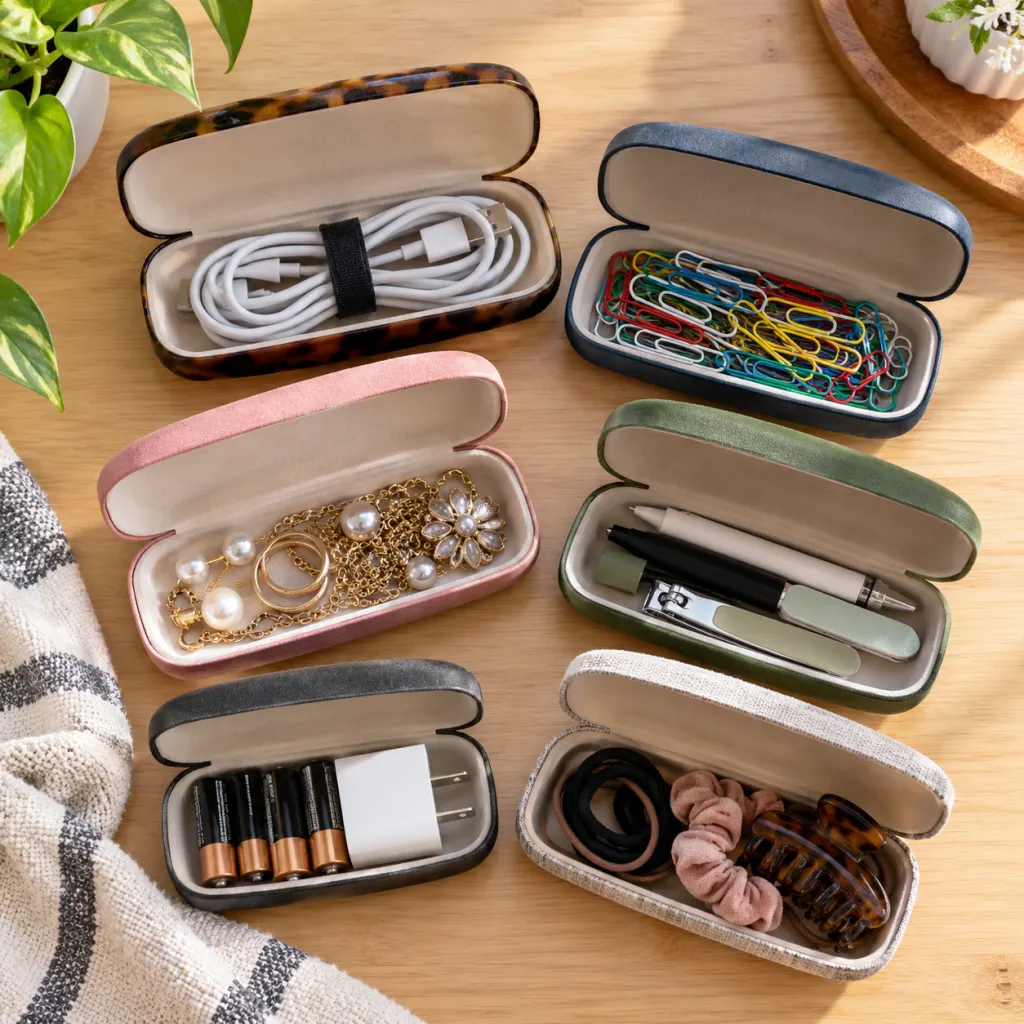
The best way to reuse an old eyeglass case is to treat it as a ready-made mini box: give it one clear job, label it if needed, and place it where small items usually get lost. A hard-shell case can protect cords, jewelry, craft pieces, and travel items; a soft case can bundle flat items such as coupons, receipts, or spare cloths. This kind of reuse fits a practical waste-reduction habit, too. The U.S. Environmental Protection Agency says reducing, reusing, and repairing materials comes before recycling when the goal is to avoid creating unnecessary waste (EPA). Eyeglass cases are especially good candidates because many are sturdy, hinged, and already designed to shield something fragile. Instead of saving every case forever, sort them with a purpose: keep the clean, working ones; repurpose the best shapes; and let go of damaged cases through the correct local route.
Why Eyeglass Cases Are Worth Reusing
An eyeglass case is a small storage tool with more structure than a pouch and less bulk than a box. That makes it useful in places where ordinary containers feel too large: a glove compartment, desk drawer, carry-on bag, nightstand, sewing basket, or kitchen utility drawer. The EPA’s recycling guidance notes that products should be recycled only when they cannot be reduced or reused, and that source reduction and reuse sit above recycling in the waste-management hierarchy (EPA recycling basics). In plain household terms, the case you already own is often the most convenient organizer you could buy. The trick is not to fill it with random leftovers. Give each case a category, choose items that fit without forcing the hinge, and keep the case in the exact spot where you normally need those items.
Check the Case Before You Repurpose It
Start with a quick inspection. Open and close the hinge a few times. Press gently on the corners. Look at the lining and make sure it is not flaking onto whatever you plan to store. If the case has a strong odor, sticky residue, or a broken closure, it may not be worth using for delicate items. A case does not have to look perfect, but it should close cleanly and protect what is inside. This matters most for items that scratch easily, such as jewelry, memory cards, earbuds, or polished metal accessories. If you are unsure whether a worn case belongs in a recycling bin, check local guidance first. The Federal Trade Commission reminds consumers that a “recyclable” claim does not guarantee an item can be recycled in every area, and local city or county programs decide what they accept (FTC).
1. Make a Desk Supply Pod
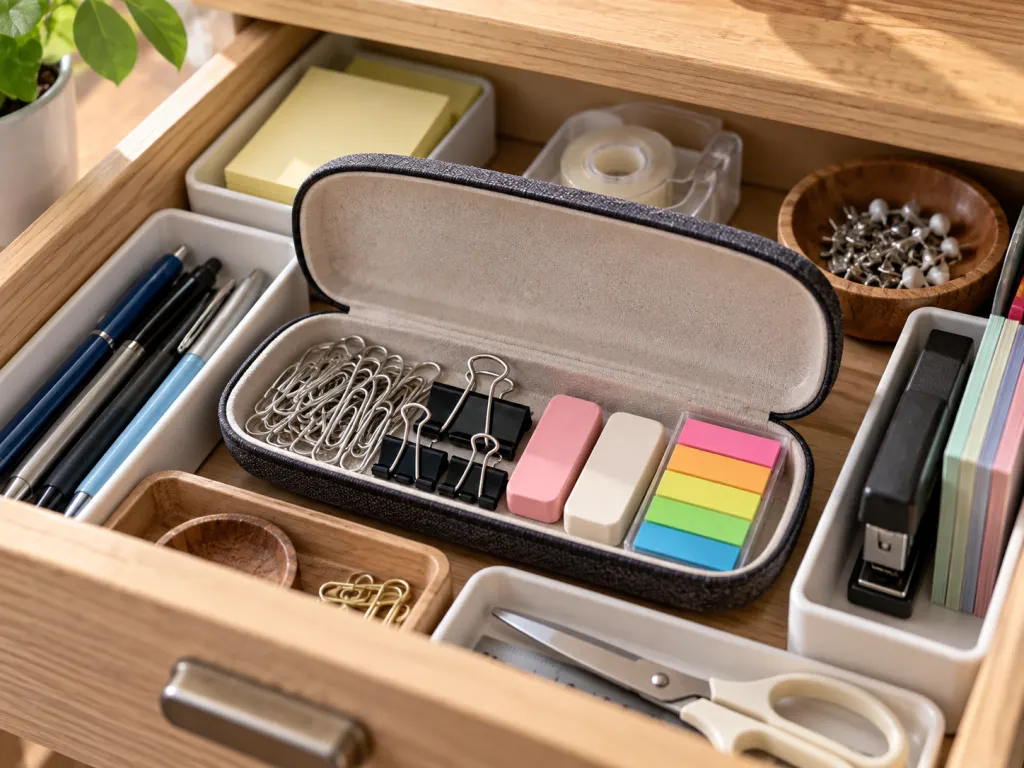
One hard eyeglass case can calm a messy desk drawer almost immediately. Use it for paper clips, binder clips, erasers, sticky-note flags, pencil leads, spare staples, rubber bands, or small USB drives. The curved shape keeps items from spreading across the drawer, while the lid lets you move the whole group from a drawer to a table without dumping everything into your hand. For a neater setup, place one case near the printer for clips and label strips, one near your laptop for storage drives, and one in a family command center for spare keys or appointment cards. If several cases look alike, add a small paper label to the outside or choose a color system: black for office items, bright colors for school supplies, patterned cases for shared household pieces.
2. Turn It Into a Cord and Adapter Kit
Cords are some of the easiest things to misplace because they are small enough to vanish but bulky enough to tangle. An eyeglass case can hold a phone cable, compact adapter, charging plug, memory-card reader, or earbud case in one tidy set. Coil cords loosely so they are not sharply bent, then secure them with a reusable tie, twist tie, or small band. This is especially helpful for a work bag or travel bag because you can grab one case instead of searching through side pockets. A soft case works well for a single cord; a rigid case is better for adapters or small electronics that should not be crushed. Keep only the cords you can identify. If you no longer know what a cable belongs to, place it in a temporary “check later” case and test it before storing it long term.
3. Pack a Travel Jewelry Tray
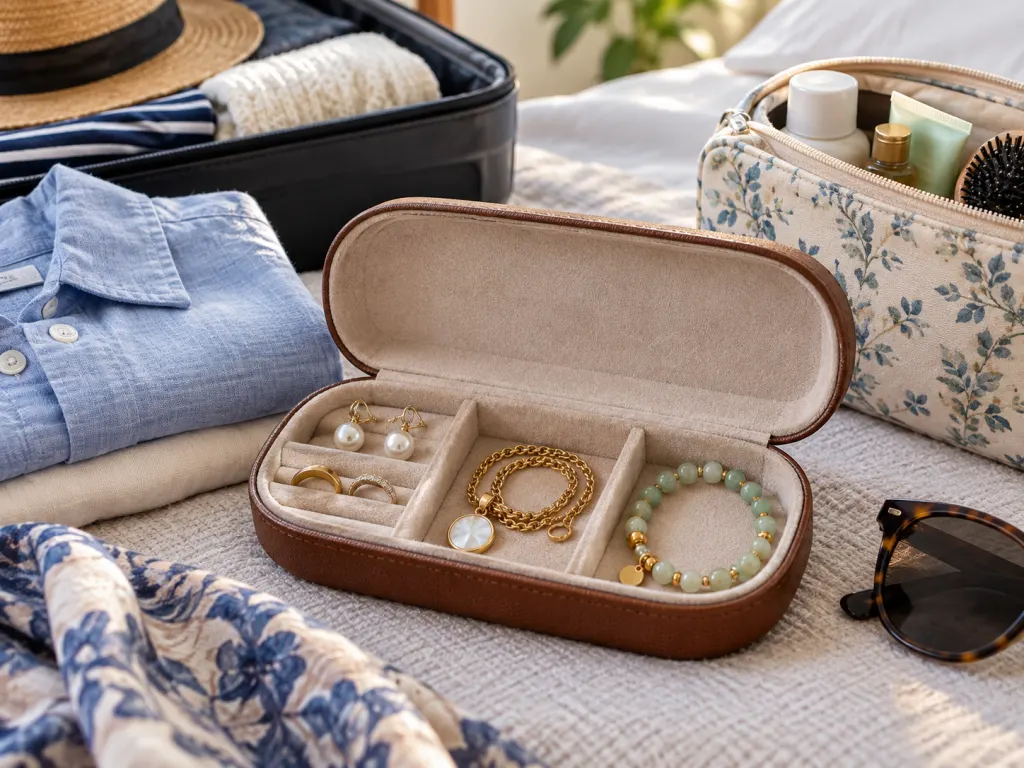
A hard eyeglass case can protect earrings, rings, bracelets, and necklace chains during a weekend trip. Line the bottom with a small square of fabric, felt, or a folded soft cloth to keep pieces from knocking together. For necklaces, thread each chain through a drinking straw segment or wrap it around a small card before placing it in the case. For earrings, pin pairs through a scrap of felt so they stay matched. When you arrive, open the case and it becomes a small bedside tray, which is easier to notice than loose jewelry on a hotel nightstand. This is not only a travel idea. It also works at home for jewelry you remove before gardening, baking, washing dishes, or doing any task where small accessories tend to disappear.
4. Build a Sewing and Mending Case
A spare eyeglass case is just the right size for a small mending kit. Add a few needles tucked into felt, a needle threader, two or three thread colors, tiny scissors with a cap, spare buttons, a few safety pins, and a measuring tape folded flat. Keep the kit near the laundry area, in a desk drawer, or in a suitcase if you travel often. The advantage is speed: when a button loosens or a hem needs a quick fix, you do not have to pull out a full sewing box. Choose a hard case if you are storing anything pointed, and add a fabric sleeve or felt flap around needles and pins so they are easy to see before you reach inside. A narrow case can also hold replacement buttons taped to the care label from a new garment.
5. Store Small Tools for Everyday Fixes
Not every household needs a full tool kit in every room, but a small case of everyday helpers can save a walk to the garage. Fill an old eyeglass case with a mini screwdriver, picture-hanging hooks, furniture pads, zip ties, a short measuring tape, adhesive cable clips, or a few spare screws sealed in a small envelope. Keep one in a junk drawer or utility cabinet. The goal is not to replace proper tool storage; it is to gather the tiny pieces that are useful but easy to lose. If the case will hold metal parts, choose one with a firm hinge and a lining that will not snag. For heavier hardware, test the closure before carrying it around. A case that opens too easily is better for stationary drawer storage than for a bag or car.
6. Create a Coupon, Receipt, or Gift Card Wallet
Soft eyeglass sleeves and slim hard cases are excellent for paper clutter. Use one for store coupons, return receipts, loyalty cards, postage stamps, or gift cards you want to use before they expire. The case can live in a purse, car console, entry drawer, or shopping tote. To keep it from becoming another clutter pocket, choose a review day. For example, empty the case every Sunday evening or before a grocery trip. Toss expired paper, move receipts you must keep to your record folder, and put active coupons back in front. This works because the case creates a physical limit: once it no longer closes easily, it is time to sort. That small boundary can be more useful than a large envelope that quietly collects months of paper.
7. Organize a Car Console
A car console often becomes a loose mix of coins, pens, charging cords, lip balm, hair ties, toll cards, and random receipts. An eyeglass case gives the smallest items a defined home. Use one case for parking meter coins and a pen, another for a charging cord and adapter, or a soft sleeve for car-wash cards and fuel receipts. Because the case is easy to remove, it also makes cleaning the console simpler: lift out the cases, wipe the compartment, and put the cases back. Avoid overfilling the case with heavy items, and do not store anything you need while actively driving in a place that requires digging. The best console case is for parked-car tasks: paying, noting mileage, charging, sorting receipts, or keeping a spare pair of inexpensive reading glasses protected.
8. Protect Craft Supplies and Hobby Pieces
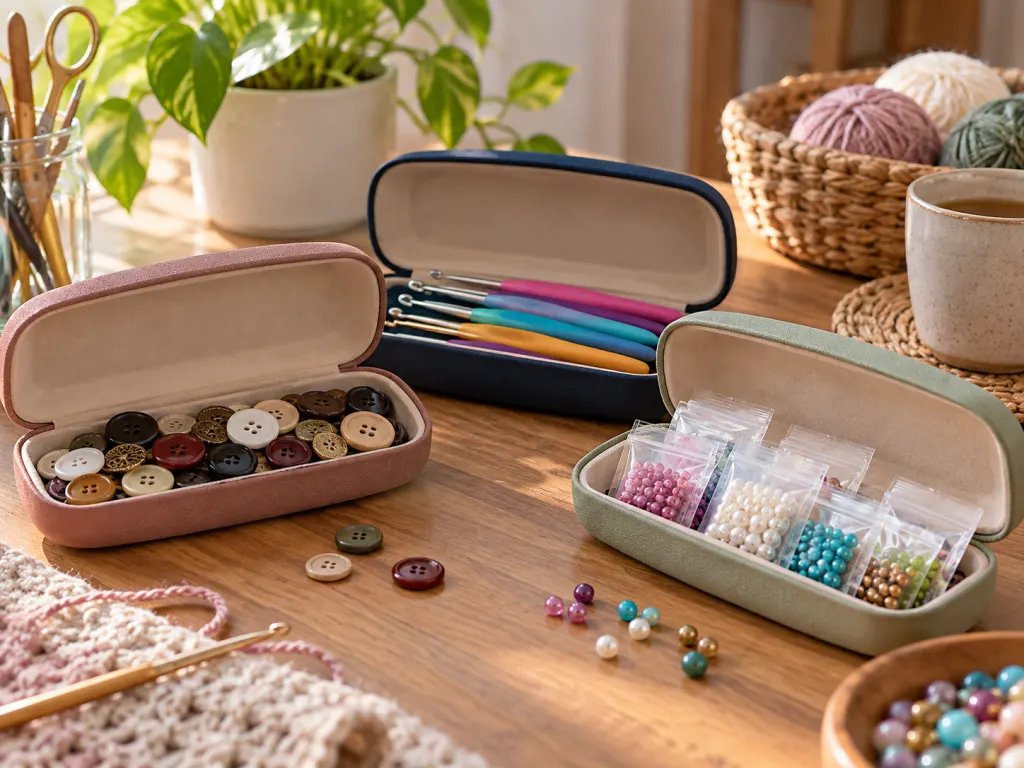
Craft rooms and hobby shelves are full of tiny pieces that deserve better than a plastic bag. Eyeglass cases can hold crochet hooks, embroidery needles in felt, beads, buttons, stitch markers, washi tape samples, miniature paint tubes, model-making parts, guitar picks, or camera memory cards. For children’s crafts, use the case for crayons, chalk pieces, stickers, or collage scraps that can travel to a restaurant or waiting room. The case works best when the contents share one activity. A “blue beads” case is easier to use than a “random beads and buttons and hooks” case. If you store very small parts, place them in a small paper envelope inside the case so they do not slip under the lining. Clear labels help, but so does matching the case to the project bag where it belongs.
9. Use It as Reusable Gift Packaging
A clean eyeglass case can become a charming little gift box for items that would otherwise need wrapping: handmade earrings, a bracelet, a keychain, a small ornament, seed packets, a handwritten note, or a set of recipe cards. Add tissue paper, fabric scraps, or a ribbon around the outside, and the case becomes part of the gift rather than disposable packaging. This lines up with the EPA’s broader household advice to reuse items such as gift bags and tissue paper when possible (EPA recycling FAQ). The key is to present it honestly. A reused case does not need to pretend to be new; it can be part of a thoughtful low-waste gesture. Choose cases without prescription labels or personal markings, and clean out old papers before passing them along.
10. Make a Household “Tiny Things” Station
Every home has small pieces that are important for a week and impossible to find when needed: extra cabinet bumpers, a single drawer pull screw, spare zipper pulls, plant tags, furniture assembly keys, bulb-removal suction cups, curtain hooks, appliance feet, or the extra felt pads that came with a chair. Instead of dropping them into a junk drawer, make an eyeglass case station. Use one case for furniture bits, one for plant and garden labels, one for small appliance pieces, and one for seasonal items such as ornament hooks. Store the cases upright in a shallow bin, with labels facing up. This system is humble, but it solves a real household problem: tiny useful things stop scattering. When a case fills up, sort it before adding more. The goal is retrieval, not hoarding.
How to Choose the Right Reuse
Match the case to the job instead of forcing one idea onto every case. A rigid clamshell case is best for items that need protection from pressure, while a soft sleeve is better for flat papers, cloths, or light accessories. A narrow case works for pens, crochet hooks, and cords; a deeper case works for adapters, beads, and small hardware. Before assigning a case, ask four simple questions:
- Does it close without strain? If not, choose fewer items or a larger container.
- Will the lining shed onto the contents? If yes, use the case for rougher items or skip it.
- Can someone identify the contents quickly? If not, add a label or use a clear inner envelope.
- Will the case live near the task? A sewing case belongs near laundry or luggage, not buried in a closet.
When It Is Better to Let a Case Go
Reuse is useful only when the new job is genuinely helpful. If you already have six empty cases and no purpose for them, keeping all six is just another form of clutter. Set a limit, such as two spare cases per household area or one small bin for all repurposed cases. Cases that are cracked, sticky, badly worn, or hard to open may be more trouble than they are worth. Because eyeglass cases can be made from mixed materials, fabric, metal, plastic, magnets, foam, and adhesives, disposal options vary. EPA guidance repeatedly points consumers back to local programs because accepted materials differ by area, and items placed in the wrong bin can create problems for recycling facilities (EPA recycling FAQ). If your local program does not accept a case, use it until it fails, offer clean extras through a local swap group, or place it in the proper trash stream.
Wrap-Up
Old eyeglass cases are most useful when they are treated as small, task-specific organizers rather than vague containers for leftovers. Keep the sturdy ones for cords, jewelry, desk supplies, mending pieces, car-console items, craft materials, coupons, small tools, reusable gift packaging, and household spare parts. Label them, avoid overfilling them, and store each case where the task actually happens. When a case is too damaged to be useful, check local disposal rules instead of assuming it belongs in a recycling bin. A single reused case will not transform a home, but several well-chosen cases can make drawers, bags, and busy corners noticeably easier to manage.
Frequently Asked Questions
- → Can old eyeglass cases go in curbside recycling?
Sometimes, but do not assume they can. Many eyeglass cases are made from mixed materials such as fabric, plastic, metal, foam, and adhesive. Check your local recycling program before placing one in the bin.
- → What is the most useful thing to store in an old eyeglass case?
The most useful choice is a small group of items you often lose: charging cords, sewing pieces, jewelry, coupons, earbuds, craft supplies, or tiny household parts. The case works best when it has one clear purpose.
- → Should I keep every eyeglass case I get?
No. Keep only the cases that close well, feel sturdy, and have a realistic use. A small limit, such as one bin of spare cases, keeps reuse from turning into clutter.
- → How do I keep reused eyeglass cases organized?
Label the outside, group similar cases in a shallow bin, and store each one near the task it supports. A cord case belongs with travel gear or a work bag; a mending case belongs near laundry or luggage.
- → Can I use an eyeglass case as a gift box?
Yes, if the case is clean, sturdy, and free of personal labels. It can hold small handmade items, jewelry, keychains, seed packets, or notes, and it can be reused again by the recipient.