 Save
The chef’s trick is less about a hidden ingredient and more about controlling three things: egg age, heat, and cooling. For smoother peeling, choose eggs that are not straight from the hen or just purchased that morning, hard-cook them gently, chill them right away, then peel from the wide end where the air cell usually sits. Public food-safety guidance still applies: the FDA advises buying refrigerated, clean, uncracked eggs and storing them at 40°F or below, and cooked eggs should not be treated as shelf-stable snacks.
Why Fresh Eggs Can Be So Stubborn
If you have ever lost half the white to the shell, the egg was probably not doing anything mysterious. Very fresh eggs tend to cling more tightly to the inner shell membrane. As eggs sit under refrigeration, air gradually moves through the porous shell and the internal chemistry changes. Iowa State University Extension explains that aging increases the pH of the egg white and enlarges the air cell at the wider end, two changes that make older eggs better candidates for hard cooking and peeling cleanly: Iowa State University Extension on hard-cooked egg peeling.
That does not mean you should use neglected eggs or eggs with questionable quality. The point is modest: eggs that have spent some time refrigerated often peel better than ultra-fresh eggs. Colorado State University Extension gives a practical target for easier peeling, recommending eggs that are 7 to 10 days old for high-elevation hard-cooked eggs: CSU Extension hard-cooked egg guidance. If your carton is new, you can still cook it, but you may want to reserve the newest eggs for scrambling, baking, or frying and use a slightly older carton for deviled eggs or lunch prep.
Choose the Right Eggs Before You Heat the Pan
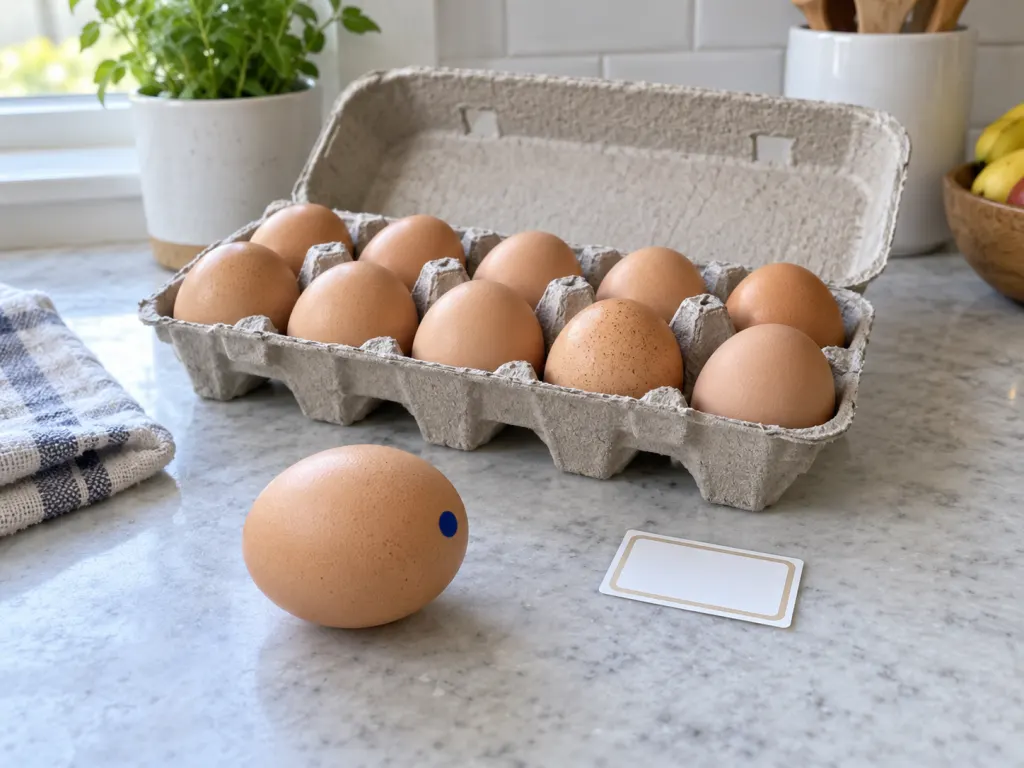
Start with clean, uncracked eggs from a refrigerated case, then keep them in the refrigerator at home. The FDA recommends storing eggs in their original carton in a refrigerator set at 40°F or below, and opening the carton at purchase to check for clean, intact shells: FDA egg buying and storage guidance. The carton protects the eggs from breakage and helps keep quality steady. It also gives you a date reference, which is useful when you want eggs old enough to peel well but still within normal home-storage guidance.
For a batch meant to look tidy, choose large eggs of similar size. Mixed sizes cook unevenly, so one egg may have a tender yolk while another edges toward chalky. Do not pierce the shell before cooking. North Carolina Cooperative Extension notes that piercing can create hairline cracks and is not recommended because cracks can make an egg more vulnerable to contamination: N.C. Cooperative Extension on peeling hard-cooked eggs. A tiny hole may sound clever, but a clean shell, a calm simmer, and a proper chill are better habits.
Cook Gently, Not Aggressively
The name “hard-boiled” is familiar, but hard-cooked is the better idea. A hard rolling boil can knock eggs around, crack shells, and overheat the outer white before the center finishes. University of Nebraska-Lincoln Extension describes a stovetop method that places eggs in a single layer, covers them with about an inch of water, brings the water to boiling, turns off the heat, and lets the covered pan stand for a size-based time before cooling: UNL Food hard-cooking instructions.
That approach gives you a simple home method without needing restaurant equipment. For large eggs, many extension-style instructions land around 12 minutes of covered standing after the water reaches boiling; medium eggs need less time and extra-large eggs need more. Your stove, pan, egg temperature, and altitude can change the result, so one test batch is worth more than arguing with a timer. At higher elevations, where water boils at a lower temperature, CSU Extension notes that longer adjustments may be needed and offers a modified method for cooks above 5,000 feet: CSU Extension high-elevation egg guidance.
The Cooling Step Is Part of the Peeling Step
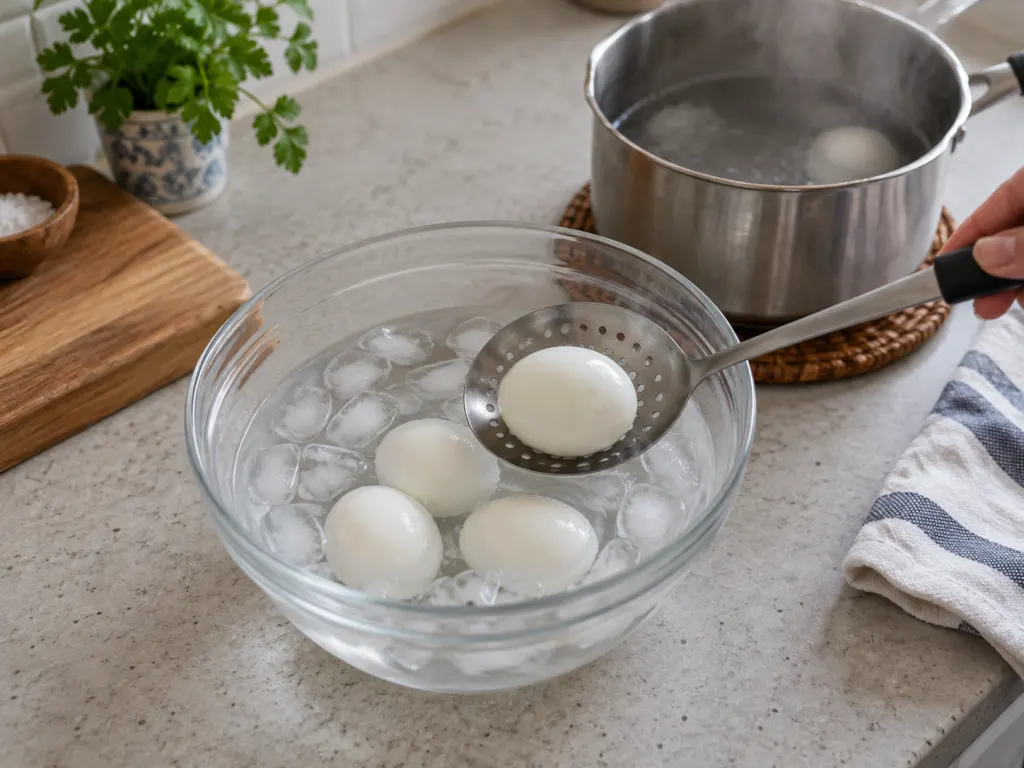
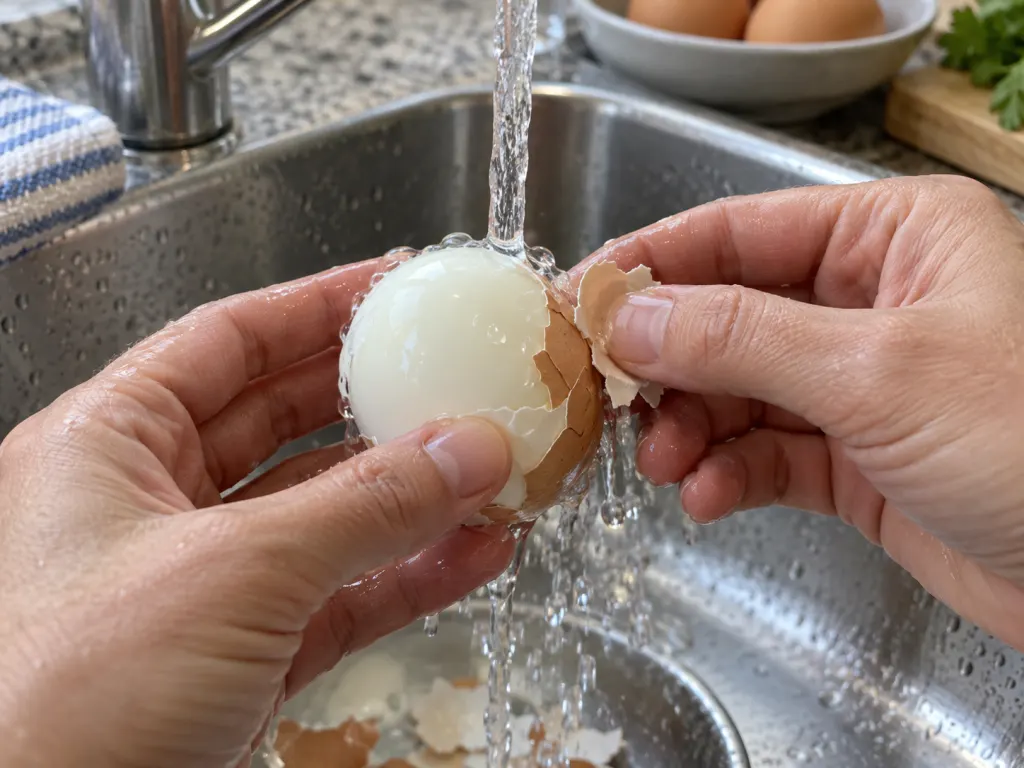
Cooling is not just about making eggs comfortable to handle. It stops carryover cooking, helps firm the white, and makes peeling easier because the cooked egg contracts slightly inside the shell. N.C. Cooperative Extension notes that hard-cooked eggs are easier to peel right after cooling and recommends tapping, rolling, and peeling under cold running water: N.C. Cooperative Extension peeling advice. In practical terms, move the eggs into a bowl of ice water or very cold tap water as soon as cooking ends, and give them enough time to cool through before peeling.
A five-minute ice bath can be enough to stop the cooking for many home batches, but larger eggs, a crowded bowl, or lukewarm tap water may need longer. Replace water that turns warm, and use enough cold water so the eggs are fully surrounded. If you are peeling immediately for egg salad or deviled eggs, cool until the eggs feel cold rather than merely cool at the shell. If you are storing them, dry the shells after cooling and refrigerate in a clean container.
A Clean Peeling Method That Actually Helps
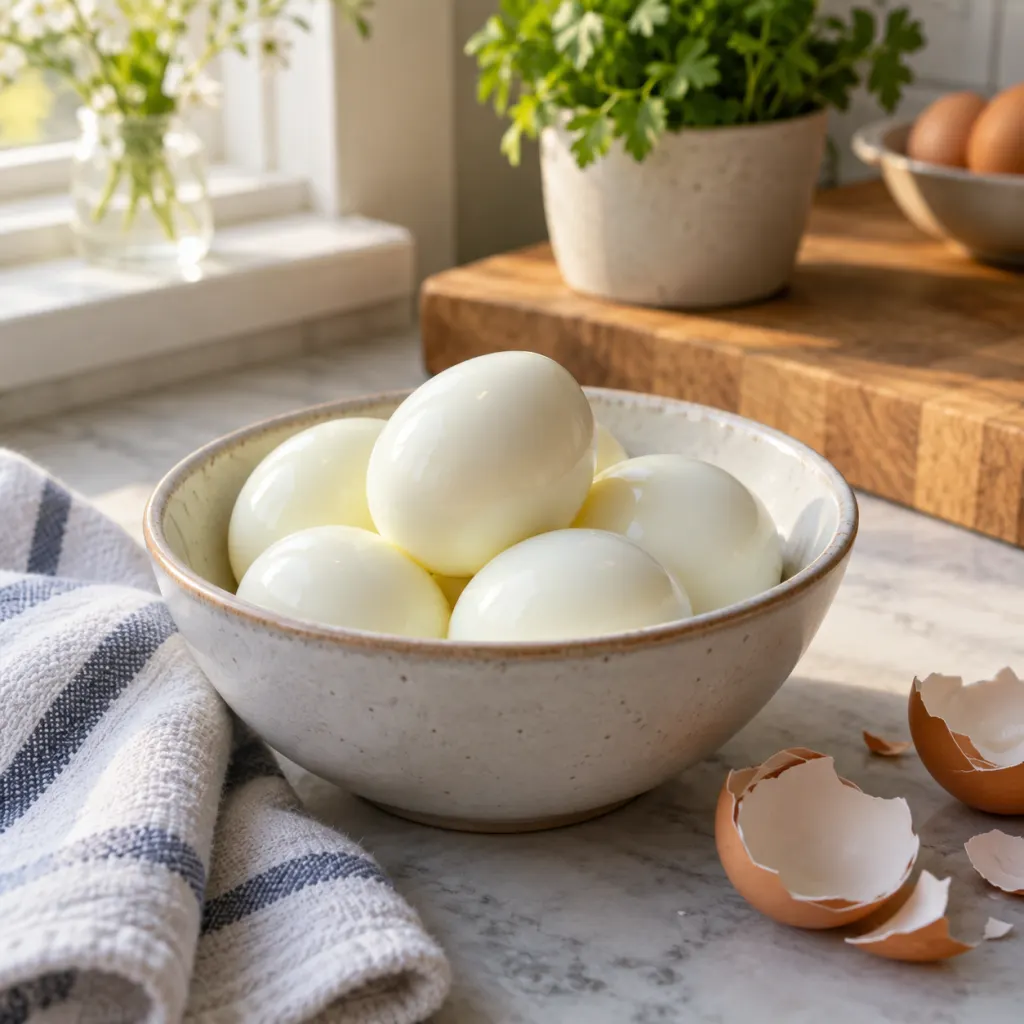
Once the eggs are cold, tap one egg on the counter, then roll it gently under your palm to create fine cracks over the whole shell. Start peeling at the wide end, where the air cell usually gives you a small opening. Slide a fingertip under the thin membrane rather than picking at shell flakes one by one. If the shell still grips, peel under cool running water or in a bowl of clean cold water; the water can slip between membrane and white and help lift the shell away.
For a tray of deviled eggs, peel the least important egg first. It tells you how the batch is behaving. If the first egg tears badly, stop rushing and switch to peeling in water, widening the opening under the membrane before pulling. If the first egg peels beautifully, keep the same rhythm for the rest. Small bits of shell cling less when the egg is cold, the shell is well crackled, and the membrane is loosened before the shell is pulled.
What To Skip: Pinhole Tricks, Rough Boiling, and Guesswork
Most peeling frustration comes from trying to fix the problem at the end. Add-ins and gadgets cannot fully compensate for very fresh eggs, rough heat, or poor chilling. A few common habits are worth reconsidering:
- Skipping the age factor: very fresh eggs often cling, so save slightly older refrigerated eggs for dishes where appearance matters.
- Using a violent boil: hard bubbling can crack shells and contribute to rubbery whites.
- Piercing shells: extension guidance warns that piercing may create small cracks, so it is not the cleanest routine for everyday cooking.
- Peeling while hot: hot eggs are harder to handle and may tear more easily; cooling gives you better control.
- Ignoring storage time: a pretty peeled egg still needs safe refrigeration and a reasonable use window.
Why Yolks Turn Greenish Around the Edge
A green-gray ring around the yolk is usually a quality issue tied to heat and time, not a sign that the egg must automatically be discarded. N.C. Cooperative Extension explains that overcooking can produce the ring when sulfur from the white and iron from the yolk interact under high heat: N.C. Cooperative Extension on hard-cooked egg quality. The best fix is boring in the nicest possible way: cook only as long as needed and cool promptly. If the whites taste rubbery and the yolks look dry, shorten the time on the next batch or cool the eggs faster.
Texture is also a clue. A well-cooked hard egg should have a firm white that slices cleanly and a yolk that is set but not dusty. If your eggs are meant for lunch boxes, salads, or snacks, a slightly tender yolk center may be pleasant, but for classic hard-cooked storage and slicing, both white and yolk should be firm. The CDC lists eggs cooked until yolks and whites are firm among safer egg choices: CDC safer food choices for eggs.
Food-Safety Boundaries for Hard-Cooked Eggs
Hard-cooked eggs are convenient, but cooking does not turn them into pantry food. The FDA says hard-cooked eggs, whether in the shell or peeled, should be used within one week after cooking: FDA egg storage guidance. FoodSafety.gov gives the same one-week refrigerator guideline for hard-cooked eggs and says they do not freeze well: FoodSafety.gov cold food storage chart. Labeling the container with the cooking date is a small habit that prevents the “Was that Monday or last Monday?” problem.
Cooked eggs should also be refrigerated promptly. The FDA advises not leaving cooked eggs or egg dishes out of the refrigerator for more than two hours, or more than one hour when temperatures are above 90°F: FDA serving guidance for eggs. For meal prep, cool the eggs, dry them, and refrigerate them in a covered container. Peeled eggs are convenient, but they can absorb odors and dry out, so many cooks keep them covered and use them earlier in the week for best eating quality.
A Practical Batch Plan for Smooth Eggs
For a dozen eggs, the routine can be simple. Pick a refrigerated carton that has been in your kitchen for several days, choose eggs without cracks, and place them in a single layer in a saucepan. Cover with about an inch of water. Bring the water just to boiling, cover the pan, turn off the heat, and let the eggs stand according to size and your stove’s behavior. Drain, transfer to ice water, chill until cold, then peel from the wide end under cool water if you want the smoothest surface.
If your first batch is not perfect, adjust one variable next time. If whites are rubbery, reduce heat exposure. If yolks are under-set, add a minute or two. If shells cling, use eggs that are a little older, cool longer, and peel under water. The best cooks are not relying on drama; they are repeating small, steady controls. Once you know how your pan, stove, and favorite egg size behave, the results become much more predictable.
Wrap-Up
Perfectly peeled hard-cooked eggs come from planning, not luck. Use clean, uncracked refrigerated eggs that are not ultra-fresh, cook them gently, cool them promptly, crack the shell evenly, and peel from the wide end under water when needed. Keep food safety in the routine, too: refrigerate cooked eggs promptly and use them within one week.
Frequently Asked Questions
- → Are older eggs always better for hard-cooking?
Slightly older refrigerated eggs often peel more cleanly because the egg white and membrane change over time. That does not mean using poor-quality eggs. Choose clean, uncracked eggs that have been refrigerated and are still within normal storage guidance.
- → Should I peel hard-cooked eggs right away or store them in the shell?
Either can work. Peeling right after cooling is often easiest, especially if you peel under cool water. For storage, many cooks leave shells on to protect the egg surface, but peeled eggs can also be refrigerated in a covered clean container and used within the same one-week cooked-egg window.
- → Does an ice bath really matter?
Yes, cooling matters for texture and handling. Cold water stops carryover cooking, makes the eggs easier to handle, and can help the egg contract slightly inside the shell. If the water warms up quickly, add more cold water or ice.
- → Why do some eggs peel with craters even when I follow the steps?
Egg freshness, shell thickness, small cracks, cooking intensity, and cooling time can all affect the result. If a batch tears, peel more slowly under water and focus on lifting the membrane rather than picking shell pieces off the white.
- → How long can hard-cooked eggs stay in the refrigerator?
FDA and FoodSafety.gov guidance place hard-cooked eggs at up to one week in the refrigerator. Mark the cooking date on the container, keep the eggs cold, and discard eggs that have been left out too long or show signs of spoilage.
References
This content was developed and refined using reliable sources.
- https://www.fda.gov/food/buy-store-serve-safe-food/what-you-need-know-about-egg-safety
- https://blogs.extension.iastate.edu/answerline/category/food-preparation
- https://extension.colostate.edu/resource/high-altitude-hard-cooked-eggs
- https://brunswick.ces.ncsu.edu/news/peeling-a-hard-cooked-egg
- https://food.unl.edu/newsletter/food-fun-young-children/how-do-you-your-eggs
- https://www.cdc.gov/food-safety/foods/safer-food-choices.html
- https://akaprod-www.foodsafety.gov/food-safety-charts/cold-food-storage-charts