 Save
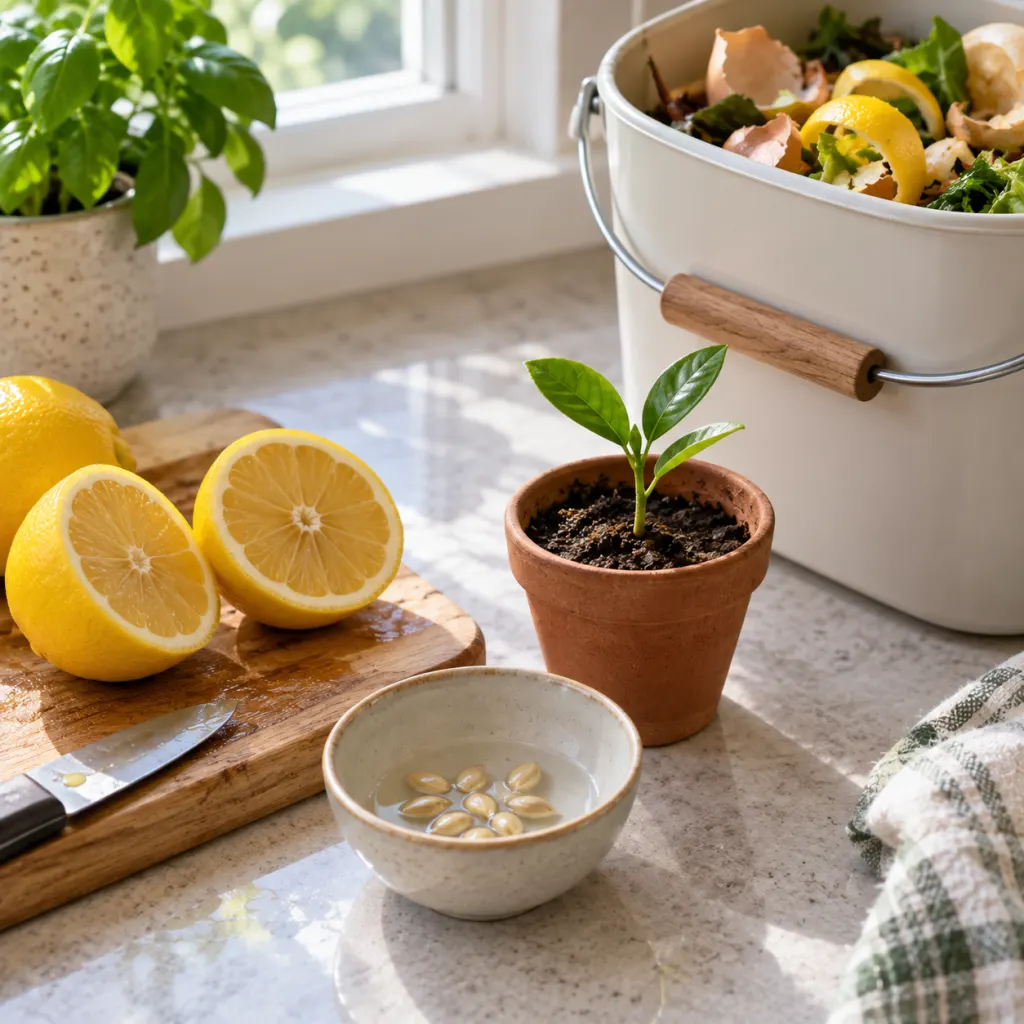
Do not throw away every lemon seed automatically. The best use for lemon seeds is not a secret household cure or a guaranteed homemade lemon tree; it is a set of small, practical options. You can sprout clean seeds as a citrus houseplant project, save them for a strained gelling experiment when making fruit preserves, or add them to a well-managed compost system with other fruit and vegetable scraps. The important catch is expectation: a seed can grow, but it may not produce fruit like the lemon it came from, and it will not do so quickly.
Start With What Lemon Seeds Are Good At
A lemon seed is a living plant part when it is fresh, intact, and mature. That makes planting the most direct reuse. University of Florida Extension explains that citrus seeds can be extracted from mature fruit and planted in a suitable potting medium; under ideal warm, bright, moist conditions, emergence can happen in a few weeks. The same source also explains why commercial citrus is usually more complicated than a seed in a pot: citrus trees are often built from a rootstock and a grafted top because growers want predictable traits. UF/IFAS Extension
That difference matters in a home kitchen. A seedling can be rewarding because it turns a scrap into a glossy green plant. It is less reliable if your goal is a countertop-to-orchard shortcut. University of Minnesota Extension notes that citrus seeds grow fairly easily, but they usually do not grow plants exactly like the parent, and seed-grown indoor citrus seldom becomes large enough to flower and fruit. In other words, plant lemon seeds for curiosity, greenery, and patience, not for a fast harvest. University of Minnesota Extension
How to Save Seeds for Planting
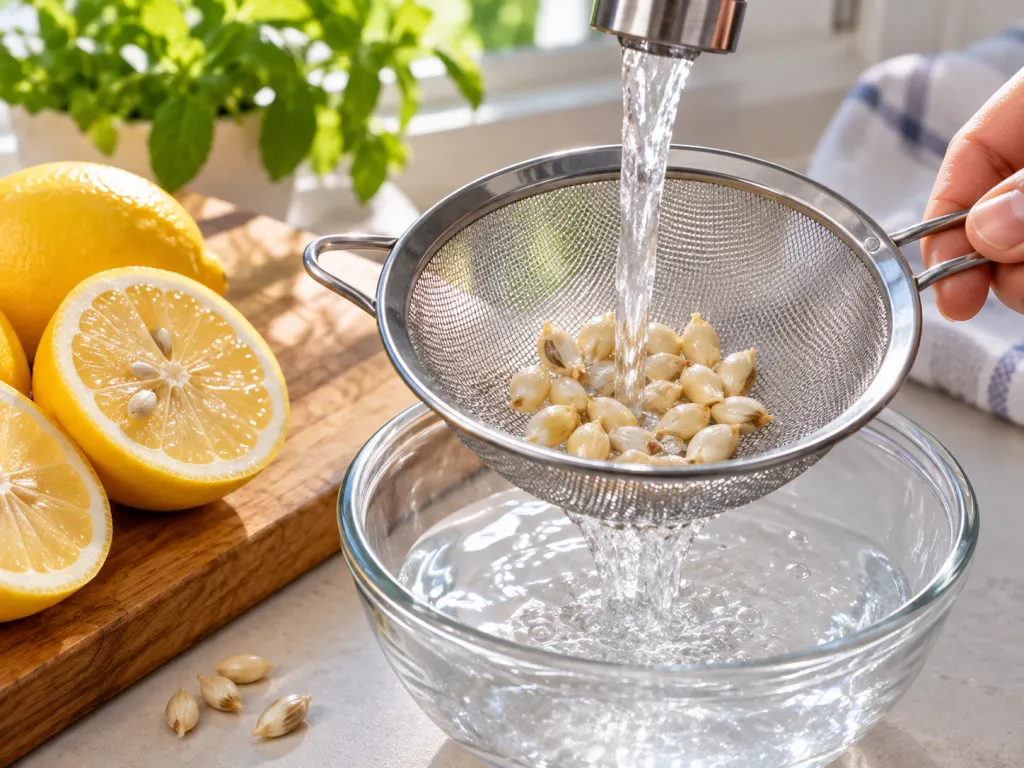
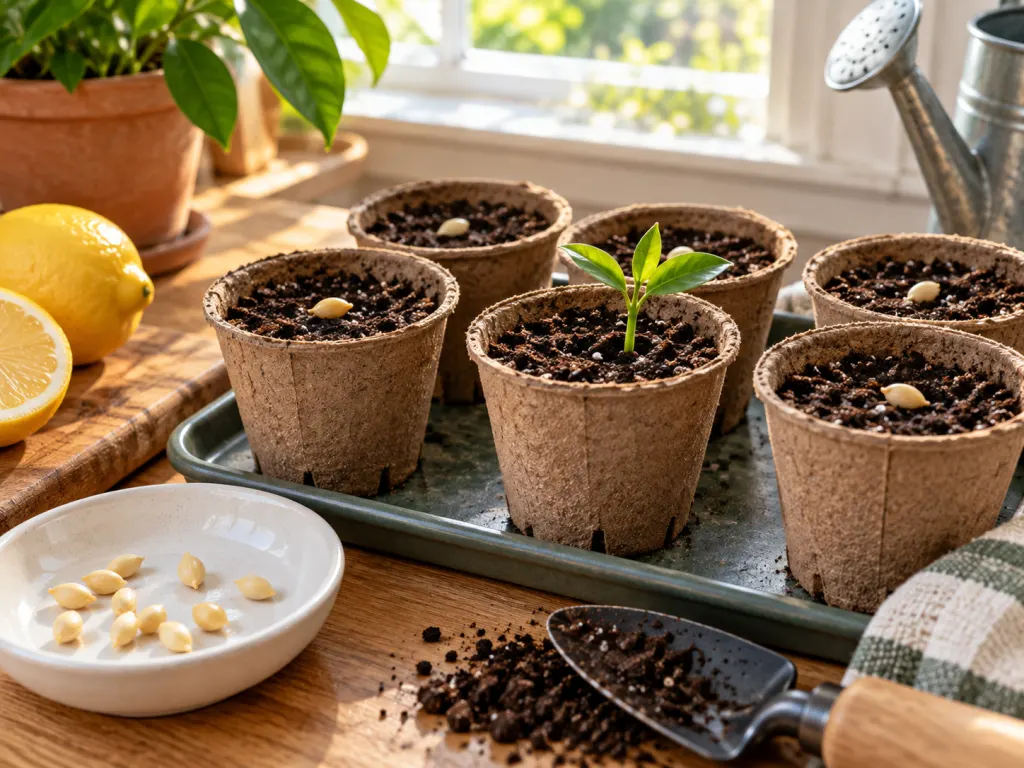
Choose seeds from a fresh lemon that look plump rather than flat or damaged. Rinse away clinging juice and pulp, because sticky residue can make storage messy. If you are planting right away, tuck the seed into a small pot of fresh, well-draining potting mix and keep it lightly moist. UF/IFAS describes planting citrus seed about one-quarter to one-half inch deep in a suitable container, and notes that removing seed coats or soaking seeds before planting can shorten the time to emergence. At home, the simpler version is enough for a casual project: rinse, plant shallowly, keep warm, and avoid letting the mix swing between soggy and bone-dry.
What to Expect From a Seedling
The first leaves are the reward, but they are not a promise. A lemon seedling may look vigorous for months and still remain a decorative plant for years. Give it as much bright light as your space allows, rotate the pot so growth stays even, and move it gradually when conditions change. University of Minnesota Extension recommends direct sun for at least part of the day and says many citrus plants benefit from spending summer outdoors after a gradual adjustment. If you do move a small citrus plant outside, bring it back before cold weather, because many lemons are not suited to freezing conditions.
A Simple Planting Checklist
For a small home experiment, keep the setup plain and observable:
- Use fresh seeds: Older dried seeds may be less dependable for sprouting.
- Rinse well: Remove pulp so the seed is easier to handle.
- Plant shallowly: A small pot with drainage is better than a deep, wet container.
- Keep warm and bright: Citrus seedlings prefer warmth and light once growth begins.
- Expect variation: A seed-grown plant may not match the original lemon.
- Treat fruit as a bonus: The main value is the plant project itself.
The Kitchen Science Side: Gel, Pectin, and Straining
Lemon seeds also have a less obvious use in kitchen science. Many seeds make or release mucilage, a gel-like mixture of plant cell-wall polysaccharides. A review indexed by PubMed describes seed mucilage as a gelatinous material associated with the seed coat or surrounding structures in many plant species, where it can help with water interactions and seed establishment. PubMed
This does not mean a spoonful of lemon seeds is a reliable substitute for a measured packet of commercial pectin. It does explain why cooks sometimes notice a slippery texture when citrus seeds sit in liquid. Pectin itself is a recognized food substance used for technical functions such as stabilizing, thickening, firming, and texturizing, according to the U.S. Food and Drug Administration's food substance database. FDA
Where Lemon Seeds Fit in Preserves
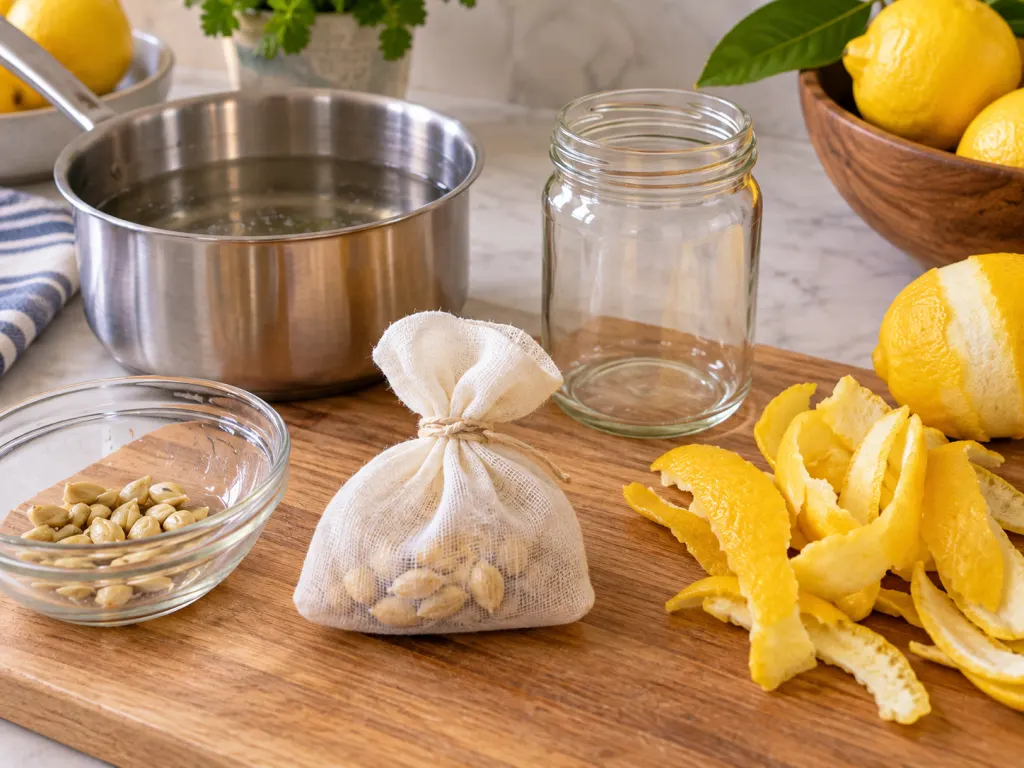
If you make marmalade, jam, or a fruit syrup at home, lemon seeds can be treated as a strained flavor-and-texture helper rather than as the main ingredient. Put rinsed seeds in a small piece of cheesecloth or a fine reusable tea bag, simmer them with lemon peel or fruit, then remove the bundle before storing or serving. That keeps hard seeds out of the finished food while letting you observe whether the liquid takes on extra body. Published research on pectin extraction focuses much more on fruit peels and processing conditions than on casual home seed use; one PubMed-indexed study found that lemon, mandarin, and kiwi peels contained pectin and compared microwave and ultrasound extraction methods. PubMed
What Lemon Seeds Are Not Great For
Lemon seeds are easy to over-romanticize. They are not especially useful as a drawer scent on their own; the fragrant part of a lemon is mostly the peel, especially the outer zest. They are not pleasant to chew because they are hard and bitter. They are not a dependable way to produce a true copy of a favorite store-bought lemon. They are also not worth saving indefinitely in a damp jar. If you want to keep them for later planting, dry the surface, label them, and use them soon; if you want them for a kitchen experiment, refrigerate briefly or freeze a small bundle with other citrus scraps.
Composting Is a Sensible Default
When you do not want another plant on the windowsill, composting is the easiest useful destination. The U.S. Environmental Protection Agency lists fruit and vegetable scraps among the materials that can go into a backyard compost pile, balanced with carbon-rich materials such as dry leaves, twigs, shredded paper, or cardboard. Lemon seeds are small, so they can disappear into a pile more easily than large fruit pits, though a stray seed may sprout if conditions suit it. EPA
For backyard compost, the practical issue is balance. A handful of citrus seeds is minor; a bucket of wet citrus scraps can make a pile too dense or sour-smelling if it is not mixed well. Cover fresh kitchen scraps with dry leaves or another brown material, keep the pile about as moist as a wrung-out sponge, and turn it occasionally. The EPA recommends balancing greens, browns, water, and air so microorganisms can break the materials down effectively. EPA
A Good Seed-Saving Routine After Squeezing Lemons
The most useful habit is to decide quickly. After squeezing lemons, set a small strainer over a bowl, catch the seeds, and rinse them. Then divide them by purpose. The best-looking seeds can go into a small planting cup. A few clean seeds can go into a labeled freezer bag for a future marmalade or syrup experiment. The rest can go into compost with other fruit and vegetable scraps. This routine keeps the counter clear, avoids mystery jars, and turns a throwaway moment into a choice.
The Bottom Line
Lemon seeds are worth saving when you have a specific use in mind. Plant them if you enjoy slow, visible projects. Strain them into a short kitchen experiment if you are curious about natural gelling. Compost them if you simply want less waste. Skip the exaggerated claims and keep the value practical: a lemon seed is a seed, a small source of plant material, and a compostable scrap. That is enough to make it useful without pretending it is more than it is.
Wrap-Up
Lemon seeds are not trash by default, but their best uses are modest. They can become citrus seedlings, contribute to a strained kitchen experiment around natural gelling, or return to the soil through compost. For most home cooks, the smartest habit is simple: rinse the seeds, save a few for planting or experimenting, and compost the rest.
Frequently Asked Questions
- → Can I grow a lemon tree from seeds in a store-bought lemon?
Often, yes. Fresh, mature citrus seeds can sprout if they are rinsed, planted shallowly in a suitable potting mix, and kept warm and lightly moist. The plant may not match the parent lemon, and fruiting is uncertain, especially indoors.
- → How long does it take for lemon seeds to sprout?
UF/IFAS Extension says citrus seedling emergence can occur within two to three weeks under ideal sunlight, warm soil, and sufficient moisture. Home conditions vary, so some seeds may take longer and some may not sprout.
- → Are lemon seeds useful for homemade jam or marmalade?
They can be used as a strained experiment because some seeds release gel-like material, but they are not a precise replacement for measured commercial pectin. Keep seeds in cheesecloth or a fine bag and remove them before storing or serving the finished food.
- → Should I dry lemon seeds before planting them?
For a casual windowsill project, many people plant fresh rinsed seeds right away. UF/IFAS Extension notes that commercial-style citrus seed handling may include drying and storage steps, but a home experiment can stay simple if the seed is clean and the pot drains well.
- → Can lemon seeds go in compost?
Yes, lemon seeds can go into compost with other fruit and vegetable scraps. Mix them with dry leaves or another brown material, and manage moisture and air so the pile breaks down cleanly.
References
This content was developed and refined using reliable sources.
- https://ask.ifas.ufl.edu/publication/hs1309
- https://extension.umn.edu/garden-and-home/yard-and-garden/gardening-in-minnesota/growing-citrus-indoors
- https://pubmed.ncbi.nlm.nih.gov/34195842
- https://hfpappexternal.fda.gov/scripts/fdcc/index.cfm?id=PECTIN&order=ASC&search=pectin&set=FoodSubstances&sort=Sortterm_ID&startrow=1&type=basic
- https://pubmed.ncbi.nlm.nih.gov/33568858
- https://www.epa.gov/recycle/composting-home