 Save
The message came during an ordinary Sunday morning, which made it feel less like news and more like a hand reaching through the wall. Five words, no explanation. By the time we reached the house, every silence in our family had begun to sound deliberate.
Chapter 1: Five Words on a Sunday
The message arrived while the kettle was beginning to tremble on the stove. I remember that small domestic sound because afterward, for a long time, ordinary noises seemed suspicious to me: water warming, a floorboard settling, the soft click of a phone screen waking in someone’s hand. My brother Eli was at the table, peeling the label from an orange juice bottle in one long strip, and my younger sister Mara stood by the sink with her sleeves pushed up, rinsing blueberries she had no intention of eating.
Mom’s name lit my phone. It was Sunday, which meant she should have been sending her usual message about lunch. She liked to pretend we were casual about it, as if roast chicken and boiled potatoes appeared by accident every week, but she began reminding us before breakfast and took any delay as evidence that her children had forgotten where they came from.
This message was different. Five words, no punctuation.
Come now. I need witnesses.
I read it twice before speaking. The kitchen seemed to draw itself inward. Eli saw my face and stopped worrying the bottle label. Mara turned off the tap, though the blueberries were still cupped in her hands, water dripping steadily between her fingers.
“What happened?” Eli asked.
I showed them the screen. He stared at it, then looked at the clock, then at the window as if the street outside might supply the missing explanation. Mara put the blueberries down without draining them.
“Call her,” she said.
I did. It rang six times and went to voicemail. I called again. Same thing. Eli called from his phone. Mara sent a text that said Mom? and then another that said We’re coming. None of us said what we were afraid of because naming it would have made it larger. We moved around the kitchen with sudden, useless purpose: turning off the stove, grabbing keys, forgetting coats, remembering them, leaving the blueberries in a blue bowl full of cloudy water.
On the drive, Eli kept one hand on the dashboard as though bracing for impact. Mara sat behind me, silent except for the small sound her thumbnail made against the edge of her phone case. We passed the bakery where Mom bought our birthday cakes after Dad left, the laundromat where she once made us fold towels in the summer heat, the old cinema with its blank marquee. Every familiar place looked like evidence from a life we had not understood properly.
“Witnesses to what?” Eli said at last.
Neither of us answered.
Chapter 2: The Quiet House
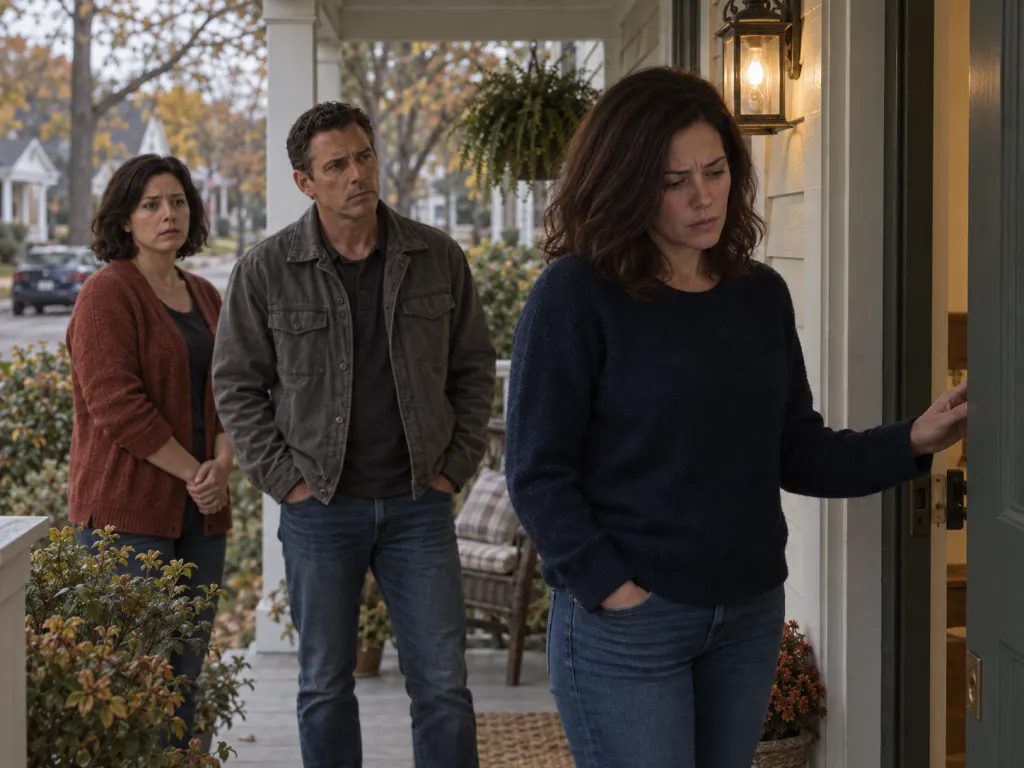
Mom’s porch light was on in the middle of the day. That was the first wrong thing. The second was the front door, unlocked and resting open by the width of two fingers. The third was the silence. Her house was never silent. It had its own weather: radio voices, simmering pots, the low complaint of the refrigerator, Mom calling from another room with a question she had already answered herself.
I pushed the door with my fingertips. The hallway smelled of furniture polish and onion skins, the familiar warm scent of her kitchen underneath something colder, like paper kept too long in a drawer. On the little table by the door sat a framed photograph of us as children: Eli missing a front tooth, Mara leaning against my hip, me squinting into sunlight. Dad had been cut from that photograph years ago. Not literally. Mom had just moved the frame behind a vase so only the three of us showed unless you picked it up and looked carefully.
“Mom?” I called.
Her voice came from the dining room. “In here.”
She sounded composed. That frightened me more than panic would have.
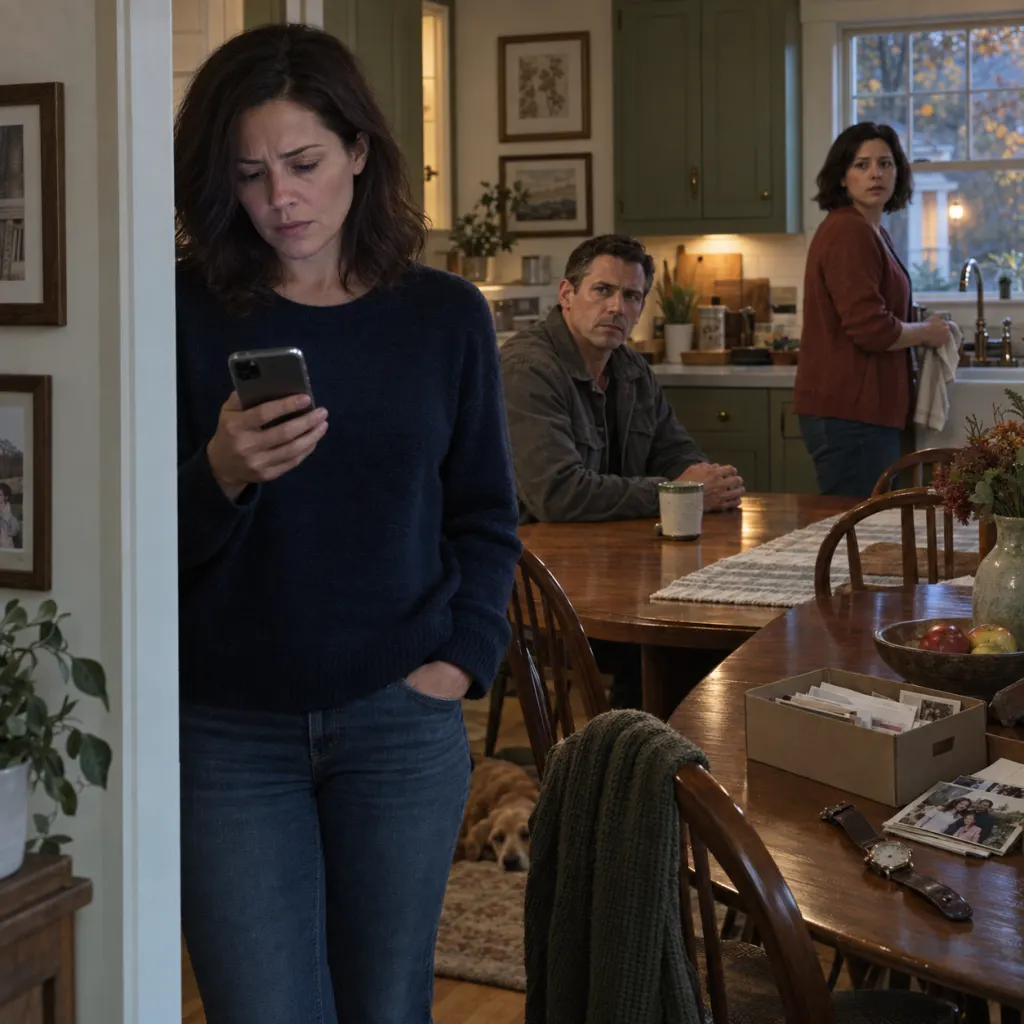
We found her seated at the end of the table in the good chair, the one with the carved back we were not allowed to lean on as children. In front of her was a shoebox, a stack of envelopes tied with kitchen twine, and Dad’s old watch. I had not seen that watch since the week he left. Mom had told us she threw it away because its ticking kept her awake.
She had not thrown it away. It lay there with its cracked brown strap and cloudy face, looking less like an object than a returned accusation.
Mom’s hair was pinned neatly, but strands had escaped around her temples. She wore her green cardigan, the one with wooden buttons, and her hands rested flat on the table. Her phone was beside the shoebox, screen down.
“Sit,” she said.
Mara remained standing. “Are you all right?”
Mom looked at each of us with a slow care that made me feel twelve years old and guilty for reasons I could not name. “I am tired of being the only person in this family who knows what happened.”
Chapter 3: The Box Between Us
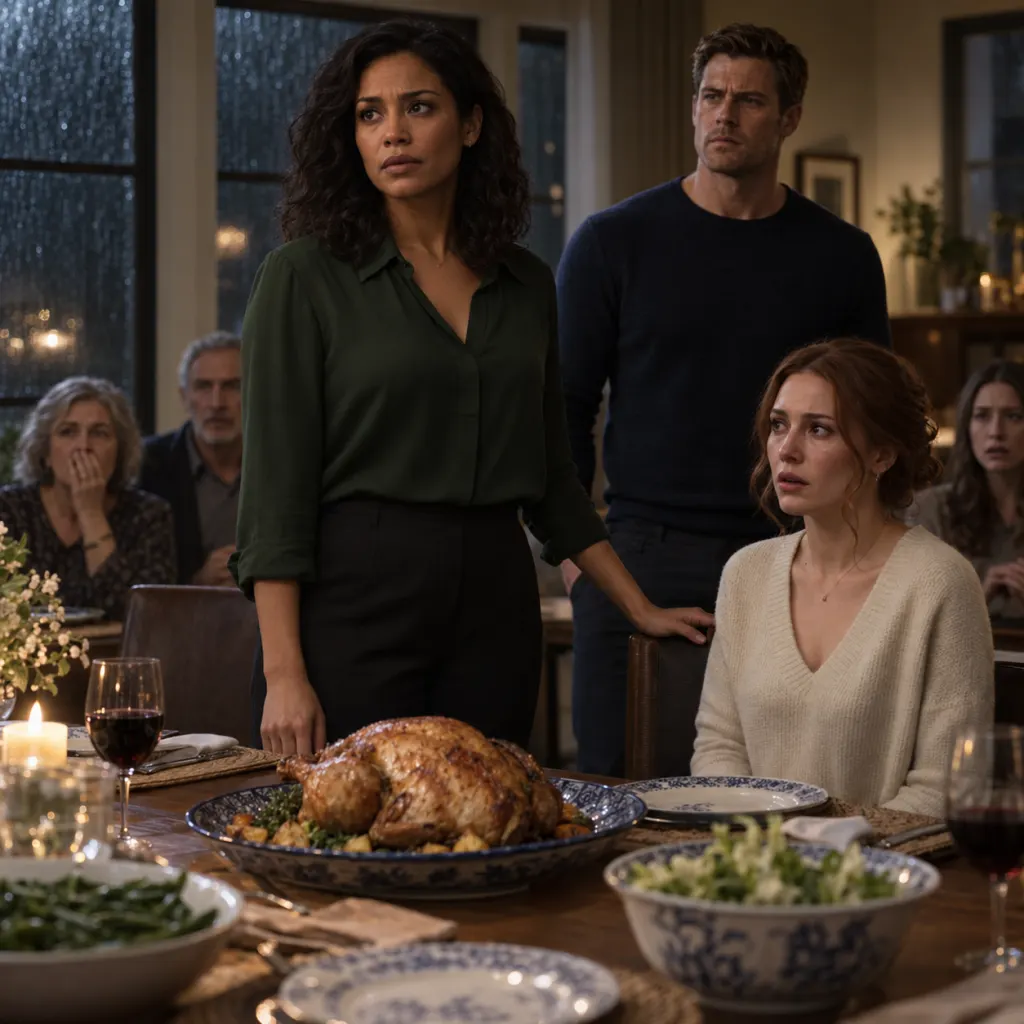
No one sat at first. We hovered around the table as though the chairs belonged to another family. Eli was the first to give in, pulling one out and lowering himself carefully. Mara took the chair farthest from Mom. I sat between them, close enough to see the tremor in Mom’s left hand when she touched the twine.
“Before you ask,” Mom said, “your father is alive.”
The words landed badly. Not with relief, exactly. More like a door opening onto a room we had been told was sealed. Eli made a short sound, almost a laugh, but it had no humor in it. Mara’s face went still. I felt my pulse in my wrists.
Dad had not been dead. We knew that. Officially, plainly, legally, whatever word a person uses for public facts. But inside our house he had become a kind of absence with rules. His name could be spoken only for practical reasons. His birthday passed without remark. When other children asked where he was, Mom taught us to say, “He lives elsewhere.” The sentence had served us for twenty-two years.
“Why would you start with that?” Eli asked.
Mom untied the twine. “Because after today, you may wonder what else I let become buried.”
She opened the first envelope and took out a photograph. She placed it in the center of the table, turning it toward us. It showed Dad standing beside a woman none of us knew. They were younger in the picture, maybe not young but not yet worn into the versions of themselves I remembered. Dad’s hand rested on the back of a little boy’s chair. The boy looked about four. He had Dad’s eyes.
Mara pushed back from the table. The chair legs scraped the floor.
“Who is that?” she asked, though all of us understood enough to dread the answer.
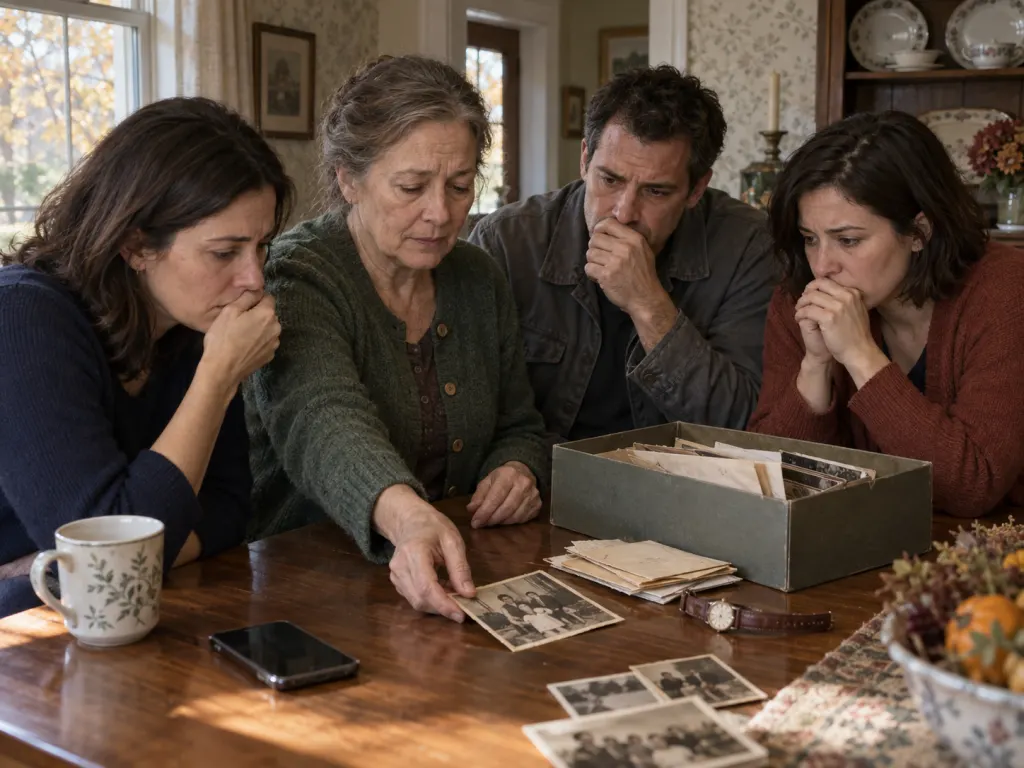
Mom closed her eyes for one breath. “His son.”
The dining room changed shape around us. The wallpaper, the cabinet of holiday dishes, the lace runner on the sideboard: all the gentle, outdated things that had made Mom’s house feel fixed and harmless suddenly seemed like a stage set hiding another room behind it.
“Our brother?” Eli said.
Mom’s mouth tightened. “Half brother.”
Mara stood all the way up. “You knew?”
Mom did not defend herself. That was how I knew the answer before she gave it. “I found out the week your father left. Not before. I need you to hear that part clearly.”
“Then why are we hearing it now?” I asked.
Her gaze shifted to the shoebox. “Because he wrote to me. Not your father. The boy. He is a man now. He sent a message through an old account I forgot I still had. He wants to know whether you know he exists.”
Chapter 4: The Shape of Silence
As children, we believed silence was empty. As adults, sitting around Mom’s table, we learned it had architecture. There were rooms in it, doors, locked cabinets, stairs leading down. Mom had built a whole house from what she would not say, and we had lived inside it without noticing the walls.
She told the story in fragments, stopping often to press her fingertips to the edge of the table. Dad had traveled for work during the years when Eli and I were small and Mara was still a baby. There had been weekends when he came home with gifts from places that sounded glamorous to us because we had never been anywhere. A tin train. A snow globe. A red scarf for Mom that she never wore.
Then one October, Mom found a receipt folded inside the watch box. Not a dramatic discovery, not one that belonged in films. Just a receipt for children’s shoes, paid for in a town Dad had never mentioned, on a date when he had said he was visiting a client two states away.
“I thought there was a simple explanation,” she said. “People always think that first because the alternative is too large to hold.”
She followed the receipt. Not physically at first. She made calls. She checked dates. She asked one careful question and then another. By the end of that week, she knew there was another household, another woman, another child who had learned to look out a window for the same man we waited for at our own.
“What did Dad say?” Eli asked.
Mom looked toward the kitchen doorway, where afternoon light lay in a pale rectangle on the floor. “He said he loved you. He said he did not know how to choose. As if choice had not been happening every day.”
Mara laughed once, sharply. “So you chose for him.”
“No,” Mom said. “He left before I could decide what I was willing to survive.”
That sentence quieted all of us. It was the first time I understood that our childhood story, polished by repetition, had been missing its most painful edge. We had believed Dad left because he wanted another life. True, but incomplete. He had also left because staying would have required truth from everyone, and truth had frightened him more than leaving.
Chapter 5: What the Message Meant
The disturbing part of Mom’s message had not been the word witnesses. It was that she had chosen it precisely. She did not want comfort. She wanted us present while she stopped carrying the secret alone.
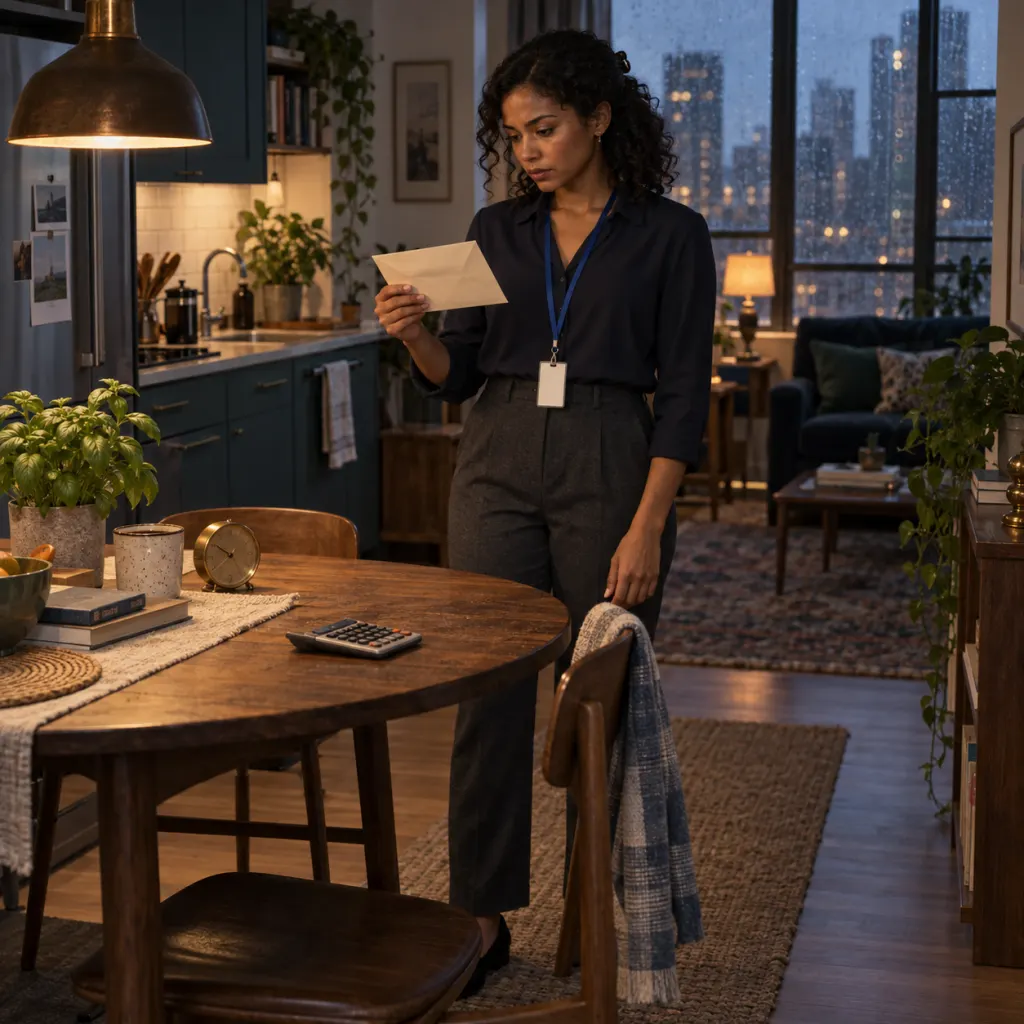
She slid her phone across the table. On the screen was a message from a name I did not recognize. It was brief, careful, and stripped of accusation. The man wrote that he had grown up knowing we existed. He did not know whether we knew about him. His mother had passed away years earlier. Dad had become unreliable in his accounts, not because of confusion but because he had always treated truth as adjustable. The man wanted no money, no confrontation, no performance of family. He wanted only to know whether the silence had been mutual.
Mara covered her mouth. Eli leaned forward, reading it again. I looked at Mom.
“Why witnesses?” I asked.
She drew the shoebox closer but did not open it further. “Because I am going to answer him. Because I did not want one of you to find out later and think I had hidden the answer too. Because I have spent years telling myself I kept quiet for your peace, and I am no longer sure that was true.”
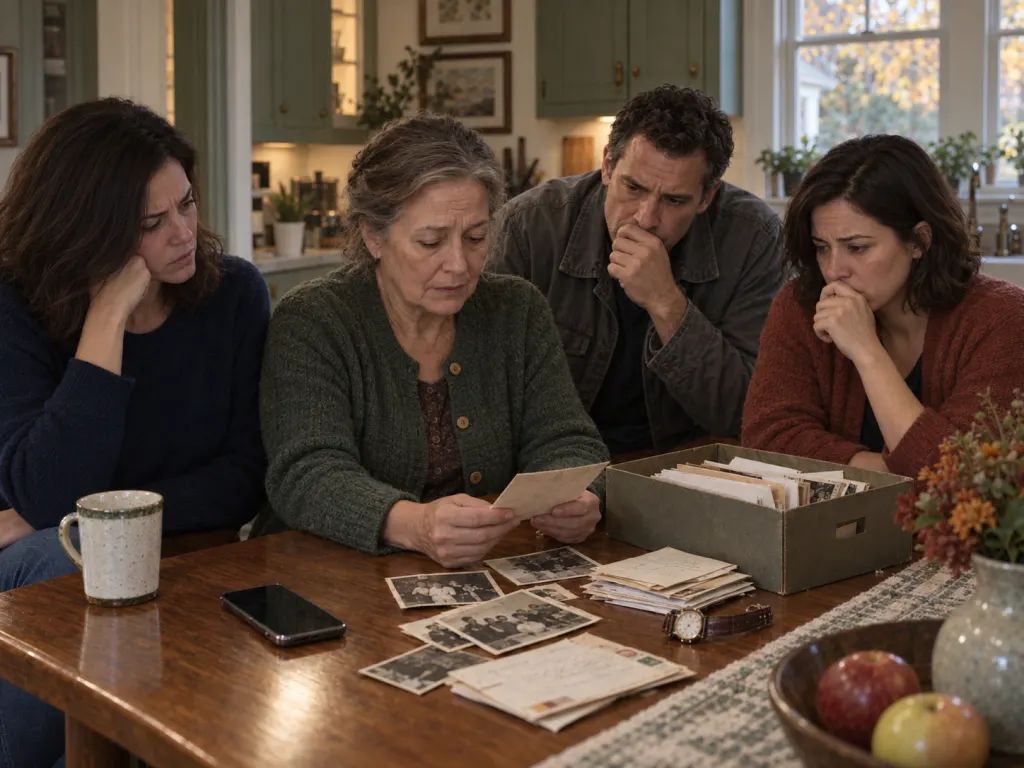
There it was, the heart of it. Not Dad’s betrayal, old as a scar beneath clothing. Not the unknown brother, alive somewhere beyond the boundaries of our family map. The thing that hurt in the room that day was more intimate: Mom had made herself the guardian of a story that belonged partly to us.
“You let us hate him for less than he did,” Eli said.
Mom flinched.
“Eli,” I said.
“No.” He shook his head. “We hated him for leaving. That was easy. Clean, almost. But this? There was a kid. Another kid. We spent years thinking we were the abandoned ones.”
Mom’s voice thinned but did not break. “You were abandoned.”
“So was he,” Mara said.
The room held that truth carefully, as if it might split if dropped.
I thought of the boy in the photograph, his small hand on the edge of the chair, Dad standing behind him with a smile I recognized. How many birthdays had been divided? How many ordinary lies had arranged themselves into our lives? I had spent years measuring Dad’s absence by the empty chair at our table. I had never imagined another child measuring it too.
Chapter 6: The Other Child
Mom opened the shoebox. Inside were more envelopes, printed emails, two school photographs, a folded map, and a birthday card still sealed. The card was addressed to Dad in handwriting that was not Mom’s. She did not hand it to us.
“I did not collect these to punish him,” she said. “At first, I kept them because I thought I would need proof. Then I kept them because throwing them away felt like pretending that child had never existed.”
Mara sat down slowly. Her anger had not disappeared, but it had changed direction. “Did you ever meet him?”
Mom nodded once. “Only once. In a grocery store parking lot. His mother asked me to come. She wanted to know if I was going to make trouble.”
“Were you?” Eli asked.
“I didn’t know. I was thirty-three years old with three children and a mortgage and a husband who had turned himself into a stranger. I was not noble. I was furious. I wanted to make trouble everywhere.”
She almost smiled then, not because anything was funny, but because honesty sometimes produces its own exhausted tenderness.
“What happened?” I asked.
“The boy dropped a carton of strawberries. They rolled under my car. He crawled down to reach them before either of us could stop him. He came up with his knees dirty and one strawberry crushed in his hand. He looked at me and said he was sorry.”
Mom pressed both palms together. “That was when I understood he was not part of what had been done to me. He was a child standing in a parking lot apologizing for fruit.”
None of us spoke. Outside, a car passed slowly, its tires whispering against the curbside grit. The house felt less like a place of revelation now and more like a place after weather, windows intact but everything damp.
“Why didn’t you tell us then?” I asked.
Mom looked at me with terrible steadiness. “Because I was afraid you would want him. Or hate him. Or want your father more. Or ask questions I could not answer without falling apart. Every reason I had sounded like protection at the time. Some of it was. Some of it was cowardice dressed as motherhood.”
Chapter 7: The Reply
We sat with the phone between us for nearly an hour. The Sunday lunch ingredients remained untouched in the kitchen. From where I sat, I could see potatoes soaking in a pot of water, their pale surfaces turning faintly gray at the edges. Mom had prepared for us out of habit before summoning us into a truth that made habit seem almost brave.
Eli wanted facts first: the man’s name, where he lived, whether Dad knew he had written, what exactly he wanted. Mara wanted to answer immediately. She kept saying he deserved not to wait another day. I wanted time, which was another way of saying I wanted the old version of my life to remain available for one more afternoon.
Mom listened to us with the patience of someone who had lost the right to rush anyone. At last, she said, “I will not ask you to forgive me today.”
“Good,” Mara said, too quickly.
Mom nodded. “But I am asking whether I may tell him the truth. That you did not know.”
Eli stood and walked to the window. He lifted the curtain with two fingers and looked out at the porch, at the quiet street, at nothing. He had always looked most like Dad when he was trying not to feel something. Same jaw, same way of going still.
“Tell him,” he said without turning around. “But don’t make us sound innocent in some pretty way. Tell him we didn’t know because no one trusted us with knowing.”
Mara’s eyes filled, though she did not let tears fall. “Tell him I’m sorry,” she said.
Mom looked startled. “For what?”
“For all the years we didn’t even imagine him. I know that isn’t our fault. I’m still sorry.”
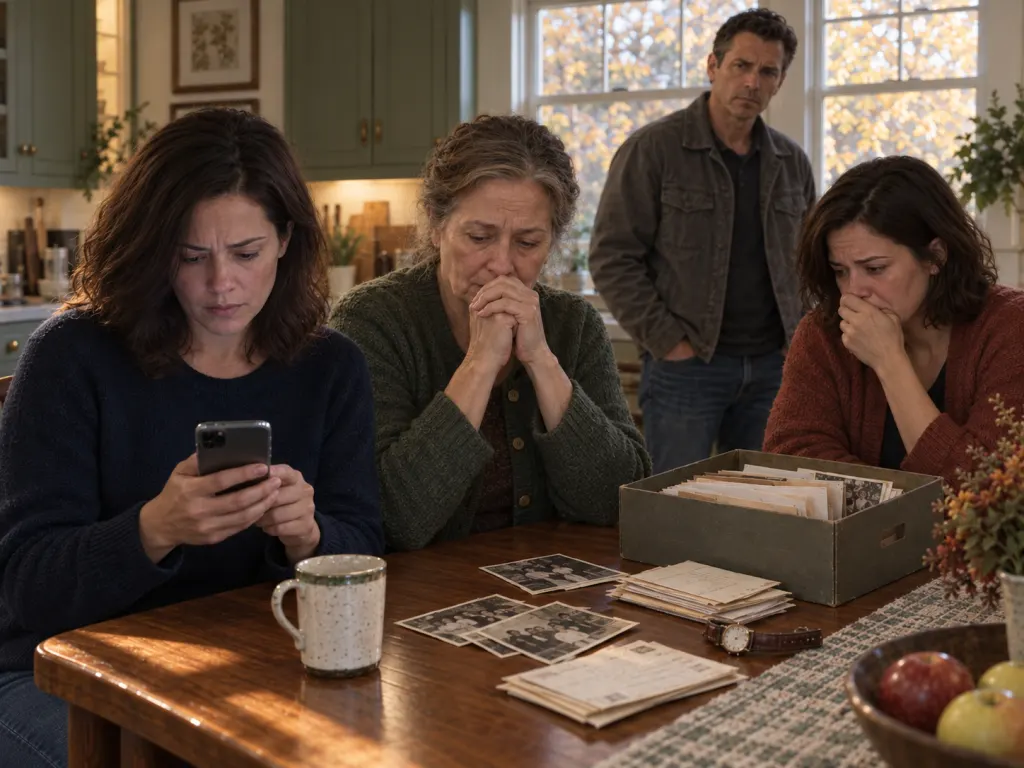
I took the phone because Mom’s hands were shaking too much to type. The reply took us twenty minutes and fewer than ten sentences. We wrote that we had received his message together. We wrote that we had not known. We wrote that the story was complicated, painful, and still unfolding, but that his existence would not be denied in our home again. We did not promise closeness. We did not ask for instant kinship. We offered, carefully, a door.
Before sending it, I read it aloud. Each word seemed to enter the room and take a seat.
Mom whispered, “Yes.”
I pressed send.
Chapter 8: After the Truth
Nothing dramatic happened after the message left. No thunder. No phone call within seconds. No sudden repair. The potatoes still needed cooking. The blueberries were still back at my apartment, softening in water. Mom’s house remained Mom’s house, with its polished table and faded wallpaper and the photograph by the door still hiding part of Dad behind a vase.
But the air had changed. We were not easier with one another. If anything, we were less comfortable, and that discomfort had dignity in it. For the first time, we were not performing around the missing pieces.
Mara went to the kitchen and began draining the potatoes with more force than necessary. Eli found the cutting board. I untied and retied the stack of envelopes because my hands needed something to do. Mom stayed at the table, watching us move through the rooms of a house that had contained both shelter and concealment.
“I don’t know how to be angry at you and grateful you told us,” I said finally.
Mom looked down. “You may be both.”
That was the first honest permission she gave us that day. Not an explanation. Not a plea. Permission.
We ate late. The chicken was dry because no one had been paying attention. Eli salted everything twice. Mara barely touched her plate, then asked for the photograph again and held it by the edges. Mom did not reach to take it back. Outside, evening gathered along the windows, softening the glass until the room reflected itself: four people at a table, changed but still there.
The man answered near dusk. His message was as careful as the first. He thanked us for telling him. He said he had not expected certainty, only honesty. He said he would understand if we needed time.
Time. The word felt almost generous. We had been living for years inside a delay we did not know existed, and now time had become something we could choose rather than inherit.
I do not know yet what he will become to us. A brother, maybe. A stranger with a familiar face. A person whose life touches ours only at the edge. Some truths arrive too late to restore what was lost, but not too late to change what happens next.
What I know is this: the most disturbing message was not the one Mom sent that Sunday. It was the silent message our family had carried for decades, the one that said love required omission, that peace depended on locked boxes, that children could be protected by being kept from the shape of their own lives.
By the end of that day, no one was forgiven completely. No one was condemned completely either. We were simply gathered around the damage, looking at it together. That was not healing in the sentimental sense. It was harder and plainer than that. It was the beginning of a family learning to speak without arranging the truth first.
Wrap-Up
A Sunday text brings three adult siblings to their mother’s house, where she reveals their father had another child. As anger and grief surface, the family must decide whether honesty can open a future without pretending the past was harmless.