 Save
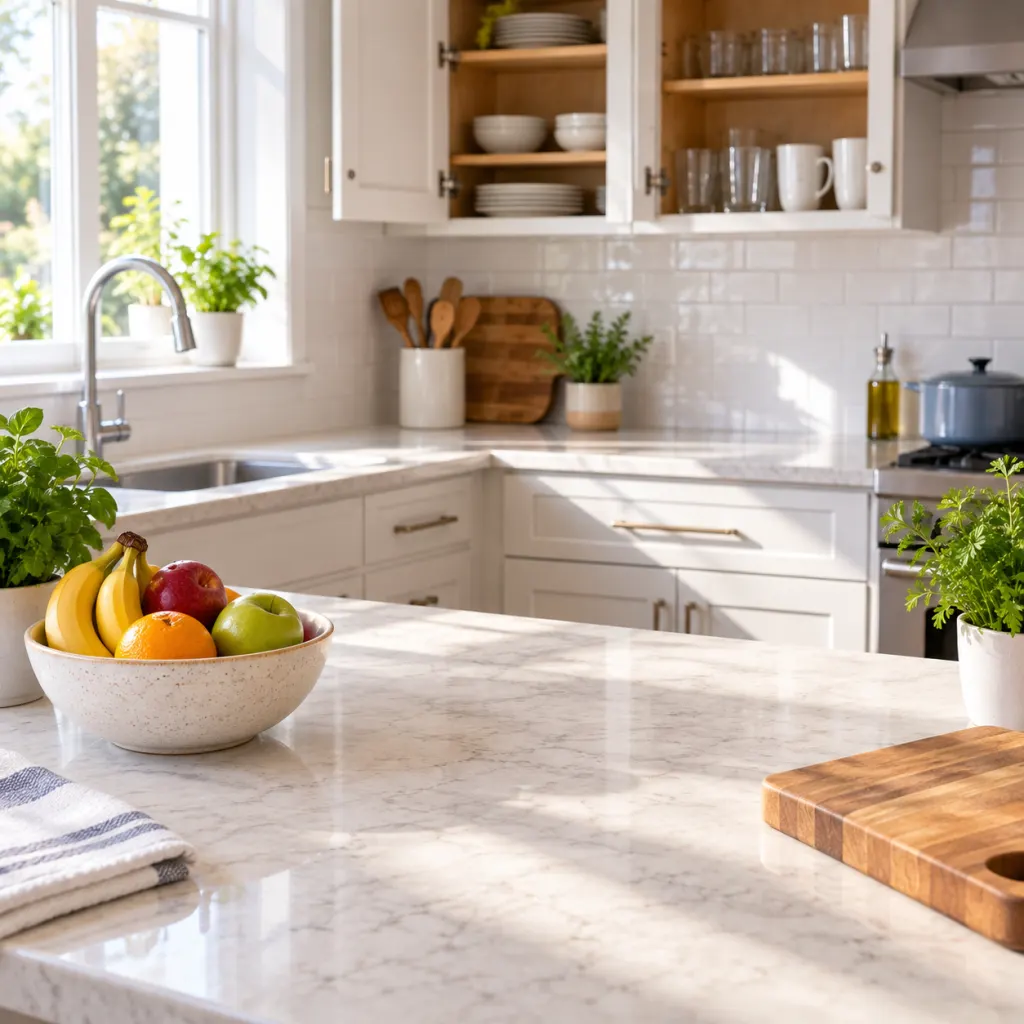
The short answer: a kitchen countertop is not ideal storage for anything that needs refrigeration, anything affected by heat or moisture, anything that could spill into food, or anything that makes prep space crowded. Keep the counter for active cooking, a washable cutting board, a fruit bowl for sturdy whole fruit, and perhaps one or two daily-use appliances. The rest usually belongs in the refrigerator, a pantry, a drawer, a cabinet, or a cool dark storage area. That simple habit helps protect food quality, keeps cleaning easier, and makes the kitchen calmer to use.
The Short Answer
Think of the countertop as a work surface, not a storage shelf. It is where groceries get sorted, vegetables get trimmed, lunch gets packed, and hot pans sometimes land briefly on a trivet. The more things that live there permanently, the harder it is to keep that surface clean and ready. The main items to move are perishables, leftovers, raw animal foods, medicines, cleaners, loose sharp tools, unused appliances, paper clutter, open food packages, and ingredients that lose quality near heat, light, or moisture. The FDA advises refrigerating or freezing foods that require cold storage right away and keeping food away from household chemicals, which is a useful starting point for countertop decisions: https://www.fda.gov/consumers/consumer-updates/are-you-storing-food-safely.
The Ten Countertop Moves
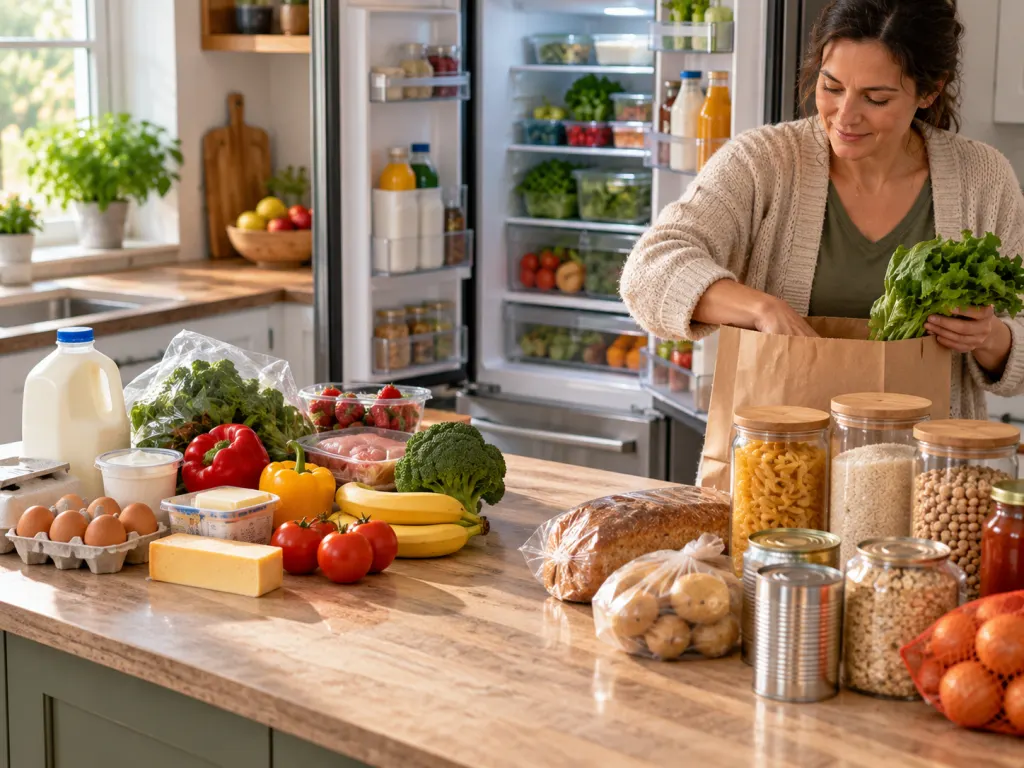
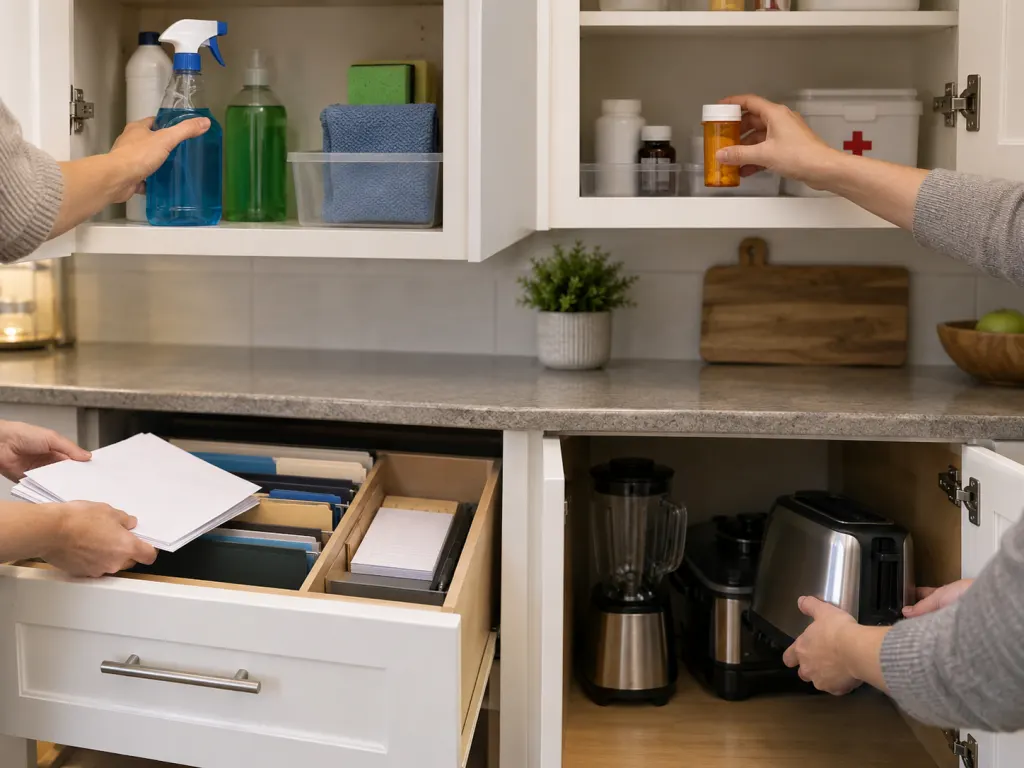
Here are the ten categories most worth moving off the counter, with a better place for each one:
- Raw meat, poultry, seafood, and thawing frozen foods: keep them cold until you are ready to cook, and use a tray or container in the refrigerator to catch drips.
- Cooked leftovers and takeout containers: portion them into covered containers and refrigerate promptly instead of letting them linger after dinner.
- Eggs, dairy, cut produce, and other refrigerated groceries: put them away as soon as possible after shopping or prep.
- Medicines and supplements: choose a cool, dry, secure cabinet away from the stove, sink, and children.
- Cleaning sprays, bleach, detergents, and pest products: keep them in a separate cabinet, not beside food, dishes, or prep tools.
- Plugged-in appliances you are not using: store occasional appliances in a cabinet or pantry, and avoid dangling cords.
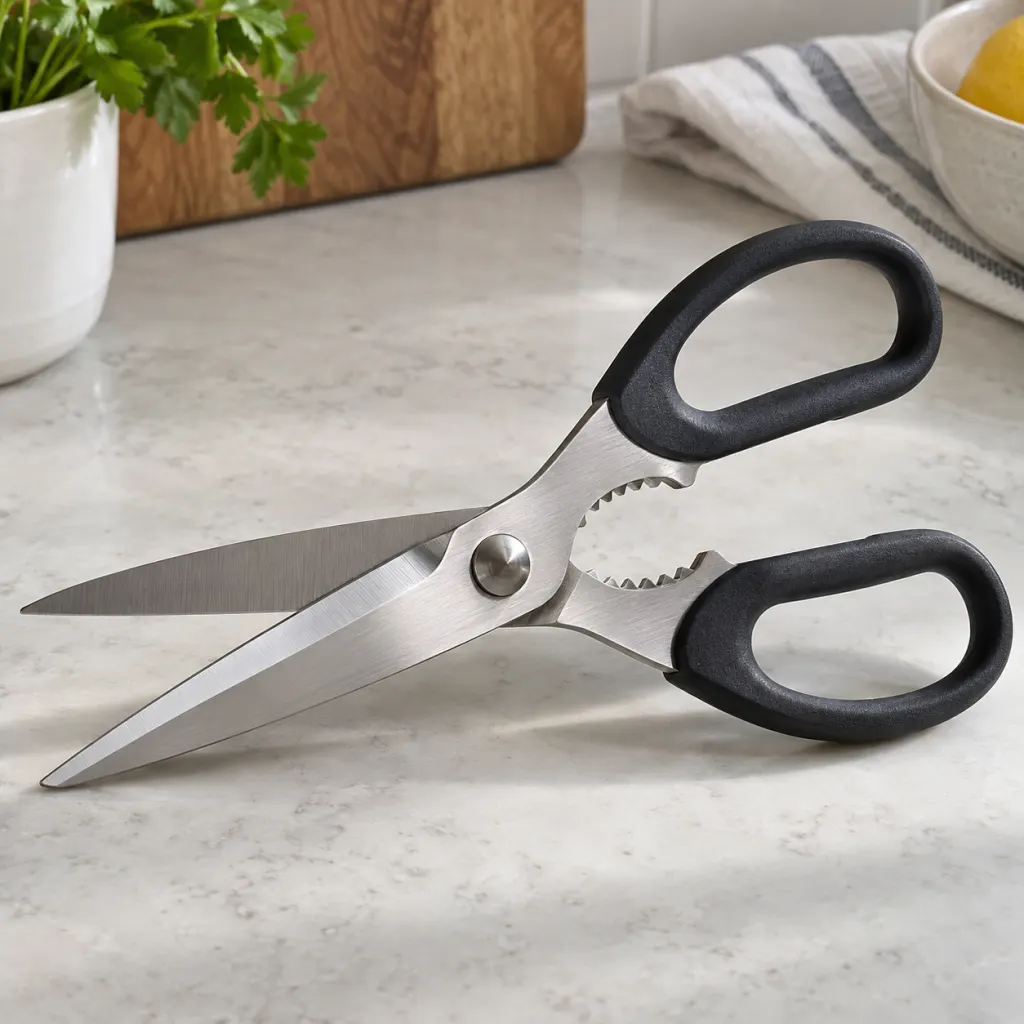
- Loose knives and sharp gadgets: use a drawer insert, magnetic strip placed safely, or knife block away from the edge.
- Paper clutter, mail, towels, and napkins near the stove: move them away from cooking heat and splatter zones.
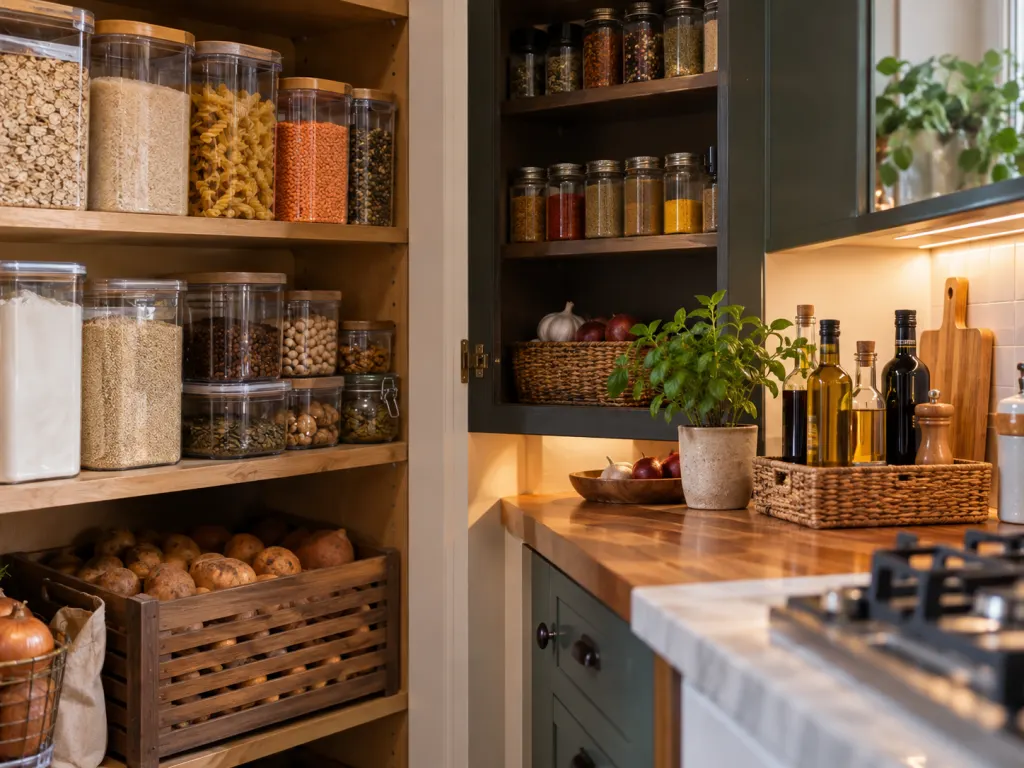
- Open bags of flour, sugar, cereal, rice, or snacks: transfer them to sealed containers and put them in a pantry or cabinet.
- Oils, spices, potatoes, and onions in bright or hot spots: store them where the conditions match the ingredient, usually cool, dry, dark, and ventilated.
This list is not about creating a bare showroom kitchen. It is about reducing the number of decisions you have to make while cooking. When the counter is clear, you can see spills, sanitize the surface before handling food, set down a cutting board without shifting six things, and unload groceries before cold foods warm up. A counter can still feel lived-in with a fruit bowl, a coffee setup, or a salt cellar. The difference is that each item should have a reason to be there and should not make food handling, cleaning, or cooking harder.
Food Items Need Time And Temperature Rules
The biggest countertop mistake is treating the counter as a pause button for refrigerated food. It is not. The FDA's storage guidance says foods that require refrigeration should not sit at room temperature for more than two hours, or one hour when the air temperature is above 90 degrees F. That applies to foods such as meat, poultry, seafood, eggs, leftovers, and produce that needs refrigeration. The same FDA page also recommends keeping refrigerators at or below 40 degrees F and freezers at 0 degrees F, because cold storage slows bacterial growth. So the practical kitchen habit is simple: unload cold groceries first, put away leftovers before cleaning the dining table, and do not let a package sit on the counter while you decide what to make later.
Heat, Light, And Moisture Quietly Shorten Pantry Quality
Not every counter problem is urgent. Some are quality problems that slowly waste ingredients. Colorado State University Extension notes that proper food storage protects quality as well as safety, and its storage table places many staples in refrigerator, freezer, or cupboard conditions rather than exposed countertop conditions: https://extension.colostate.edu/resource/food-storage-for-safety-and-quality/. Oils can pick up stale flavors faster when they sit beside a warm stove. Ground spices and herbs lose aroma more quickly when exposed to light, heat, and steam. Flour, cereal, rice, and snacks are easier to keep clean and dry in sealed containers inside a cabinet. If an ingredient is used often, store it close to where you cook, but close does not have to mean visible on the counter.
Raw Foods, Leftovers, And Takeout
Raw meat, poultry, and seafood should not be parked on the counter while you answer messages, empty the dishwasher, or wait for inspiration. Bring them out when your board, pan, and seasonings are ready. If the package leaks, clean the area before anything else touches it. Leftovers deserve the same decisiveness. Divide large amounts into shallow covered containers so they cool efficiently in the refrigerator, label them if your household forgets dates, and keep them visible enough to use. For takeout, the container is not a storage plan; it is packaging. If you will eat later, transfer the food to a clean covered container and refrigerate it instead of leaving the bag on the counter.
Medicines Do Not Belong Beside The Coffee Maker
A kitchen counter seems convenient for daily pills or vitamins, but it is a poor long-term storage spot. MedlinePlus explains that heat, air, light, and moisture may damage medicines, and recommends a cool, dry place away from the stove, sink, and hot appliances. It also advises keeping medicines in their original containers and out of reach and out of sight of children: https://medlineplus.gov/ency/patientinstructions/000534.htm. If a medicine truly must be taken with breakfast, consider a secure organizer kept in a cabinet, then bring it out only when needed. The goal is not inconvenience; it is keeping products stable, identifiable, and less likely to be mistaken for something else.
Cleaning Products Need Their Own Zone
Cleaning supplies are useful in the kitchen, but they should not live on the prep surface. The FDA's food storage guidance includes a plain rule for non-refrigerated foods: keep food away from poisons and do not store foods near household cleaning products and chemicals. On the counter, a spray bottle can leak, be confused with a food item, or leave residue where food is prepared. Keep cleaners in original labeled containers and store them in a separate cabinet, ideally below eye level but secured if children visit or live in the home. If you use a counter spray after cooking, spray, wipe, let the surface dry as the label directs, and put the bottle away before food returns to the area.
Small Appliances Should Earn Their Footprint
Small appliances are often the reason a counter stops functioning. A toaster used every morning may deserve a permanent spot, but the waffle maker, blender, stand mixer, rice cooker, air fryer, and slow cooker probably do not all need to be out at once. Beyond clutter, cords matter. The U.S. Consumer Product Safety Commission warns that damaged or overloaded cords and power strips can create shock or fire hazards, and notes that cords should not dangle from counters or table tops where they can be pulled down or tripped over: https://www.cpsc.gov/Newsroom/News-Releases/1999/CPSC-Warns-Consumers-About-Faulty-Extension-Cords-Power-Strips-and-Surge-Protectors. Store occasional appliances on a sturdy shelf, wrap cords loosely, and keep active appliances away from the sink and stovetop.
Sharp Tools, Paper, And Everyday Clutter
Loose knives, peelers, mandolines, can lids, and broken skewers are easy to overlook on a busy counter. They are also easy to grab accidentally while clearing crumbs. Give sharp tools a dedicated home: a knife block set back from the edge, an in-drawer tray, or a mounted strip placed where children cannot reach and where sleeves will not brush against it. Paper clutter is a different kind of problem. Mail, school forms, coupons, recipes, and paper towels gather grease and moisture quickly, and anything near the stove can become part of the cooking mess. Create a landing spot outside the main prep area, even if it is only a wall pocket, tray, or drawer used for daily sorting.
Potatoes, Onions, Oils, And Spices Need Better Conditions
Some foods are counter-friendly for a day or two but poor candidates for open display. Potatoes are a good example. Colorado State University Extension recommends storing potatoes in a well-ventilated, dry, dark, cool place, not in the refrigerator, and not washing them before storage because dampness promotes spoilage: https://extension.colostate.edu/resource/how-to-use-potatoes/. A bright bowl next to the window is attractive, but it is not dark or cool. Onions and garlic also prefer dry, ventilated storage, away from wet sink areas. Oils and spices should be convenient but protected from the stove's heat and steam. A cabinet beside, rather than above, the range is often the better compromise.
How To Decide What Gets To Stay
Use a simple test before giving any item permanent counter space. Ask whether you use it daily, whether it is safe at room temperature, whether it can be cleaned around easily, whether it is away from heat and water, and whether it helps you cook instead of interrupting you. If the answer is no, give it a different home. A small kitchen may need creative storage, but it still benefits from zones: cold foods in the refrigerator, dry foods in sealed containers, tools near the task, cleaners away from food, and papers outside the prep path. The counter should reset quickly after every meal because the storage system around it is doing its job.
A Five-Minute Counter Reset
If the counter is already crowded, start with a five-minute reset instead of a full kitchen overhaul. First, refrigerate anything that belongs cold. Second, move cleaning products and medicines to their proper storage spots. Third, put sharp tools away. Fourth, gather papers into one non-food tray and move the tray out of the main prep zone. Fifth, choose the appliances that truly stay out and store the rest. Finally, wipe the cleared surface. Repeat that routine for a week and you will quickly see which items keep wandering back. Those are the ones that need a more convenient official home, not another temporary pile.
Wrap-Up
A good counter rule is simple: keep out only what earns its place every day and can sit there without heat, moisture, light, spills, cords, or crowding creating problems. Perishable foods, leftovers, medicines, cleaning products, paper clutter, loose sharp tools, open pantry bags, and heat-sensitive staples all do better somewhere else. A cleared counter is not just prettier. It gives you room to cook, makes spills easier to clean promptly, and helps the kitchen work the way it should.
Frequently Asked Questions
- → Can I keep fruit on the kitchen counter?
Yes, some whole fruit can stay on the counter for a short time, especially fruit you are ripening or planning to eat soon. Once fruit is cut, peeled, very ripe, damaged, or labeled for refrigeration, move it to the refrigerator promptly.
- → Is it okay to leave butter on the countertop?
Follow the label and your household's risk comfort. For general storage, the safer routine is to keep dairy foods refrigerated and only set out what you need for serving or softening.
- → What should stay on the counter in a small kitchen?
Keep only the items you use daily and can clean around easily, such as a coffee maker, a fruit bowl for sturdy whole fruit, or a utensil crock away from the stove. Store occasional appliances and backup supplies elsewhere.
- → Why are medicines a bad fit for the countertop?
Countertops are exposed to light, heat, moisture, spills, and easy reach. MedlinePlus advises storing medicines in a cool, dry place, in their original containers, and out of sight and reach of children.
- → How often should I reset my kitchen counter?
A quick daily reset works best: put away groceries and dishes, move papers to a non-kitchen spot, wipe the surface, and return only the few items that genuinely belong there.
References
This content was developed and refined using reliable sources.
- https://www.fda.gov/consumers/consumer-updates/are-you-storing-food-safely
- https://medlineplus.gov/ency/patientinstructions/000534.htm
- https://extension.colostate.edu/resource/food-storage-for-safety-and-quality
- https://extension.colostate.edu/resource/how-to-use-potatoes
- https://www.cpsc.gov/Newsroom/News-Releases/1999/CPSC-Warns-Consumers-About-Faulty-Extension-Cords-Power-Strips-and-Surge-Protectors