 Save
Eating chia seeds daily usually means one practical thing first: you are adding a concentrated source of fiber, plant omega-3 fat, protein, and minerals to foods you already eat. The most noticeable changes may be fuller meals, thicker textures, and a gentler shift toward higher-fiber eating. Chia seeds are not a special shortcut, and the effects depend on the whole plate, but they can be a useful pantry habit when used thoughtfully. USDA FoodData Central lists dried chia seeds as rich in fiber, fat, protein, calcium, magnesium, and phosphorus, which explains why such a small ingredient gets so much attention USDA FoodData Central.
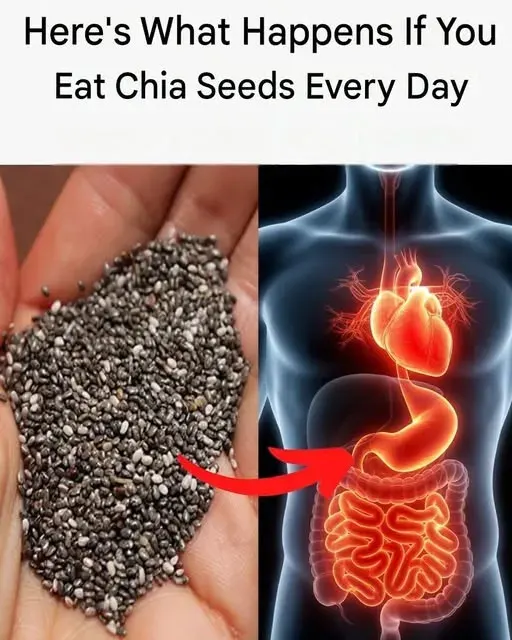
The Alzheimer’s claim in one version of the image
One version of this chia-seed post says the seeds reduce Alzheimer’s risk. The photograph does not provide evidence for that result. The National Institute on Aging’s review of diet and prevention explains that no specific food has been shown to prevent Alzheimer’s or age-related cognitive decline. Chia can be an ordinary source of fiber and other nutrients; it should not be advertised as proven prevention.
What Daily Chia Actually Adds
Chia seeds come from Salvia hispanica, a plant in the mint family. The seeds are tiny, but they are dense: a spoonful contributes fiber, fat, protein, and minerals rather than mostly water. That is why adding them every day can make a meal feel more substantial without changing the flavor very much. Harvard Health describes chia as a mild, easy-to-use seed that can be stirred into cereal, yogurt, smoothies, soups, batters, and simple puddings Harvard Health.
The daily effect is best understood as accumulation, not drama. A sprinkle at breakfast does not transform the body overnight. Instead, it nudges the meal pattern: a little more plant fiber, a little more unsaturated fat, a small mineral contribution, and a texture that slows down how quickly a bowl or drink disappears. Cleveland Clinic’s nutrition overview notes that one ounce of chia seeds contains about 9.8 grams of fiber, 4.7 grams of protein, 95 milligrams of magnesium, 244 milligrams of phosphorus, and 179 milligrams of calcium Cleveland Clinic. Most people use less than an ounce at a time, so the realistic benefit is a steady contribution, not a complete diet by itself.
A helpful way to think about chia is as a supporting ingredient. It works well when it makes nutritious foods easier to enjoy: oats that feel creamier, yogurt that holds fruit better, a smoothie with more staying power, or a salad with a light crunch. It works less well when it is treated as the only wellness decision that matters.
The Fiber Effect You May Notice First
The most immediate everyday change is often digestive comfort, and that depends on how quickly a person increases fiber. MedlinePlus explains that dietary fiber is found in plant foods and that nuts and seeds are among good sources; it also notes that increasing fiber too quickly can lead to gas, bloating, and cramps MedlinePlus. This is why the best daily routine is usually a gradual one. Chia absorbs liquid and forms a gel, so mixing it into moist foods can make it easier to eat and can soften the texture.
Fiber is not one single substance. Chia contains fiber that helps hold water, creates bulk, and changes the mouthfeel of foods. In the kitchen, this is obvious: dry seeds scattered on a counter behave like tiny grains, while seeds left in milk, yogurt, or juice thicken into a spoonable mixture. In the body, the experience is personal. Some people feel pleasantly full after adding chia to breakfast. Others need smaller portions, more fluid, or a slower adjustment period.
Why Hydration Matters With Chia
Chia’s gel-forming quality is useful, but it also explains why dry seeds can feel unpleasant if eaten by the spoonful. The seeds draw in liquid. In a bowl, that is what creates chia pudding. In a thick smoothie, it can make the drink feel more filling. In a dry mouthful, it can feel gritty or sticky. For ordinary kitchen use, the simplest habit is to stir the seeds into something wet or add them as a light topping to foods that will be chewed well.
This does not mean every chia seed has to be soaked overnight. Whole seeds can be sprinkled onto oatmeal, fruit, toast, salads, or grain bowls. The point is to pair them with a normal eating rhythm: enough liquid in the meal, enough chewing, and enough patience for the fiber change. Mayo Clinic’s high-fiber food chart lists chia seeds among legumes, nuts, and seeds, with one ounce providing about 10 grams of fiber Mayo Clinic. That is a meaningful amount, so comfort matters as much as nutrition arithmetic.
Plant Omega-3 Fats, Protein, and Minerals
Chia seeds also provide alpha-linolenic acid, often shortened to ALA, which is a plant form of omega-3 fat. A 2012 review on chia describes the seed oil as notably rich in ALA and notes that chia has long been used as a food crop in Central and South America PubMed Central. This makes chia useful for people who want more plant-based unsaturated fats in everyday meals, especially when it replaces lower-nutrient toppings rather than simply being added on top of an already crowded plate.
Protein is another part of the picture, though chia should not be mistaken for a main protein food in the way beans, lentils, tofu, eggs, fish, poultry, or dairy might be. It contributes protein at the margins. That margin can still be helpful in breakfast foods that are otherwise mostly carbohydrate, such as fruit and toast, or in snacks that need a little more staying power. The mineral contribution is similar: chia can add calcium, magnesium, phosphorus, zinc, iron, and B vitamins, but it should sit inside a varied pattern of vegetables, fruits, whole grains, legumes, nuts, seeds, and protein foods.
Fullness Is Plausible, but Context Decides
Many readers are interested in chia because it seems to make meals more satisfying. That idea is reasonable, but it needs context. Fiber-rich foods can add bulk and help a meal feel complete, and MedlinePlus notes that fiber can make people feel full faster MedlinePlus. Chia’s gel texture may also slow the pace of eating because the meal becomes thicker and more spoonable. Still, fullness is affected by the whole meal: protein, total energy, fat, volume, flavor, sleep, stress, and eating schedule all matter.
A bowl of sweetened chia pudding may feel different from chia stirred into plain yogurt with fruit. Chia in a balanced breakfast may feel different from chia added to a dessert. Daily chia works best when it improves the structure of a meal: oats plus chia plus berries, yogurt plus chia plus nuts, or a smoothie with fruit, protein, and a small spoonful of seeds. The seed is useful; the pattern does the larger work.
What Research Can and Cannot Tell Us
The evidence around chia is strongest for composition: the seeds clearly contain fiber, unsaturated fat, protein, and minerals. Evidence is more cautious when the question becomes what daily chia does to broad health outcomes in free-living people. The PubMed record for a review of chia notes that human clinical research has been limited and that chia’s safety and usefulness needed more study at the time of publication PubMed. That kind of caution still matters for readers. A food can be nutrient-dense and worth using without being presented as a guaranteed result.
That distinction keeps expectations realistic. Chia seeds can improve the nutrient density of meals, especially when they replace refined toppings or add fiber to low-fiber breakfasts. They cannot make an otherwise narrow diet complete. They also cannot tell you what your personal lab results, symptoms, or nutrition needs mean. For that, individualized guidance matters.
Easy Ways to Use Chia Daily
Chia has almost no strong flavor, which is one reason it fits into many kitchens. The texture is the part to manage. Whole dry seeds stay lightly crunchy. Soaked seeds become slippery and gelled. Ground chia blends more smoothly into batters and porridges, though it can thicken them quickly. The best method depends on what you like to eat repeatedly, because a daily habit only works if it is pleasant.
- For breakfast: stir chia into oats, yogurt, cottage cheese, or a smoothie and let it sit briefly before eating.
- For snacks: mix chia with fruit, milk, or a fortified plant drink for a spoonable pudding-style bowl.
- For savory meals: sprinkle a small amount over salads, grain bowls, soups, or avocado toast for texture.
- For baking: use chia as a moisture-holding addition in muffins, quick breads, pancakes, or crackers.
- For comfort: pair chia with enough liquid and increase gradually if your usual meals are low in fiber.
Whole, Soaked, or Ground: Which Is Best?
Whole chia seeds are convenient and shelf-stable. Soaked chia is softer and easier to distribute through a bowl. Ground chia can disappear into batters and blended foods, though it may lose freshness faster after grinding. Mayo Clinic’s short chia feature notes that chia does not have to be ground in the same way flaxseed often is, because people commonly eat chia whole Mayo Clinic News Network. In practice, the best choice is the one that fits the dish.
If you dislike the gel texture, use dry seeds as a topping. If dry seeds bother your mouth or throat, soak them. If you want them hidden in pancakes or muffins, grind them shortly before use or buy ground chia in small amounts and keep it sealed. None of these forms is automatically superior for every person. The form should serve the meal.
When Daily Chia May Not Feel Good
More is not always better with high-fiber foods. A person who goes from very little fiber to a large chia habit may feel bloated or uncomfortable. Someone who dislikes gelatinous textures may abandon the habit quickly. A person with a restricted eating plan may need to consider how chia fits with the rest of the day. The practical answer is moderation, variety, and attention to comfort.
It is also worth remembering that chia seeds are energy-dense. They are small, so it is easy to add them repeatedly without noticing. That is not a reason to avoid them; it is a reason to use them intentionally. Let chia improve a meal rather than turning every drink, bowl, and baked good into the same seed-heavy pattern.
The Bottom Line
Eating chia seeds daily may add useful fiber, plant omega-3 fat, protein, minerals, and texture to meals. The most realistic effects are practical ones: a thicker breakfast, a more filling snack, a higher-fiber routine, and another plant-based pantry option. The less realistic expectation is that chia alone will deliver a specific body change. Keep it simple: use chia in foods you already enjoy, add it gradually, drink normally with meals, and keep the rest of the plate varied.
Wrap-Up
Chia seeds are small, nutrient-dense seeds that can fit well into a daily eating pattern. Their main value is not mystery; it is composition. They bring fiber, ALA omega-3 fat, protein, calcium, magnesium, phosphorus, and a useful gel-forming texture. Used thoughtfully, they can make breakfasts, snacks, and baked goods more satisfying. Used too aggressively, especially by someone not used to much fiber, they can feel uncomfortable. The wisest daily approach is modest, varied, and food-first.
Frequently Asked Questions
- → Can I eat chia seeds every day?
For many people, chia can be part of daily meals, especially in small kitchen portions mixed into moist foods. The key is comfort and variety: chia should add to a balanced pattern, not crowd out other high-fiber foods such as beans, vegetables, fruit, whole grains, nuts, and other seeds.
- → Do chia seeds need to be soaked first?
No, they do not always need to be soaked. Whole chia can be sprinkled on foods and chewed well. Soaking is helpful when you want a softer texture, a pudding-like consistency, or easier mixing in yogurt, oats, smoothies, and sauces.
- → What might I notice when I start eating chia daily?
The most noticeable changes are usually meal texture and fullness. Chia thickens liquids and adds fiber, so a breakfast bowl or smoothie may feel more substantial. If your usual diet is low in fiber, add chia gradually to reduce digestive discomfort.
- → Are whole chia seeds or ground chia seeds better?
Both can be useful. Whole seeds are easy as a topping or soaked mixture. Ground chia blends more smoothly into batters and porridges but can lose freshness faster after grinding. Choose the form that makes the food enjoyable enough to repeat.
- → Is chia enough to improve a diet on its own?
No single seed can make a diet complete. Chia is best treated as a nutrient-dense supporting ingredient. It works well alongside fruit, oats, yogurt, legumes, vegetables, whole grains, and protein foods.
References
This content was developed and refined using reliable sources.
- https://api.nal.usda.gov/fdc/v1/food/170554?api_key=DEMO_KEY
- https://www.medlineplus.gov/dietaryfiber.html
- https://www.health.harvard.edu/diet-and-nutrition/chia-seed-benefits-what-you-need-to-know
- https://health.clevelandclinic.org/benefits-of-chia-seeds?slug=benefits-of-chia-seeds
- https://www.mayoclinic.org/healthy-lifestyle/nutrition-and-healthy-eating/in-depth/high-fiber-foods/art-20050948?p=1
- https://pmc.ncbi.nlm.nih.gov/articles/PMC3518271
- https://pubmed.ncbi.nlm.nih.gov/23251075
- https://newsnetwork.mayoclinic.org/discussion/mayo-clinic-minute-chia-its-not-just-a-pet