 Save
If your potato patch often looks green above ground but disappoints at harvest, the first choice to revisit is variety. Bellarosa is one useful candidate for tough growing seasons: it is a red-skinned, yellow-fleshed potato documented by the Canadian Food Inspection Agency as a distinct potato variety, and its early table-potato profile can suit gardeners who want tubers before late-season heat or erratic rain do their worst. Still, the real answer is not one name alone. Potatoes respond strongly to water timing, soil temperature, spacing, seed quality, and whether tubers stay covered.
This guide treats Bellarosa as a case study rather than a guarantee. The goal is to help you choose a potato variety with the right maturity, tuber type, and garden management for a season that may be hot, dry, stormy, or uneven. If you already grow potatoes for simple meals such as air fryer potato wedges, vegan potato soup, or broccoli cheese baked potatoes, better variety choice can make the difference between a few small tubers and a useful home harvest.
Start With the Real Problem: Timing, Heat, and Water
A difficult potato season is rarely just “dry.” It is usually a timing problem. Potato plants can tolerate some stress better early in growth than they can once tubers are forming and enlarging. University of Maine Cooperative Extension explains that drought stress during tuber initiation and early development can affect both yield and tuber quality, and Utah State University Extension identifies tuber set and enlargement as a critical water period for potatoes. That means an early variety can help only if it reaches useful tuber size before the worst stress arrives, or if the gardener protects the crop during that key window.
Heat matters because warm air increases evaporative demand. In plain terms, the crop and soil lose moisture faster during hot, windy weather. A gardener may think a light sprinkle helped, while the active root zone remains dry. Extension guidance from Utah State University also notes that potatoes draw much of their water from the upper foot of soil, so the practical question is not whether the surface looks damp, but whether moisture has reached the part of the bed where roots are working.
What Bellarosa Actually Offers
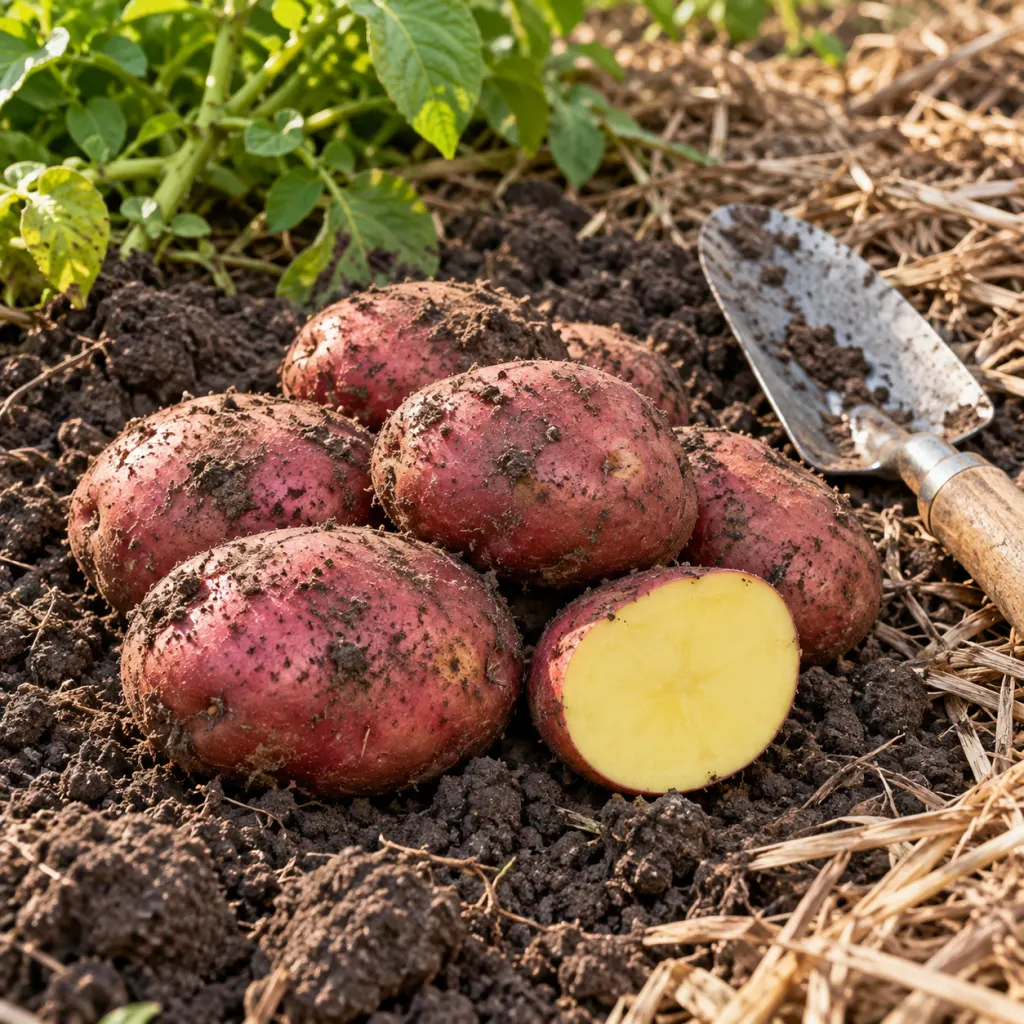
Bellarosa is best understood as an early red table potato with appealing kitchen traits, not as a crop-insurance policy. The Canadian Food Inspection Agency’s variety description lists Bellarosa as Solanum tuberosum, with red tuber skin and medium to dark yellow flesh, and records its origin as a cross made in Germany in 1993. The same official description notes short oval to oval tubers and a comparison trial in New Brunswick in 2010, where plants were spaced 30 cm apart within the row during testing.
Those facts support a practical conclusion: Bellarosa belongs on a shortlist when you want a red-skinned potato that can size up early enough for everyday cooking. They do not prove that Bellarosa will produce heavily in every dry garden. Local seed availability, your planting date, your soil, and your water source still matter. If a regional extension office or trusted local seed grower recommends another early red or early yellow variety for your area, that local advice deserves weight.
How to Compare Potato Varieties for Unreliable Weather
When summers are unpredictable, variety choice should be a small decision matrix rather than a guess from a catalog photo. Utah State University Extension advises gardeners to consider growing environment, intended use, and available space when selecting potato varieties. For a tough season, add maturity and tuber habit to that list. A fast early potato can sometimes be harvested before late heat builds, while a later variety may need a longer stretch of steady moisture.
- Maturity: early varieties are useful where the season turns hot quickly or where water may be limited later.
- Cooking use: waxier table potatoes are useful for boiling and roasting, while higher-starch types are often chosen for baking or frying.
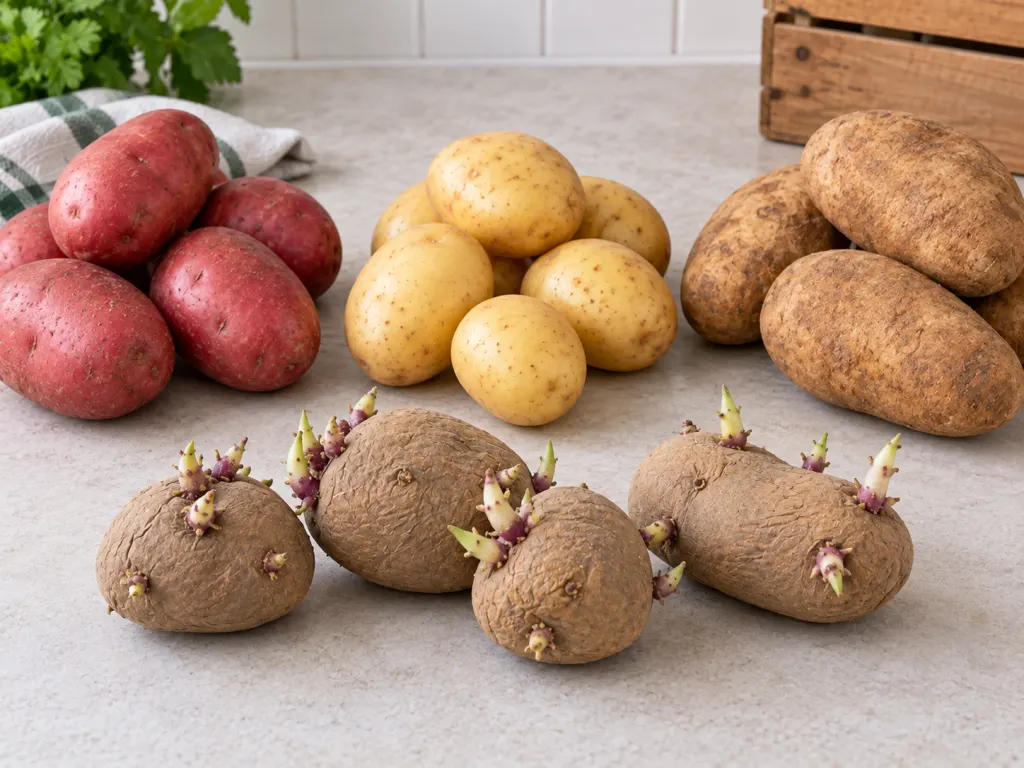
- Seed source: certified seed tubers are preferable because saved kitchen potatoes can carry crop pathogens from year to year.
- Tuber size goal: closer spacing tends to favor more modest tubers, while wider spacing can support fewer, larger tubers when moisture and fertility are adequate.
- Local fit: a variety that performs well in one climate can struggle in another, especially where soil texture, rainfall, or pest pressure differs.
Bellarosa checks several useful boxes for home cooks who like red-skinned potatoes, but the stronger habit is learning how to compare choices. If you cannot find Bellarosa from a reliable seed supplier, look for another early table potato with a good regional record rather than planting unknown grocery-store tubers.
Spacing and Soil Decide How Much the Variety Can Show
Good variety choice can be hidden by crowding. Utah State University’s home-garden guidance recommends planting seed pieces 4 to 6 inches deep, 10 to 12 inches apart, with rows 30 to 36 inches apart. The University of Minnesota Extension also notes that spacing influences tuber size: closer spacing tends to produce smaller tubers, while wider spacing can produce fewer but larger ones. That principle is important for Bellarosa because early, large tubers still need room to develop.
Soil texture is just as important. Potatoes prefer loose, fertile, well-drained soil. Heavy compacted soil can hold water in the wrong way after storms while still becoming hard during dry spells. Very sandy soil warms and drains quickly, which can be useful early but unforgiving during heat. Compost can improve structure, but a large late dose of nitrogen is not the same as balanced fertility. Utah State University cautions that heavy fertilization can push foliage growth and delay tuber development. For a home garden, a soil test and moderate amendments are more useful than guessing with a heavy hand.
Hilling Protects Tubers and Helps the Bed Work Better
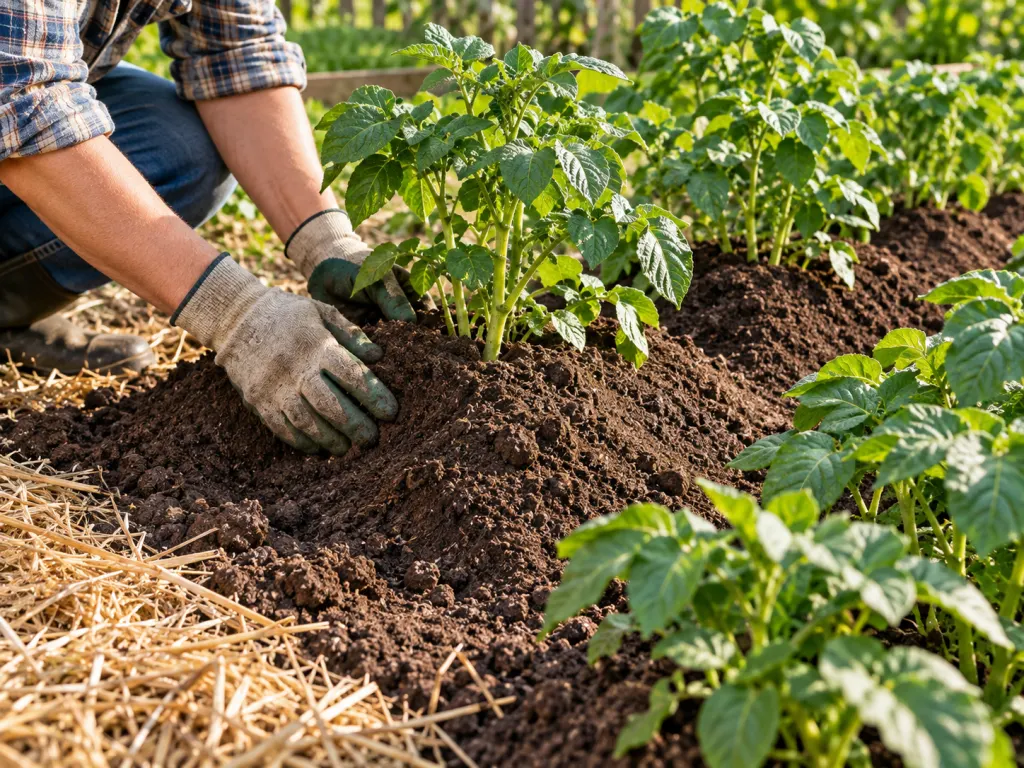
Hilling is one of the most practical ways to support a potato crop in a difficult season. The University of Minnesota Extension explains that tubers form on stolons that emerge from the underground portion of the stem, and that hilling keeps shallow tubers from exposure to light. Utah State University also notes that hills provide room for tubers, improve drainage, and reduce greening later in the year.
For a home bed, hill when stems are established rather than waiting until plants sprawl. Pull loose soil or finished compost around the base of the plants without burying all the leaves. Repeat as the plants grow, especially after heavy rain flattens the ridge or exposes tubers. Hilling is not only about harvest size; it is also about quality. Covered tubers are less likely to green, and a broad, stable hill gives developing potatoes more loose soil to occupy.
Water at the Stages That Matter Most
The most important watering rule is depth before frequency. Utah State University Extension recommends good soil moisture through the season and notes that 1 to 2 inches of water per week is a general garden target, while also warning that irregular over- or under-watering can lead to knobs and cracks. Its crop irrigation guide identifies tuber set and enlargement as the critical potato stage. University of California Agriculture and Natural Resources gives a similar commercial principle: potatoes are sensitive to water stress, with allowable depletion kept limited, especially during tuber initiation.
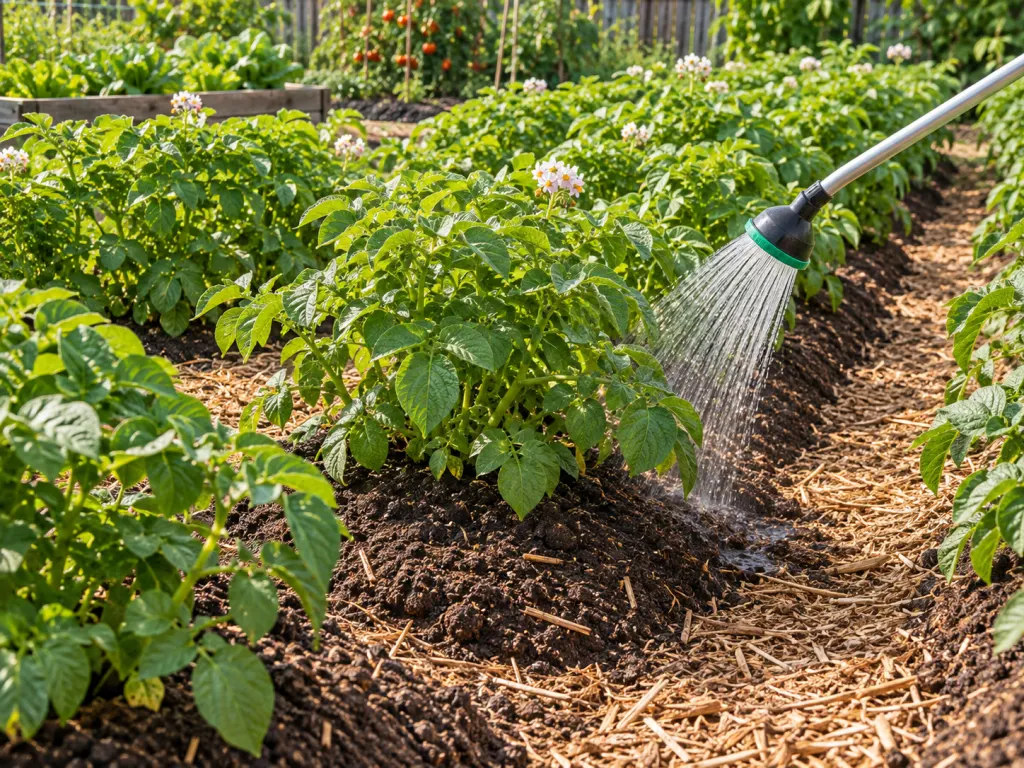
In a home garden, this translates into a simple routine. Check the soil below the surface before watering. If only the top inch is damp, keep going long enough for moisture to reach the root zone. Mulch can help slow evaporation, but mulch does not replace irrigation when the soil underneath is dry. Water earlier in the day when possible so foliage has time to dry. As vines naturally yellow near maturity, reduce water rather than keeping the bed constantly wet, because late wet conditions can hurt storage quality.
Heat Waves, Mulch, and the Temptation to Overcorrect
During a hot spell, it is easy to swing between neglect and overwatering. University of Maine Cooperative Extension explains that higher temperatures increase evaporative demand, so drought stress can develop more quickly in warm conditions. At the same time, too much water can create its own problems. Utah State University’s irrigation guidance warns that overwatering can encourage foliar and root problems, affect tuber quality, delay skin set, and interfere with harvest.
The best response is steady observation. Use mulch to moderate soil temperature and moisture, but keep thick wet material from pressing tightly against stems. Water deeply, then let the soil guide the next irrigation. In sandy beds, that may mean watering more often; in heavier soil, it may mean waiting longer. If a heat wave arrives during tuber bulking, prioritize the potato bed over less sensitive ornamental areas, because that is when water stress is most likely to reduce usable tuber size.
Food Safety: Keep Tubers Covered and Stored Dark
Potato growing also has a small but important food-safety side. Tubers exposed to light can turn green. Utah State University recommends keeping tubers covered in the garden and storing harvested potatoes in a dark, cool place. MedlinePlus explains that green tubers and new sprouts can contain solanine, and advises avoiding spoiled or green potatoes below the skin and throwing away sprouts. For gardeners, the practical field step is simple: hill well, check for exposed tubers after rain or watering, and store the harvest away from light.
If someone may have eaten a large amount of green potato tissue or sprouts and feels unwell, seek urgent local medical help or contact Poison Help in the United States at 1-800-222-1222. For ordinary kitchen sorting, set aside damaged, green, or heavily sprouted potatoes rather than trying to stretch every tuber into storage.
A Practical Buying and Planting Checklist
Use this checklist before committing garden space to Bellarosa or any other early potato variety. First, buy certified seed tubers from a reputable supplier rather than planting table potatoes from the pantry. Second, choose a sunny bed with loose, well-drained soil and improve it with measured compost instead of excess fertilizer. Third, plant when soil has warmed enough for steady emergence, following regional extension timing for your climate. Fourth, give each plant room; crowding may look efficient in spring but can limit tuber size later.
Fifth, hill on schedule, not only after you see tubers. Sixth, mulch after the soil has warmed if your summer tends to run hot or dry. Seventh, water deeply during tuber set and enlargement, using a trowel or soil probe to check moisture below the surface. Eighth, harvest gently when tubers reach the size you want. If you are harvesting early for fresh meals, use the thin-skinned potatoes soon. For storage, wait for mature skins, cure sound tubers, and store them cool, dark, and ventilated.
So, Is Bellarosa the Right Potato for a Tough Season?
Bellarosa is a reasonable variety to consider when you want an early red-skinned potato for a season that may not be gentle. Its official Canadian variety description supports the basics: red skin, yellow flesh, oval tubers, and a documented variety identity. But the strongest strategy is broader than one name. Look for early maturity, local availability, certified seed, and a cooking texture that fits your kitchen. Then manage the bed so the plant can express those traits.
For many home gardeners, the best potato is the one that reaches usable size before the hardest part of summer, grows in soil that stays evenly moist rather than soggy, and stores safely after harvest. Bellarosa may fit that role in some gardens. In others, a locally recommended early red, yellow, or russet type may be wiser. The reliable habit is to match variety choice to your season, then support it with spacing, hilling, mulch, and water when tubers are forming.
Wrap-Up
Bellarosa can be a strong candidate for gardeners facing hot, dry, or uneven seasons, especially if they want an early red-skinned table potato with yellow flesh. It should not be treated as a guaranteed heavy producer. Potato harvests depend on moisture during tuber set and enlargement, loose well-drained soil, certified seed, spacing, hilling, and careful storage. Choose Bellarosa when it is locally available from a reputable seed source and fits your cooking goals; otherwise, use the same criteria to choose another early potato recommended for your region.
Frequently Asked Questions
- → Is Bellarosa always the best potato for dry summers?
No. Bellarosa is a useful early red-skinned potato to consider, but the best choice depends on local climate, soil, water access, and seed availability. A regionally recommended early variety from a reliable seed supplier may be a better fit in some gardens.
- → Why do early potatoes help in difficult seasons?
Early potatoes can reach usable tuber size sooner, which may help gardeners harvest before late-season heat or water limits become severe. They still need steady moisture during tuber set and enlargement, so early maturity should be paired with good watering and hilling.
- → How much water do home-garden potatoes need?
Utah State University Extension gives 1 to 2 inches per week as a general home-garden guide, with moisture reaching into the soil rather than only wetting the surface. Soil type, weather, mulch, and growth stage all change the exact need.
- → Can I plant sprouted potatoes from my kitchen?
It is better to use certified seed potatoes when available. Kitchen potatoes may carry crop pathogens or may have been handled for storage rather than planting. Certified seed gives the potato bed a cleaner start, which matters even more in stressful seasons.
- → What should I do if potatoes turn green in the garden?
Green color means the tuber was exposed to light. Hill plants during growth, cover exposed tubers, and store harvested potatoes in darkness. Avoid eating green tissue or sprouts, and seek qualified medical guidance if a possible exposure causes concern.
References
This content was developed and refined using reliable sources.
- https://active.inspection.gc.ca/english/plaveg/pbrpov/cropreport/pot/app00006606e.shtml
- https://extension.usu.edu/yardandgarden/research/potatoes-in-the-garden
- https://extension.usu.edu/vegetableguide/potato/irrigation
- https://extension.umn.edu/garden-and-home/yard-and-garden/gardening-in-minnesota/growing-potatoes
- https://extension.umaine.edu/publications/2439e
- https://ipm.ucanr.edu/agriculture/potato/irrigation
- https://www.medlineplus.gov/ency/article/002875.htm