 Save
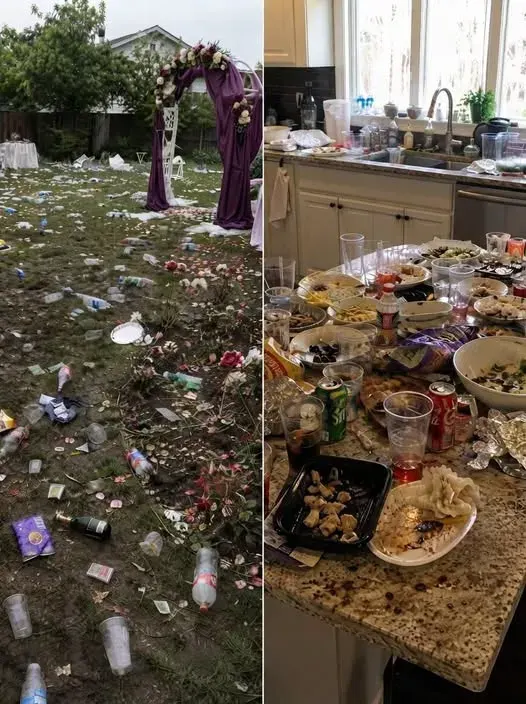
Fiction. This is an original fictional continuation of the setup in the accompanying post. The image is illustrative; it does not verify the events or identify the characters.
Kelsey borrowed her sister-in-law’s inherited lake house after her wedding venue flooded. She promised to respect the property. While the owner was with an aunt at the hospital, the wedding party tore out Grandma’s flowers for an arch and left the house and lawn damaged. Kelsey dismissed the complaint. Then a carefully wrapped box arrived, and she called screaming.
Step 1: Inside the box
The box held a single bound album. On the first page was a photograph of my grandmother standing in the garden she had planted. Under it I had written: This is what you borrowed.
The next pages showed the uprooted beds, the flowers wired into the wedding arch, the damaged lawn, the scattered bottles, and the rooms as I found them. Each photograph had a date. At the back were the written repair estimates and a letter asking Kelsey to pay the documented cost of restoring the property.
The ribbon was white. The paper was the same silver paper I had bought for her wedding present. The difference was what the package asked her to see.
“You sent me a bill as a wedding gift?” she shouted into the phone.
“I sent you a record of what happened, and what it will cost to put it right.”
Step 2: The promise in her own words
She said flowers grew back. She said guests had moved the tables, not her. She said I was trying to spoil the beginning of her marriage.
I opened our messages on my laptop. There was her promise to respect the house. There was my condition about leaving the garden alone. There was no agreement that she could turn the flower beds into decorations.
“Read the last page,” I said. “Then send me a written response.”
I ended the call before we could repeat ourselves. My hands shook afterward. Being firm did not make me suddenly fearless. I stood at the kitchen sink for a while, then called the hospital to ask about my aunt. She was improving. That was one piece of good news I could hold without arguing for it.
Step 3: My husband finally looked
My husband came home upset about the package. Kelsey had called him first, and he had arrived with the version in which I was punishing her for an untidy party.
I handed him a copy of the album. This time I did not explain every photograph while he looked. He reached the page showing the arch and stopped.
“Those are the plants beside the porch.”
“They were.”
He turned another page. The silence lasted long enough for me to hear the refrigerator start.
“I asked you to let her use it,” he said.
“You did. Now I need you to stop asking me to absorb the consequences because refusing would upset her.”
He apologized. Then he asked what practical help I needed. We drove to the house together the next morning.
Step 4: Restoring what could be restored
We photographed the remaining damage before cleaning. A gardener helped me separate plants that might recover from roots that had been torn apart. We collected glass carefully and kept the damaged areas closed while work was arranged.
I did not claim an album was a court order. I asked for advice before deciding what further steps were available. The estimates covered actual repair and cleanup, not an invented price for my grief. I kept the requests in writing.
Kelsey refused at first. When her new husband saw the photographs and the messages, he asked to meet. He had believed the garden flowers were supplied for the ceremony. I showed him the agreement too.
It took several uncomfortable conversations to reach a repayment arrangement. The money came in installments. I kept the receipts. The repaired lawn did not look perfect that summer, and some of Grandma's plants could not be saved.
Months later, Kelsey came to the lake house by invitation. She stood at the restored beds and said she had been so focused on making the wedding look right that she had stopped caring who paid for it.
I accepted the apology without promising that everything would return to normal. The house would no longer be available for large family events. Nobody would have an open invitation to borrow it. My husband and I would make those decisions together, and my first answer would count.
Kelsey asked whether I still had the album. I did. The copy I kept now ended with photographs of the new planting, followed by the receipts marked paid.
That was the gift she had not expected: a record she could not laugh away, and a clear request to take responsibility. It did not bring Grandma's original garden back. It gave me a way to protect what remained without spending the rest of my life explaining why it mattered.
Frequently Asked Questions
- → Is this a verified true story?
No. This is an original fictional continuation of the accompanying caption, not a verified account of real events. The names, setup and promised reveal are kept consistent with that caption.