 Save
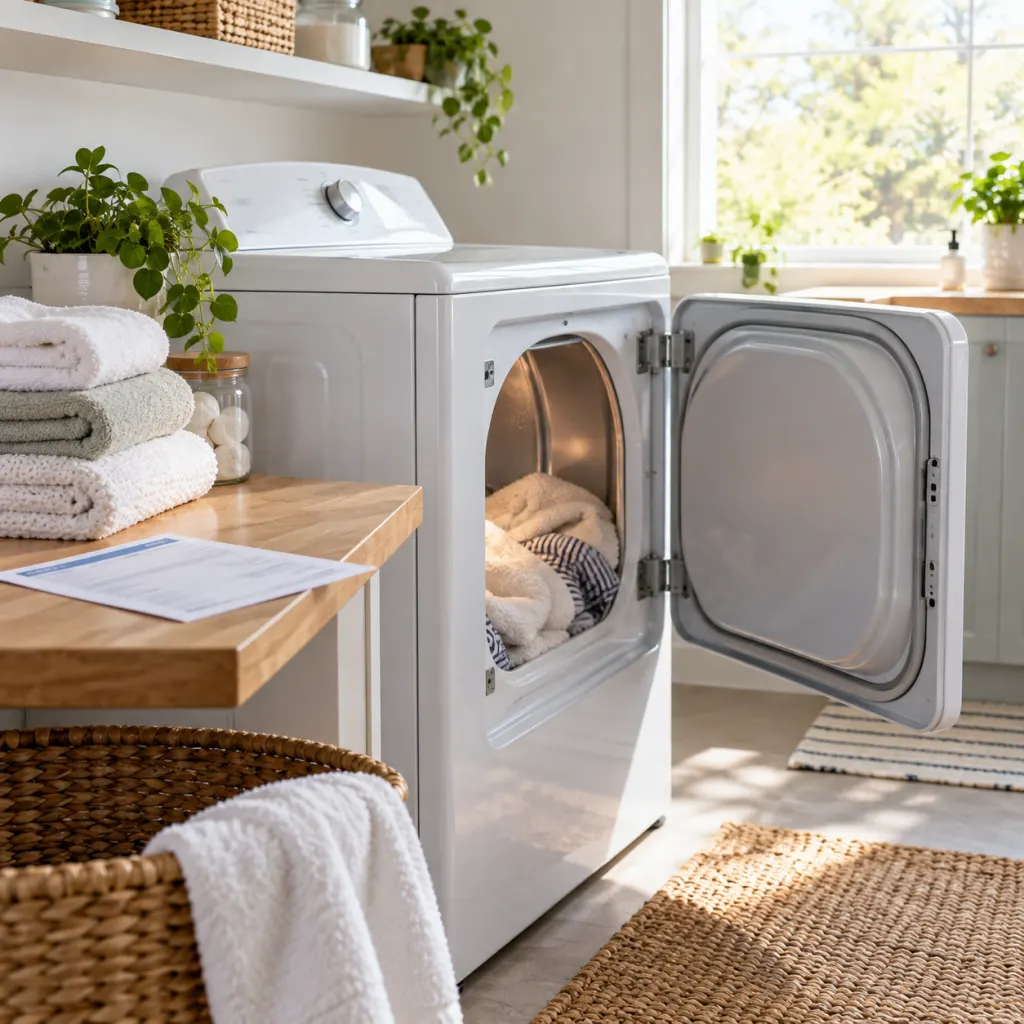
The household appliance most likely to be quietly raising your electricity bill is the clothes dryer. It does not run all day like a refrigerator, so it can feel harmless, but each cycle asks the machine to create heat, move air, tumble wet fabric, and keep going until moisture leaves the load. In homes that do frequent laundry, those repeated cycles can add up quickly. The good news is that you do not have to stop using your dryer to get control of the cost. Better loading, cleaner airflow, smarter cycle choices, and more careful replacement shopping can all reduce wasted energy.
Why The Dryer Escapes Notice
A dryer is easy to underestimate because it is not always on. Many people look first at lights, televisions, chargers, or kitchen gadgets because those are visible throughout the day. But home energy use is shaped by both power draw and runtime. The U.S. Energy Information Administration explains that household energy use depends on climate, home size, appliances, efficiency, the number of people in the home, and how long equipment is used; it also groups clothes dryers among the devices that make up the remaining share of home energy use after major uses such as heating, cooling, water heating, lighting, and refrigeration https://www.eia.gov/energyexplained/use-of-energy/homes.php.
That is why the dryer can be a surprise. It may run for less than an hour at a time, yet it is doing energy-intensive work while it runs. A household with one or two laundry days a week may barely notice it. A household drying towels, school clothes, uniforms, bedding, and workout clothes several times a week may see a very different pattern. The cost is not only about owning a dryer; it is about how often it runs, how wet the laundry is when it enters, how well air moves through the machine, and whether the cycle stops when the load is actually dry.
What Makes Drying So Energy-Hungry
The main reason is heat. Washing moves water through fabric; drying must remove that water afterward. A conventional dryer warms air, moves it through the drum, picks up moisture from the clothes, and then exhausts damp air or condenses moisture depending on the design. ENERGY STAR describes heat pump dryers as closed-loop systems that remove moisture and reuse much of the heated air rather than sending it outdoors, which is one reason they can use much less energy than conventional dryers https://www.energystar.gov/products/clothes_dryers.
The Small Habits That Make Each Cycle Longer
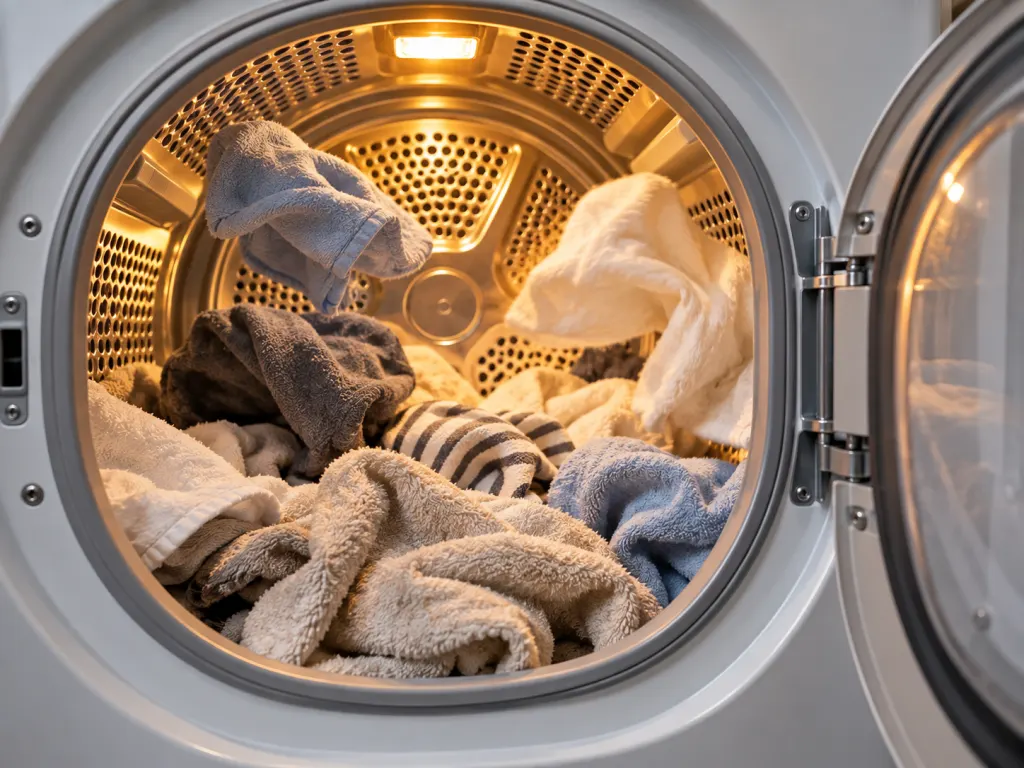
Dryer cost often hides inside ordinary routines. A load that is packed too tightly cannot tumble freely, so warm air struggles to reach the fabric. A very small load can also be inefficient because the drum runs for nearly the same stretch of time without the benefit of a properly tumbling load. ENERGY STAR notes that a dryer should have enough space for hot air to circulate, and that drying a single towel for a fixed time can cost about as much as drying a fuller load for the same time https://www.energystar.gov/products/clothes_dryers.
The washer matters too. If clothes come out very wet, the dryer has more work to do. A good spin cycle removes water mechanically before the dryer has to remove the rest with heat and airflow. Sorting also matters: lightweight shirts, heavy towels, denim, and bedding may dry at different speeds. When they are mixed together, the cycle often continues for the slowest-drying pieces while lighter items are already done. That extra time is where quiet waste creeps in.
A Simple Laundry Routine That Uses Less Energy
The easiest savings usually come from repeatable habits, not from one dramatic change. ENERGY STAR specifically recommends using sensor drying when available, choosing lower-heat or energy-saving settings when they fit the load, cleaning the lint filter after every load, and scrubbing the filter occasionally if dryer sheets leave a film that restricts airflow https://www.energystar.gov/products/clothes_dryers.
- Clean the lint filter before or after every load so air can move freely.
- Use sensor dry or automatic termination instead of a long timed cycle when the feature is available.
- Group similar fabrics together so light items are not waiting on heavy towels.
- Run full but not stuffed loads, leaving room for tumbling and airflow.
- Use a strong washer spin cycle when it is appropriate for the fabric.
- Air-dry bulky, delicate, or nearly dry items when that works for your space and schedule.
- Try lower-heat settings for loads that do not need the fastest possible dry time.
Why The Lint Filter Deserves More Attention
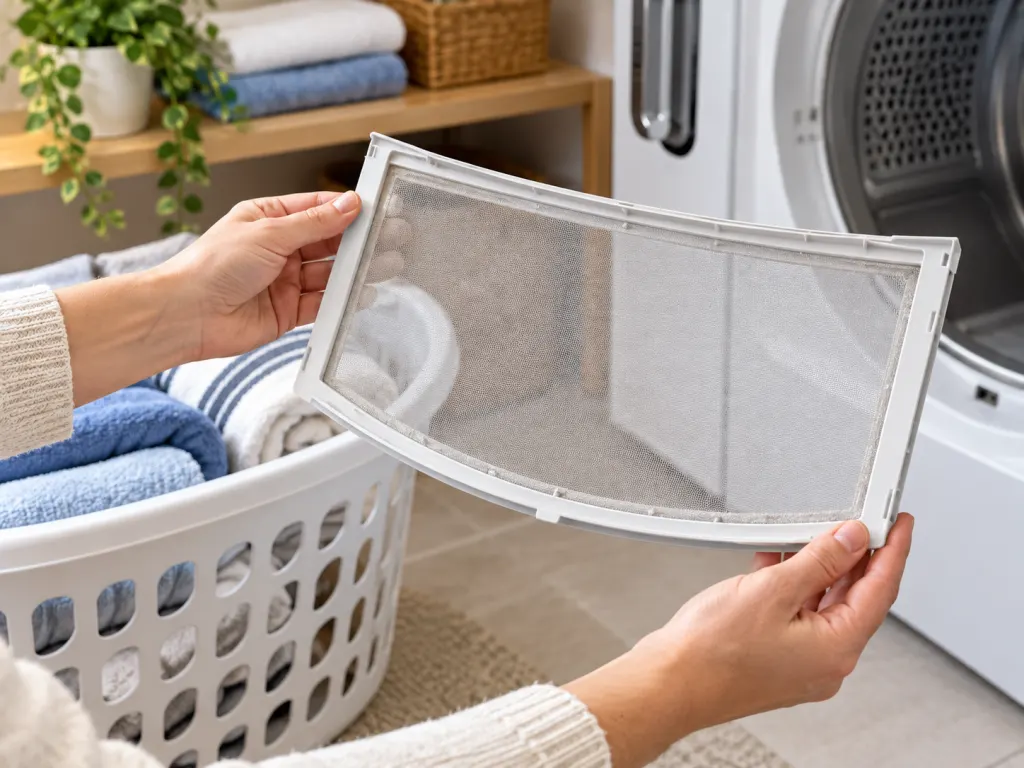
The lint filter is more than a neatness chore. Airflow is part of the drying system, and restricted airflow can stretch drying time. When air cannot move well through the load, the dryer may run longer, stop with damp spots, or encourage people to restart the cycle. That restart is the hidden cost: the machine repeats work that could have been avoided with better airflow and a more suitable load.
Dryer sheets can add another small complication. ENERGY STAR notes that they may leave film on the lint filter, and recommends scrubbing the filter regularly if dryer sheets are used https://www.energystar.gov/products/clothes_dryers. A quick rinse is not always enough if water beads on the screen instead of passing through it. In that case, a gentle scrub with a brush and a full dry before reinstalling can help the filter do its job again.
When An Upgrade Is Worth Looking At
Not every high bill means you need a new dryer. If the appliance is fairly new, cycles finish normally, and laundry volume is modest, habits may be the best place to start. But if the dryer is old, frequently restarted, or used by a large household, replacement research may be worthwhile. ENERGY STAR says certified clothes dryers use less energy than standard models, and its dryer guidance says heat pump dryers can use around 70 percent less energy than conventional clothes dryers https://www.energystar.gov/products/clothes_dryers.
The U.S. Department of Energy also points consumers toward efficient dryer choices. Its home upgrades guidance says ENERGY STAR clothes dryers use 20 percent less energy than conventional models, while ENERGY STAR-certified heat pump dryers can save 20 to 60 percent more energy than conventional clothes dryers https://www.energy.gov/save/home-upgrades. The exact payback depends on purchase price, local electricity rates, how often you dry laundry, available rebates, and whether your home already has the venting or drainage setup a particular dryer needs.
How To Compare Dryers Without Guessing
When shopping, compare operating information instead of relying only on the sticker price. The Federal Trade Commission explains that EnergyGuide labels show estimated annual operating cost, energy consumption, and a range for comparing similar models on many covered appliance types https://www.ftc.gov/legal-library/browse/rules/energy-water-use-labeling-consumer-products-under-energy-policy-conservation-act-energy-labeling. Clothes dryers are not always presented to shoppers in exactly the same way as refrigerators or washers, so it is also useful to check manufacturer specifications and ENERGY STAR product information when comparing models.
Look for features that match your real laundry habits. A moisture sensor is valuable if you often forget loads or use timed drying out of habit. A larger drum can help if your washer produces large loads, but oversized capacity is not a win if it encourages tiny loads in a big machine. A heat pump model can be attractive for high-use households, apartments without easy venting, or people who want lower ongoing energy use, but it may cost more upfront and may have different cycle times and water-drainage needs.
The Bigger Bill Picture
The dryer is not the only appliance that affects a bill, and it is rarely useful to blame one machine without looking at the whole home. The EIA notes that heating and air conditioning accounted for more than half of household energy consumption in 2020, while water heating, lighting, and refrigeration accounted for another major portion https://www.eia.gov/energyexplained/use-of-energy/homes.php. Still, dryers deserve attention because they are one of the easier appliances to manage with behavior: fewer unnecessary minutes, better airflow, and smarter loads can make a difference without changing your comfort.
If you want a practical experiment, track laundry for two weeks. Count loads, note which ones need a second cycle, and write down whether you used timed dry, sensor dry, low heat, or air drying. Then adjust the routine for two more weeks: clean the filter every time, split heavy fabrics from light fabrics, use the washer spin setting thoughtfully, and avoid running the dryer for a single item unless there is a real need. Even without a special meter, this kind of log can reveal whether the dryer is being used efficiently or simply out of habit.
What To Do This Week
Start with the no-cost moves. Clean the lint filter, inspect whether the screen has residue, stop overstuffing the drum, and move from timed drying to automatic sensing if your dryer has that option. Pull out pieces that are already dry instead of restarting the entire load. Give towels and bedding enough room to tumble. If you have a utility plan with time-of-use pricing, check whether running the dryer at a different time changes the cost of the same cycle; ENERGY STAR notes that delayed start can help some households take advantage of time-of-use pricing when their utility offers it https://www.energystar.gov/products/clothes_dryers.
Then decide whether replacement belongs on the list. The Department of Energy finalized updated efficiency standards for residential clothes dryers with compliance required from March 1, 2028, and estimated large long-term consumer savings from dryer standards over 30 years of shipments https://www.energy.gov/articles/doe-finalizes-efficiency-standards-residential-clothes-washers-and-clothes-dryers-save. That does not mean every household should replace a working appliance immediately. It does mean that efficiency is a real operating-cost factor, so the next dryer purchase should be treated as a bill decision, not only a laundry-room decision.
Wrap-Up
The clothes dryer raises electricity costs because it combines heat, airflow, tumbling, and repeated runtime. The biggest savings usually come from shortening unnecessary drying time: clean the lint filter, use sensor dry, avoid stuffed or tiny loads, sort by fabric weight, and let the washer remove more water before drying. For heavy-use households, an efficient replacement, especially a heat pump dryer, may be worth comparing carefully against upfront cost, available rebates, and real laundry volume.
Frequently Asked Questions
- → Is the clothes dryer always the biggest appliance cost in a home?
No. Heating, cooling, and water heating often account for larger shares of household energy use. The dryer matters because it uses energy intensively during each cycle and is easy to overlook, especially in homes that dry many loads each week.
- → Does using timed dry waste more energy than sensor dry?
It can. Timed dry keeps running until the selected time ends, even if the load is already dry. Sensor dry or automatic termination can stop the cycle when the machine detects dryness, which may reduce unnecessary runtime when the feature works well.
- → Should I replace my dryer just to lower my bill?
Not automatically. First improve loading, airflow, fabric sorting, and cycle choice. Replacement becomes more worth comparing when the dryer is old, used frequently, often needs a second cycle, or when an efficient model and available incentives make the operating-cost difference meaningful.
- → Are heat pump dryers better for every household?
They can use much less energy than conventional dryers, but they may cost more upfront, have different cycle times, and need either a drain connection or a tank that is emptied. They tend to make the most sense for households with frequent dryer use or high electricity costs.
- → What is the fastest no-cost way to reduce dryer waste?
Clean the lint filter every load, stop overstuffing the drum, separate heavy items from lightweight fabrics, and use sensor dry if the dryer has it. Those steps target the most common reasons a load runs longer than necessary.
References
This content was developed and refined using reliable sources.
- https://www.eia.gov/energyexplained/use-of-energy/homes.php
- https://www.energystar.gov/products/clothes_dryers
- https://www.energy.gov/save/home-upgrades
- https://www.ftc.gov/legal-library/browse/rules/energy-water-use-labeling-consumer-products-under-energy-policy-conservation-act-energy-labeling
- https://www.energy.gov/articles/doe-finalizes-efficiency-standards-residential-clothes-washers-and-clothes-dryers-save