 Save
For a 170 cm adult, a standard BMI-based healthy weight range is about 53.5 to 72 kg, or roughly 118 to 159 lb. That answer is useful as a starting point, but it is not the same as an ideal weight. The CDC adult BMI categories describe BMI as a screening measure that should be considered with other health information, and the NHLBI notes that BMI does not directly diagnose body fatness. A person at 170 cm can be healthy at different weights depending on muscle, frame, age, health history, and daily function.
The Quick Calculation for 170 cm
BMI is calculated as weight in kilograms divided by height in meters squared. At 170 cm, height is 1.70 meters, and 1.70 x 1.70 equals 2.89. Using the adult healthy-weight BMI range of 18.5 to less than 25, the calculation is 18.5 x 2.89 to just under 25 x 2.89. That gives a range from about 53.5 kg to just under 72.3 kg. If using the familiar rounded upper cutoff of BMI 24.9, the top of the range is about 72.0 kg.
In pounds, that is roughly 118 to 159 lb. These numbers come from the formula and adult BMI categories described by public-health sources such as the CDC, WHO, and NIDDK. They apply to most adults, not to children or teens, and they do not account for every individual difference.
A Simple BMI Table for 170 cm
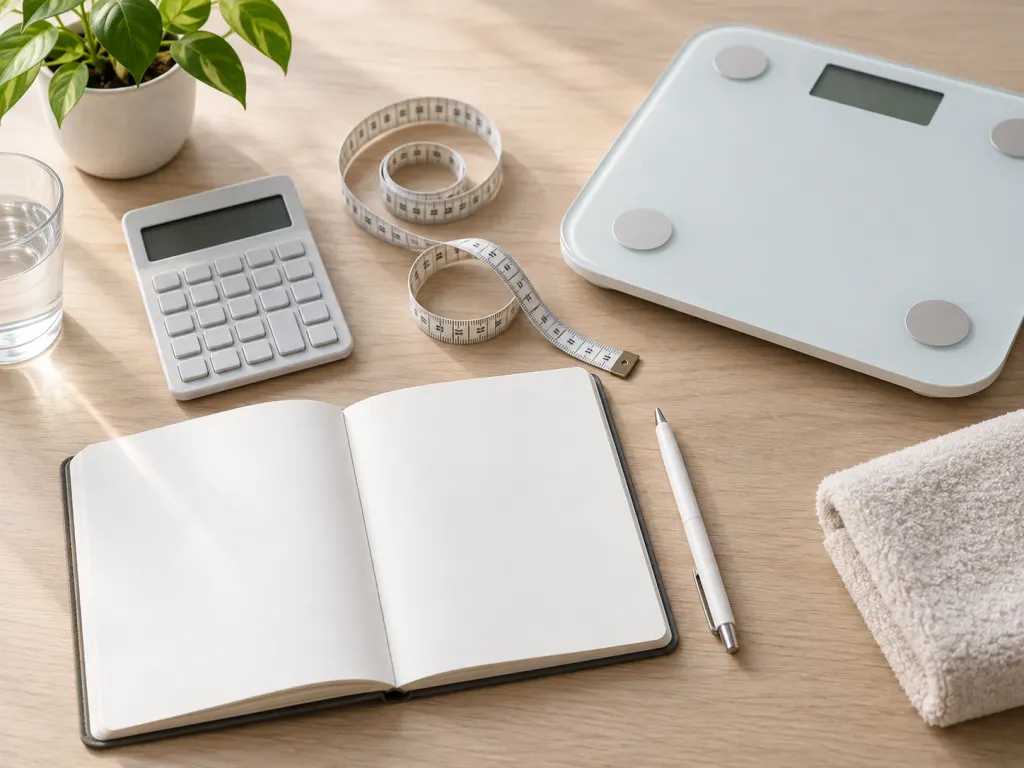
Here is the math in everyday terms. The table is not a ranking of best to worst; it is a way to understand where a given weight falls on the BMI scale for someone who is 170 cm tall.
- 53.5 kg: BMI about 18.5, the lower edge of the adult healthy-weight category.
- 57.8 kg: BMI about 20, within the adult healthy-weight category.
- 63.6 kg: BMI about 22, within the adult healthy-weight category.
- 72.0 kg: BMI about 24.9, near the upper edge of the adult healthy-weight category.
- 72.3 kg: BMI about 25, the start of the adult overweight category.
- 86.7 kg: BMI about 30, the start of the adult obesity category.
Why BMI Is Only a Starting Point
BMI is popular because it is quick, inexpensive, and easy to compare across large groups. That is also its weakness. It uses only height and weight. It does not know whether a kilogram comes mostly from muscle, bone, fluid, or fat. MedlinePlus explains that BMI may be less precise for people with much more or much less muscle than average, including very muscular adults and some older adults.
This is why a 170 cm person at 74 kg is not automatically in poor health, and a 170 cm person at 58 kg is not automatically in good health. A strength athlete, a person recovering from illness, an older adult with low muscle mass, and someone whose weight has changed quickly can all need different interpretations. The number on the scale is one clue. It should not be treated as the whole story.
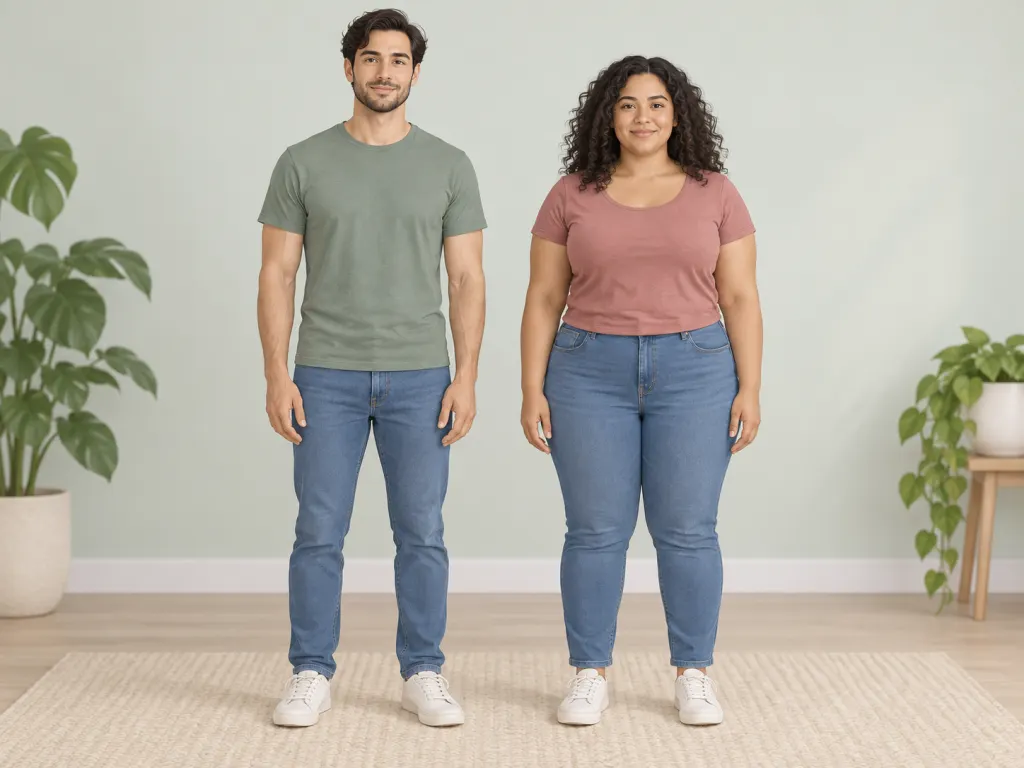
What Else Gives a Fuller Picture
A more useful weight conversation looks at patterns and function. The NIDDK lists several factors that can affect weight, including lifestyle habits, sleep, where a person lives and works, health problems, family history, genes, and some medicines. That means two people of the same height may have different realistic ranges and different priorities.
Clinicians may also consider waist circumference or waist-to-hip ratio. The NHLBI notes that waist circumference can help evaluate health risk along with BMI, because body fat distribution can matter. Even then, waist measurement is not a daily scorecard. It is another screening measure, best interpreted with symptoms, history, physical function, and clinical judgment.
Weight Changes Matter More Than One Weigh-In
A single weigh-in is often less meaningful than the direction and speed of change. A stable adult weight near the BMI range, paired with steady energy, adequate eating, regular movement, and normal day-to-day function, may be less concerning than a rapid change in either direction. Unexplained weight loss, sudden gain, new weakness, swelling, dizziness, or strong distress around food or weighing deserves a conversation with a qualified health professional.
For a 170 cm adult, it can help to think in zones rather than one exact number. Someone at 60 kg and someone at 70 kg are both within the BMI healthy-weight category, but they may look and feel different. The better question is not only, "What should I weigh?" It is, "Is my current weight stable, compatible with strength and daily life, and understood in the context of my health?"

Age, Muscle, and Strength Change the Conversation
Age can change body composition even when scale weight stays similar. Muscle mass may decline over time, and a person can feel less steady or less capable without seeing a dramatic change in kilograms. The CDC physical activity guidance for adults recommends regular aerobic activity and muscle-strengthening activity on at least 2 days each week. For many adults, especially as they get older, maintaining strength and mobility is just as practical as tracking weight.
This does not mean everyone should aim to weigh more or less after a certain birthday. It means weight goals should become more personal. A lower weight is not automatically better if it comes with fatigue, loss of strength, restricted eating, or worry. A higher weight is not automatically harmless either, especially when paired with concerning symptoms or other risk factors. Context matters.
Children and Teens Need Different Assessment
The adult BMI range should not be applied to children or teenagers. The CDC child and teen BMI categories use age- and sex-specific BMI-for-age percentiles because young people are still growing. A 170 cm teenager should not be encouraged to match an adult table without professional context. Growth pattern, puberty stage, nutrition, activity, and emotional wellbeing all matter.
When to Ask for Personal Guidance
Ask for professional guidance if your weight changes quickly without a clear reason, if eating or exercise feels difficult to manage, if weighing yourself causes major anxiety, or if you have symptoms such as persistent weakness, dizziness, swelling, or loss of daily function. It is also reasonable to ask for guidance if you are near the edge of a BMI category and are unsure whether it applies to you. A clinician can interpret height, weight, waist measurement, health history, and relevant tests together instead of relying on one number.
A Practical Way to Use the Number
If you are 170 cm and simply curious, use 53.5 to 72 kg as a reference range, not a command. If you are within it, focus on habits that support your body: regular meals, enough protein and fiber from varied foods, enjoyable movement, strength work, sleep, and reduced weight-checking if it feeds worry. If you are outside it, avoid self-judgment and look at the wider picture. BMI categories can flag when a conversation may be useful, but they do not define your worth or provide a full health assessment.
Wrap-Up
For a 170 cm adult, the usual adult BMI healthy-weight range is about 53.5 to 72 kg, or about 118 to 159 lb. The number is helpful for orientation, but it is not a personal ideal. BMI cannot show muscle, body fat distribution, age-related body composition, symptoms, daily function, or emotional wellbeing. Use the range as a conversation starter, and seek qualified guidance when weight changes quickly, symptoms appear, or the number creates distress.
Frequently Asked Questions
- → What is the healthy weight range for a 170 cm adult?
Using the standard adult BMI healthy-weight category, a 170 cm adult is roughly in the range of 53.5 to 72 kg, or about 118 to 159 lb. This is a screening range, not a personal target.
- → Is 70 kg healthy for someone who is 170 cm tall?
At 170 cm, 70 kg gives a BMI of about 24.2, which is within the standard adult healthy-weight category. Health still depends on more than BMI, including strength, waist measurement, symptoms, habits, and medical history.
- → Can someone at 170 cm weigh more than 72 kg and still be healthy?
Possibly. BMI does not separate muscle from fat or account for every body type. A person who is very muscular, for example, may have a higher BMI. A qualified health professional can interpret the number with other information.
- → Does the adult BMI range apply to teenagers who are 170 cm?
No. Children and teens are assessed with age- and sex-specific BMI-for-age percentiles, not the fixed adult BMI categories. Growth and development need professional context.
- → Should I aim for the middle of the BMI range?
Not necessarily. The middle of the range is not automatically best for every person. A stable weight that supports energy, adequate eating, strength, mobility, and overall wellbeing is more useful than chasing one exact number.
References
This content was developed and refined using reliable sources.
- https://www.cdc.gov/bmi/adult-calculator/bmi-categories.html
- https://www.who.int/en/news-room/fact-sheets/detail/obesity-and-overweight
- https://www.nhlbi.nih.gov/health/overweight-and-obesity/symptoms
- https://www.medlineplus.gov/ency/article/007196.htm
- https://www.niddk.nih.gov/health-information/weight-management/adult-overweight-obesity/definition-facts
- https://www.niddk.nih.gov/health-information/weight-management/adult-overweight-obesity/factors-affecting-weight-health
- https://cdc.gov/bmi/child-teen-calculator/bmi-categories.html
- https://www.cdc.gov/physical-activity-basics/guidelines/adults.html