 Save
The clearest morning takeaway is this: do not treat one home blood pressure number as the whole story. A rushed reading, a cuff over clothing, coffee right before measuring, a skipped prescribed medicine, or a high-sodium breakfast can all make the morning harder to interpret. The goal is not to make mornings tense. It is to make them consistent enough that the numbers you share with a healthcare professional are useful. The American Heart Association recommends home monitoring for people diagnosed with high blood pressure and notes that home checks do not replace regular visits with a clinician (AHA). This guide walks through common morning mistakes in plain language, with practical ways to make the first hour of the day less confusing.
Why Morning Readings Deserve Extra Care
Morning readings can feel especially important because they often happen before work, breakfast, errands, and the day’s stressors begin. But blood pressure measurement is not like checking the time. The result can shift when the body is not rested, when the cuff does not fit, when the arm is unsupported, or when the reader talks during the measurement. The CDC says blood pressure is usually measured in millimeters of mercury, or mm Hg, and that regular measurement is the only way to know whether readings are in a high range because high blood pressure usually has no warning signs or symptoms (CDC).
That is why the best morning routine is boring in a good way. Same chair. Same arm. Same quiet pause. Same log. The less dramatic the setup, the easier it is for a clinician to spot a real pattern instead of a measurement problem. A single number can be worth writing down, but a dated series of readings is usually more useful than reacting to one result.
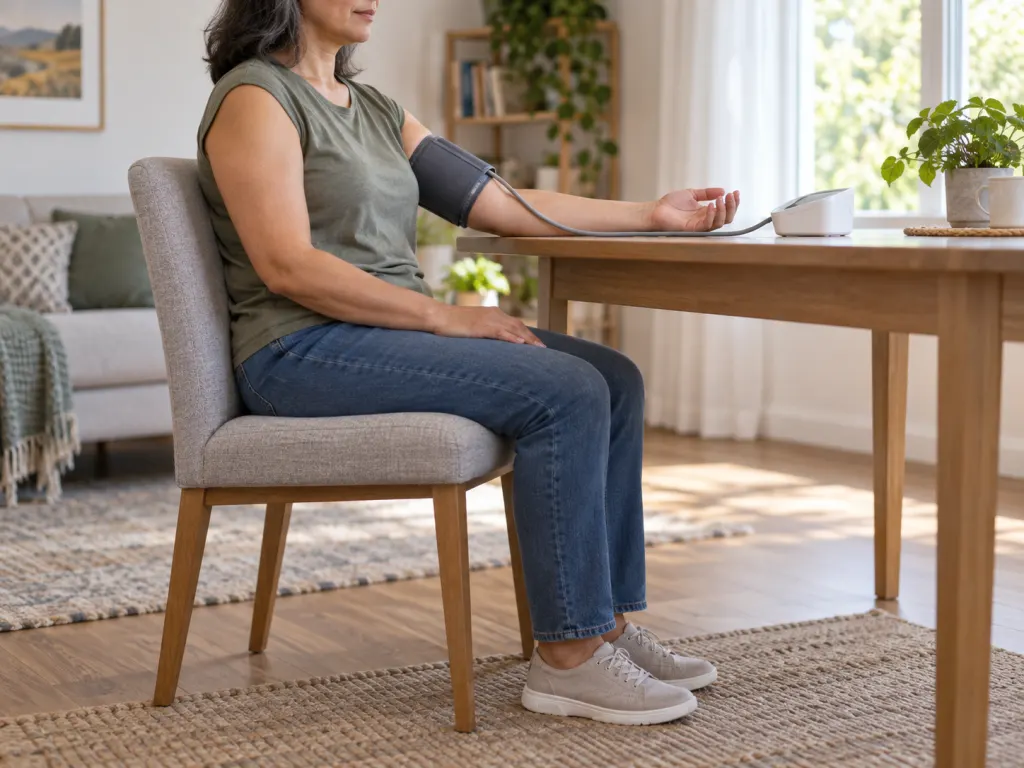
Mistake 1: Measuring Before Sitting Quietly
One common morning mistake is placing the cuff immediately after getting out of bed, walking across the house, answering messages, or starting breakfast. The American Heart Association advises avoiding smoking, caffeinated drinks, and exercise for 30 minutes before a home reading, then resting quietly for at least five minutes before measuring (AHA). The CDC gives similar technique points: sit with the back supported, feet flat, legs uncrossed, arm resting at chest height, cuff on bare skin, and no talking during the measurement (CDC).
A better morning habit is to build the reading into a pause rather than a sprint. Use the bathroom first, sit down, keep the phone out of your hand, and let the body settle. If the room is cold, the house is noisy, or the day already feels pressured, the quiet five minutes may feel surprisingly long. That pause is part of the measurement, not wasted time.
Mistake 2: Forgetting That Technique Changes the Number
Small posture errors can matter. A cuff placed over clothing, an unsupported arm, crossed legs, talking, or using the wrong cuff size can all interfere with accuracy. The AHA recommends an automatic upper-arm cuff-style monitor and says wrist and finger monitors are less reliable for many home users (AHA). The monitor should also be checked against office equipment as directed, because even a careful routine is less useful when the device or cuff size is wrong.
Think of the home monitor as a measuring tool, not a mood test. The goal is to create the same conditions each time. Helpful basics include:
- Use a validated upper-arm monitor when possible.
- Place the cuff on bare skin, not over a sleeve.
- Support the arm so the cuff is at about heart level.
- Keep both feet flat and legs uncrossed.
- Take two readings, spaced about one minute apart, when your clinician has asked for home tracking.
- Record the date, time, systolic number, diastolic number, and pulse if the device shows it.
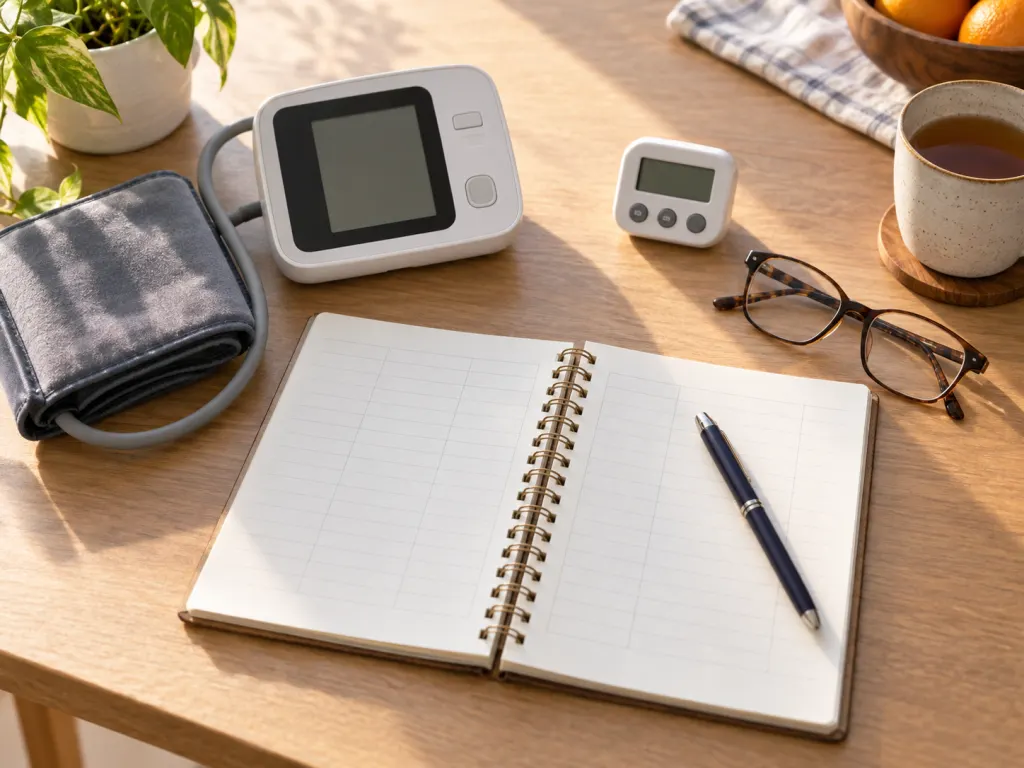
Mistake 3: Letting One Good Reading Change a Medicine Routine
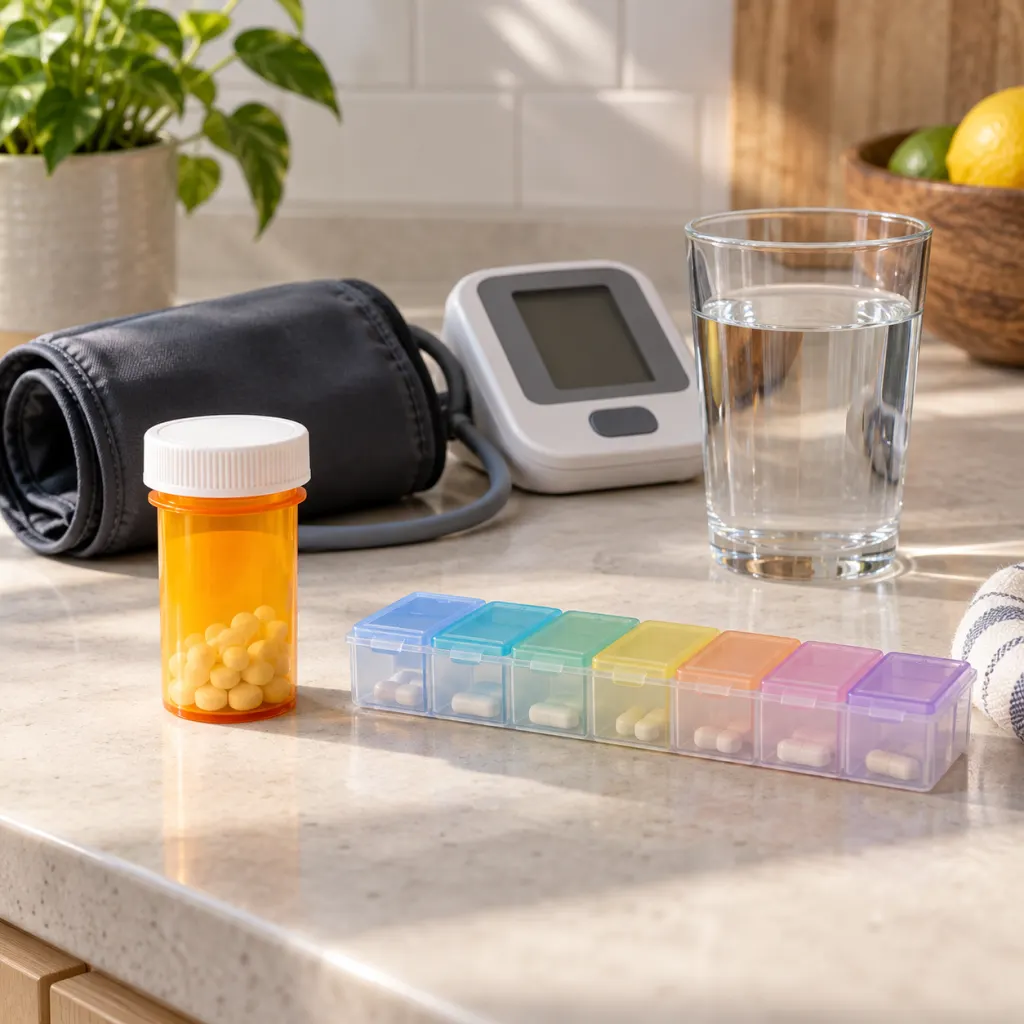
A normal-looking morning reading can feel reassuring, but it should not become a reason to change a prescribed routine on your own. The AHA explicitly says not to stop taking blood pressure medication without checking with a healthcare professional, regardless of home monitoring readings (AHA). That advice matters because home monitoring is a way to share information with a clinician, not a stand-alone decision system.
A practical safeguard is to keep medicines, the blood pressure log, and the monitor routine mentally separate. Take readings the way the clinician requested. Take prescribed medicines the way the clinician directed. Bring the log to appointments or upload it through the system your clinic uses. If a reading pattern feels unusual, or if side effects are a concern, the safest next step is a direct conversation with the prescribing professional rather than a private morning experiment.
Mistake 4: Taking Over-the-Counter Products Without a Label Check
Morning aches, sinus pressure, and cold symptoms often lead people to the medicine cabinet before breakfast. Some over-the-counter products deserve extra attention around high blood pressure. The AHA advises checking with a healthcare professional or pharmacist before taking over-the-counter medicines, supplements, or substances when high blood pressure is part of the care picture, and it lists caffeine, decongestants, and nonsteroidal anti-inflammatory drugs such as ibuprofen and naproxen among substances that can raise readings (AHA). Mayo Clinic also notes that NSAIDs can make the body hold onto water, which may affect the kidneys and raise blood pressure, and it identifies decongestants such as pseudoephedrine and phenylephrine as products that can narrow blood vessels (Mayo Clinic).
This does not mean every morning discomfort has the same answer. It means labels and pharmacist questions matter. Many products combine several ingredients, and some have warnings aimed at readers with hypertension or those taking blood pressure medicines. Before adding a new pain reliever, cold medicine, stimulant, supplement, or herbal product to a morning routine, it is wise to bring the exact product name to a pharmacist or clinician.
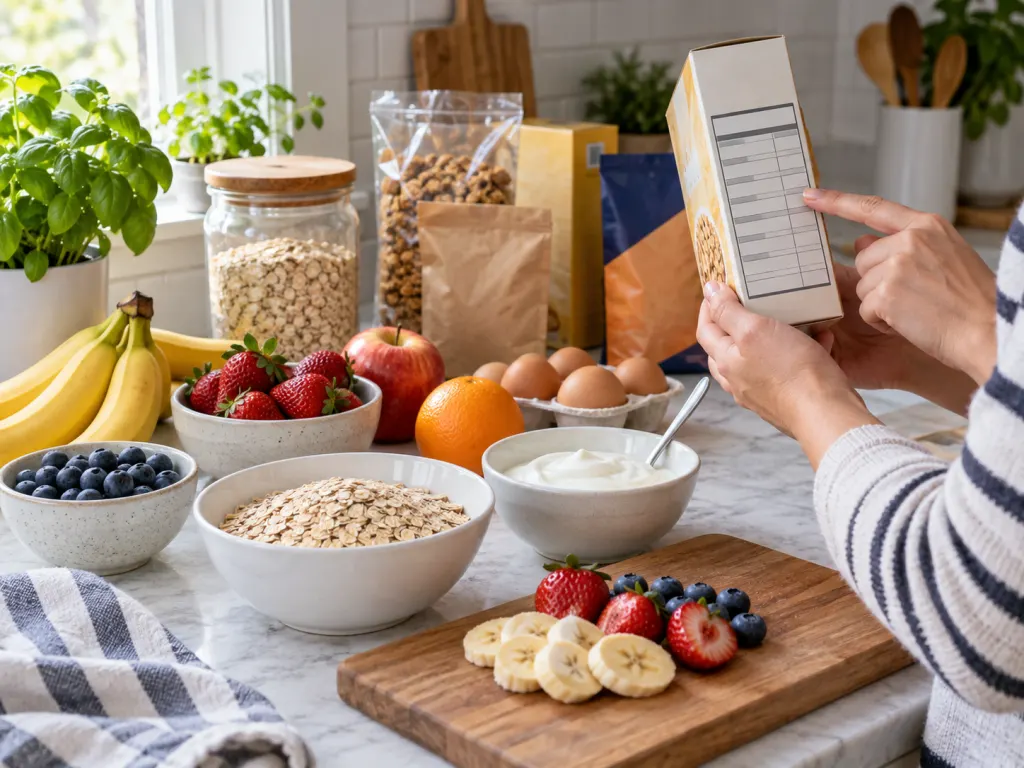
Mistake 5: Starting the Day With Hidden Sodium
Breakfast can look simple and still carry a lot of sodium. Packaged breakfast sandwiches, cured meats, instant bowls, biscuits, savory pastries, processed cheeses, canned items, and restaurant meals can add more sodium than a person realizes. The FDA says more than 70% of dietary sodium comes from packaged and prepared foods, and that the Nutrition Facts label helps shoppers see sodium amounts in packaged foods and drinks (FDA). The FDA also says 5% Daily Value or less per serving is generally low for a nutrient, while 20% Daily Value or more is high; the current Daily Value for sodium is 2,300 mg (FDA).
A calmer breakfast pattern is not complicated: compare labels, notice serving sizes, and keep more minimally prepared foods in the rotation. Oats, fruit, yogurt without a salty topping, eggs prepared without processed meat, unsalted nuts, and leftovers built from vegetables, beans, or whole grains can make the morning less dependent on packaged convenience foods. The American Heart Association describes a heart-healthy eating pattern as one rich in fruits, vegetables, whole grains, low-fat dairy products, fish or skinless poultry, nuts, legumes, and non-tropical vegetable oils, while limiting sodium, processed meats, added sugars, and alcoholic beverages (AHA).
Mistake 6: Treating Coffee as Part of the Measurement
Coffee or tea may be a normal part of the morning, but timing matters when the goal is a clean reading. The CDC says eating, drinking alcohol or caffeine, smoking, or exercising within 30 minutes of measurement can make a reading higher (CDC). This is about measurement quality, not moral judgment about a beverage. A reader who wants coffee can usually make the routine simpler by measuring first, after the quiet rest period, and then having breakfast or a caffeinated drink afterward unless a clinician has given different instructions.
The same logic applies to rushing, stairs, workouts, and stressful news. The body responds to activity and stimulation. When a morning reading is taken immediately after those inputs, it may tell more about the last few minutes than the larger pattern. A quiet measurement window protects the usefulness of the log.
Mistake 7: Ignoring Sleep Clues That Show Up in the Morning
Morning readings do not begin in the morning. Sleep quality, nighttime awakenings, and breathing interruptions can shape how rested a person feels at the start of the day. NHLBI lists symptoms of sleep apnea that may happen during sleep, such as breathing that starts and stops, frequent loud snoring, and gasping for air; daytime sleepiness, fatigue, dry mouth, headache, insomnia, and waking often at night to urinate can also be noticed after waking (NHLBI). Those clues are worth discussing with a healthcare professional, especially when morning logs remain puzzling despite careful measurement technique.
A useful morning log can include more than numbers. A short note such as poor sleep, unusual stress, missed breakfast, heavy restaurant meal the night before, cold medicine, pain, or very early workout can help a clinician interpret the pattern. The log should not become a source of worry. It is simply a way to make the appointment more concrete.
A Calmer Morning Template
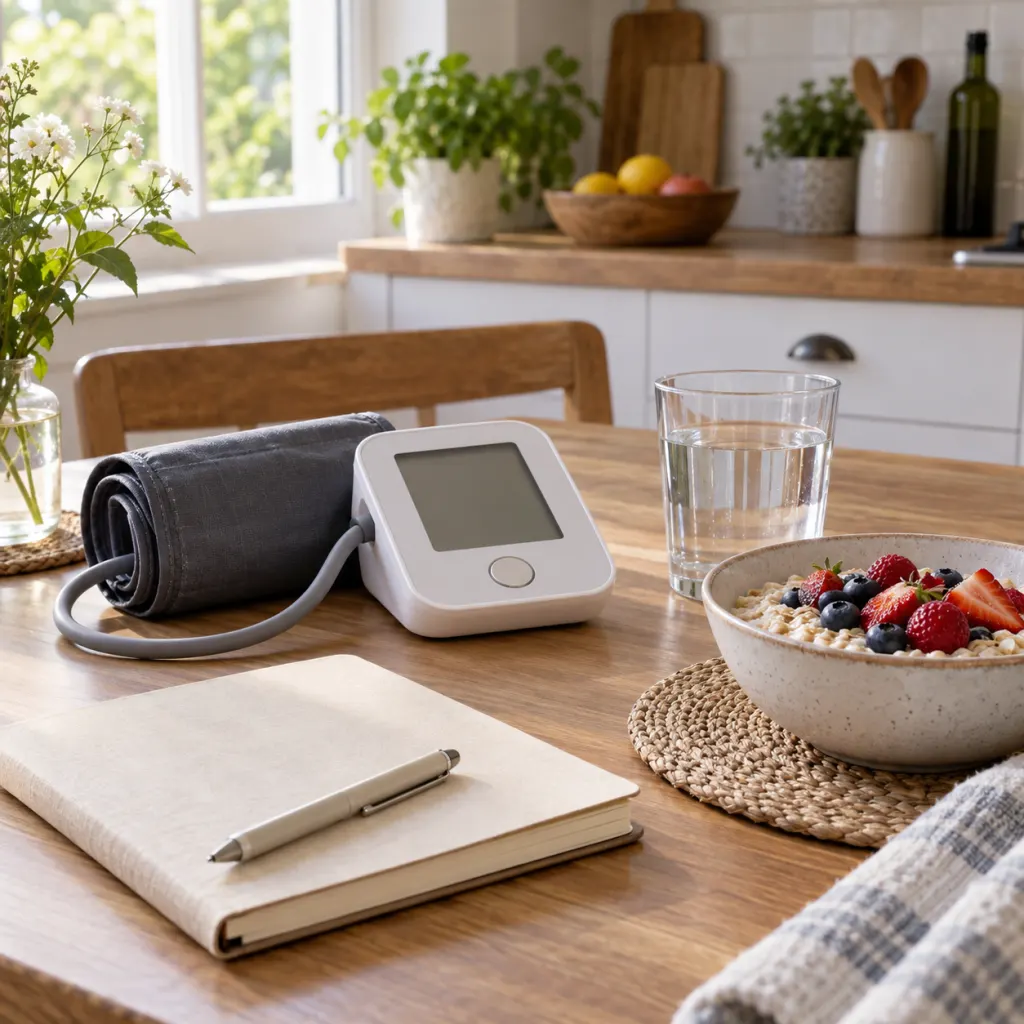
A steady routine can be brief. Use the bathroom, sit in a supported chair, rest quietly for five minutes, measure with the cuff on bare skin, take the second reading as directed, and record both results. Then continue with the prescribed morning plan, breakfast, and usual activities. The CDC recommends taking blood pressure at the same time every day and taking at least two readings one or two minutes apart when home monitoring is part of the plan (CDC).
For many readers, the most helpful changes are small: put the cuff and notebook in one place, move coffee until after the reading, choose a breakfast with an easier sodium label, and keep over-the-counter products in their original packaging so a pharmacist can review them. The win is not a perfect morning. The win is a repeatable morning.
When a Reading Needs Immediate Attention
Most high readings are not an automatic emergency, but very high readings deserve a clear plan. The AHA blood pressure category chart describes readings higher than 180 systolic and/or higher than 120 diastolic as severe hypertension when symptoms are absent, and as a hypertensive emergency when symptoms such as chest pain, shortness of breath, back pain, numbness, weakness, vision change, or difficulty speaking are present; in that emergency situation, the AHA says to call 911 (AHA). MedlinePlus also identifies readings higher than 180 and higher than 120 as a hypertensive crisis requiring medical care right away (MedlinePlus).
Wrap-Up
Mornings are easier to understand when the routine is consistent. Rest before measuring, keep the cuff on bare skin, avoid caffeine and exercise right before a reading, record more than one number when instructed, and keep medicine or product questions with a clinician or pharmacist. Breakfast labels matter because sodium is often hidden in packaged and prepared foods. Sleep clues matter too, especially when fatigue, loud snoring, gasping, or frequent night waking show up alongside confusing morning patterns. The safest mindset is steady, not fearful: create a clean reading, write it down, and use the record as a conversation tool with a qualified professional.
Frequently Asked Questions
- → Should a morning reading be taken before coffee?
For the cleanest home measurement, authoritative guidance recommends avoiding caffeine for 30 minutes before checking blood pressure. A simple routine is to measure after a quiet rest period, record the result, and then move on to coffee or breakfast unless a clinician has advised something different.
- → Is one high morning number enough to change a routine?
One number is a snapshot. Home logs are more useful when they show readings over time with consistent technique. A very high reading with serious symptoms needs urgent attention, but ordinary pattern questions should be reviewed with a healthcare professional.
- → Why does cuff position matter so much?
The cuff is measuring pressure in a blood vessel, so body position changes the quality of the measurement. A supported back, uncrossed feet, bare upper arm, and cuff at about heart level help make readings more comparable from day to day.
- → What breakfast habit is most worth checking?
Sodium is the big label item to notice in packaged and prepared breakfast foods. The FDA says the Nutrition Facts label can help compare sodium amounts, and 20% Daily Value or more per serving is considered high for a nutrient.
- → Can poor sleep affect the morning routine?
Poor sleep can make mornings harder to interpret, especially when a person wakes tired or has symptoms that may suggest sleep apnea, such as loud snoring, gasping, or daytime sleepiness. Those clues are worth sharing with a qualified health professional.
References
This content was developed and refined using reliable sources.
- https://www.heart.org/en/health-topics/high-blood-pressure/understanding-blood-pressure-readings/monitoring-your-blood-pressure-at-home
- https://www.cdc.gov/high-blood-pressure/measure/index.html
- https://www.medlineplus.gov/highbloodpressure.html
- https://www.heart.org/en/health-topics/high-blood-pressure/changes-you-can-make-to-manage-high-blood-pressure/managing-high-blood-pressure-medications
- https://www.mayoclinic.org/diseases-conditions/high-blood-pressure/in-depth/blood-pressure/art-20045245
- https://www.fda.gov/food/nutrition-education-resources-materials/sodium-nutrition-facts-label
- https://www.fda.gov/food/nutrition-facts-label/daily-value-nutrition-and-supplement-facts-labels
- https://www.heart.org/en/health-topics/high-blood-pressure/changes-you-can-make-to-manage-high-blood-pressure/managing-blood-pressure-with-a-heart-healthy-diet
- https://www.nhlbi.nih.gov/health/sleep-apnea/symptoms