 Save
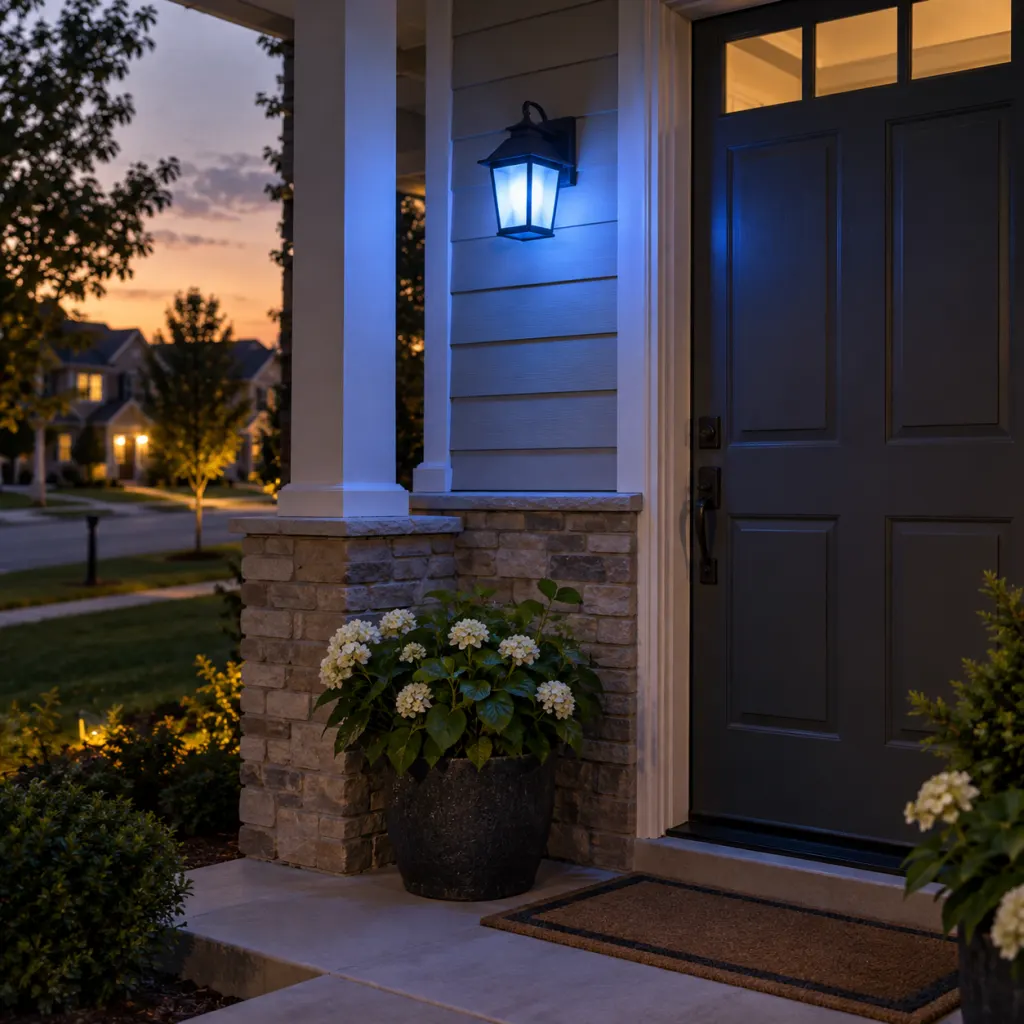
A blue porch light most often means support, remembrance, or awareness, but it is not a single official code. In many U.S. communities, blue lights are connected with Project Blue Light, a public observance honoring fallen law enforcement officers and showing support for officers and their families. In other cases, a household may use blue for autism awareness, a school or neighborhood event, a memorial, a holiday display, or simple personal preference. The safest interpretation is modest: the light may be intentional, but you need context before deciding what it means.
That context matters because porch lights sit in a public-facing place while still belonging to a private home. A blue bulb on a December evening near a police memorial event may carry a different message than a blue smart bulb on a summer weekend. A single color also cannot tell you anything certain about the residents, their beliefs, or their family situation. This guide explains the best-supported meanings, what not to assume, and how to respond respectfully if you notice one in your neighborhood.
A blue porch light is a signal, not a code
The most useful way to understand a blue porch light is to treat it as a social signal. It can point toward a cause, a mood, a memorial, or a household's chosen decoration, but it does not work like a traffic sign or an emergency notice. There is no national household-lighting rule that makes every blue porch light mean the same thing. That is why the question is less, What does blue always mean?
and more, What meaning is likely in this place, at this time?
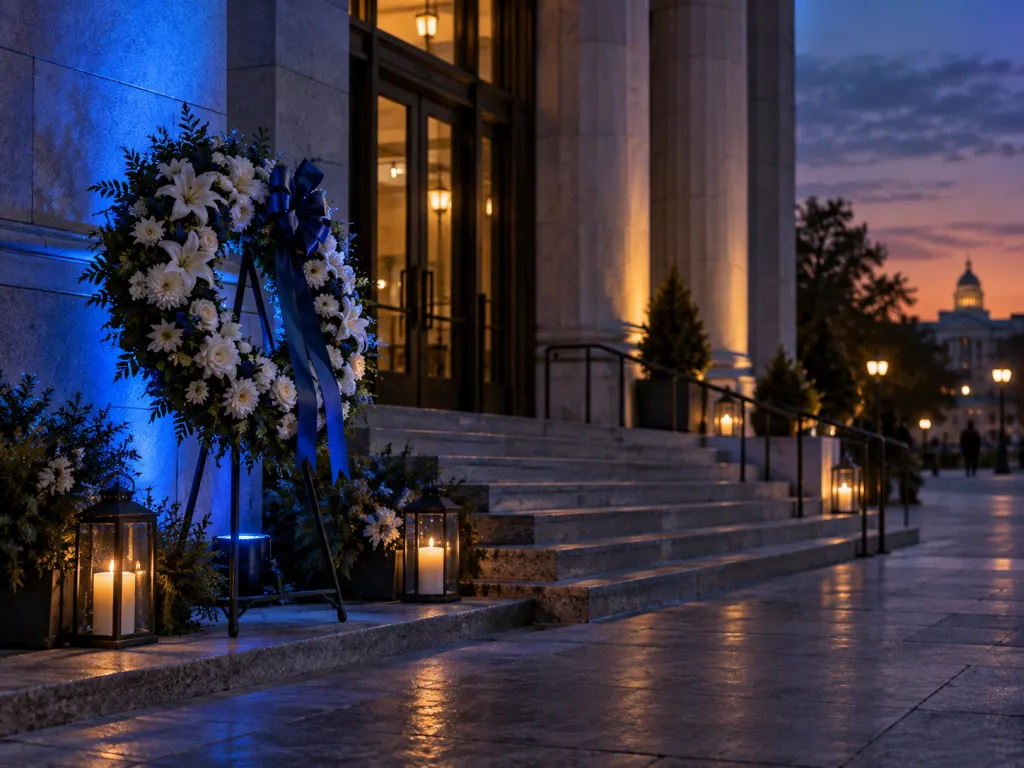
Public agencies give us some clear examples. Bucks County, Pennsylvania, describes an annual Project Blue Light wreath ceremony that remembers law enforcement officers lost in the line of duty and traces the observance to a family gesture that spread nationally (Bucks County). The Missouri State Highway Patrol has also announced participation in Project Blue Light by displaying blue lights at agency buildings to honor fallen officers and show support for law enforcement (Missouri State Highway Patrol). Those examples support a real public meaning, but they do not turn every porch bulb into an official statement.
The best-documented meaning: Project Blue Light
Project Blue Light is the clearest historically documented meaning behind blue porch and window lights in the United States. According to Bucks County's account, the observance grew from Dolly Craig of Philadelphia, who placed blue candle lights in her window in 1988 after the death of her son-in-law, Philadelphia Police Officer Daniel Gleason, and the later death of her daughter. The idea was shared with Concerns of Police Survivors and spread as a seasonal remembrance. Many agencies and families now use blue lights during the holiday season or around law enforcement memorial events.
When a home displays a blue porch light in that context, the likely message is remembrance, gratitude, or solidarity with law enforcement families. The meaning may be especially likely if nearby public buildings, police departments, or local announcements mention Project Blue Light. Still, readers should remember the difference between a probable public meaning and a confirmed private intention. A resident may be taking part in the observance, honoring a specific person, supporting a friend, or simply continuing a neighborhood tradition without explaining it publicly.
Autism awareness and other community meanings
Blue is also commonly associated in public conversation with autism awareness, especially during April events and online awareness campaigns. For an evidence-based grounding, the CDC describes autism spectrum disorder as a developmental disability and notes that awareness can support inclusion and connectedness for autistic people and their families (CDC autism overview; CDC autism resources). That does not mean a blue porch light is a standardized public-health marker. It means some households may choose blue as a visible sign of inclusion, support, or personal connection.
This is where respectful interpretation matters most. A blue porch light should not be used to infer that someone in the home is autistic, that a child lives there, or that the residents want to discuss private family information. A better reading is simple and courteous: the household may be expressing support for awareness or inclusion, or it may be using blue for another reason entirely. If the light appears alongside a yard sign, school campaign, community event, or public post from the homeowner, that extra context can clarify the intention. Without that context, restraint is part of good neighborliness.
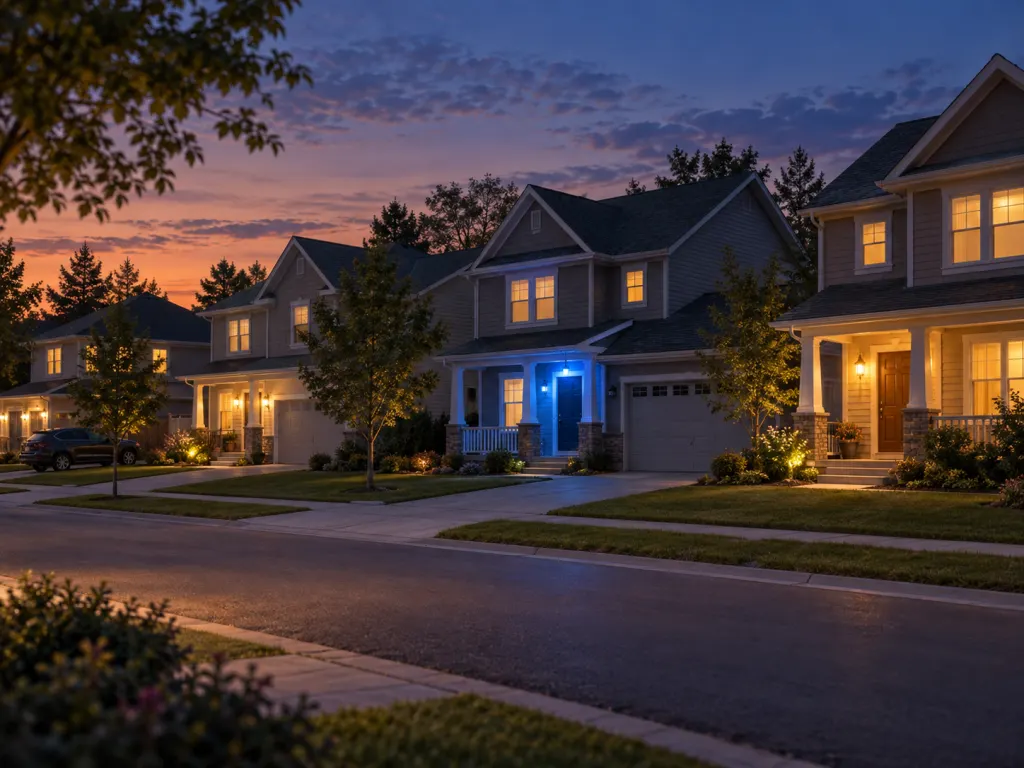
What a blue light does not reliably tell you
A blue porch light is not the same thing as an official Blue Alert. The U.S. Department of Justice describes the National Blue Alert Network as a public alert system used to rapidly share information with law enforcement, media, and the public in serious law enforcement safety situations (U.S. Department of Justice). That is a formal communication system. A porch light is a private display. The shared word blue
can cause confusion, but the two are not interchangeable.
A blue porch light also does not reliably identify a political position, household belief, profession, diagnosis, emergency, or request for help. It may be a memorial, a cause color, a decorative choice, a smart-bulb setting, a holiday accent, or a leftover from an event. In practice, color meanings travel through communities informally. They can be sincere without being universal, and they can be familiar in one town while meaning little in another.
How to respond respectfully
If you notice a blue porch light and want to acknowledge it, keep your response proportionate. Most of the time, no response is required. The light is simply part of a home's exterior, and the resident may not want a conversation about it. If you already know the household and the moment feels appropriate, a gentle question can be fine: I noticed the blue light - is it for an event?
That leaves room for a short answer, a personal story, or a polite change of subject.
- Look for public context first. Check whether a local agency, school, or neighborhood group has announced a blue-light observance.
- Do not attach private facts to the home. A color choice is not evidence about the residents' personal lives.
- Use neutral language. Say
blue light
ordisplay
rather than assigning a motive. - Respect silence. If a neighbor does not explain the meaning, that is enough.
- Separate support from debate. A porch display may be personal remembrance, not an invitation to argue.
Practical porch-light choices
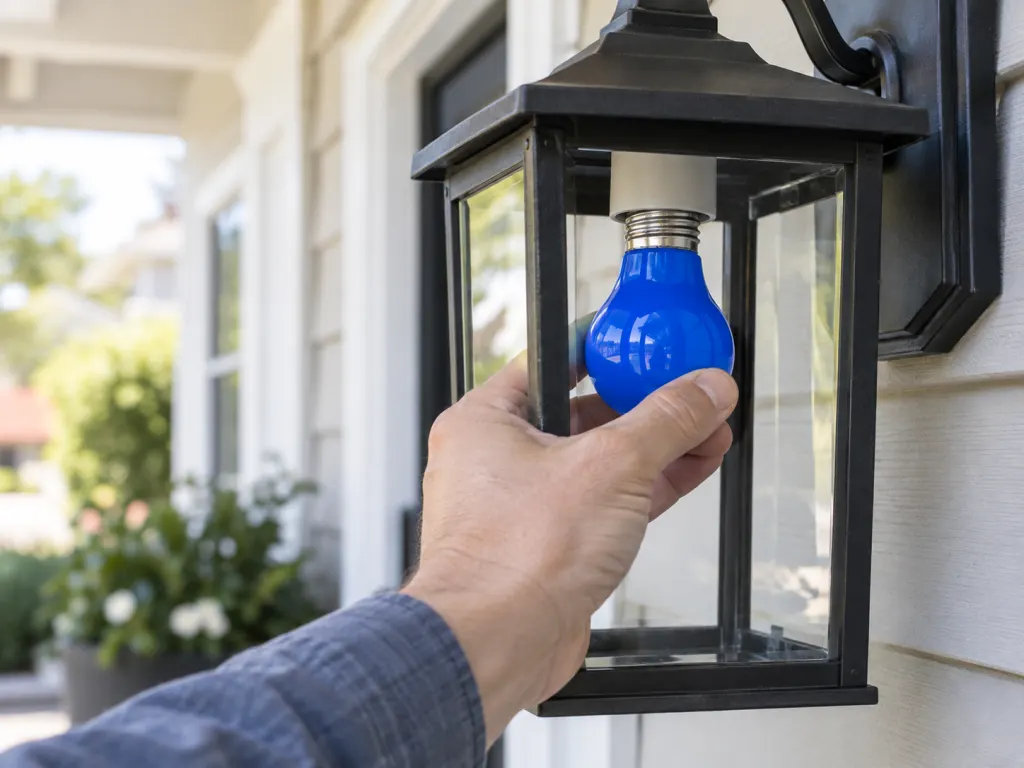
If you are thinking about installing a blue porch light yourself, start with the message you want to send and the practical details of the fixture. For a short observance, a blue bulb in an existing porch fixture may be enough. For a holiday display, LED light strings can reduce energy use compared with incandescent strings, and ENERGY STAR notes that certified LED light strings are cooler to the touch and more durable than older styles (ENERGY STAR light strings). For everyday exterior lighting, make sure the product is intended for outdoor use and fits the fixture you already have.
Smart bulbs add flexibility because one fixture can change color for different occasions. ENERGY STAR explains that LED products use light emitting diodes and can include colored LEDs, including blue, for general lighting and signal-style uses (ENERGY STAR LED lighting). If your goal is remembrance or awareness, consider pairing the light with a clear public context, such as a small event notice, a local campaign link on your personal page, or a conversation with neighbors who ask. The light itself can start the signal, but context carries the meaning.
A quick context checklist
When you are trying to interpret a blue porch light, use clues that are visible and public rather than assumptions about the household. The most helpful clues are timing, local announcements, nearby displays, and whether the homeowner has chosen to explain the light. This checklist can keep the interpretation fair:
- Season: Blue lights around late fall and winter may relate to Project Blue Light or holiday memorial displays.
- Local events: Police departments, county offices, schools, or community groups may announce a shared color display.
- Nearby patterns: Several homes or public buildings using blue at once often points to a coordinated observance.
- Accompanying signs: A sign, ribbon, or public post may explain the cause more clearly than the bulb alone.
- Household style: Some homes use color-changing lights year-round for mood, design, or seasonal decoration.
Bottom line
The meaning behind a blue porch light is real but context-dependent. The strongest documented public association is Project Blue Light, a remembrance and support observance connected with fallen law enforcement officers and their families. Blue can also be used for autism awareness, local causes, memorials, seasonal decoration, or personal preference. If you see one, the most accurate response is curiosity with restraint. Notice the context, avoid private assumptions, and let the homeowner's own explanation carry the final meaning.
Wrap-Up
A blue porch light is best understood as a flexible public-facing symbol. It may honor fallen law enforcement officers through Project Blue Light, express support for autism awareness or another local cause, mark a memorial, or simply reflect a homeowner's decorating choice. Because the color has several possible meanings, one bulb should not be treated as proof of anything private about the residents. Look for timing, local announcements, signs, and neighborhood patterns before drawing conclusions.
Frequently Asked Questions
- → Does a blue porch light always mean support for police?
No. Project Blue Light is the best-documented public association, especially around memorial or holiday observances, but blue porch lights can also be used for awareness campaigns, local events, memorials, or decoration.
- → Can a blue porch light mean autism awareness?
Sometimes, depending on the household or community event. Blue is often used in autism awareness contexts, but a porch light alone should not be treated as a statement about anyone who lives in the home.
- → Is a blue porch light an official emergency signal?
No. Official Blue Alerts are public alert systems managed through formal channels. A blue porch light is a private display and should not be interpreted as an emergency notice.
- → Is it rude to ask a neighbor why their porch light is blue?
It depends on your relationship and tone. A brief, neutral question can be fine if you already know them, but avoid pressing for personal details. The homeowner does not owe an explanation.
- → What should I do if I want to use a blue porch light myself?
Choose a bulb or light string rated for the fixture and setting, then add context if the meaning matters to you. A small sign, event notice, or public post can help others understand whether the display is for remembrance, awareness, or decoration.
References
This content was developed and refined using reliable sources.
- https://www.buckscounty.gov/m/newsflash?cat=1,12
- https://notes.mshp.dps.mo.gov/si01/si01p001.nsf/035631d21d12b3ca8625729800536894/c6688887e8d17d1186258d4c004d1bb2?OpenDocument=
- https://www.cdc.gov/autism/about/index.html
- https://www.cdc.gov/autism/communication-resources/index.html
- https://www.justice.gov/archives/opa/pr/justice-department-announces-national-blue-alert-network
- https://www.energystar.gov/products/holiday/light_strings
- https://www.energystar.gov/products/learn-about-led-lighting