 Save
Orchids are some of the longest-lived houseplants you can own, capable of flowering year after year with a consistent routine. After the blooms drop, many owners are unsure what to do, but encouraging a second flower spike is very achievable. The key is matching the plant's natural cycle: adequate light, careful watering, measured feeding, and a brief cooler period that signals the plant it is time to bloom again. This guide covers six practical steps drawn from horticultural research to help you bring your orchid reliably back into flower.
Step 1: Position the plant in bright, indirect light
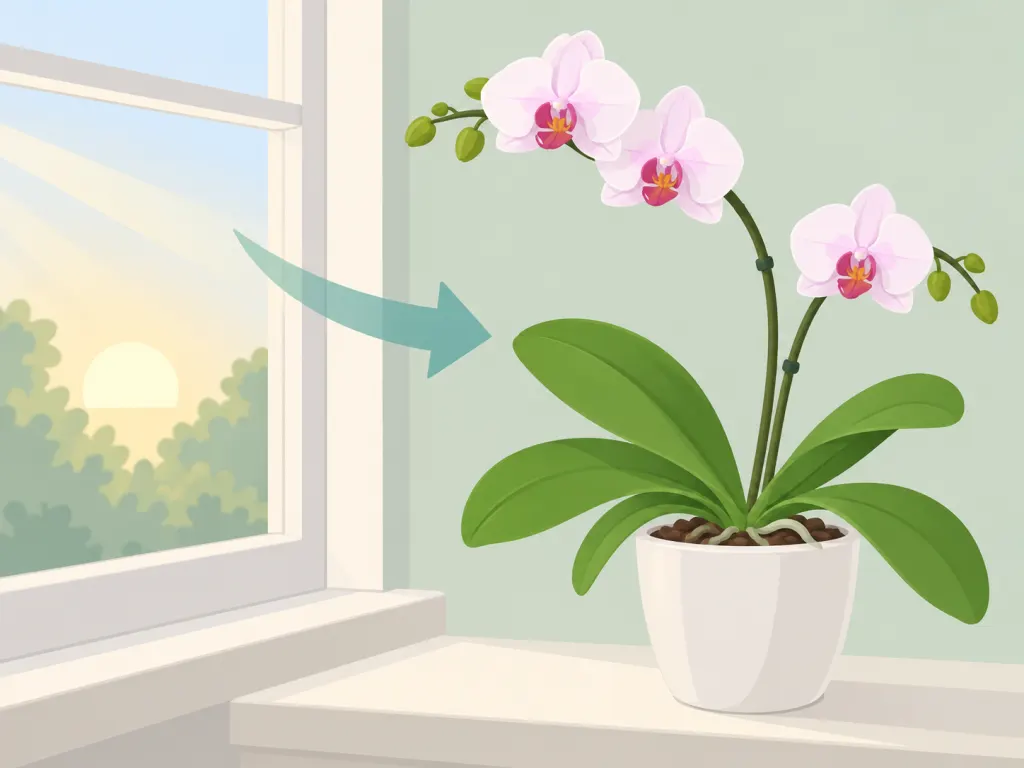
Moth orchids (Phalaenopsis), the most common indoor type, do best on an east- or west-facing windowsill where they receive strong, diffused light without direct midday sun. A useful check: healthy orchid leaves should be a medium, grassy green. Very dark green leaves indicate insufficient light, which typically prevents good flowering. Keep the plant away from cold draughts and hot radiators, both of which can cause developing buds to drop before they open.
Step 2: Water once a week with tepid, low-mineral water
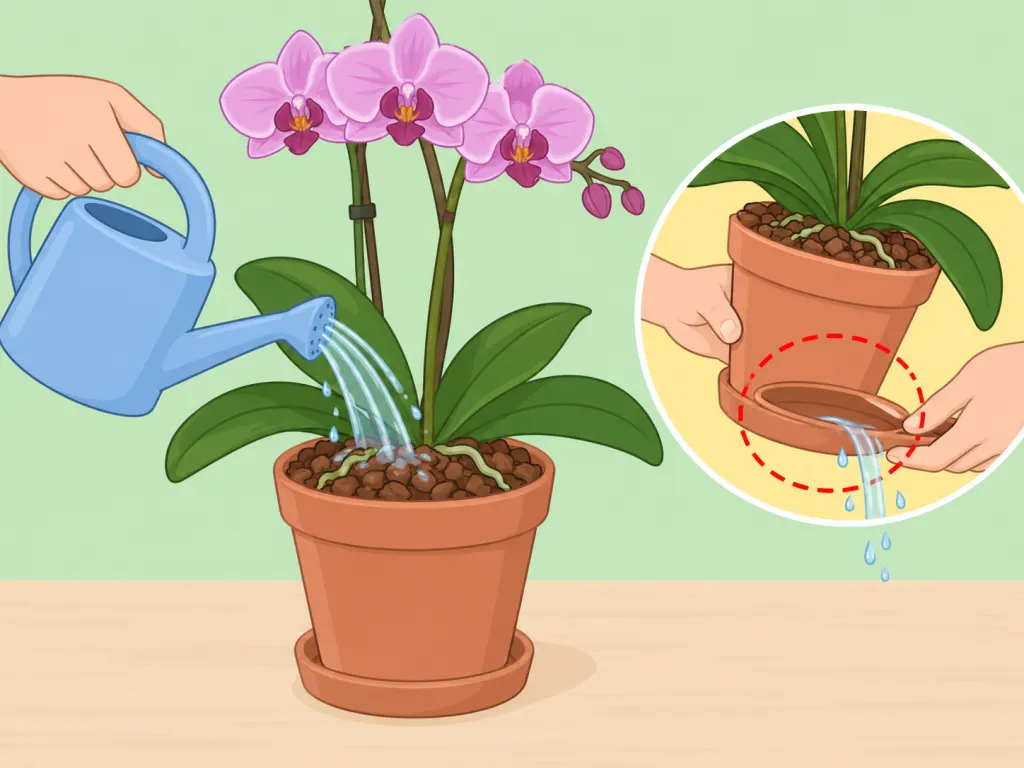
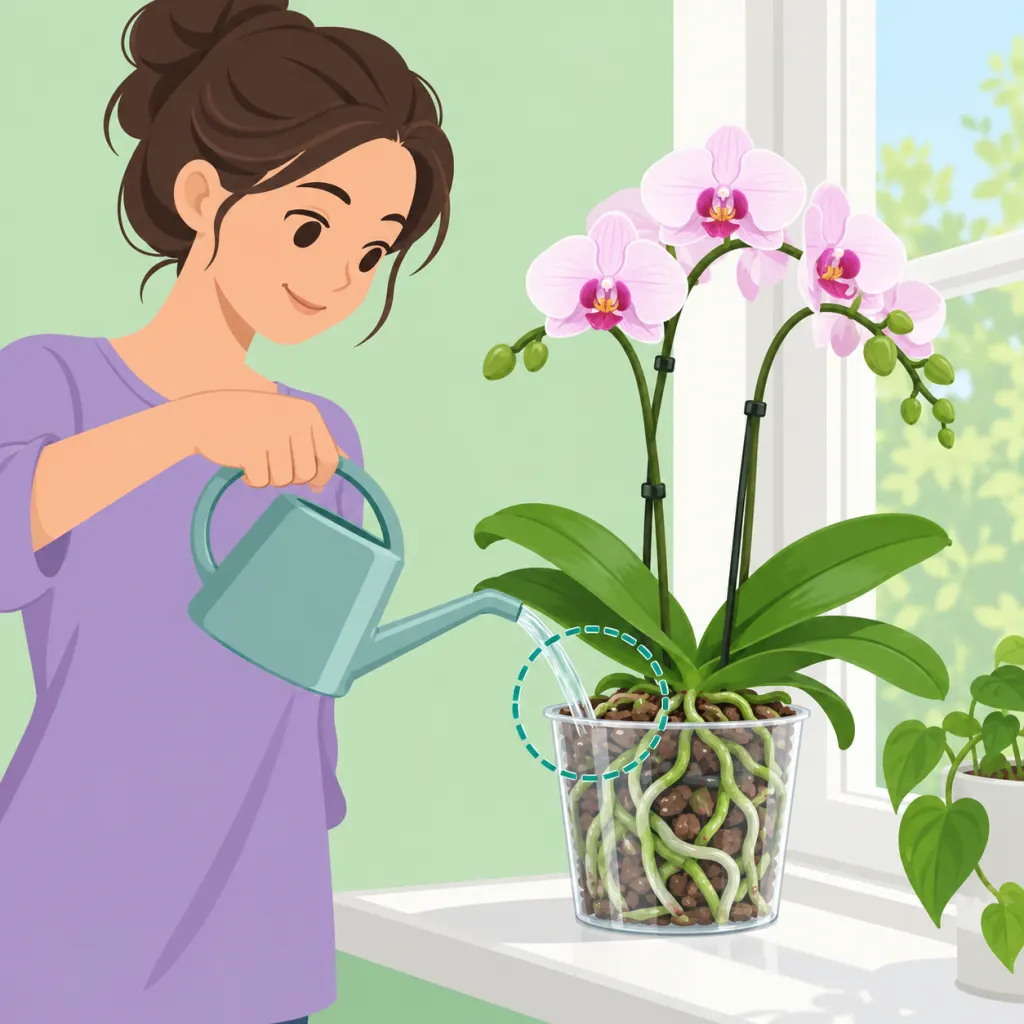
Water the orchid once a week during the growing season by pouring tepid rainwater, or previously boiled water cooled to room temperature, slowly over the bark from the top. Tip out any water that collects in the saucer within thirty minutes, as roots sitting in standing water can rot quickly. Reduce watering slightly in winter, but never let the roots dry out completely. Avoid getting water into the crown of the plant, which can lead to rot.
Step 3: Feed with diluted fertilizer during the growing season
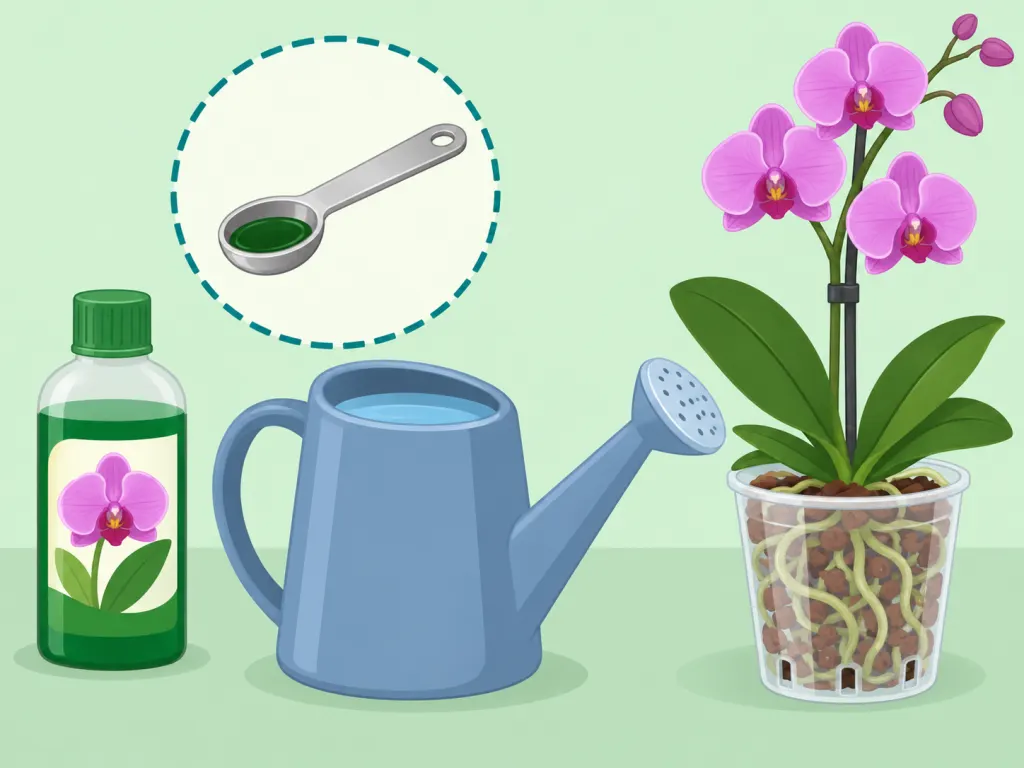
From spring through summer, apply a balanced orchid fertilizer at half or quarter the label strength with every second or third watering. This steady, diluted approach builds the plant's strength for flowering without overloading it with mineral salts. Flush the compost through with plain water every fourth watering to clear any residue. Cut back on feeding in autumn and winter when the plant is resting.
Step 4: Introduce a cool period in autumn to trigger a new flower spike

Most moth orchids need a short stretch of cooler temperatures to prompt a new flower spike. Moving the plant to a room about 5°C (8-10°F) cooler than its usual position, such as an unheated spare room or a cool hallway, for four to six weeks in autumn is usually enough to trigger this response. Night temperatures between 16°C and 18°C (61-64°F) are ideal; avoid drops below 14°C (57°F), which can stress the plant. Once a new spike becomes visible, move the orchid back to its regular warm spot.
When all the blooms have fallen and the spike begins to turn yellow or brown, sterilize a pair of scissors and cut the spike cleanly to just above the second notch (node) counting up from the base. Cutting at this point often prompts the spike to branch and produce a second flush of flowers more quickly than waiting for a completely new spike to grow from the base. If the spike stays green and firm, it may branch on its own, wait a few weeks before cutting.
Step 6: Repot every two years in fresh bark-based compost
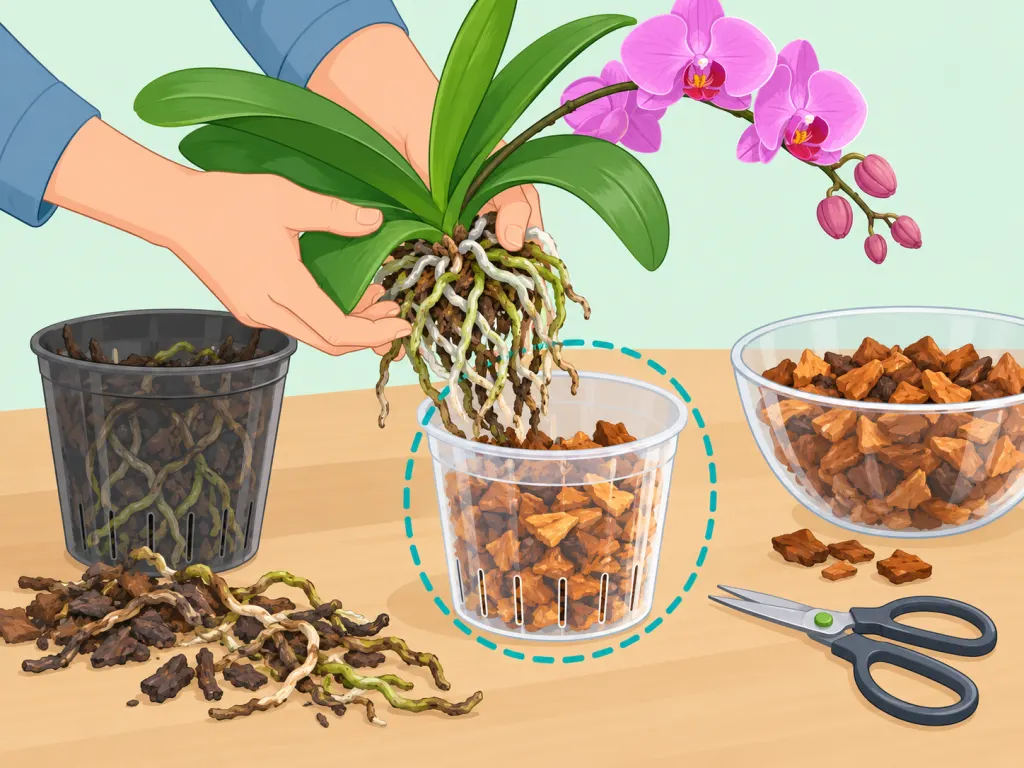
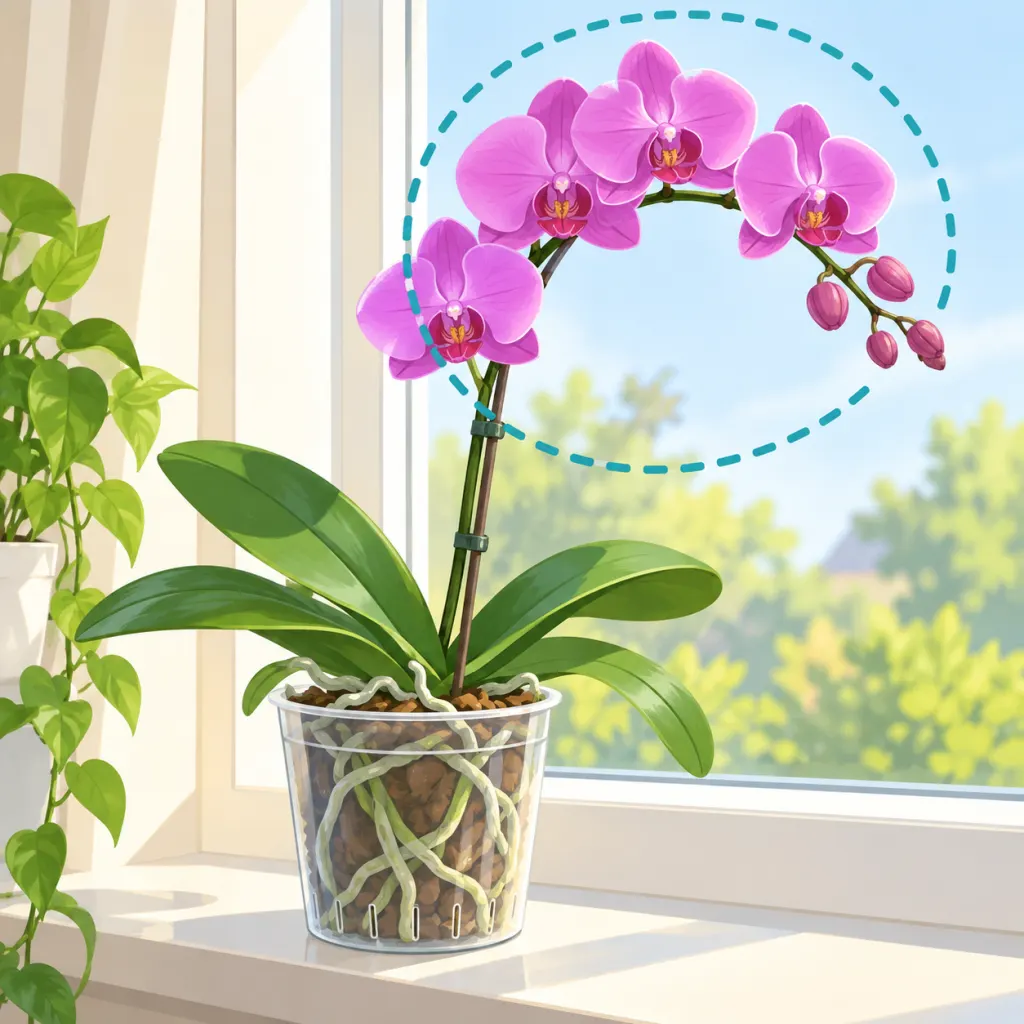
Bark compost breaks down over time, retaining too much moisture and crowding the roots. Every two years, or sooner if the plant is clearly pot-bound, move it into a slightly larger transparent pot using fresh orchid-grade bark mix. Remove all the old compost, trim any brown or mushy roots cleanly, and keep healthy roots to around 12 cm (5 in). The best time to repot is just after the plant has finished flowering, never while it is actively in bloom.
Wrap-Up
The bottom line: keep your orchid in bright indirect light, water it once a week with tepid low-mineral water, feed it with diluted fertilizer during spring and summer, and give it a short cooler period in autumn. Trim the spent spike above the second node when flowering ends and refresh the compost every two years, and most moth orchids will produce a new flower spike year after year.
Frequently Asked Questions
- → Why are my orchid's flower buds dropping before they open?
Bud blast is usually caused by sudden temperature swings, cold draughts, low humidity, or ethylene gas from nearby ripening fruit. Move the plant away from windows, air vents, and fruit bowls, and check that temperatures remain stable above 16°C (61°F).
- → How long does it take for a new flower spike to appear?
After the right care and a cool trigger period, most Phalaenopsis orchids produce a new spike within one to three months. Continue the regular watering and light routine while you wait, the spike often grows slowly before becoming clearly visible.
- → Should I use tap water or rainwater for my orchid?
Rainwater or water that has been boiled and cooled to room temperature is recommended because it contains fewer dissolved minerals than hard tap water, which can build up around roots over time. If tap water is all you have, letting it sit overnight before use can help.
- → Is it normal for orchid roots to grow outside the pot?
Yes. Aerial roots climbing over the rim or sides of the pot are healthy and normal for orchids. They absorb moisture and light and should not be cut off or pushed back into the compost, they are a sign of a vigorous, healthy plant.
- → How do I know when it is time to repot my orchid?
Repot when roots are visibly crowded or pushing out of drainage holes, when the bark compost smells sour or looks dark and decomposed, or roughly every two years. Just after flowering ends in spring is the ideal window for repotting.
- → Can I move my orchid outside in summer?
A shaded, sheltered outdoor spot during warm weather can benefit an orchid, but bring it back indoors before night temperatures fall below 16°C (61°F). Protect it from direct midday sun, heavy rain, and strong wind, all of which can damage leaves and roots.