 Save
The most useful hidden sign of fatty liver is often not a feeling in the liver. It is a metabolic pattern: extra weight around the waist, insulin resistance or type 2 diabetes, high triglycerides, abnormal cholesterol, high blood pressure, or liver test changes found for another reason. The National Institute of Diabetes and Digestive and Kidney Diseases notes that nonalcoholic fatty liver disease, now also referred to as MASLD, is usually a silent condition with few or no symptoms, while risk is higher with insulin resistance, type 2 diabetes, abnormal blood fats, and traits of metabolic syndrome NIDDK. That is why the phrase 'hidden sign' can be misleading if it makes people search for one dramatic clue. A better question is whether several quiet risk signals are clustering together. This article explains what that pattern can look like, why normal day-to-day sensations are not enough to rule fatty liver in or out, and what to discuss with a clinician if the topic fits your situation.
Why the clue is usually a pattern, not one symptom
Fatty liver means excess fat has built up in liver cells. MedlinePlus describes steatotic liver disease as the newer broad term for fatty liver disease and explains that MASLD is the type not caused by heavy alcohol use MedlinePlus. The liver sits deep in the upper right abdomen and can continue doing many of its jobs without sending a clear early warning. That is why many people first hear about possible fatty liver after routine blood work, an ultrasound, or a medical visit focused on another condition.

What the metabolic pattern can include
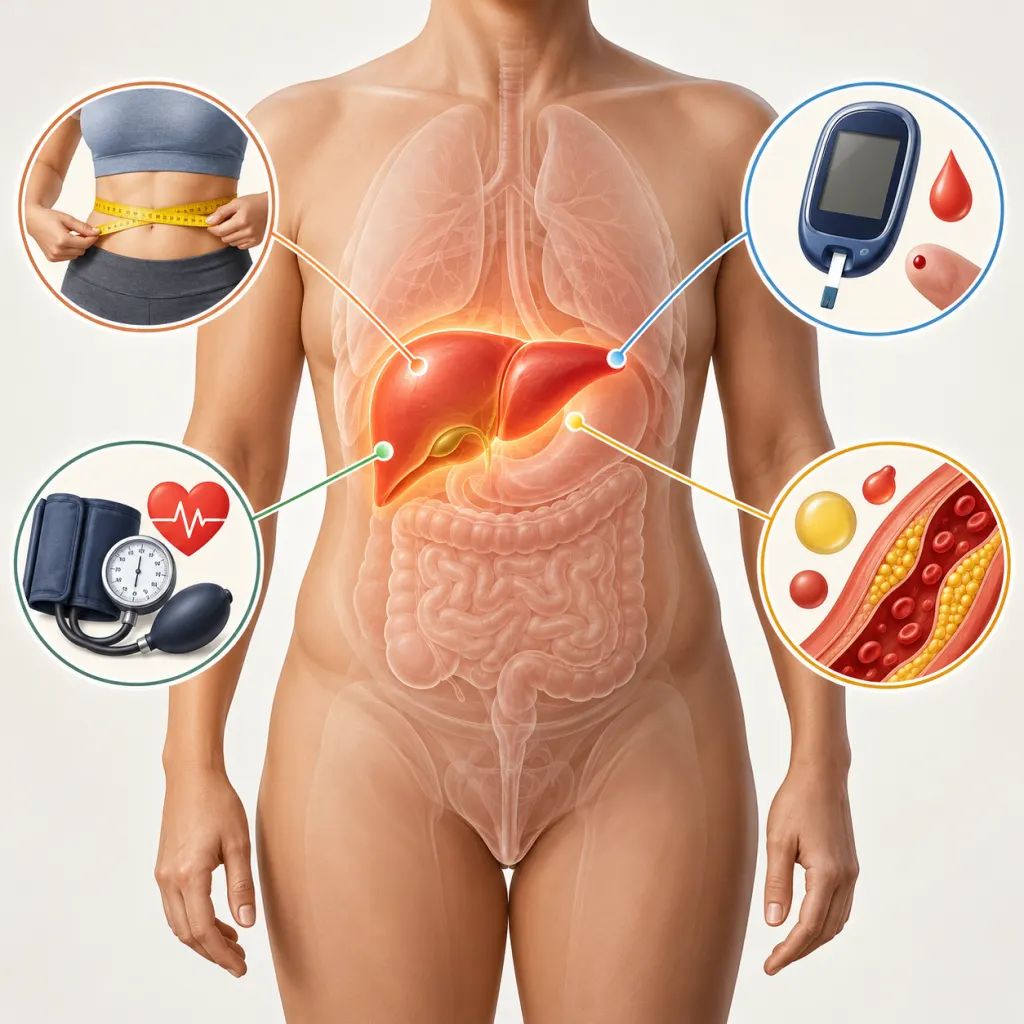
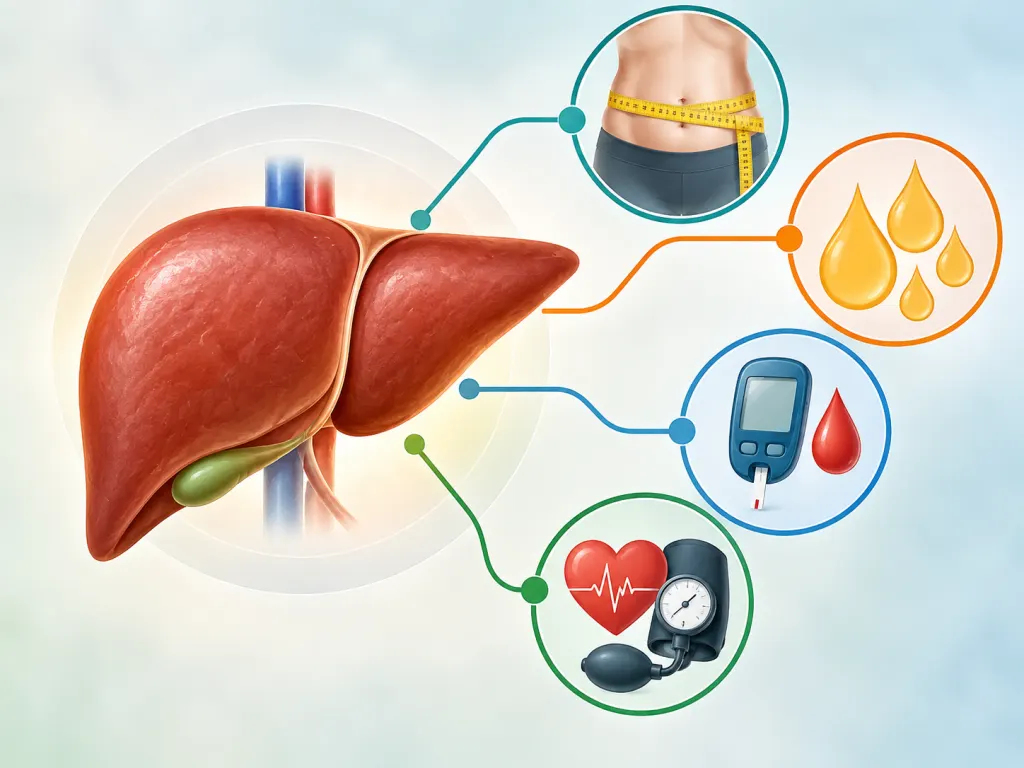
The pattern worth noticing is the same one doctors often review when they think about MASLD. It can include body weight centered around the waist, type 2 diabetes or insulin resistance, high triglycerides, abnormal cholesterol, and high blood pressure. Mayo Clinic lists obesity, especially waist-centered fat, type 2 diabetes, high cholesterol, high triglycerides, insulin resistance, and metabolic syndrome among important risk factors for MASLD Mayo Clinic. None of these proves that someone has fatty liver, and some people develop MASLD without obvious risk factors. Still, when several of these are present together, the liver can become part of the same metabolic story.
A practical way to think about the hidden clue is to look for clustering rather than one isolated number or body feature:
- Waist-centered weight: extra fat around the stomach and waist is repeatedly listed by health authorities as a risk clue.
- Blood sugar concerns: insulin resistance, prediabetes, or type 2 diabetes can travel alongside fat buildup in the liver.
- Blood fat changes: high triglycerides or abnormal cholesterol can be part of the same metabolic pattern.
- Blood pressure: high blood pressure can be another trait in the cluster.
- Unexpected liver test results: abnormal liver tests may prompt a clinician to look further, even when the person feels well.
Why feeling fine does not settle the question
Many people expect liver problems to cause obvious pain or visible changes. In early MASLD, that expectation can be unreliable. The NHS says non-alcoholic fatty liver disease does not usually cause symptoms and is often found when tests are done for another reason NHS. When symptoms occur, they may be vague, such as tiredness, generally feeling unwell, or discomfort under the right side of the ribs. Those sensations are common and can come from many causes, so they are not specific enough to identify fatty liver on their own.
This is also why social-media claims about a single shared habit or sensation can oversimplify the issue. A person can have fatigue for reasons unrelated to the liver. Another person can have fatty liver and feel completely normal. A third may have abnormal liver tests because of alcohol-related liver disease, viral hepatitis, a medicine or supplement effect, another liver condition, or a temporary illness. The useful move is not to label the symptom by yourself, but to notice whether the broader risk pattern deserves a proper review.
How clinicians usually check it
Health professionals do not diagnose fatty liver from appearance or a single symptom. NIDDK describes the usual process as a combination of medical history, physical exam, blood tests, imaging tests, and sometimes liver biopsy when more certainty is needed NIDDK diagnosis guide. A history may include alcohol intake, weight history, physical activity, sugar-sweetened drinks, other health conditions, and possible alternative causes. The physical exam may include height, weight, and signs that suggest insulin resistance or more advanced liver disease.
Blood tests can show liver enzyme changes, but they do not tell the full story by themselves. Imaging can show fat in the liver, while certain specialized tests can estimate stiffness, which may suggest scarring. Cleveland Clinic notes that providers may use blood tests and imaging tests, with biopsy used in some cases, to evaluate MASLD Cleveland Clinic. The reason this matters is simple: two people can have similar daily symptoms and very different liver findings, while two people with fatty liver can have different levels of inflammation or scarring.
What to bring to the conversation
If you are concerned about fatty liver, it helps to arrive with specifics rather than a vague fear. Bring recent lab results if you have them, including liver panel results, triglycerides, cholesterol, A1C or fasting glucose, and blood pressure readings. Be ready to discuss alcohol use honestly, because alcohol-associated liver disease can also cause fat buildup in the liver. Mention supplements and over-the-counter products as well as prescribed medicines, because clinicians sometimes need to consider other causes of liver test changes.
It is also reasonable to ask direct questions: Do my liver tests need repeating? Do my metabolic risk factors make MASLD worth checking for? Would imaging be useful in my case? Are there signs that suggest scarring should be assessed? What follow-up interval makes sense? These questions do not assume a diagnosis; they help turn a vague hidden-sign worry into a structured medical conversation.

When symptoms deserve timely attention
Because early fatty liver is often quiet, new or persistent symptoms should be interpreted carefully. Lasting tiredness, ongoing right-upper-abdominal discomfort, yellowing of the skin or eyes, abdominal swelling, leg swelling, confusion, or unexplained weight loss should not be brushed off as ordinary. They do not automatically mean fatty liver, but they are reasons to seek medical review. For more context on visible liver-related changes, see our related explainers on visible signs of liver disease and warning signs of liver problems.
Putting the hidden clue in perspective
The hidden sign of fatty liver is best understood as a context clue, not a verdict. A larger waist measurement, abnormal triglycerides, high blood pressure, insulin resistance, or type 2 diabetes can point toward a metabolic environment in which fatty liver is more likely. But a person can have those factors without fatty liver, and a person can have fatty liver without the full pattern. That uncertainty is exactly why testing and medical history matter.
There is a useful upside to this framing. Instead of waiting for the liver to hurt, people and clinicians can notice quiet patterns earlier: routine blood work, waist measurement, blood pressure, blood sugar history, alcohol history, and imaging results if available. The goal is not to frighten people into assuming the worst. It is to replace the idea of one mysterious hidden sign with a more accurate question: does my overall metabolic picture suggest that my liver should be checked?
Wrap-Up
Fatty liver is often silent, so the clearest clue is usually not a single symptom. It is a cluster of metabolic risk signals such as waist-centered weight, insulin resistance or type 2 diabetes, high triglycerides, cholesterol changes, high blood pressure, or abnormal liver tests. Those clues cannot diagnose fatty liver by themselves, but they can justify a thoughtful discussion with a qualified health professional about whether testing or follow-up is appropriate.
Frequently Asked Questions
- → Is there one hidden sign that proves someone has fatty liver?
No. Fatty liver is often silent, and no single symptom proves it. The more useful clue is a pattern of metabolic risk, such as insulin resistance, type 2 diabetes, high triglycerides, abnormal cholesterol, high blood pressure, or waist-centered weight. Testing and medical history are needed to evaluate the liver.
- → Can fatty liver happen if liver tests are normal?
It can. Liver blood tests are helpful, but they do not answer every question about fat, inflammation, or scarring in the liver. A clinician may consider the full picture, including risk factors, alcohol history, imaging, and follow-up tests when appropriate.
- → Does tiredness mean fatty liver?
Not by itself. Tiredness is common and can have many causes. Fatty liver can sometimes be associated with fatigue, but many people with fatty liver have no symptoms. Persistent tiredness is worth discussing with a health professional, especially when other metabolic risk factors are present.
- → What should I ask my doctor if I am worried about fatty liver?
Ask whether your personal risk factors make MASLD worth checking for, whether recent liver tests should be repeated, whether imaging is appropriate, and whether your blood sugar, blood pressure, triglycerides, and cholesterol suggest a broader metabolic pattern.
- → Is fatty liver always related to alcohol?
No. Steatotic liver disease can be alcohol-associated, but MASLD is the term often used when fat buildup is linked with metabolic factors rather than heavy alcohol use. A clinician may ask about alcohol because it helps distinguish possible causes and choose the right evaluation path.
References
This content was developed and refined using reliable sources.
- https://www.niddk.nih.gov/health-information/liver-disease/nafld-nash/symptoms-causes?dkrd=www2.niddk.nih.gov
- https://medlineplus.gov/steatoticliverdisease.html
- https://www.mayoclinic.org/diseases-conditions/fatty-liver-disease-masld/symptoms-causes/syc-20354567?p=1
- https://my.clevelandclinic.org/health/diseases/22437-non-alcoholic-fatty-liver-disease
- https://www.nhs.uk/conditions/non-alcoholic-fatty-liver-disease
- https://www.niddk.nih.gov/health-information/liver-disease/nafld-nash/diagnosis