 Save
Most flowering “geraniums” sold for pots and summer displays are tender pelargoniums, and they bloom best when water reaches the roots without leaving the soil soggy. This guide shows you how to water them in a steady, practical way that supports stronger roots and more flowers. It also covers how to adjust for containers, hot weather, rain, and cooler seasons.
Step 1: Check that the plant has sun and drainage
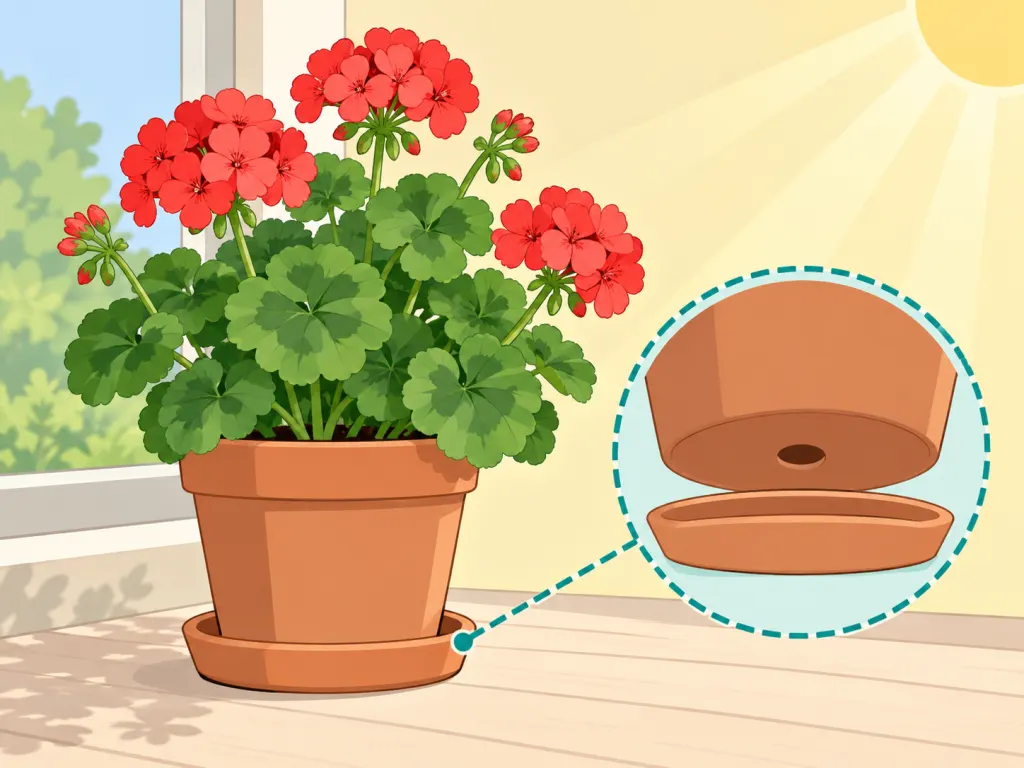
Before changing your watering routine, make sure the plant is in a spot where watering can actually help. Common bedding geraniums, listed by Illinois Extension as Pelargonium x hortorum, prefer full sun and moist but well-drained soil. If a pot has no drainage hole, move the plant to one that drains so the roots are not left sitting in water.
Step 2: Test the soil before you water
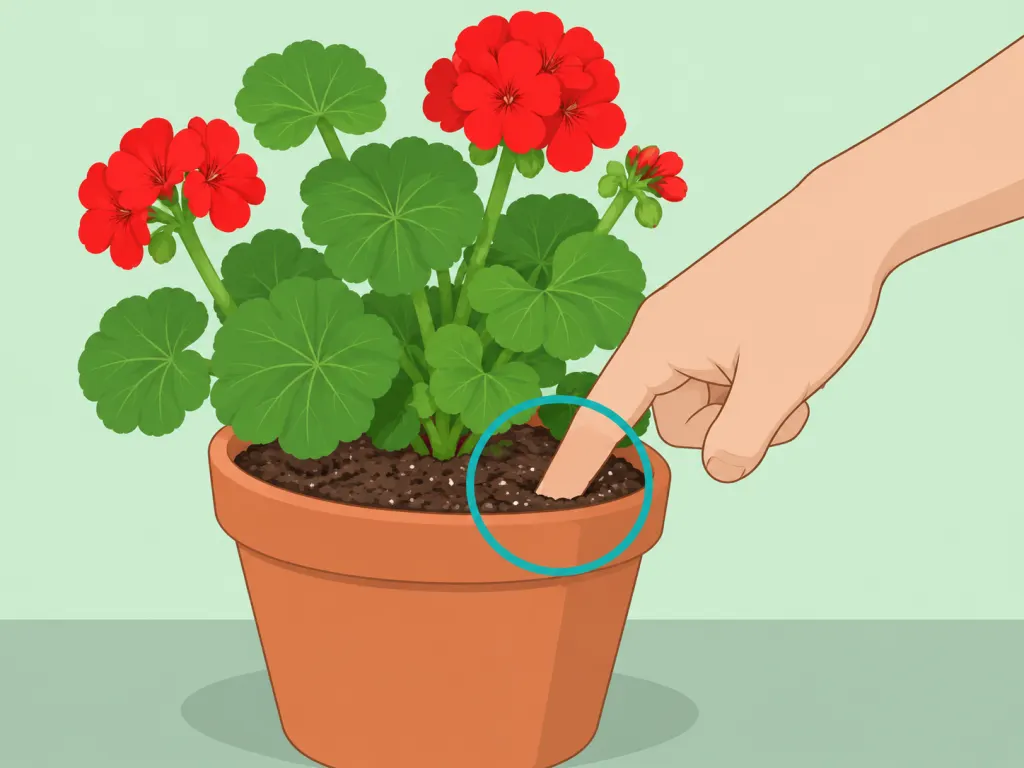
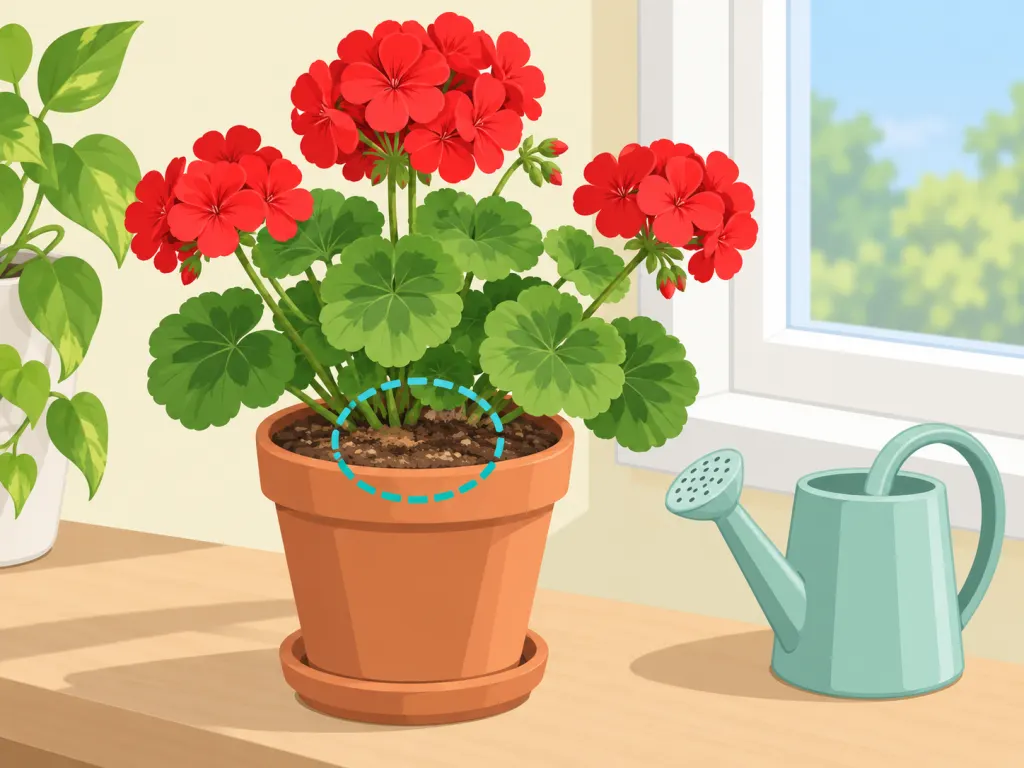
Push your finger into the top 1 to 2 inches of soil and water only when that layer feels dry. Iowa State Extension recommends checking soil moisture rather than watering by the calendar, since weather and soil conditions change how fast plants dry out. Container geraniums usually need checking more often than plants growing in garden beds.
Step 3: Water in the morning at the soil line
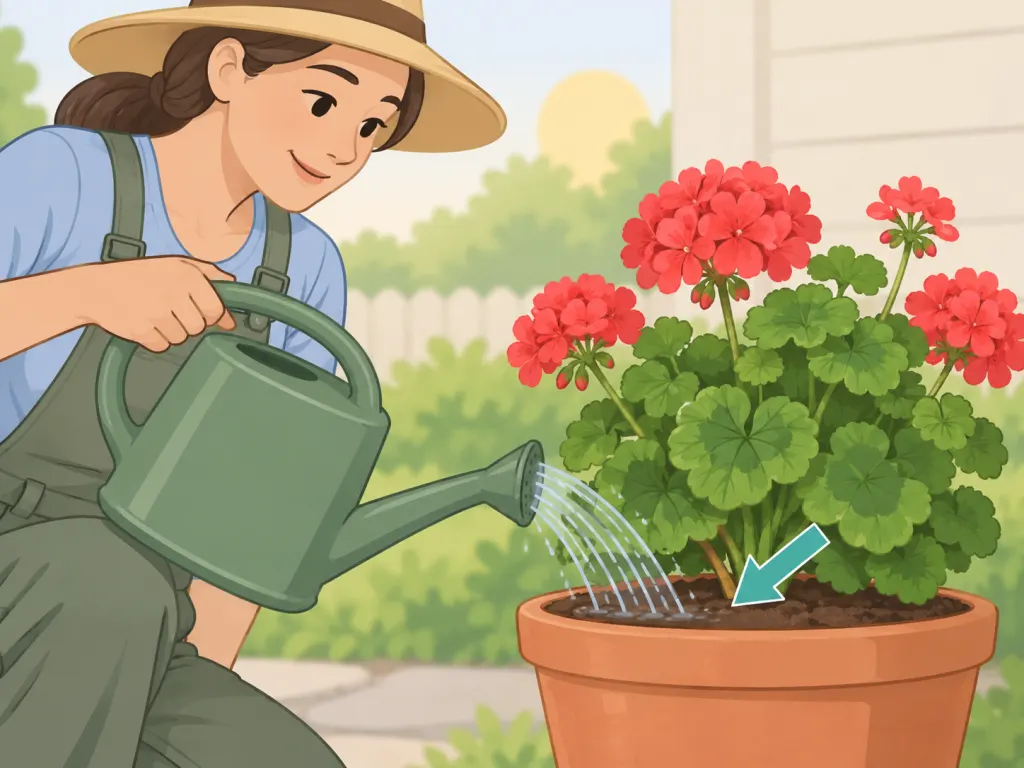
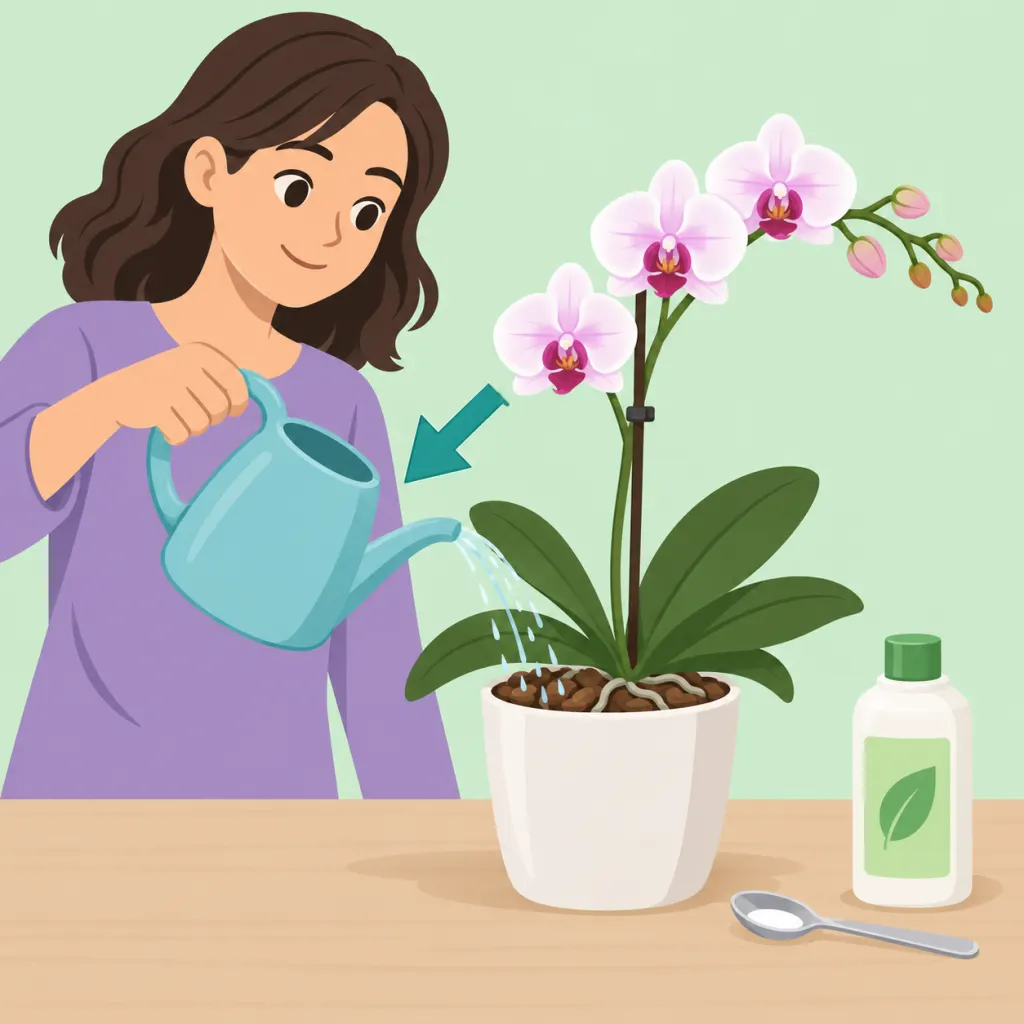
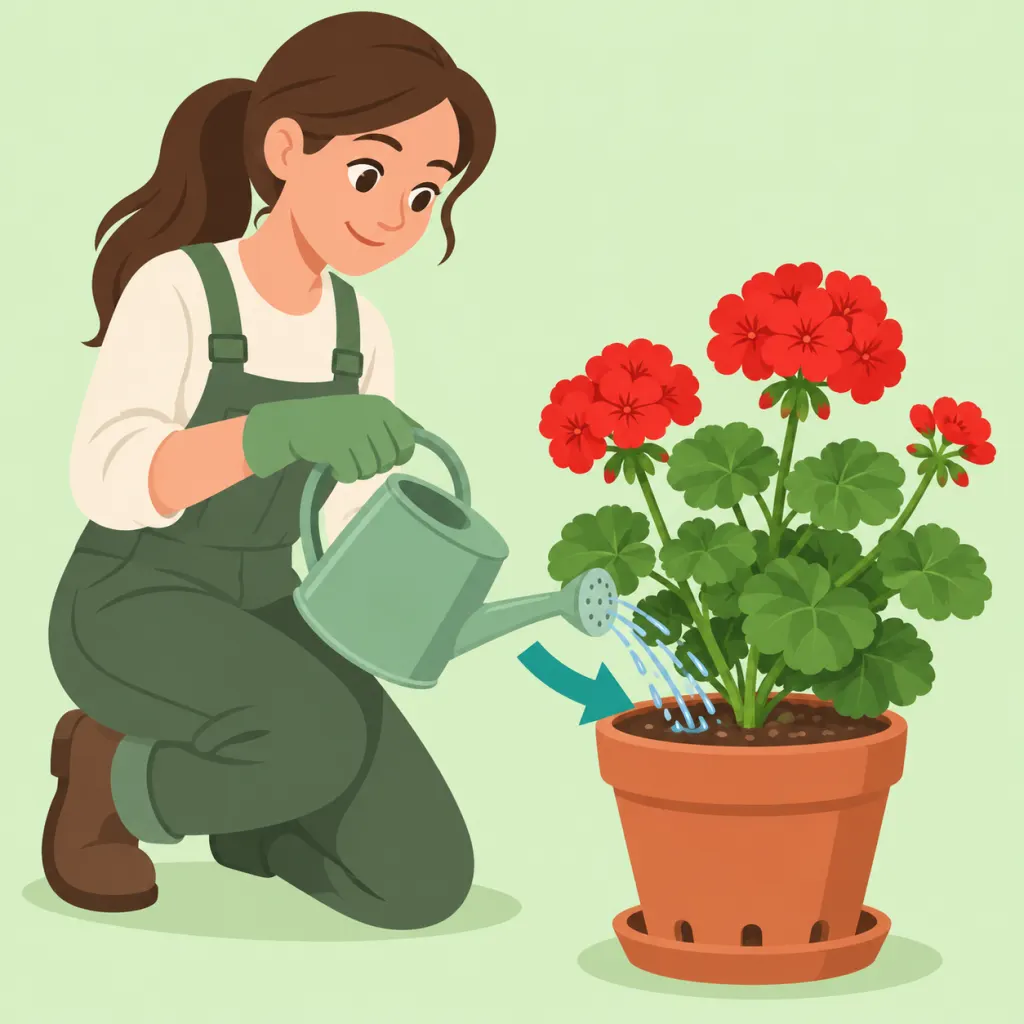
Use a watering can or gentle hose wand and aim at the base of the plant, not over the leaves and flowers. Iowa State Extension notes that watering the root zone and watering in the morning helps plants use moisture well while allowing damp foliage to dry faster. This is especially helpful for crowded pots and window boxes.
Step 4: Soak deeply instead of sprinkling lightly
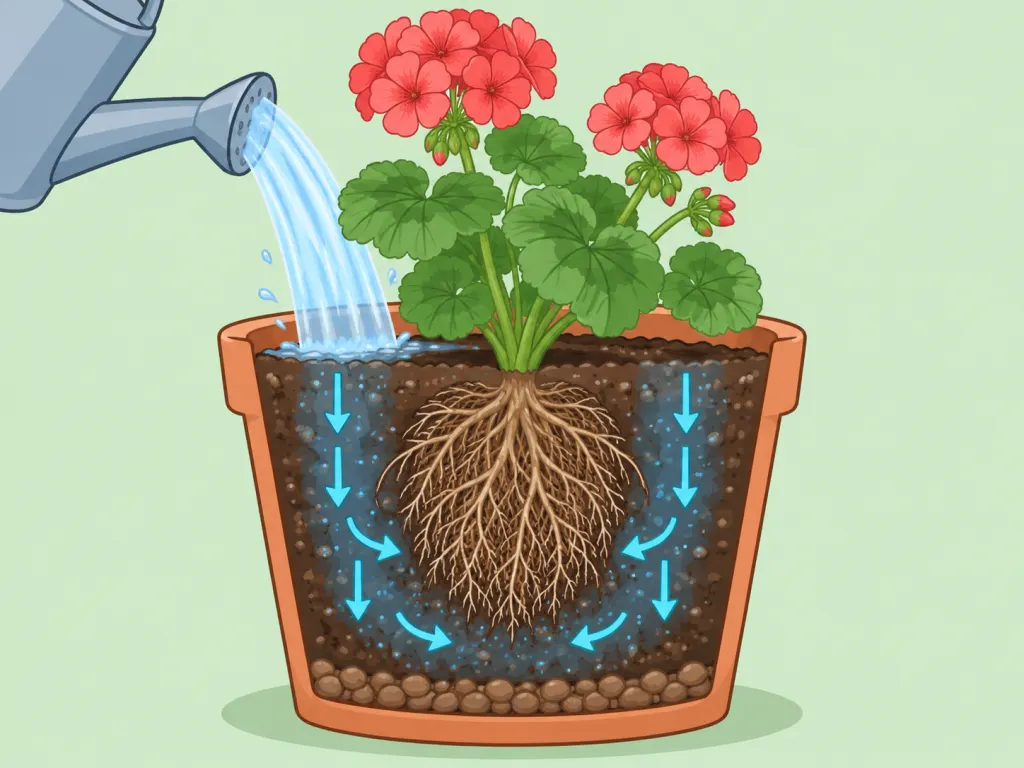
When the soil is dry enough to water, apply water slowly until the root area is evenly moist. For garden watering, Iowa State Extension recommends slow, deep watering because a quick splash can encourage shallow roots. In containers, continue until water begins to drain from the bottom, then stop.
After watering a potted geranium, wait for extra water to run out and then empty any saucer or cachepot. Illinois Extension advises allowing excess water to drain and not letting potted plants sit in standing water. This helps keep the soil moist without becoming soggy.
Step 6: Adjust watering for heat, wind, and rain
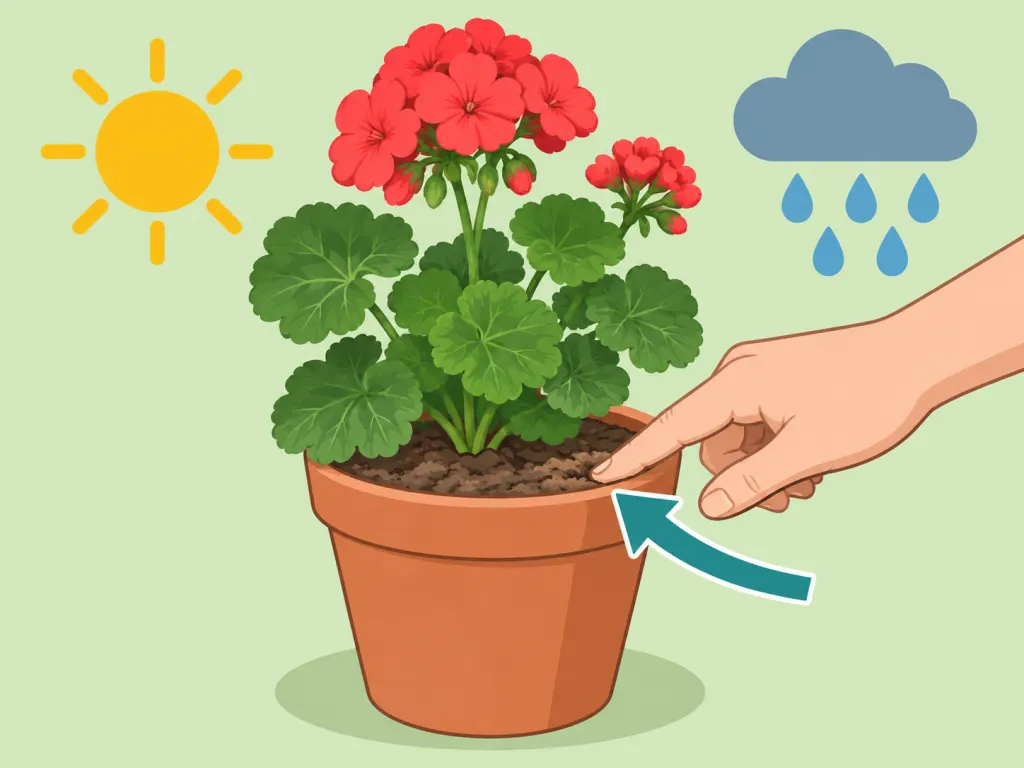
Check more often during hot, windy weather because pots, hanging baskets, and small containers dry quickly. After rain, test the soil again before watering, even if it is your usual watering day. The RHS describes pelargoniums as not especially thirsty plants, so moderate watering is better than keeping the compost constantly wet.
Step 7: Water less in cool weather
As temperatures cool or growth slows, let the soil dry more between waterings. The RHS recommends watering pelargoniums sparingly in winter so the compost has time to dry between waterings. If you bring plants indoors to overwinter, check them weekly but avoid treating them like actively growing summer plants.
Step 8: Feed and deadhead after watering
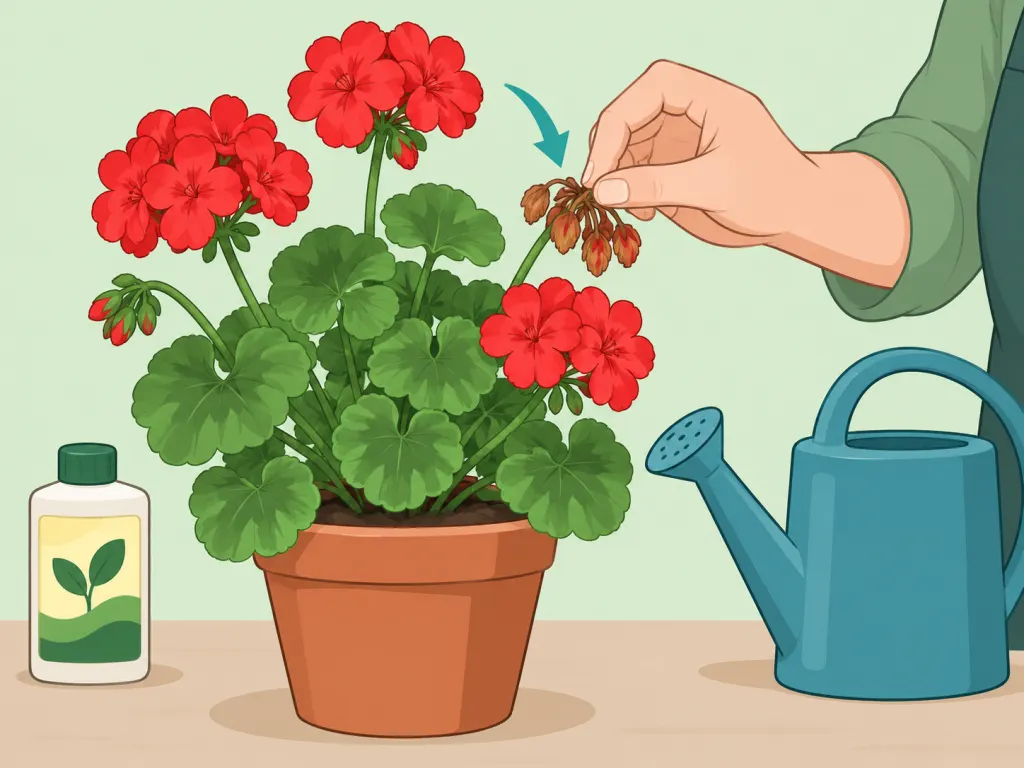
For more flowers, combine good watering with regular bloom care. Iowa State Extension says container geraniums respond well to dilute fertilizer, while RHS recommends feeding pelargoniums and switching to a potassium-rich feed once flowers form. Remove faded blooms regularly, since Illinois Extension notes that deadheading geraniums helps maintain blooming plants.
Wrap-Up
The bottom line: water geraniums when the top soil dries, soak the root zone thoroughly, and let containers drain. Moderate, well-timed watering works best when it is paired with sun, good drainage, feeding, and regular deadheading.
Frequently Asked Questions
- → How often should I water geraniums in pots?
Check the soil daily in hot weather and water when the top 1 to 2 inches feel dry. Pots can dry faster than garden beds, so the right timing may change from week to week.
- → Should geranium soil stay constantly moist?
No. Keep the soil evenly moist after watering, but let the surface dry before watering again. Constantly wet soil can reduce root health and weaken the plant.
- → Is it better to water geraniums from above or below?
Watering at the soil line from above is simple and effective as long as the pot drains well. Avoid soaking the leaves and flowers because wet foliage is more likely to develop plant disease problems.
- → Why are my geranium leaves yellow after watering?
Yellow leaves can have several causes, including too much water, too little water, poor drainage, or nutrient stress. Check whether the soil is staying wet for a long time before watering again.
- → Do geraniums need more water to bloom more?
Not necessarily. More flowers come from balanced care: full sun, well-drained soil, moderate watering, feeding during active growth, and removing spent blooms.
- → Can geraniums dry out a little between waterings?
Yes. Pelargoniums tolerate some dryness better than soggy soil. Let the top layer dry, then water thoroughly so moisture reaches the roots.
References
This content was developed and refined using reliable sources.
- https://www.rhs.org.uk/plants/pelargonium/growing-guide
- https://yardandgarden.extension.iastate.edu/faq/how-do-i-care-garden-geraniums
- https://yardandgarden.extension.iastate.edu/how-to/watering-tips-garden-lawn-and-landscape
- https://extension.illinois.edu/flowers/geranium
- https://extension.illinois.edu/flowers/caring-annuals
- https://extension.illinois.edu/houseplants/watering