 Save
A wilted orchid can often improve once you find out whether the roots are too dry, too wet, or trapped in broken-down potting mix. This guide focuses on common moth orchids, also called Phalaenopsis, because they are the orchids most people keep indoors. Work slowly, protect healthy roots, and avoid quick-fix mixtures that promise instant blooming.
Step 1: Confirm that the orchid is stressed, not just finished blooming
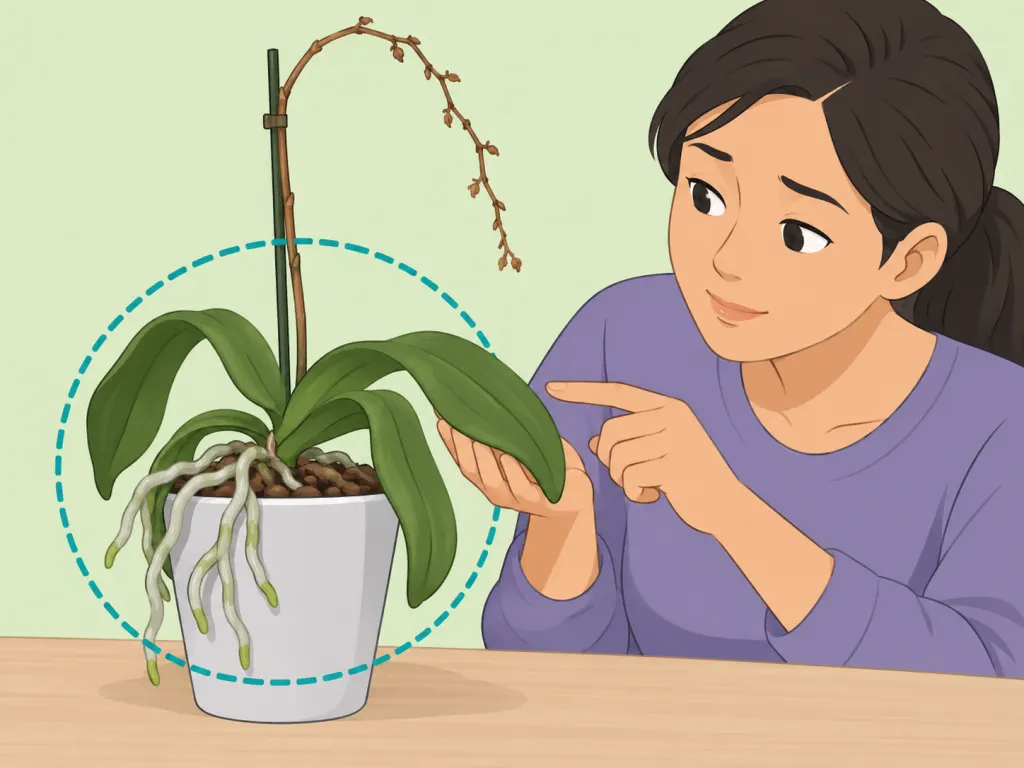
Look at the leaves, roots, and flower spike before you act. Faded flowers alone are normal, but limp or wrinkled leaves can point to water stress, and moth orchids commonly grow visible aerial roots that should not be cut just because they sit outside the pot.
Step 2: Check the potting mix before adding water
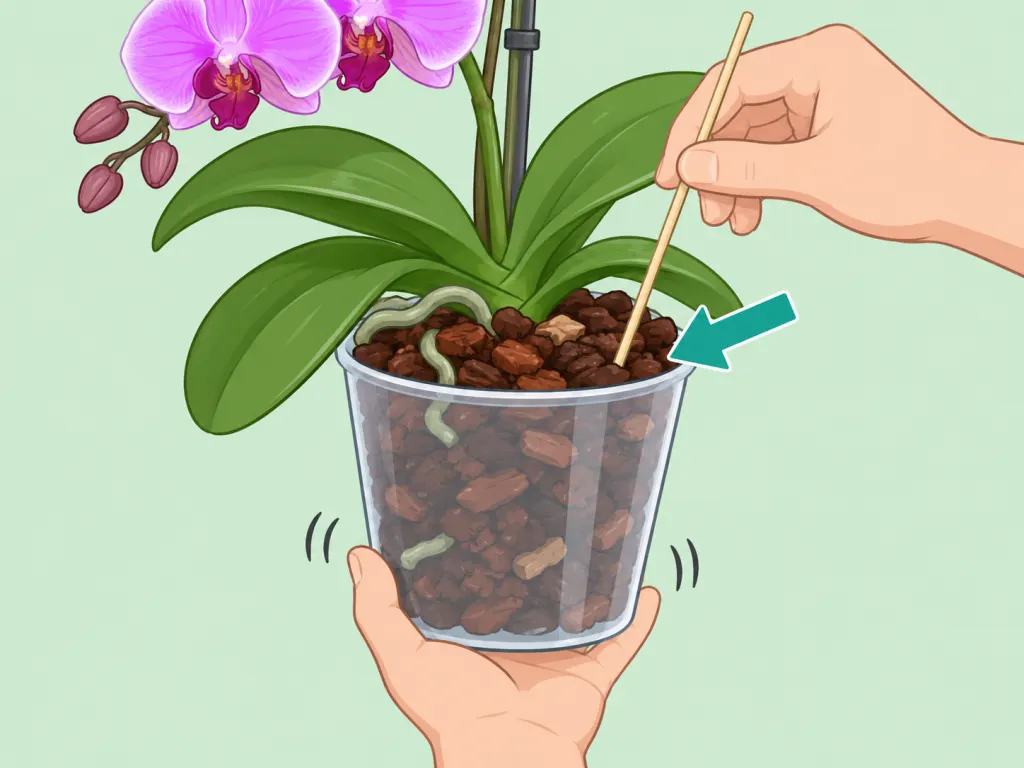
Press a finger or wooden skewer into the bark and lift the pot to judge moisture. Orchids can wilt from being too dry, but indoor plants also wilt when overwatering damages roots, so checking moisture around the root zone is more reliable than watering by the calendar.
Step 3: Soak a dry orchid, then drain it completely
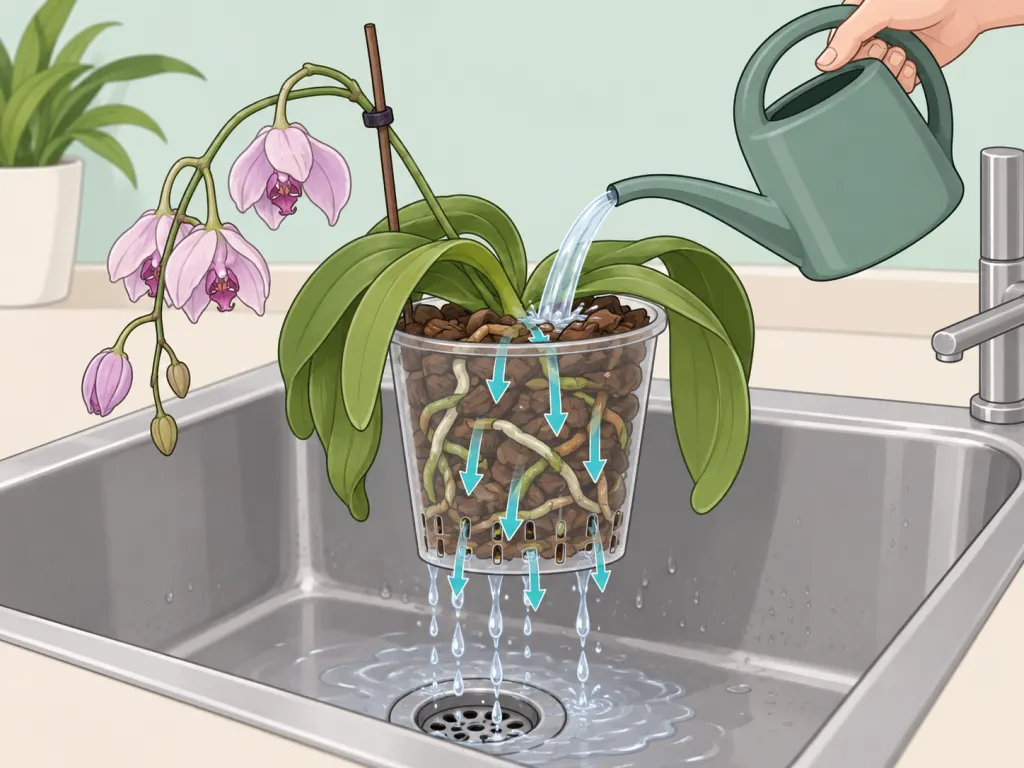
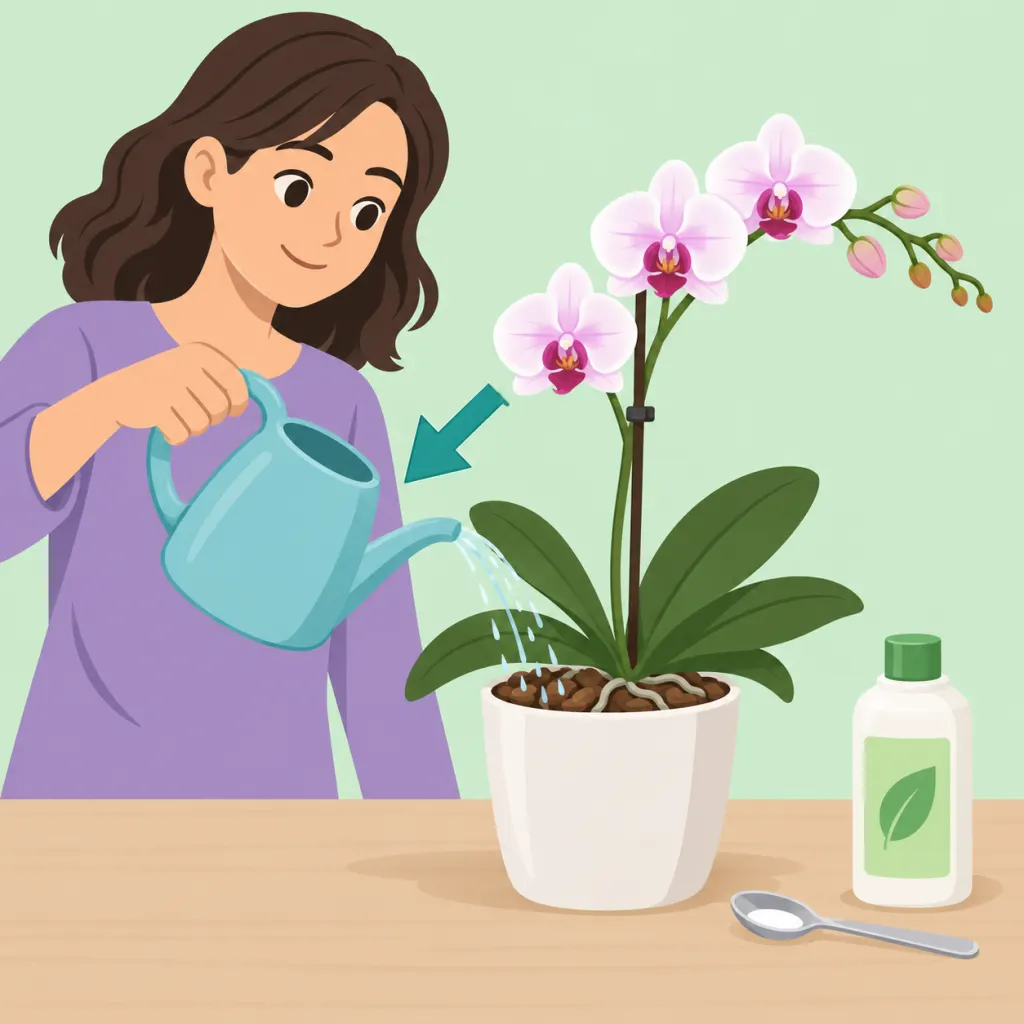
If the bark is dry and the roots look silvery or shriveled, water with tepid water until the whole root area is moistened. Let the pot drain fully afterward, because moth orchids should not sit in water.
Step 4: Unpot the orchid if the mix stays wet or smells sour
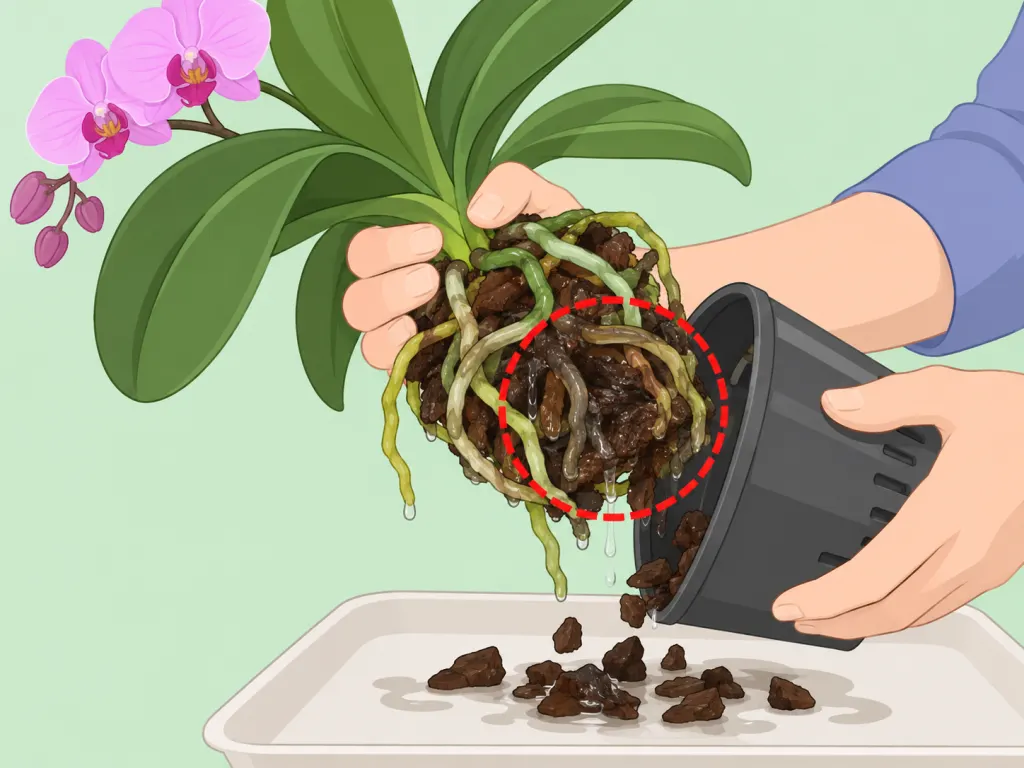
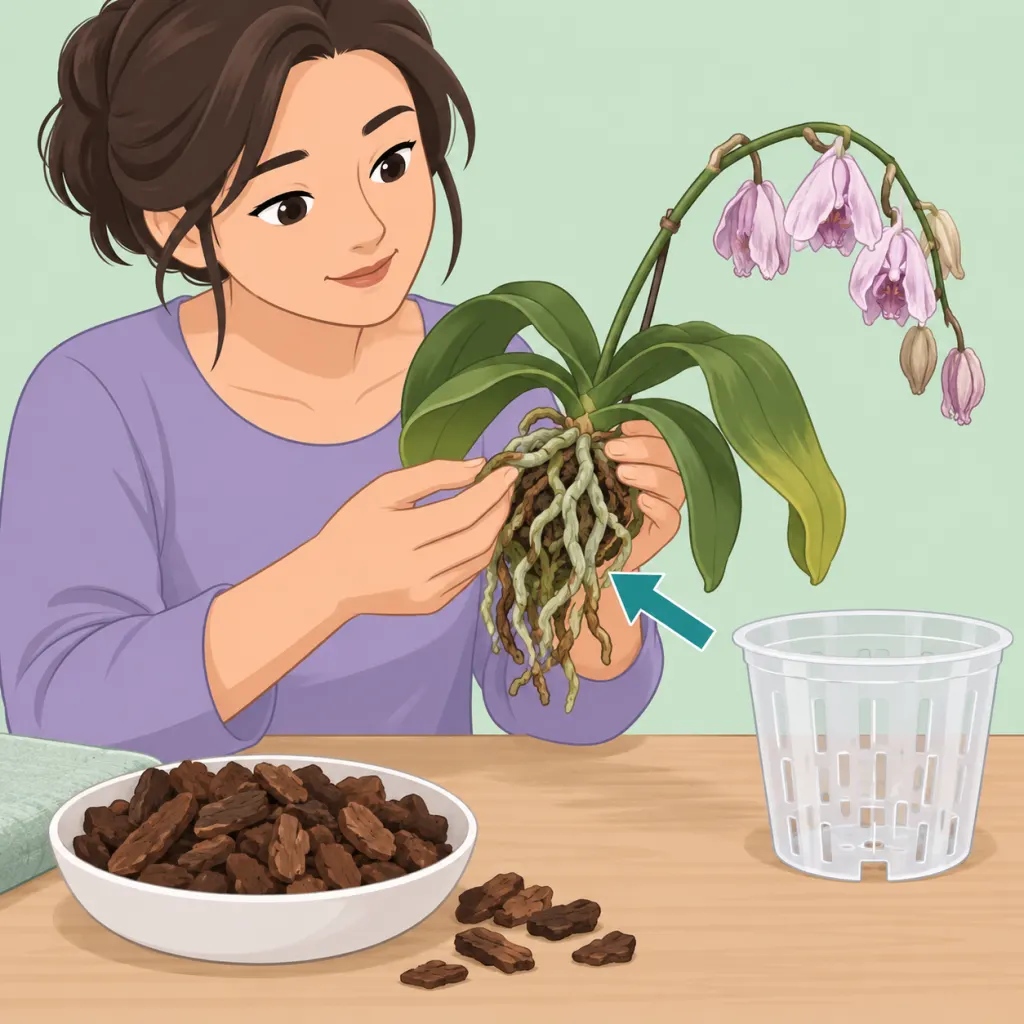
Slide the orchid gently from its container when the bark stays soggy, breaks down into fine pieces, or the leaves remain limp after watering. Root rot can make a plant wilt even in wet potting mix because damaged roots cannot move water to the leaves, a problem described in University of Maryland Extension guidance on indoor plant root rots.
Use clean, sharp scissors to remove roots that are brown, hollow, mushy, or collapsed. Keep firm green, white, or silvery roots, since healthy moth orchid roots are firm and pale to greenish.
Step 6: Repot in fresh orchid bark and a draining container
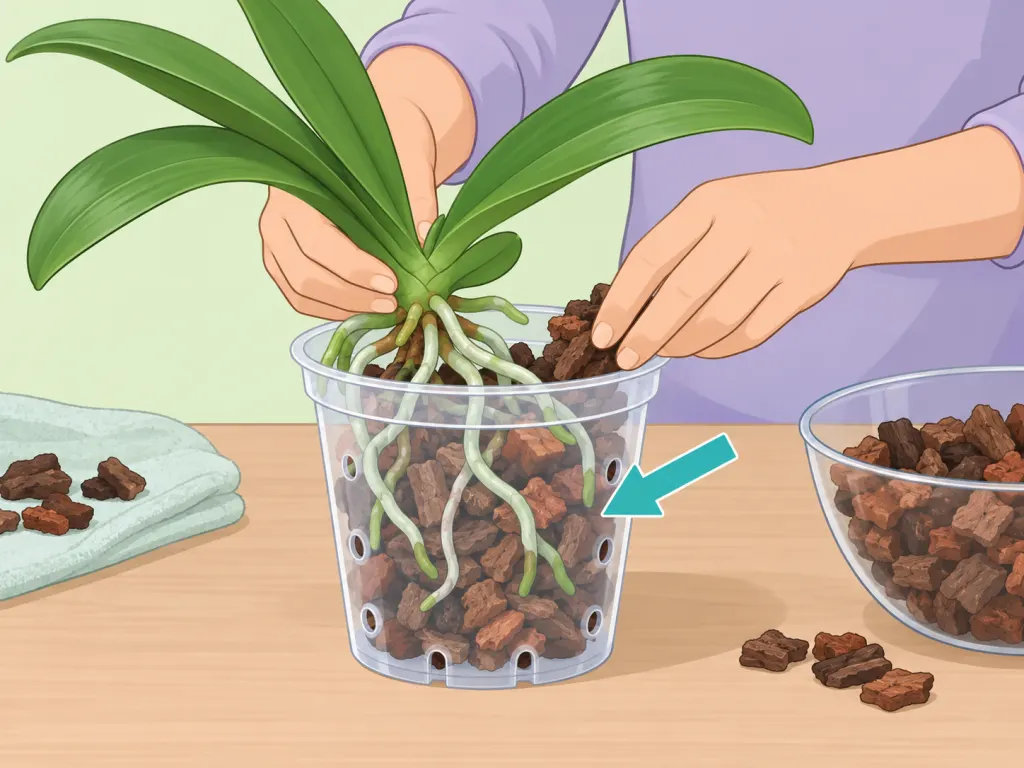
Set the orchid at the same level it was growing before, then tuck fresh bark-based orchid mix around the roots without packing it tightly. Orchids need a porous medium with air around the roots, and University of Missouri Extension notes that epiphytic orchids need orchid bark rather than dense soil.
Step 7: Place the orchid in bright, indirect light and steady warmth
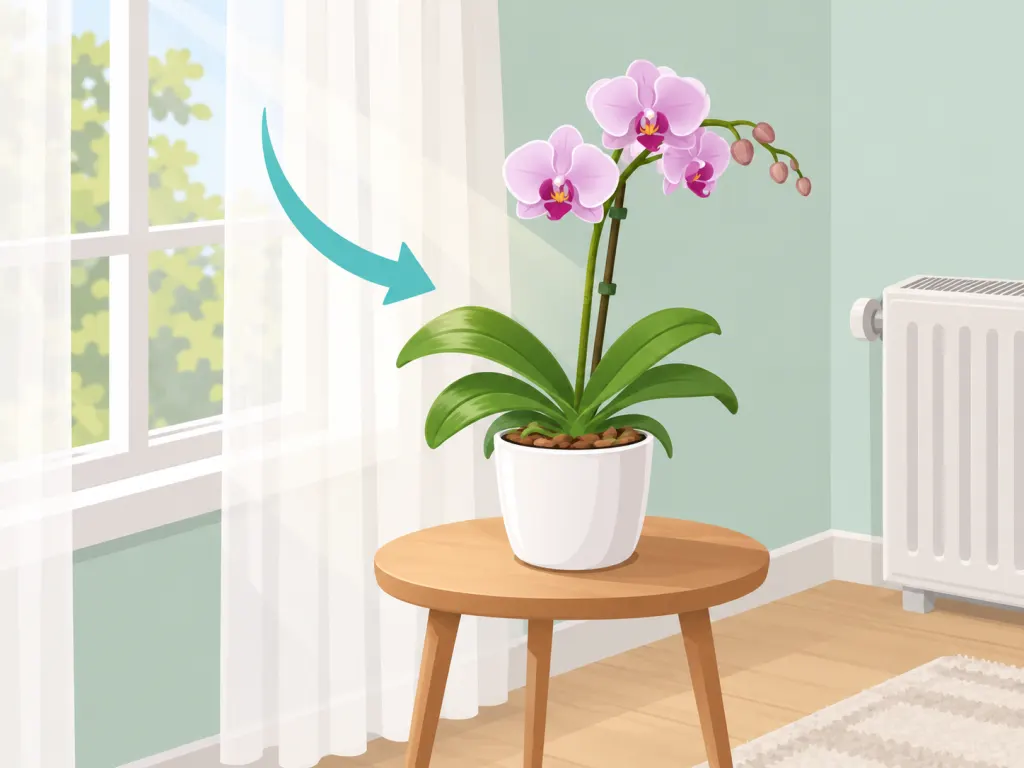
Move the orchid to an east or west window, or another spot with bright indirect light and no hot blast from a heater. Moth orchids grow well in normal indoor warmth, while direct summer sun can scorch the leaves.
Step 8: Rebuild humidity without keeping the roots wet
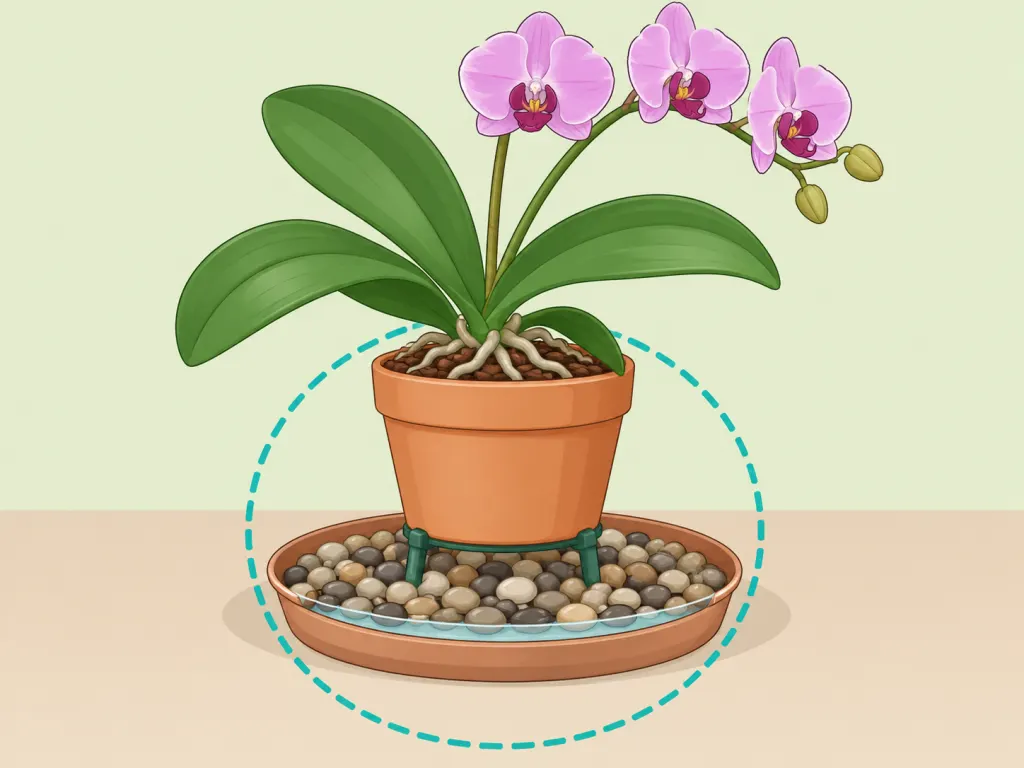
Set the pot above, not in, a tray of damp pebbles, or group it near other houseplants to raise humidity gently. Orchids appreciate humid air, but extended root saturation can lead to root rot, so keep drainage clear.
Step 9: Resume light feeding only after new growth appears
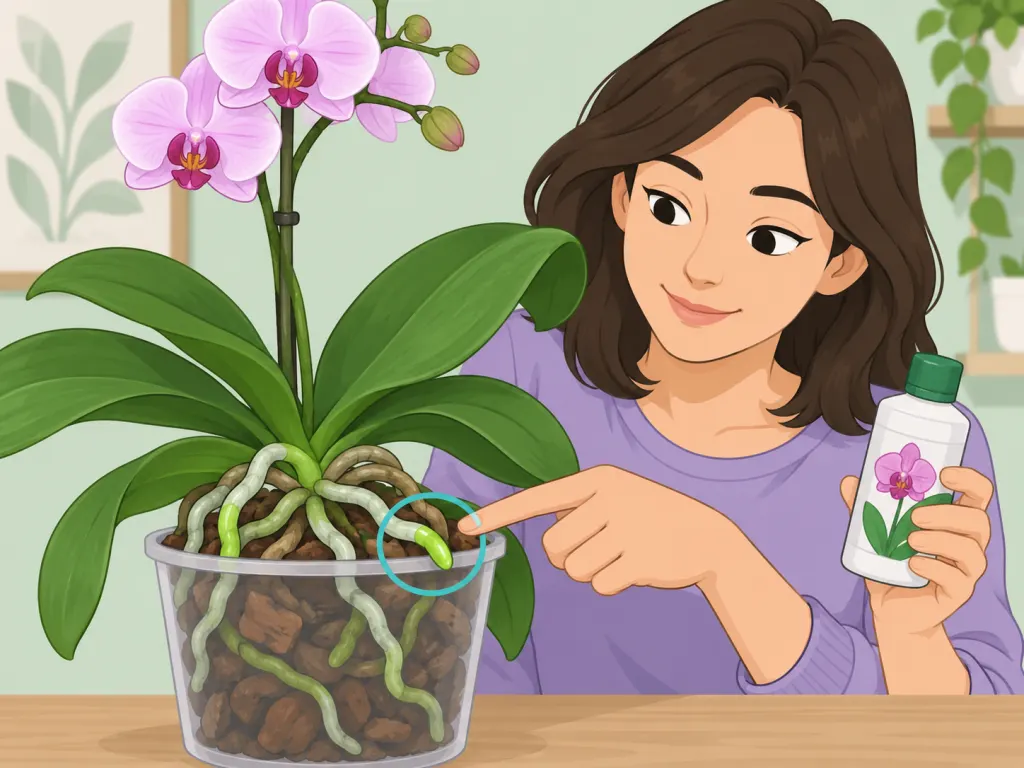
Wait until the orchid looks steadier and begins making a new leaf or root before using orchid fertilizer at label directions. Poor growth is often caused by light or watering problems, and extra fertilizer can injure a plant already stressed by poor conditions.
Wrap-Up
The bottom line: a wilted orchid usually needs a root check, better drainage, careful watering, and steady bright indirect light. Once the roots are back in airy bark and the plant is no longer sitting wet or bone dry, give it time to grow before expecting new flowers.
Frequently Asked Questions
- → Why are my orchid leaves wrinkled?
- Wrinkled leaves usually mean the plant is not getting enough water into its tissues. That can happen because the potting mix is too dry, or because damaged roots can no longer take up water well.
- → Should I cut off orchid air roots?
- No. Healthy aerial roots are normal on moth orchids, and they help the plant take in moisture. Leave firm green, white, or silvery roots in place.
- → Can an orchid recover from root rot?
- It may recover if the crown is firm and at least some roots or new root growth remain. Remove mushy roots, repot in fresh airy orchid bark, and avoid keeping the potting mix soggy.
- → How often should I water a recovering orchid?
- Water when the bark is nearly dry but before healthy roots become completely shriveled. For many indoor moth orchids this is about weekly in active growth, but light, temperature, pot size, and humidity change the timing.
- → Should I fertilize a wilted orchid?
- Wait until the plant is rehydrated and showing steadier growth. Fertilizer should not be used to force recovery when poor light, damaged roots, or watering problems are the real issue.
- → Should I move a wilted orchid into direct sun?
- No. Bright indirect light is better for recovery. Strong direct sun can scorch leaves, while a dark room slows the plant's ability to rebuild strength.
References
This content was developed and refined using reliable sources.
- https://www.extension.umd.edu/resource/care-phalaenopsis-orchids-moth-orchids
- https://www.rhs.org.uk/plants/phalaenopsis/growing-guide
- https://extension.umd.edu/resource/winter-indoor-plant-problems
- https://extension.illinois.edu/blogs/garden-scoop/2018-02-27-orchids
- https://extension.missouri.edu/publications/g6510