 Save
The safest way to store cooked rice is to cool it quickly, move it into shallow covered containers, refrigerate it promptly, and reheat only what you will eat. Do not leave a pan of rice on the counter for hours. Rice is often treated like a harmless pantry food after it is cooked, but once it is moist and warm it behaves like a perishable leftover. Public food-safety authorities connect rice and other leftovers with Bacillus cereus when food sits too long at room temperature, so the main habit is simple: shorten the warm waiting time and keep cooked rice either hot, cold, or frozen.
The Practical Rule For Home Kitchens
If you want one easy routine, use this: serve rice soon after cooking, spread leftovers into shallow containers, refrigerate them as soon as the rice is no longer steaming hard, and use the rice promptly. GOV.UK food-safety guidance says leftover foods such as rice should be cooled as quickly as possible, ideally within one hour, and that cooked rice should be kept in the fridge for no more than one day before reheating. Broader U.S. leftover guidance summarized by FoodSafety.gov also emphasizes shallow containers, refrigeration at 40°F (4°C) or below, and avoiding long periods at room temperature.
Why Rice Needs Extra Attention
The concern is not that rice is unusual or unsafe by itself. The concern is what can happen after cooking if a large batch cools slowly. Bacillus cereus is a spore-forming bacterium associated with a variety of foods, including rice and leftovers. Food Standards Australia New Zealand explains that it can form spores and toxins that are not destroyed by cooking or boiling. That is why reheating is not a magic reset button for rice that spent too long warm on the counter.
The classic fried-rice risk comes from time and temperature. In a CDC investigation of a 1993 fried-rice outbreak, the rice had been cooked the previous night, cooled at room temperature, refrigerated, then later fried and held without refrigeration before serving. The CDC report notes that B. cereus spores may survive cooking and that, if cooked rice is held at room temperature, bacteria can multiply and toxin can be produced; the report is available from the CDC MMWR archive. For home cooks, the takeaway is practical rather than frightening: do not let cooked rice drift through a long warm period.
Cool Rice Quickly Without Making A Mess
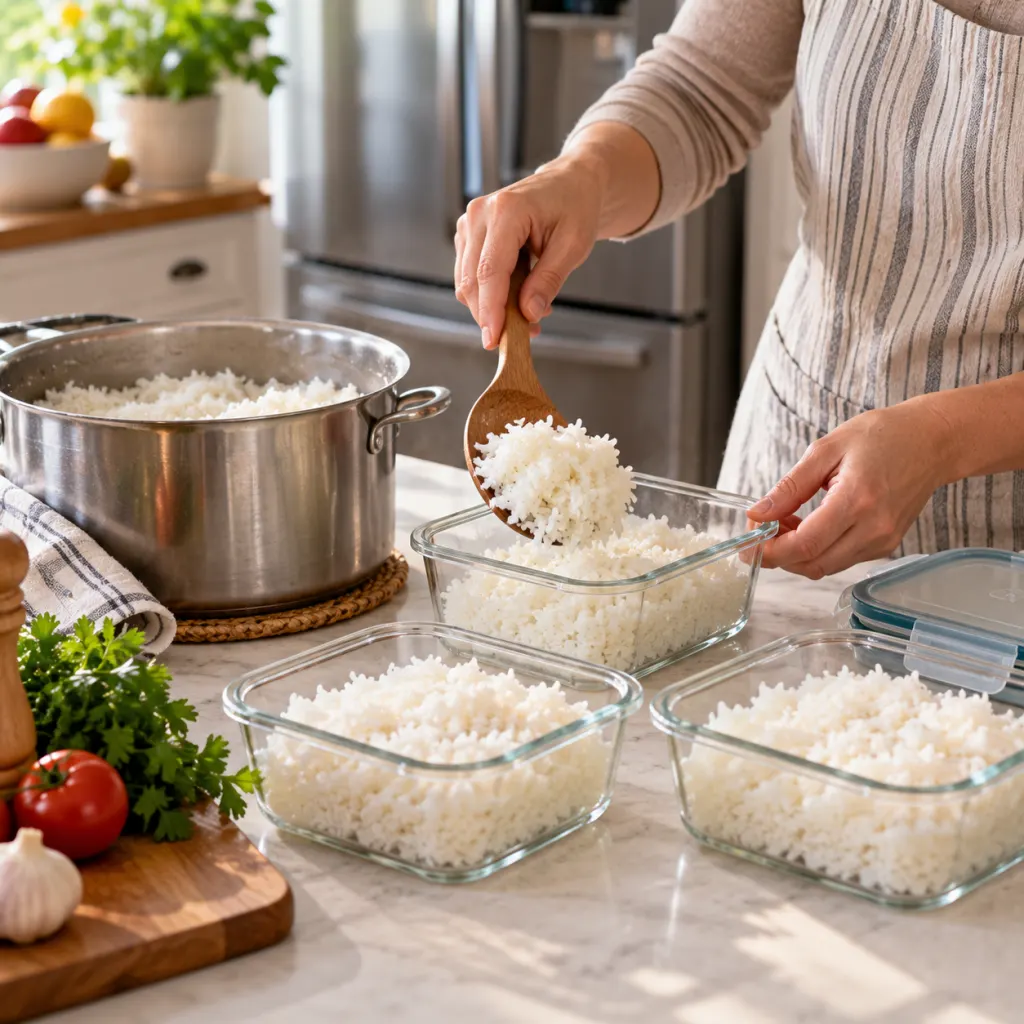
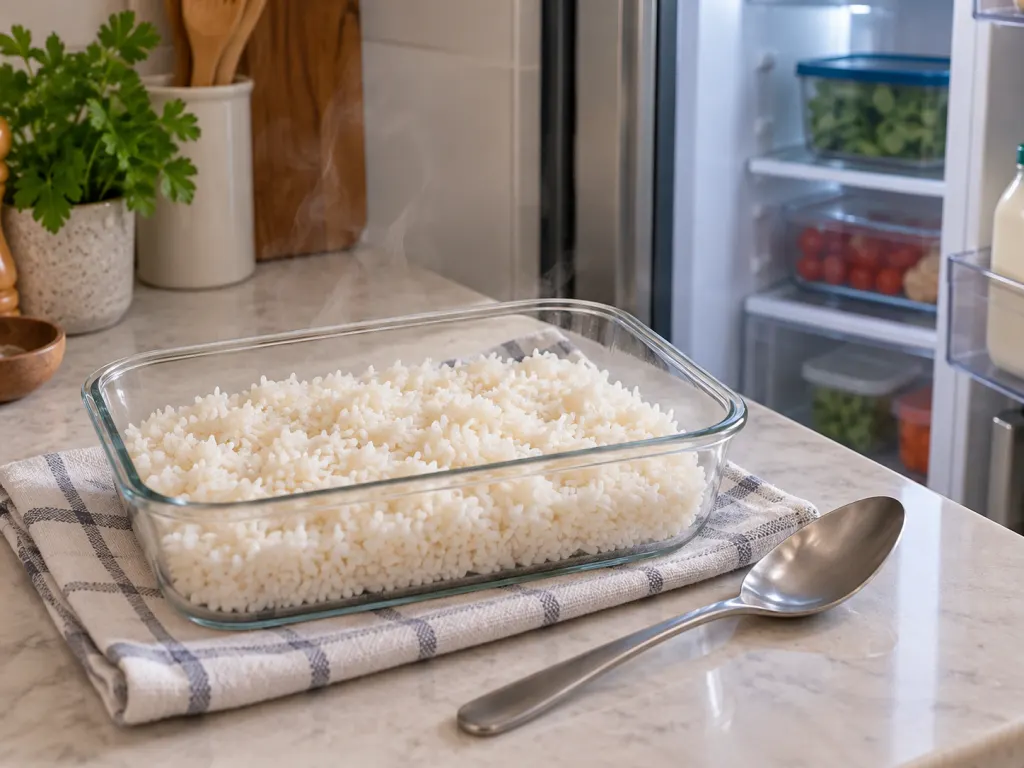
Cooling works best when the rice is not trapped in one deep, steamy mass. A deep pot can hold heat for a long time, especially if it has a lid on. Instead, move leftovers into wide, shallow containers so the heat can leave faster. If you made a very large batch, divide it into several containers. Keep the rice loosely covered while steam escapes, then seal it once it is cool enough for the refrigerator. FoodSafety.gov specifically recommends wide, shallow containers for cooked food that will be stored.
A good cooling routine looks like this:
- Serve what you plan to eat right away.
- Move leftovers out of the cooker, pan, or serving bowl instead of leaving them in a deep hot pile.
- Spread rice no deeper than a few inches in clean shallow containers.
- Put containers in the refrigerator promptly once the rice is no longer steaming heavily.
- Label the container with the date if you cook rice often or share a refrigerator.
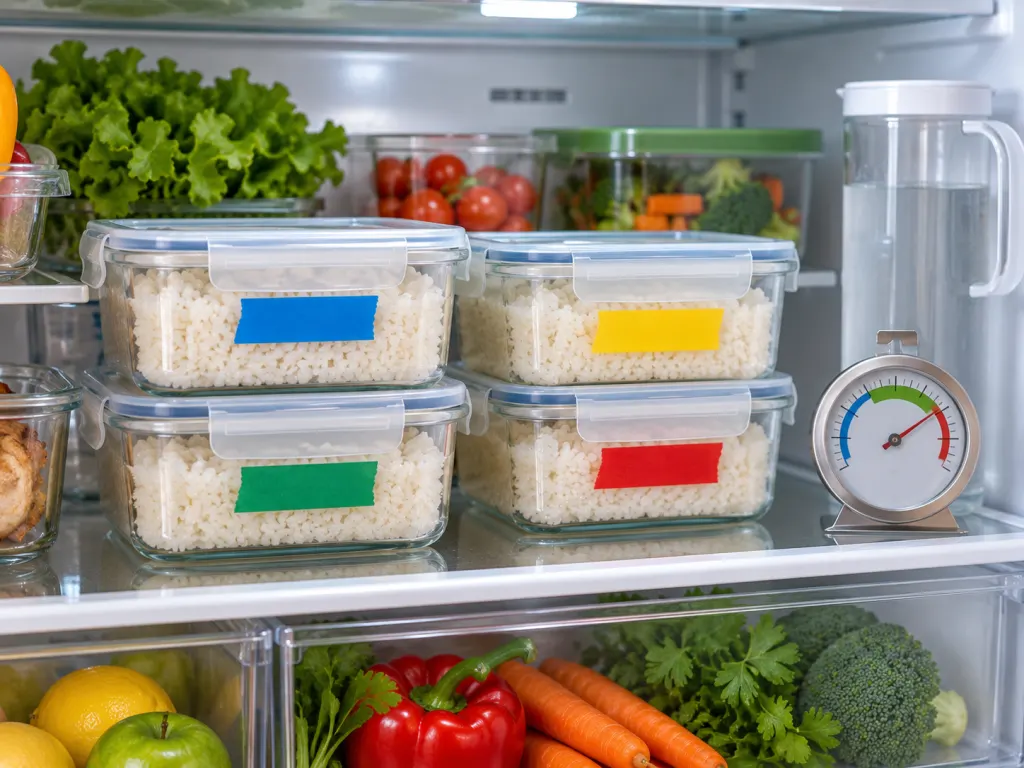
Fridge Temperature And Containers Matter
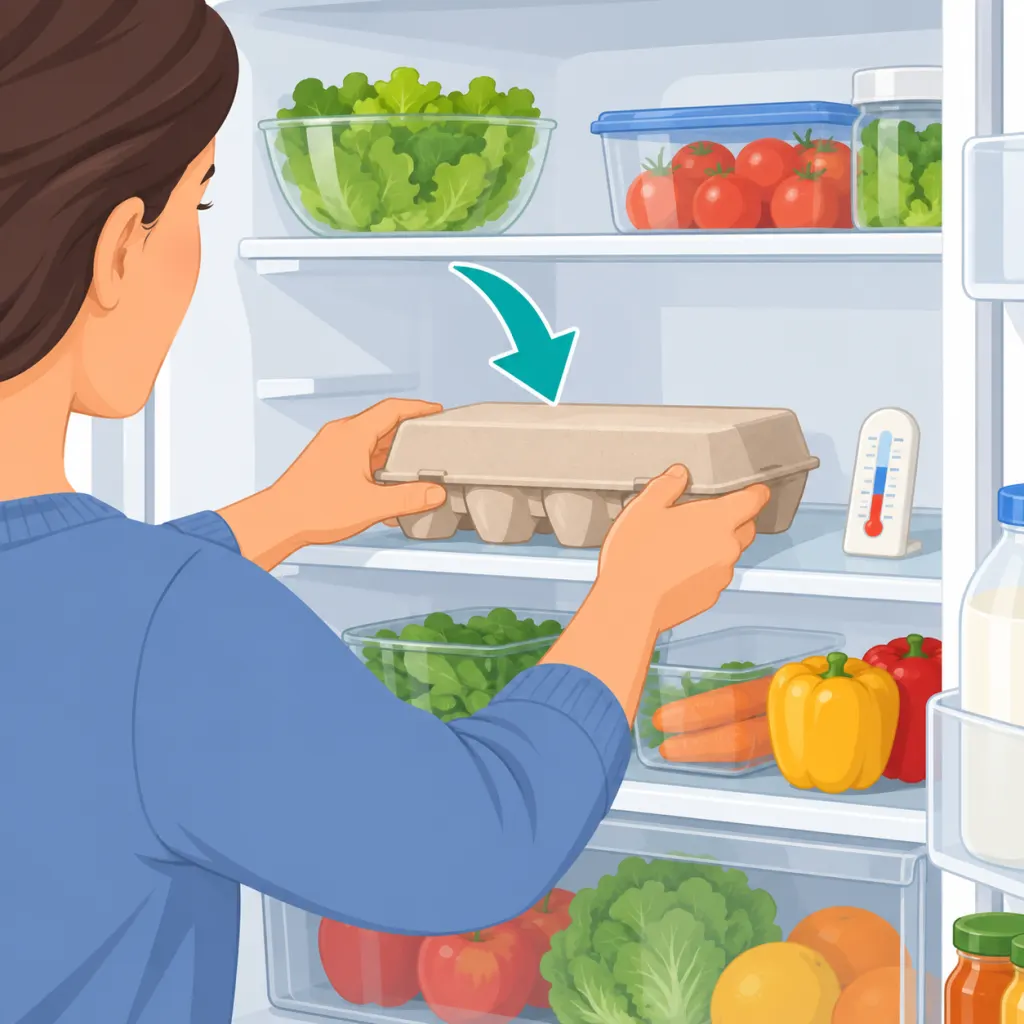
Cold storage slows bacterial growth, but it does not turn old leftovers into new food. Keep the refrigerator at 40°F (4°C) or below, the temperature used in the FoodSafety.gov cold storage chart. Use clean food-storage containers with lids, or freezer bags laid flat once the rice has cooled. Airtight storage also keeps rice from drying out and reduces contact with drips, crumbs, and other refrigerator clutter.
Do not pack a very large amount of hot rice into one tall tub and push it to the back of the refrigerator. That container may stay warm in the center while the outside feels cold. Small containers cool more evenly, are easier to reheat in single portions, and make it less tempting to reheat the same batch repeatedly. If your refrigerator is crowded, leave space around the containers at first so cold air can circulate.
How Long Cooked Rice Keeps
Guidance differs slightly by country and by how cautious the advice is. For rice specifically, GOV.UK advises consuming cooked rice within 24 hours and reheating it no more than once. Food Standards Australia New Zealand gives a broader leftover window of three to four days, with a one-day limit for vulnerable people. For a household article meant to be easy and cautious, the best everyday rule is to plan rice leftovers for the next day, and freeze extra portions you know you will not use quickly.
If you choose to keep rice longer than one day, be honest about the full history of the batch. Rice that cooled fast, went into a clean shallow container, stayed in a cold refrigerator, and has not been reheated before is very different from rice that sat out through dinner, was packed while still deep and warm, and was forgotten behind other food. Time limits only make sense when the handling before storage was sound.
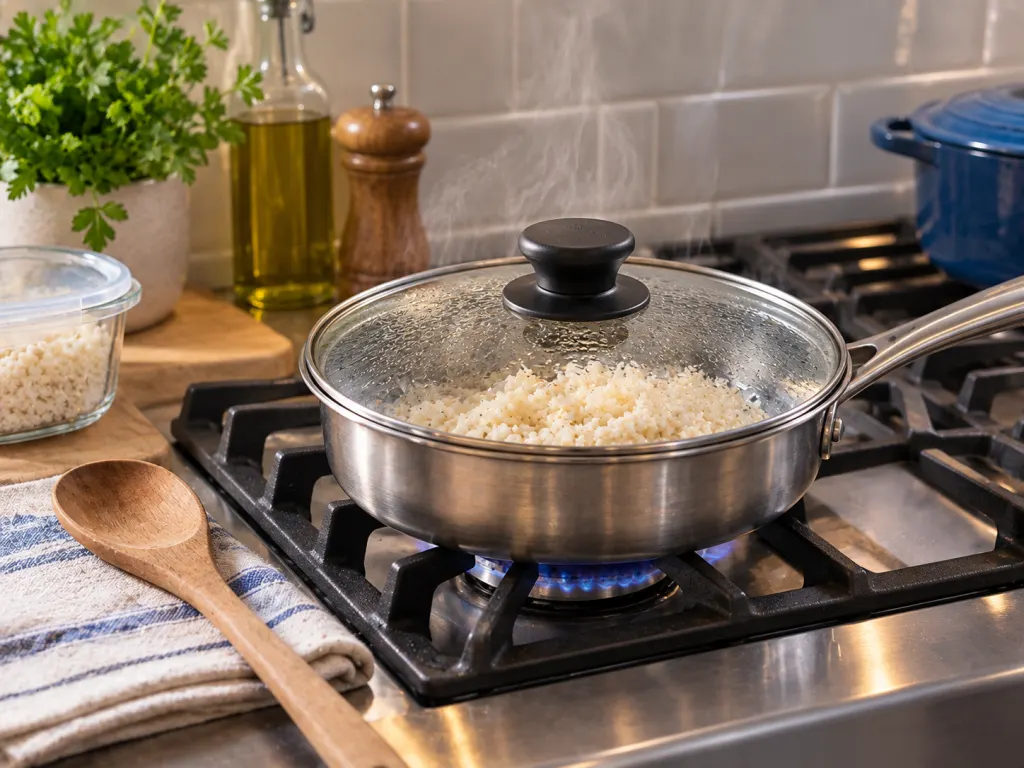
Reheat Only The Portion You Need
Reheating should be thorough and even. GOV.UK advises reheating rice until it is steaming hot all the way through and not reheating rice more than once. Stirring matters because microwaves and pans can leave cooler pockets. Break up clumps, add a small splash of water if the rice is dry, cover loosely to trap steam, stir partway through heating, and check the center before eating. If you use a food thermometer, leftovers are commonly reheated to 165°F (74°C) in U.S. guidance for thorough reheating.
Do not reheat the whole container just to scoop out one bowl. Each warm-up and cool-down gives the rice another trip through temperatures where bacteria can grow. Portioning before storage solves this elegantly: one container for lunch, one for fried rice, one for the freezer. It also protects texture, because rice that is heated again and again becomes dry, hard, or gummy.
Freezing Cooked Rice Is Often The Better Plan
Freezing is useful when you cook rice in batches. Cool the rice quickly first, then pack it in meal-size portions. Flatten freezer bags so they freeze and thaw faster, or use small rigid containers if you prefer stackable storage. FoodSafety.gov notes that frozen foods kept continuously at 0°F (-18°C) or below remain safe indefinitely, though quality changes over time. For rice, quality is usually best when it is used within a few months.
Thaw frozen rice in the refrigerator or reheat it directly from frozen if your microwave or pan method heats it evenly. Avoid thawing cooked rice on the counter. If using the microwave, spread the rice in a microwave-safe dish, add a little water, cover with a vented lid, stir during heating, and make sure the center is hot. On the stovetop, a covered pan with a small amount of water works well; stir frequently so the bottom does not scorch while the top stays cool.
Takeout Rice And Fried Rice Need Extra Judgment
Takeout rice can be tricky because you do not always know how it was cooked, cooled, held, and reheated before it reached your table. If rice arrives hot, eat it soon. If you want to save leftovers, refrigerate them promptly in shallow containers. Be especially cautious with fried rice because it may have been cooked once, cooled, reheated in a wok, then left warm during serving. That does not mean every container is unsafe; it means your home storage clock does not tell the whole story.
When in doubt, choose a conservative path. Save a small portion only if it has been handled promptly and kept cold. Throw away rice that has been left out for a long meal, forgotten overnight, held warm in a switched-off rice cooker, or reheated once already. A normal smell or taste is not a reliable safety test for cooked rice because bacteria linked with foodborne illness may not announce themselves with obvious spoilage.
A Keep-Or-Toss Checklist
Use this checklist when you open the refrigerator and cannot remember what happened:
- Keep and reheat: rice cooked recently, cooled quickly, stored in a shallow covered container, kept cold, and not reheated before.
- Freeze next time: rice you cooked in bulk but will not eat within a day or two.
- Toss: rice left out for more than two hours, or one hour in very hot conditions.
- Toss: rice stored in a deep warm container that took hours to cool.
- Toss: rice that has already been reheated once and cooled again.
- Toss: rice with visible mold, unusual texture, or any storage history you cannot trust.
The Bottom Line
Safe cooked rice storage is mostly about time, temperature, and portion size. Cook what you need when you can. When you have leftovers, cool them quickly, store them cold, use shallow containers, and reheat only once. The habit is small, but it changes the risk profile of a food many households cook in big batches. Rice can be a convenient leftover; it just should not be treated like a dry pantry staple after it has been cooked.
Wrap-Up
Cooked rice should be cooled quickly, stored in clean shallow containers, kept in a refrigerator at 40°F (4°C) or below, and reheated until steaming hot throughout. Rice is best planned as a next-day leftover unless it is frozen. Throw it away if it sat out too long, cooled slowly in a deep container, or has already been reheated once.
Frequently Asked Questions
- → Can I put hot cooked rice straight into the refrigerator?
Small portions in shallow containers can go into the refrigerator promptly. The bigger concern is a deep pot or rice-cooker insert that stays warm for a long time. Divide the rice first so it cools faster and does not warm nearby foods unnecessarily.
- → How long can cooked rice sit at room temperature?
Keep the room-temperature period as short as possible. A cautious rice routine is to cool it within about one hour when you can, and discard cooked rice that has been left out for more than two hours, or sooner in very hot conditions.
- → Is leftover rice safe if it smells normal?
Not always. Smell, appearance, and taste are poor safety checks for rice that may have been held warm too long. Storage history matters more: how quickly it cooled, whether it stayed cold, and whether it has already been reheated.
- → Can I freeze cooked rice?
Yes. Cool it quickly, portion it, seal it well, label it, and freeze it. Thaw in the refrigerator or reheat directly from frozen using a method that heats the rice evenly all the way through.
- → Why is reheated rice mentioned so often in food-safety advice?
Rice is linked with Bacillus cereus when cooked rice sits warm long enough for bacteria to multiply. Reheating helps only when the rice was cooled and stored correctly first, so the safest habit is quick cooling and cold storage.
References
This content was developed and refined using reliable sources.
- https://www.foodsafety.gov/food-poisoning/bacteria-and-viruses
- https://www.foodstandards.gov.au/consumer/prevention-of-foodborne-illness/bacteria-foodborne-illness/bacillus-cereus
- https://www.gov.uk/government/publications/student-guide-to-food-safety-and-hygiene/student-guide-to-food-safety-and-hygiene
- https://www.foodsafety.gov/food-safety-charts/cold-food-storage-charts
- https://www.cdc.gov/mmwr/preview/mmwrhtml/00025744.htm