 Save
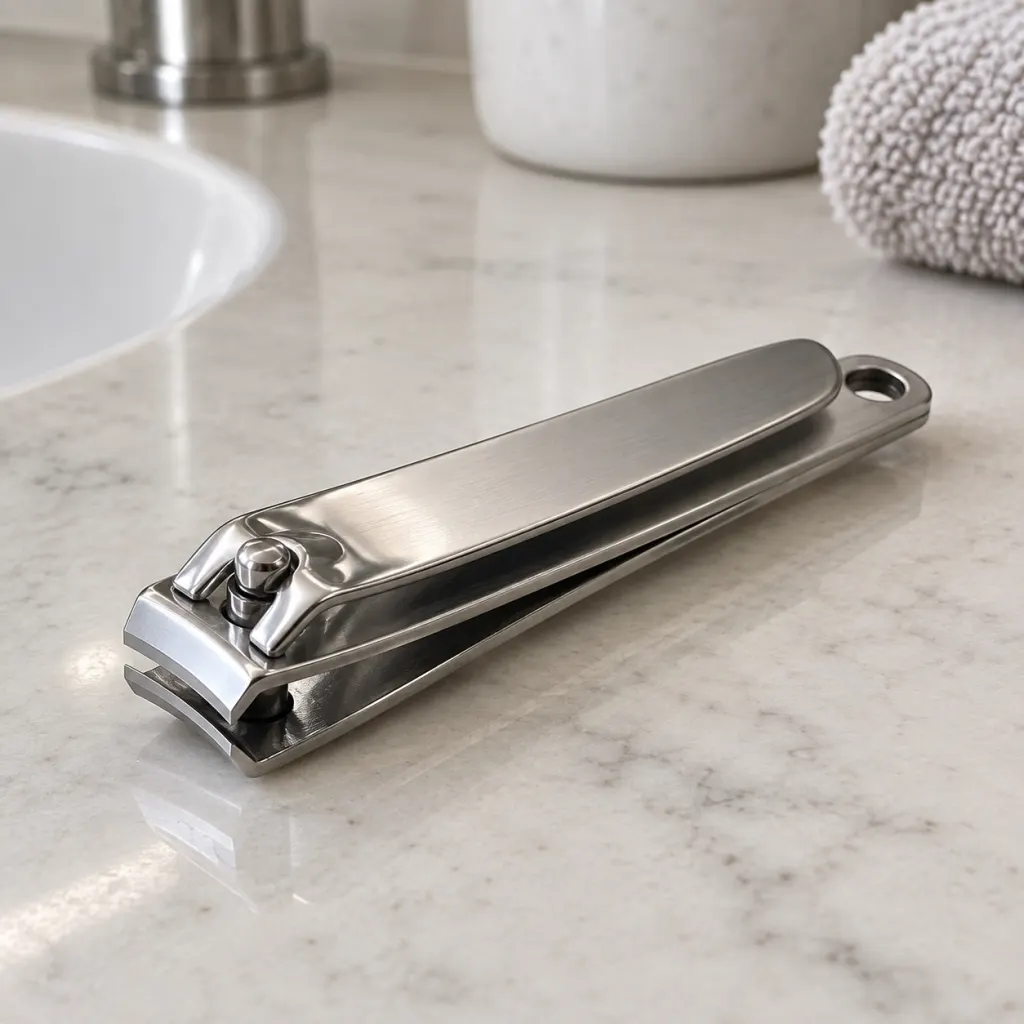
The small hole in many nail clippers is mainly a carrying and storage feature. It gives a key ring, chain, split ring, cord, or hanging hook a place to pass through so the clipper can be kept with keys, travel items, bathroom hooks, or a grooming kit. It is easy to miss because the actual cutting work happens at the opposite end, where the lever and curved jaws meet. The hole is useful because nail clippers are small enough to disappear in drawers and bags, yet awkward to attach without a dedicated opening.
That simple answer also explains why the hole is usually placed at the blunt rear end of the tool. The cutting jaws need open space, the lever needs room to swing, and the pivot pin must stay aligned. Putting the hole at the far end turns unused metal into a practical attachment point. In other words, it is a small piece of design economy: one punched opening makes a tiny tool easier to carry, hang, identify, and store.
A Quick Answer Before the Details
On the common folded metal nail clipper, the hole is best understood as an attachment hole. It may be called a key-ring hole, chain hole, hanging hole, or lanyard hole depending on the design. The United States Patent and Trademark Office describes Patent Public Search as a way to find issued patents and published patent applications, and its public search materials note that results can include full patent documents, PDFs, text, and previews USPTO patent search USPTO Patent Public Search FAQs. Looking through that kind of record is helpful because many small product features are described in design and utility documents, even when the everyday package never explains them.
The short version is practical: the hole helps a small object behave like a carried tool instead of a loose bit of metal. A clipper without an attachment point has to live loose in a drawer, bag, or pocket. A clipper with a hole can be tethered. That difference matters most for compact clippers, travel kits, first-aid-style household kits, workshop drawers, and keychains, where small tools are useful only if they are easy to find when needed.
Where the Hole Fits in the Clipper’s Design
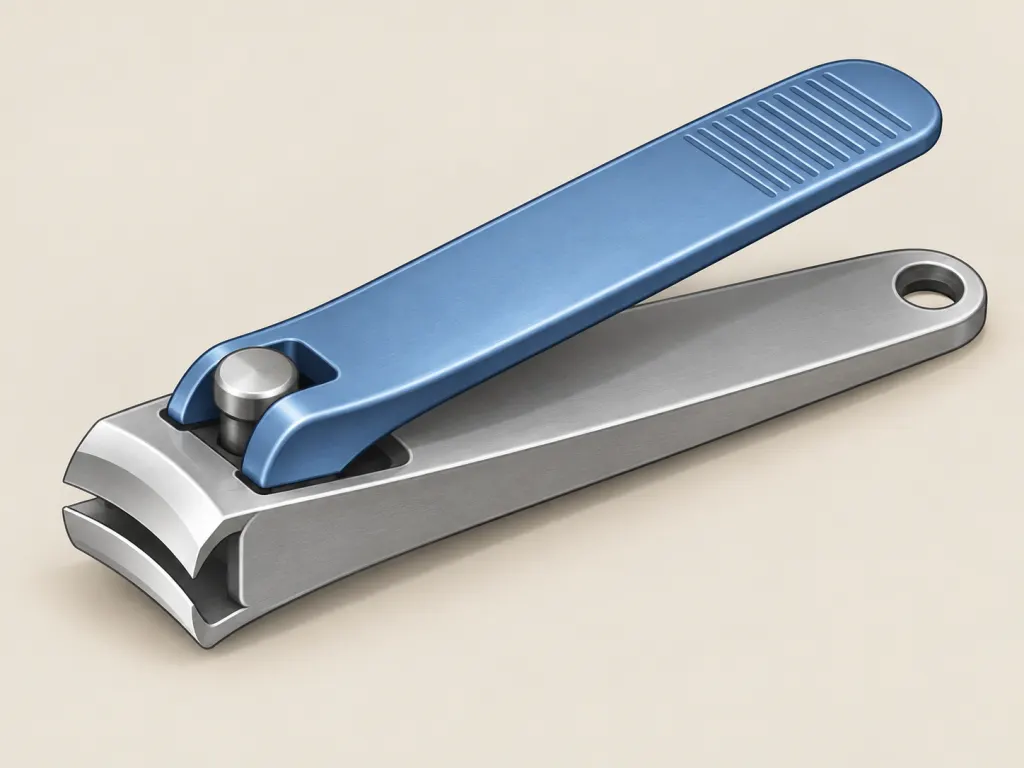
A standard nail clipper is a surprisingly dense little machine. The curved jaws act at the cutting end. A central post or rivet holds the jaws and lever in relationship. The top lever flips into working position, then multiplies the pressure from your fingers. The rear end is the part with the least cutting responsibility, so it is a logical place for an attachment opening. That placement lets the clipper hang from the back while the lever, post, and jaws remain available for their normal movement.
Why the Hole Is Usually at the End
The end location solves several small problems at once. It keeps the hanging force away from the cutting jaws, gives a ring a stable corner to pull from, and keeps dangling keys or cords from blocking the lever. It also leaves the broad lever surface available for pressing. If the hole were near the front, it would compete with the cutting area. If it were close to the pivot, a ring could interfere with the lever. At the rear, the clipper can hang nose-down, lie flat, or rotate on a ring with fewer conflicts.
There is also a manufacturing reason the feature feels so natural. Many clippers are stamped from thin metal. A round or oval hole is simple to punch into a flat blank before the parts are bent and assembled. That does not mean the hole is accidental. It means a useful attachment point can be added with very little extra material, which is exactly the kind of practical choice that often survives in everyday tools.
What the Hole Is Not
The hole is not the main source of cutting force. That job belongs to the lever, pivot, and jaws. A nail clipper works because the lever lets a modest finger press create a stronger closing action at the short jaw end. Michigan State University’s open physics text explains that simple machines can multiply or redirect an input force, and that a lever’s mechanical advantage depends on the distances from the pivot to the input and output forces Michigan State University Open Books. The clipper’s hole is outside that main force path. It may help you carry the tool, but it does not make the blades meet.
It is also worth being careful with the popular claim that the hole exists so another clipper or a nail can be inserted to bend the tool back into shape. Some people may improvise with the hole that way, just as people improvise with many household objects. But improvised use is not the same as design purpose. The more reliable explanation is the plain one: the hole is positioned where an attachment opening makes sense. If a clipper is bent, loose, or misaligned, forcing metal through the rear hole can make the problem worse and may leave the tool less predictable.
How to Use the Hole Well
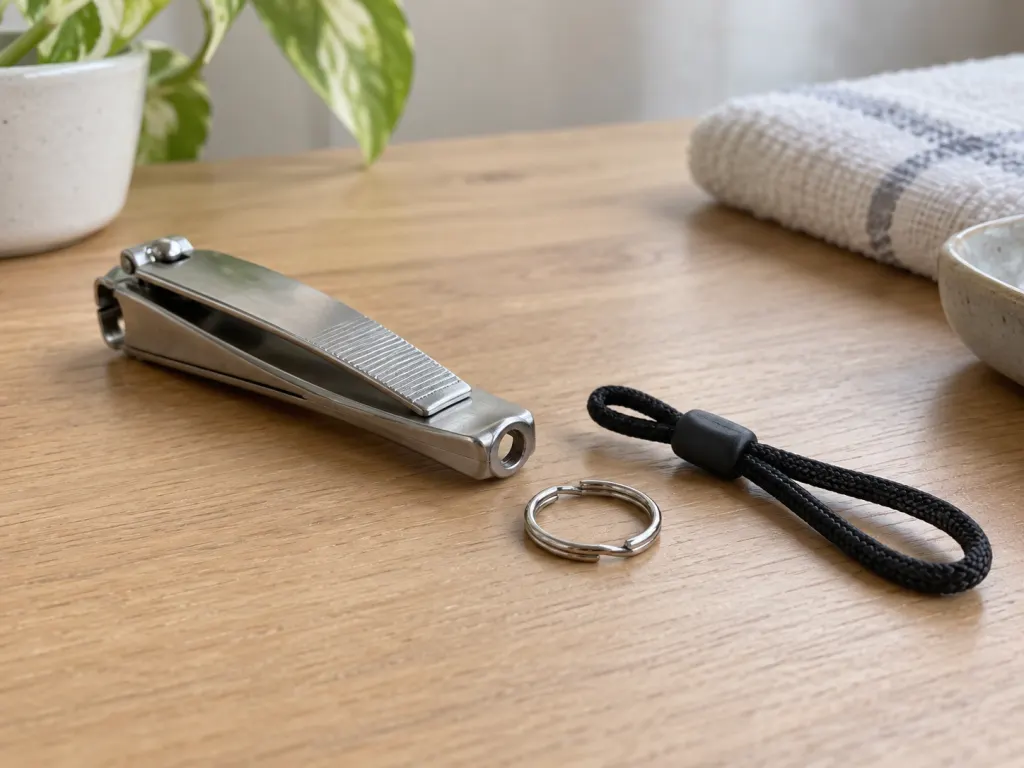
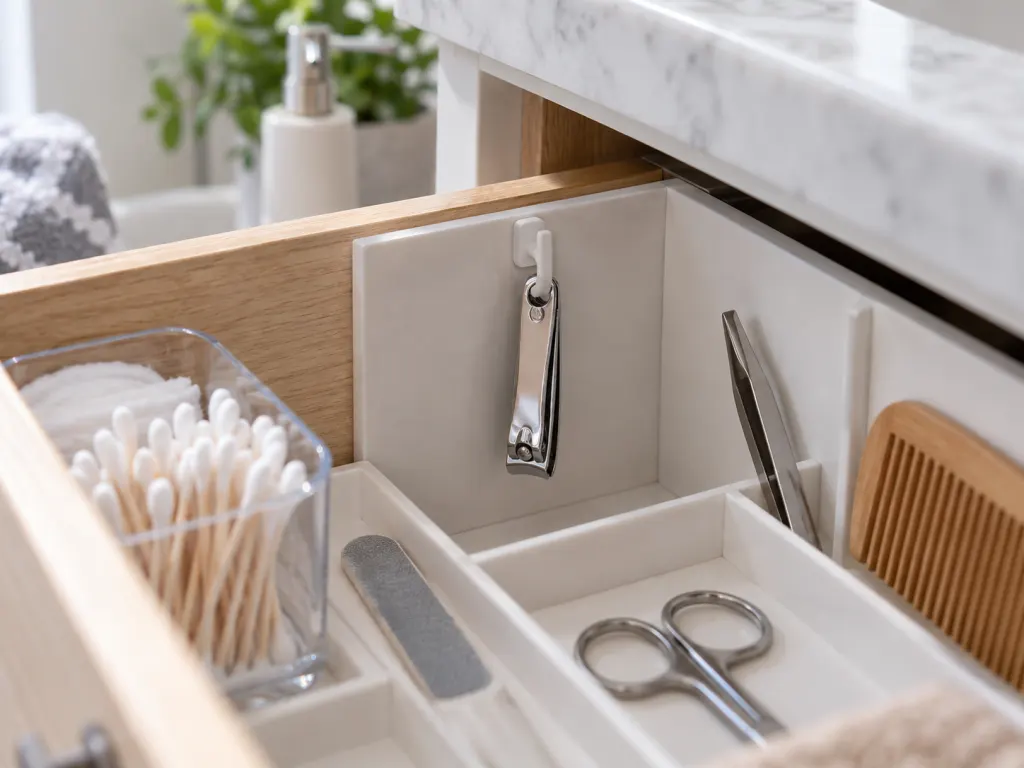
The best use is simple: attach the clipper in a way that does not block the lever or jaws. A small split ring works for keychain use, but it should be thin enough to move freely through the opening. A short cord or lanyard can work well in a bathroom cabinet or travel pouch. A wall hook can also make sense if the clipper has a hole large enough to hang securely. The goal is convenience, not strain.
- For a key ring: use a small split ring first, then connect that ring to the larger key ring so the clipper can rotate freely.
- For a drawer or cabinet: thread a short cord through the hole and hang it from a small hook or organizer peg.
- For travel: keep the clipper in a pouch even if it has a ring, so the lever does not snag on fabric or other small items.
- For shared household storage: choose a visible loop or tag so the clipper is easy to return to the same place.
Why Some Clippers Make the Hole Hard to Reach
On some models, the folded lever partly covers the hole. That can make the opening look mysterious, because it seems too awkward to use. The reason is usually compactness. Designers are trying to keep the clipper short while still allowing the lever to fold flat. In that arrangement, the hole may be usable only after the lever is lifted or rotated, or it may accept only a very small ring. This is why two clippers that look almost identical can behave differently on a keychain.
USPTO guidance for Patent Public Search notes that Basic Search can look up documents by patent or published application number and that search results may provide document PDFs, text, and previews USPTO PDF links quick reference guide. That matters for curious readers because clipper variations often appear in technical documents long before most people notice the details in a bathroom drawer. Some designs try to expose the rear opening more clearly; others prioritize a tighter folded profile.
The Hole as a Clue to Everyday Design
The hole is a good example of how ordinary tools carry hidden design compromises. A nail clipper has to be small, strong, inexpensive to make, comfortable to press, easy to store, and durable enough for repeated use. It also has to fold in a way that keeps the lever from sticking out. No single feature can do all of that, but a small rear hole helps with the storage part without changing the cutting mechanism.
That is why the feature remains useful even on clippers that never touch a keychain. A hanging hole can help a caregiver keep tools organized, help a traveler identify a tiny item in a kit, or let a household keep grooming tools off a damp countertop. It can also make a clipper easier to attach to a larger handle, pouch, or case designed for someone who prefers a bigger grip. The hole is small, but it gives the tool more ways to belong somewhere.
Why the Keychain Theory Is the Strongest Explanation
The keychain explanation fits the object better than the more dramatic theories because it matches the hole’s shape, position, and common use. The hole is round or oval, placed at the non-cutting end, and sized for a ring or cord. It does not line up with the jaws like a blade-adjustment feature. It does not have flats, notches, or reinforced edges like a wrenching socket. It is not placed where a repair operation would be easiest to control. It is placed exactly where a small carrying loop belongs.
There is still room for variation. Some clippers include a separate nail file with its own small hole. Some novelty clippers use a larger handle, plastic shell, or built-in catcher, and those may move or omit the rear opening. Some compact clippers have no useful hole at all. The correct answer is therefore not that every hole on every clipper has one identical function. The better answer is that the familiar rear hole on the classic clipper is mainly an attachment point, with secondary value for hanging and organizing.
Choosing and Storing Clippers With the Hole in Mind
If the hole matters to you, check it before buying a clipper. Look for enough exposed metal around the opening so a ring can move without scraping the lever. Open and close the lever while the ring is attached, if you can, to see whether the ring blocks your grip. A clipper meant to ride on keys should also fold neatly, because a raised lever catches on pockets and pouches. A clipper meant for a bathroom hook can use a larger loop and does not need to be as compact.
Storage is the quiet benefit. A clipped-on ring, cord, or hook makes the tool easier to find and less likely to migrate around the house. That may be the least glamorous purpose imaginable, but it is exactly the sort of small convenience that makes an object feel well designed. The best household tools often work this way: they solve a tiny annoyance so quietly that we only notice them when someone asks what the detail is for.
Bottom Line
The small hole in a nail clipper is mainly for attaching the clipper to something else. It can accept a key ring, chain, cord, lanyard, or hanging hook, depending on the size and placement of the opening. It is not the clipper’s cutting engine, and it should not be treated as a guaranteed repair feature. If you remember one thing, make it this: the hole is there to keep a tiny tool findable, carryable, and organized.
Wrap-Up
The hole in many nail clippers is a modest but useful design feature. Its main purpose is to provide an attachment point for a key ring, chain, lanyard, cord, or hook. The lever and jaws do the cutting work; the hole helps with carrying and storage. When the hole is partly hidden, the clipper may still be designed for compact folding, but it may not be comfortable on a keychain. Treat repair theories with caution and use the opening for what it does best: keeping the clipper easy to locate.
Frequently Asked Questions
- → Is the hole in nail clippers for a keychain?
Yes, on many classic nail clippers the rear hole is mainly for a key ring, small chain, cord, lanyard, or hook. Its position at the blunt end lets the clipper hang without blocking the cutting jaws.
- → Can the hole be used to repair a bent nail clipper?
That is an improvised use, not a reliable general purpose. The hole is not shaped or positioned like a repair socket. If a clipper is bent or misaligned, forcing metal through the hole may make it less dependable.
- → Why do some nail clippers have a hole that is partly covered?
Compact clippers often fold the lever over the rear end, which can partly cover the opening. The designer may be prioritizing a short folded shape, even if that makes the hole less convenient for a ring.
- → Do all nail clippers have this hole?
No. Some have a clear rear attachment hole, some place a hole in an attached file or lever, and some omit it. Larger, novelty, plastic-handled, or specialty clippers may use a different storage design.
- → What is the best way to use the hole?
Use a small split ring, cord, or hook that moves freely and does not interfere with the lever. For bags or travel kits, a small pouch is still useful because it keeps the clipper from snagging on other items.