 Save
The reason people hang a wooden clothespin in the shower is simple: it can act as a tiny fragrance holder. A few drops of essential oil on unfinished wood may release scent when the bathroom becomes warm and steamy. It is best understood as a household comfort idea, not as a medical practice. The useful part is the gentle scent; the careful part is keeping concentrated oils away from skin, eyes, children, pets, slippery surfaces, and poor ventilation.
This trick works best when it stays modest. A clothespin is small, cheap, easy to remove, and less visually fussy than a bottle or diffuser sitting in the wet zone. But essential oils and fragrance products are concentrated substances, and the bathroom is already a damp, slippery room. The safest version is a clean wooden clothespin, lightly scented, clipped high and dry, used with the fan on or a window cracked when possible.
What the Clothespin Is Really Doing
A wooden clothespin is not changing the water, cleaning the air, or making the shower medically useful. It is holding a little fragrance on a small piece of wood. The U.S. Forest Service explains that wood is hygroscopic, meaning it takes on moisture from the surrounding environment, and its moisture exchange depends on air temperature and relative humidity according to the Forest Products Laboratory. In plain home terms, unfinished wood can hold a small amount of liquid and scent better than smooth plastic. Warm air and steam can then help the aroma become noticeable for a short time.
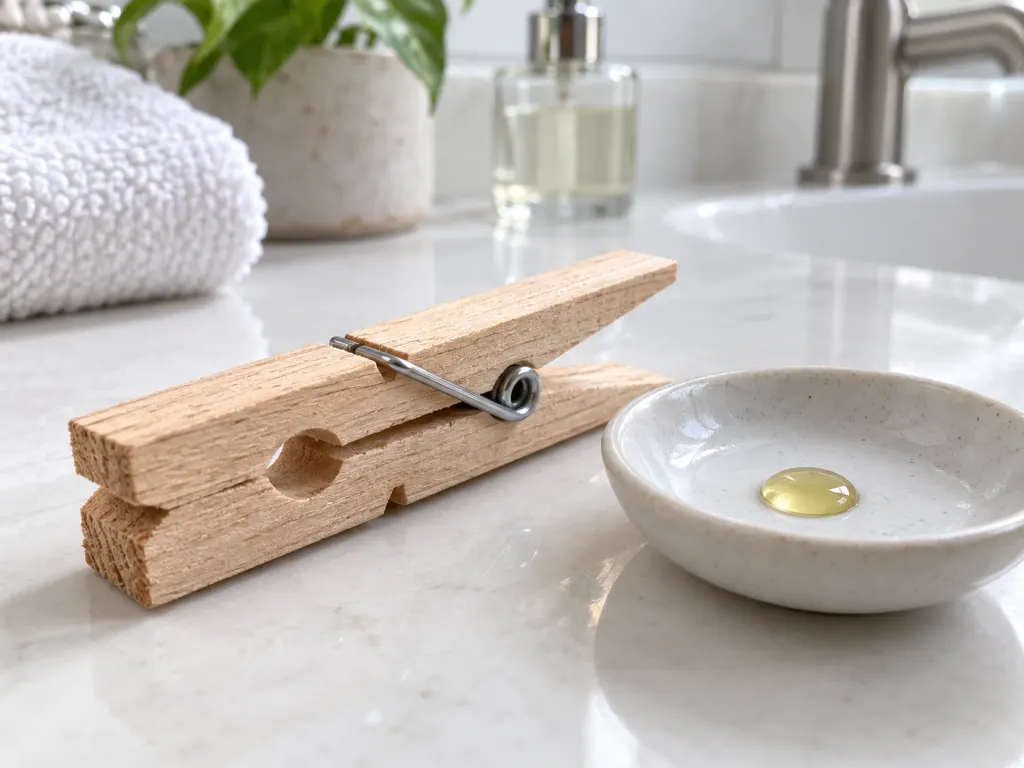
That is why the usual suggestion specifies a wooden clothespin rather than a plastic one. Plastic may hold a droplet on the surface, but it will not absorb it the same way. Metal parts can rust if they stay wet. A bare wooden pin is the practical middle ground: it is absorbent enough to carry scent, sturdy enough to clip to a shower caddy or curtain ring, and easy to throw away if it becomes stained, musty, warped, or unpleasantly strong.
How to Try It Without Turning the Shower Into a Scent Cloud
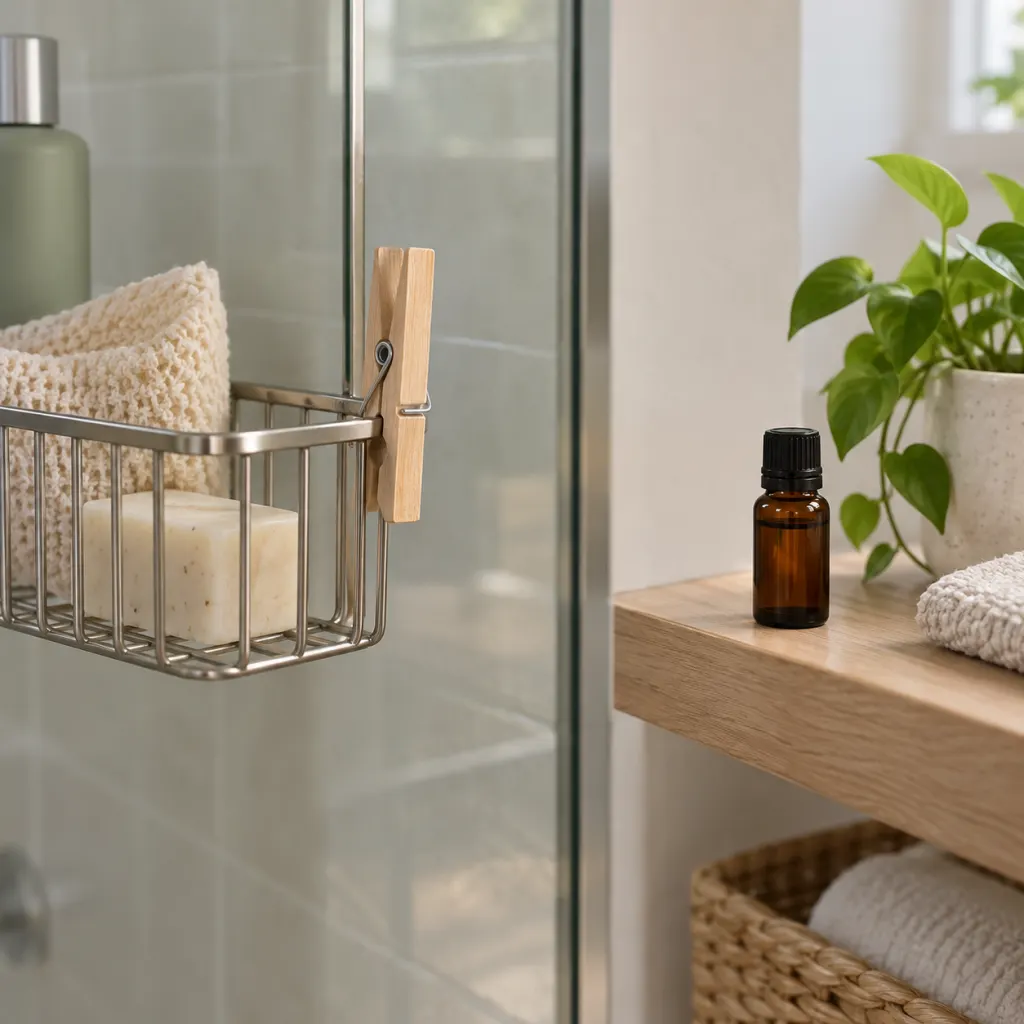
The restrained version is the best version. Choose one clean, unfinished wooden clothespin. Add a very small amount of essential oil to the wooden end, then let any wet shine absorb before bringing it into the bathroom. Clip it where it will stay dry: on the outside edge of a shower caddy, on a curtain ring, or on a towel bar near the shower but away from the stream. Do not clip it to a place where it can drop underfoot.
A practical setup looks like this:
- Use only a clean wooden clothespin, not a painted or glittered craft pin.
- Start with one mild scent and a very small amount rather than mixing several oils.
- Keep the pin above shoulder height only if it is secure and not near the face.
- Keep it outside direct water spray so oil does not rinse onto the shower floor.
- Run the bathroom fan or open a window during and after the shower when practical.
- Remove the pin if the scent feels irritating, overwhelming, or stale.
Why Placement Matters More Than the Trick Itself
The bathroom is one of the home’s most common places for slips and awkward falls. A CDC report on nonfatal bathroom injuries found that most bathroom injuries in the data set were caused by falls, and bathing, showering, or getting out of the tub or shower were especially common circumstances in the CDC analysis. A clothespin is tiny, but a tiny object on a wet floor can still be a bad surprise. If it cannot be secured, skip the shower placement and use it nearby on a shelf or linen closet hook instead.
The second placement issue is contact. Essential oils should not drip where bare feet, hands, or faces will touch them. The FDA notes that plant-derived fragrance ingredients can still irritate skin or cause allergic reactions, and “natural” does not automatically mean safe on its aromatherapy page. That is a good reason to treat the clothespin as a scent holder, not as something to rub, rinse, or hold while showering.

What Essential Oils Can and Cannot Promise
Essential oils are widely used for aroma, but the claims around them often run ahead of the evidence. The National Center for Complementary and Integrative Health describes aromatherapy as the use of plant essential oils, most often by inhaling them or applying diluted forms to skin, and notes that rigorous research is limited for some popular uses in its aromatherapy overview. For a shower clothespin, the reasonable expectation is narrower: the bathroom may smell like lavender, eucalyptus, citrus, cedar, or another chosen scent for a little while.
The FDA also explains that products marketed with health-related claims may be regulated differently from products used only for fragrance or cosmetic purposes by intended use. For this home idea, it is clearer and safer to keep the purpose simple. You are not making the shower into a clinic or changing how your body functions. You are adding a small, removable source of scent to a space where you already spend a few quiet minutes.
Ventilation Still Counts
Steam can make a fragrance more noticeable, but it also raises bathroom humidity. The EPA advises running a bathroom fan or opening a window when showering because damp bathrooms can encourage recurring mold when ventilation and cleaning are poor in its mold and moisture guidance. A scented clothespin should never become a substitute for drying surfaces, washing towels, cleaning grout, or fixing a slow leak. If a bathroom smells musty, cover-up scents only delay the useful work.
Fragrance also belongs in the broader indoor-air picture. The EPA lists air fresheners among household products that can emit volatile organic compounds and recommends increasing ventilation when using products that release VOCs in its indoor air guidance. A single lightly scented clothespin is much smaller than many plug-ins, sprays, or candles, but sensitive people may still prefer no added fragrance at all. In shared bathrooms, ask first.

Who Should Be More Cautious
Some households should treat this idea as optional at best. Skip it if anyone in the home dislikes fragrance, notices coughing or headaches around scented products, or has been advised by a clinician to avoid scented household products. Avoid strong scents in small, windowless bathrooms, especially when the exhaust fan is weak. Keep all oil bottles closed and stored away from children. Do not leave a scented pin where a child might handle it or put it in the mouth.
Pets add another layer of caution. Cornell University College of Veterinary Medicine lists several aromatic oils and related substances among items that can be toxic to small animals, including peppermint oil and tea tree oil in its small animal toxin guidance. That does not mean every faint bathroom scent creates the same risk, but it does mean pet access matters. Do not place scented clothespins where cats, dogs, or other animals can lick, chew, knock down, or rub against them.
Choosing a Scent With Restraint
If you decide to try the clothespin method, choose a scent you already tolerate well in ordinary household use. Lavender, cedar, lemon, and eucalyptus are common choices, but common is not the same as universal. Citrus oils can be sharp in a small bathroom. Minty oils can feel intense. Tea tree oil is a poor casual choice in many homes because of pet concerns and its strong character. The simplest approach is one familiar oil, a tiny amount, and a short trial.
It also helps to avoid fragrance mixing. Three oils on one pin may sound spa-like in theory and muddled in practice. If the first scent fades, let the pin dry before refreshing it. If the wood becomes tacky, discolored, dusty, or sour-smelling, discard it. A clothespin is not meant to be a permanent bathroom fixture. Think of it like a temporary sachet: useful for a while, then done.
A Better Use Case: Guest-Ready Freshness
The clothespin trick makes the most sense before a guest visit, after cleaning day, or during a quiet bath routine when you want a subtle scent without lighting a candle. Bathrooms are not ideal places for open flames, and plug-in fragrance devices may feel too strong for small rooms. A removable clothespin gives you more control. You can put it up for one shower, move it outside the wet area, or toss it without rearranging the room.
For a guest bathroom, clip the scented pin near but not inside the shower, such as on a wire shelf or a discreet hook. That avoids surprising a visitor with oil in the shower space. If the bathroom is shared by people with different scent preferences, a clean, dry room will always be more considerate than a heavily perfumed one. Fresh towels, a working fan, emptied trash, and dry surfaces do more for the room than any scent trick.
When the Clothespin Is the Wrong Answer
Do not use this trick to hide mildew, sewer smells, damp towels, or drain odors. Those smells usually point to a cleaning, plumbing, ventilation, or moisture problem. The EPA’s mold guidance emphasizes controlling moisture, cleaning hard surfaces, drying materials completely, and increasing ventilation where dampness recurs rather than relying on scent. If a smell returns quickly after cleaning, look for a wet bath mat, clogged drain, leaking supply line, dirty overflow opening, or fan that is not moving air well.
Also skip the trick in a shower used by toddlers, anyone who may grab objects for balance, or anyone with low vision who might not notice a dropped pin. A home idea should make the room easier to enjoy, not add something to manage. In those cases, a washable cotton sachet in a linen closet, a cleaned fan grille, or simply opening the door after bathing may be the better household move.
The Bottom Line
Hanging a wooden clothespin in the shower is a small scent-diffuser idea. It works because unfinished wood can hold a little liquid and warm, humid air can help carry aroma through the room. The safest version is light, removable, well ventilated, and kept out of the water stream. Use it for atmosphere, not health claims. If the bathroom needs actual freshness, start with cleaning, drying, ventilation, and moisture control; the clothespin is only the finishing touch.
Wrap-Up
A clothespin in the shower is best treated as a simple fragrance holder. Use a clean wooden pin, add only a very small amount of a familiar essential oil, clip it somewhere dry and secure, and keep the bathroom ventilated. Do not let oil drip onto skin, eyes, pets, children, or the shower floor. If the scent bothers anyone or the bathroom has a persistent odor, remove the pin and address the underlying source.
Frequently Asked Questions
- → Does a clothespin in the shower actually do anything?
Yes, but the effect is modest. A wooden clothespin can hold a small amount of fragrance and release some aroma as the bathroom warms. It will not clean the room, fix odors from moisture, or change the shower water.
- → Where should I hang the clothespin?
Clip it somewhere dry, stable, and away from direct spray, such as the outside edge of a shower caddy or a curtain ring. It should not be able to fall onto the shower floor or drip oil where someone may step.
- → Can I use any essential oil?
Use only a scent you already tolerate well, and use very little. Avoid experimenting with strong blends in a small bathroom. If children, pets, or scent-sensitive people use the space, the better choice may be no added fragrance.
- → How often should I replace the clothespin?
Replace it when the wood looks dirty, sticky, warped, stained, or smells stale. Let it dry between uses, and do not treat it as a permanent bathroom accessory.
- → Is this better than an air freshener spray?
It can be gentler because you control the amount and can remove it immediately, but it is still fragrance in indoor air. Ventilation, cleaning, and dry surfaces matter more than any scent product.
References
This content was developed and refined using reliable sources.
- https://research.fs.usda.gov/treesearch/62243
- https://www.fda.gov/cosmetics/cosmetic-products/aromatherapy
- https://www.nccih.nih.gov/health/aromatherapy
- https://www.epa.gov/mold/brief-guide-mold-moisture-and-your-home
- https://www.epa.gov/indoor-air-quality-iaq/volatile-organic-compounds-impact-indoor-air-quality
- https://www.cdc.gov/mmwr/preview/mmwrhtml/mm6022a1.htm
- https://www.vet.cornell.edu/hospitals/pharmacy/consumer-clinical-care-guidelines-animals/small-animal-toxins