 Save
Bath mats sit in one of the dampest spots in the home, so washing them safely means cleaning the fabric without damaging the backing or leaving moisture trapped underneath. This guide shows you how to choose hand washing or machine washing, dry the mat fully, and handle mold-aware cleanup calmly and safely.
Step 1: Read the care label first
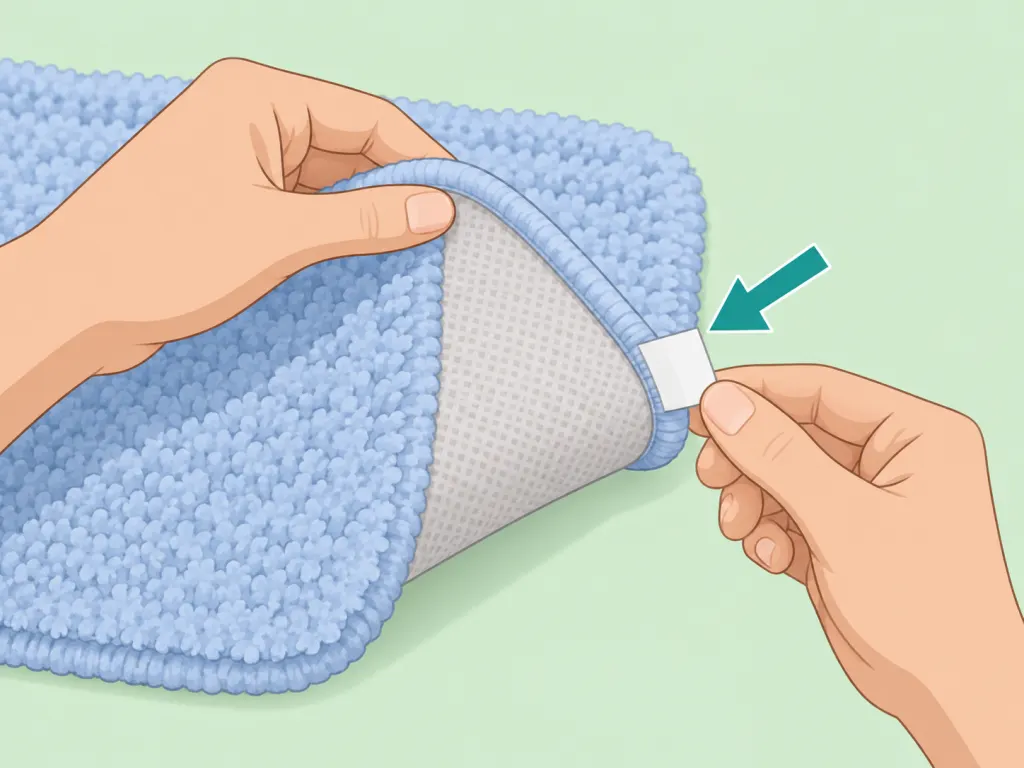
Look for the mat's wash, dry, bleach, and warning symbols before you add water. Textile care labels are meant to show the strongest cleaning process the item can handle without lasting damage, so treat the label as your main rule.
Step 2: Inspect the backing and edges
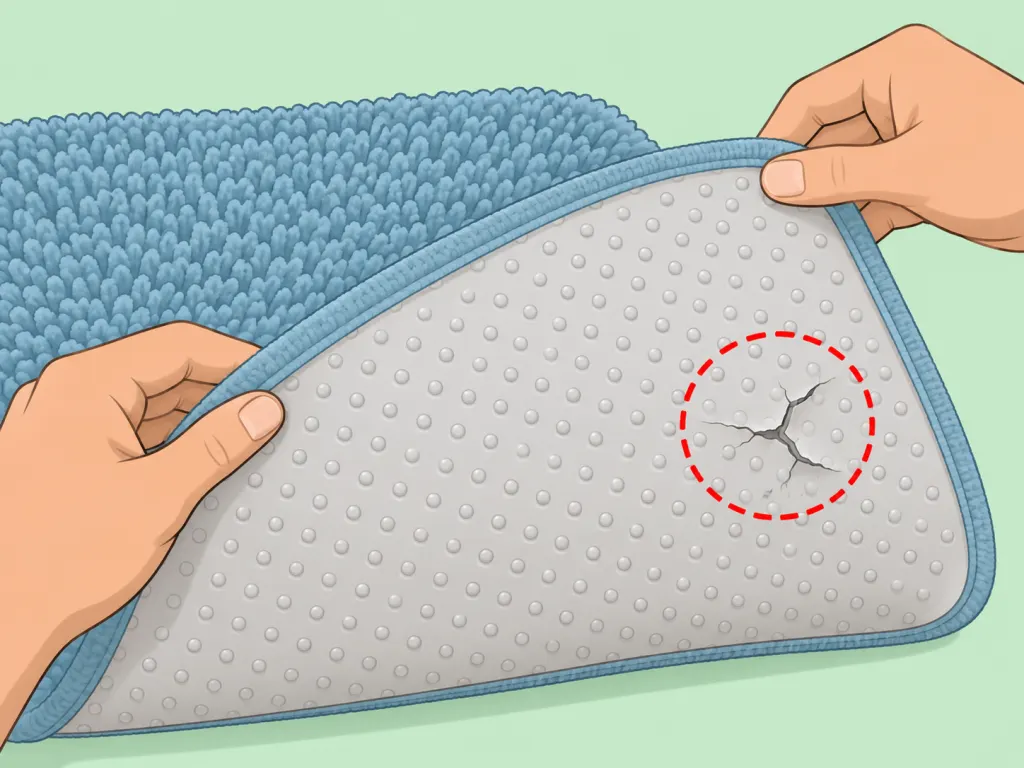
Turn the mat over and check for cracks, peeling rubber, loose seams, or crumbling material. The University of Georgia notes that rubber is sensitive to heat and can deteriorate at high drying temperatures, so damaged backing is a sign to hand wash gently or replace the mat.
Step 3: Shake out loose debris
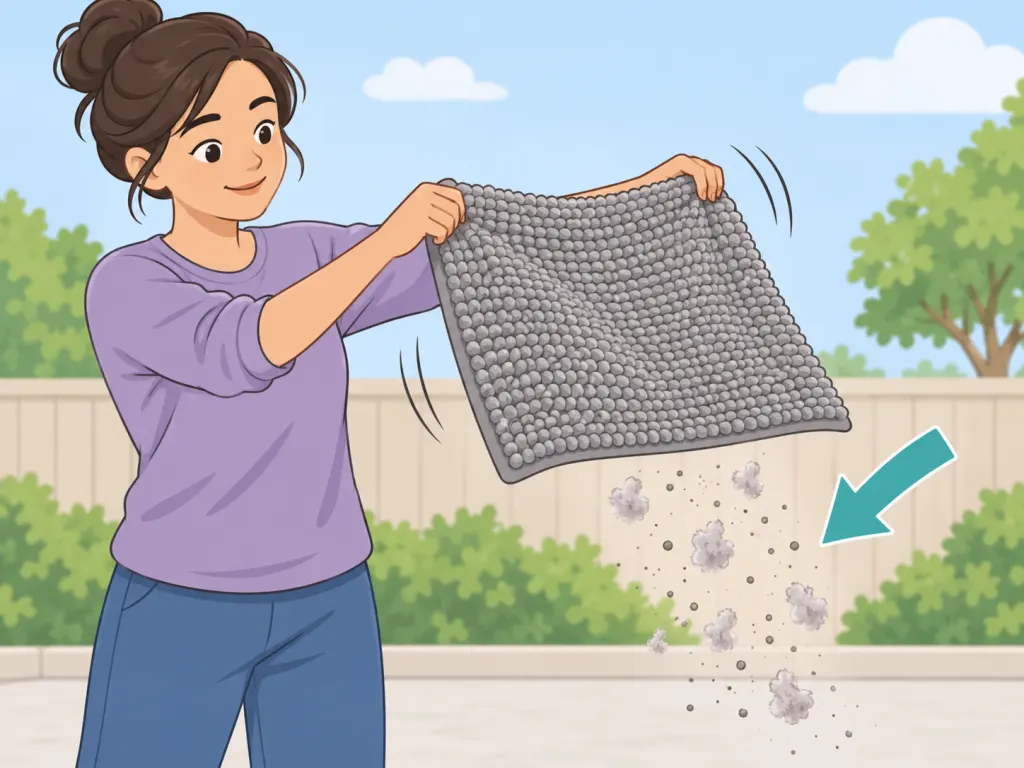
Take the mat outside and shake it firmly to remove hair, lint, grit, and dust before washing. If the fabric side is textured, vacuum it briefly so loose particles do not grind into the fibers during washing.
Step 4: Pretreat spots with mild detergent
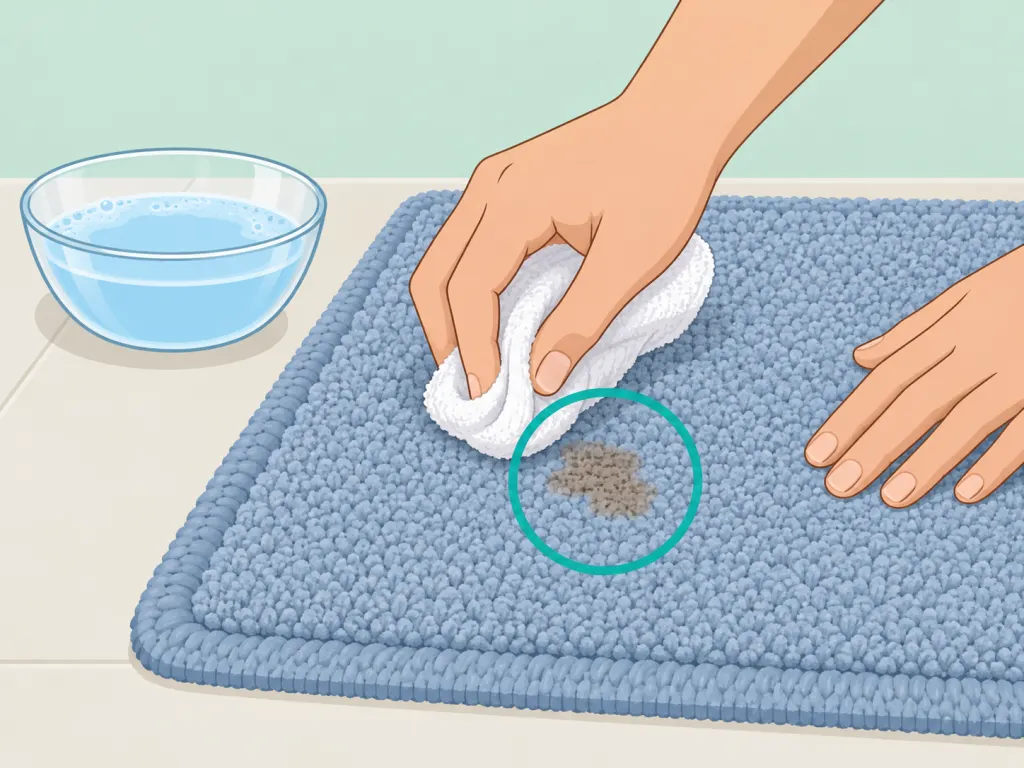
Dab visible spots with a small amount of mild detergent mixed with cool or warm water, then let it sit for a few minutes. A clear or white detergent is a careful choice for textiles because some colored products can transfer dye, according to UGA textile care guidance.
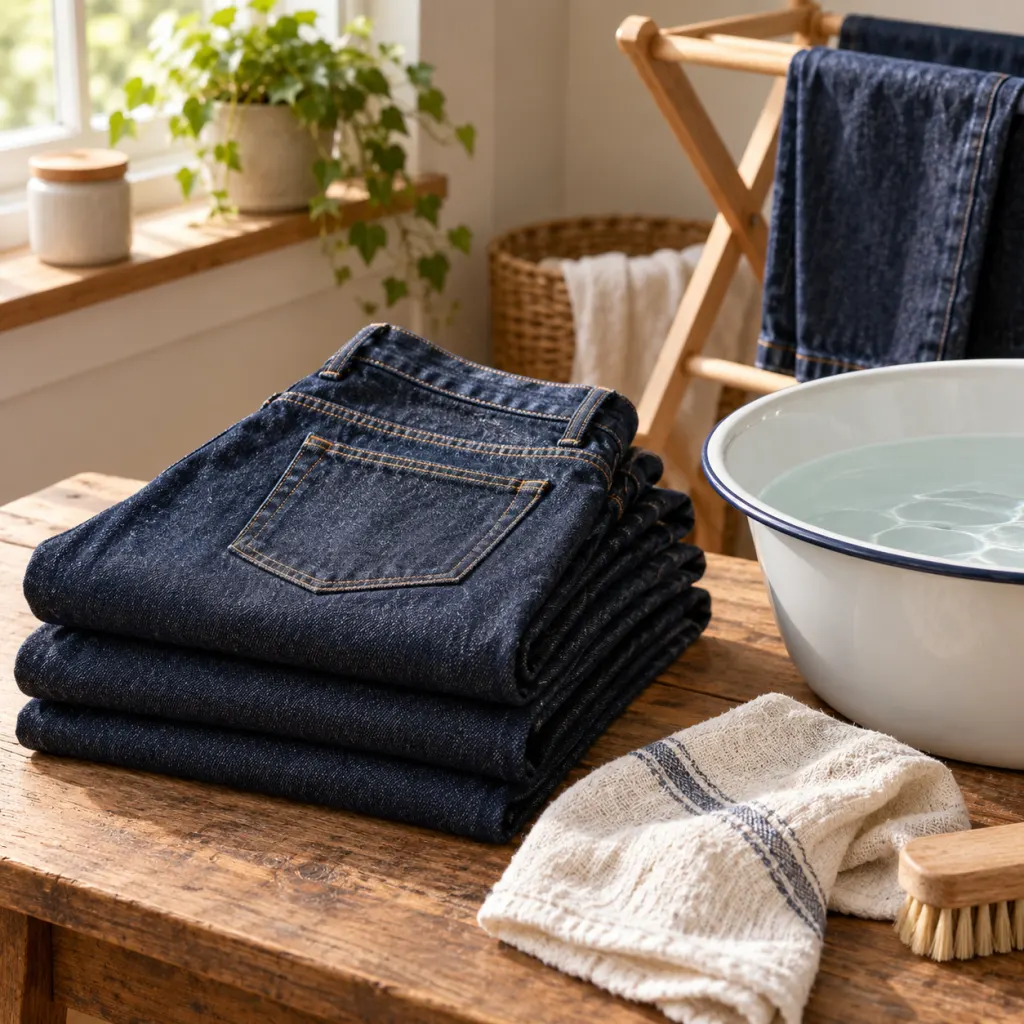
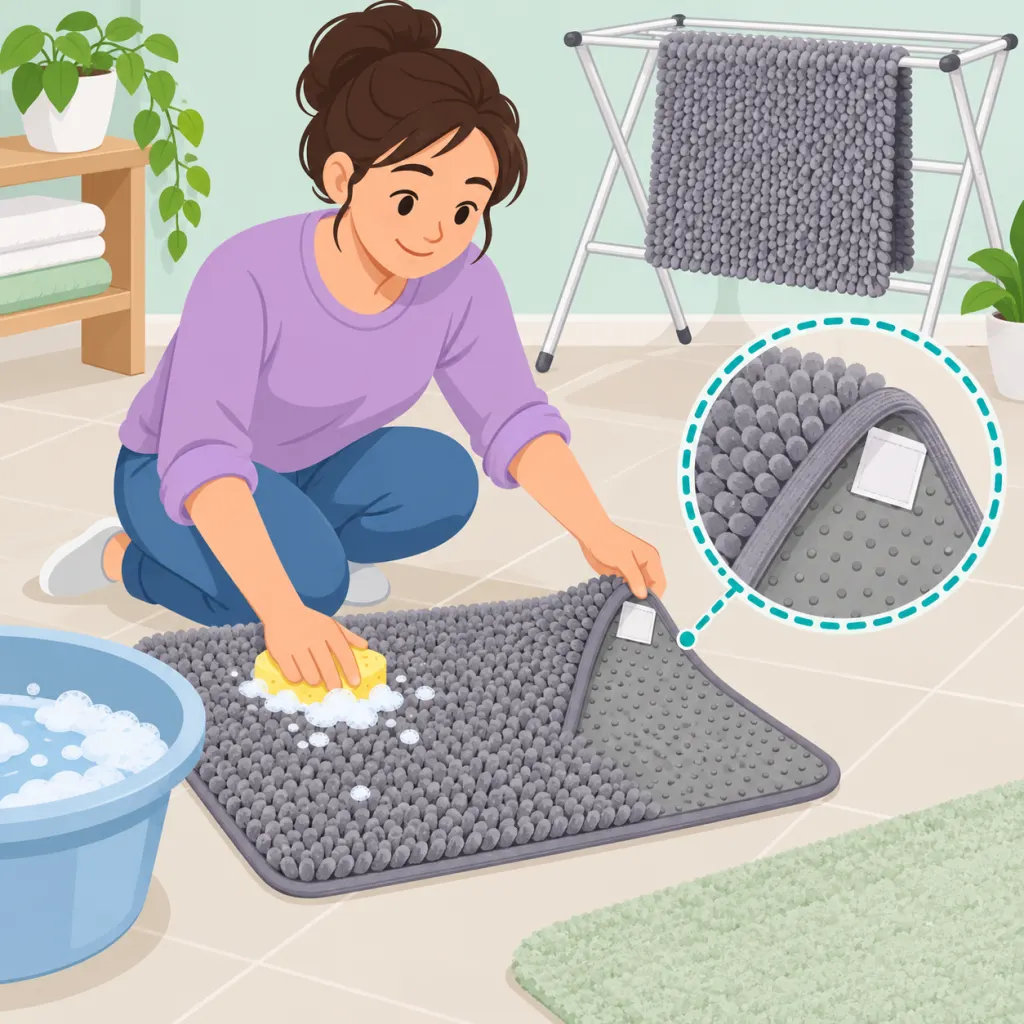
Fill a tub or large basin with cool or lukewarm water and a small amount of mild detergent. Press the mat through the water instead of twisting it, scrub stained areas lightly with a soft brush, then rinse until the water runs clear.
Step 6: Machine wash only sturdy washable mats
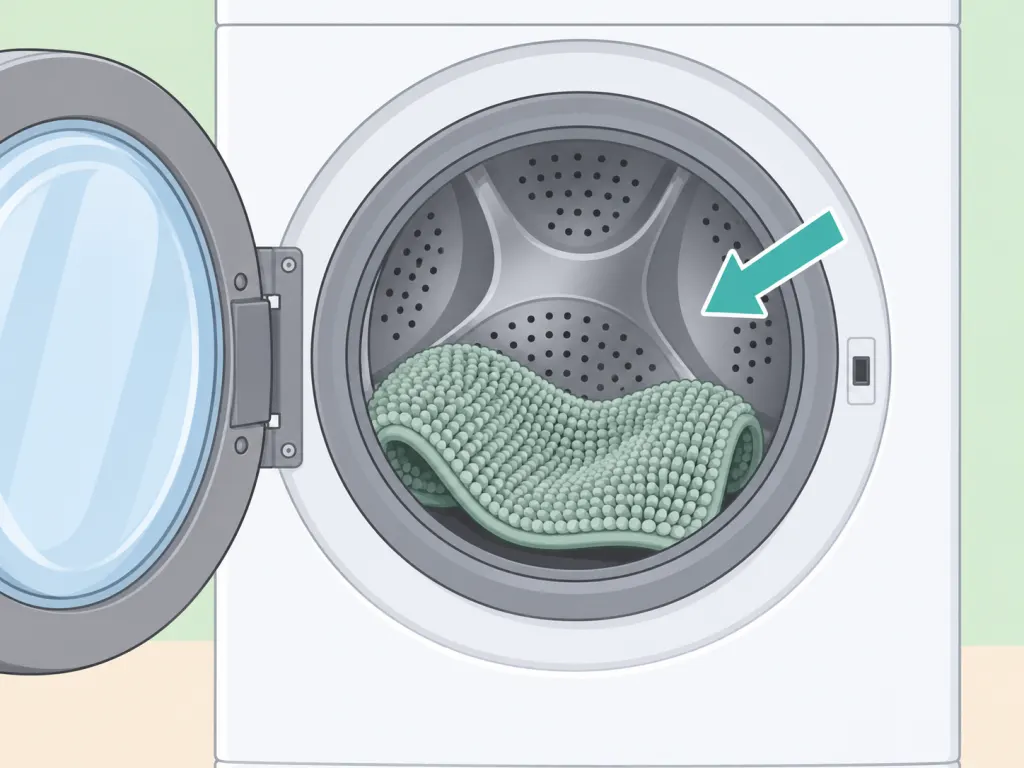
If the label allows machine washing, place the mat in the washer without crowding the drum and choose a gentle or normal cycle that matches the label. For ordinary laundry soil, ENERGY STAR says cold water generally cleans well and uses less energy than warmer settings.
Step 7: Dry the mat completely
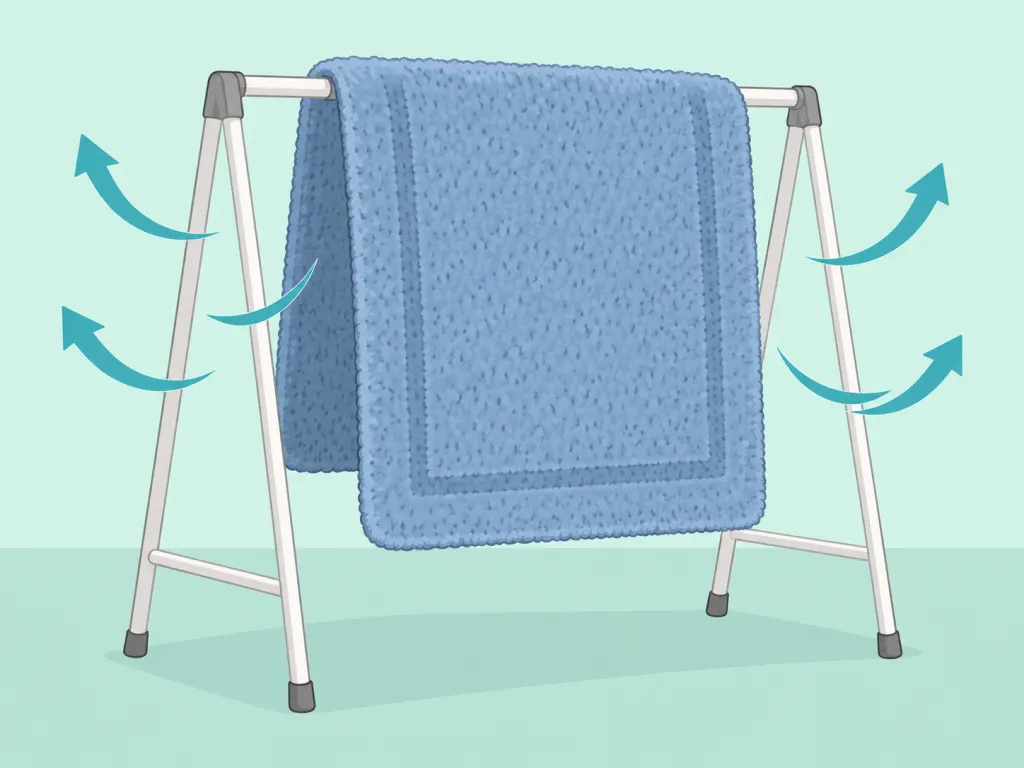
Press out excess water without wringing, then hang the mat over a sturdy rack, shower rod, or outdoor line with air reaching both sides. EPA guidance says moisture control is key to mold control and that wet items should be dried within 24 to 48 hours when possible.
Step 8: Clean the floor before replacing it
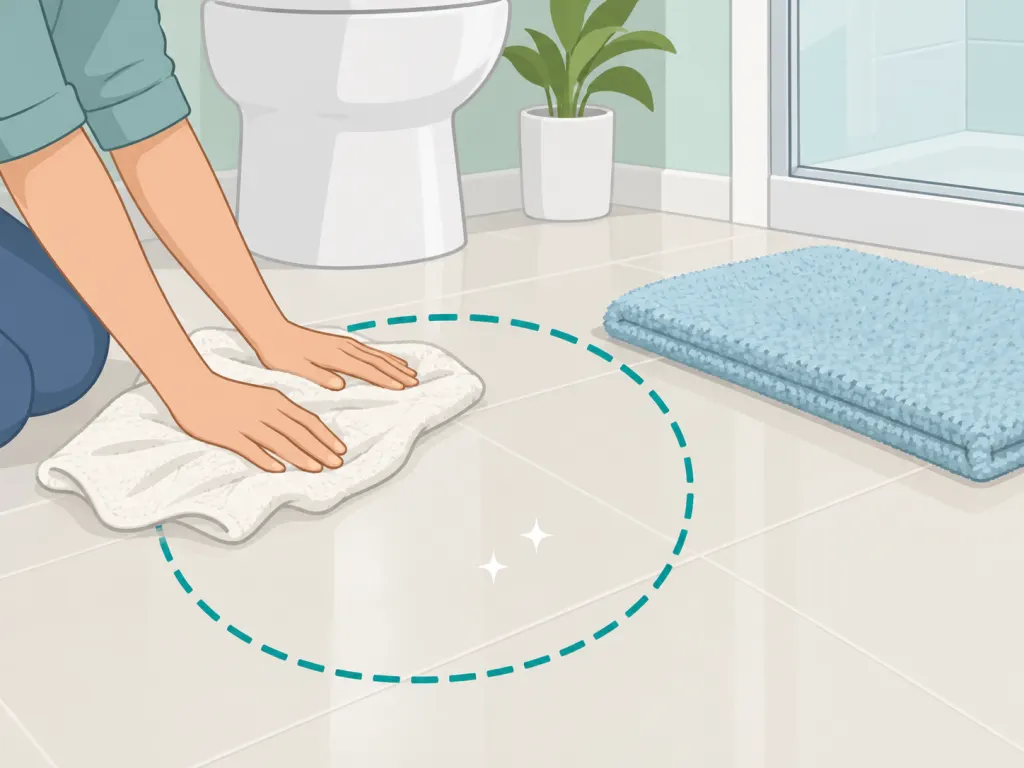
Wait until the bathroom floor and the underside of the mat are dry before putting the mat back. The EPA recommends bathroom ventilation, such as a fan or open window during showers, to reduce moisture that can keep damp surfaces from drying well.
Step 9: Seek help for mold, dirty water, or symptoms
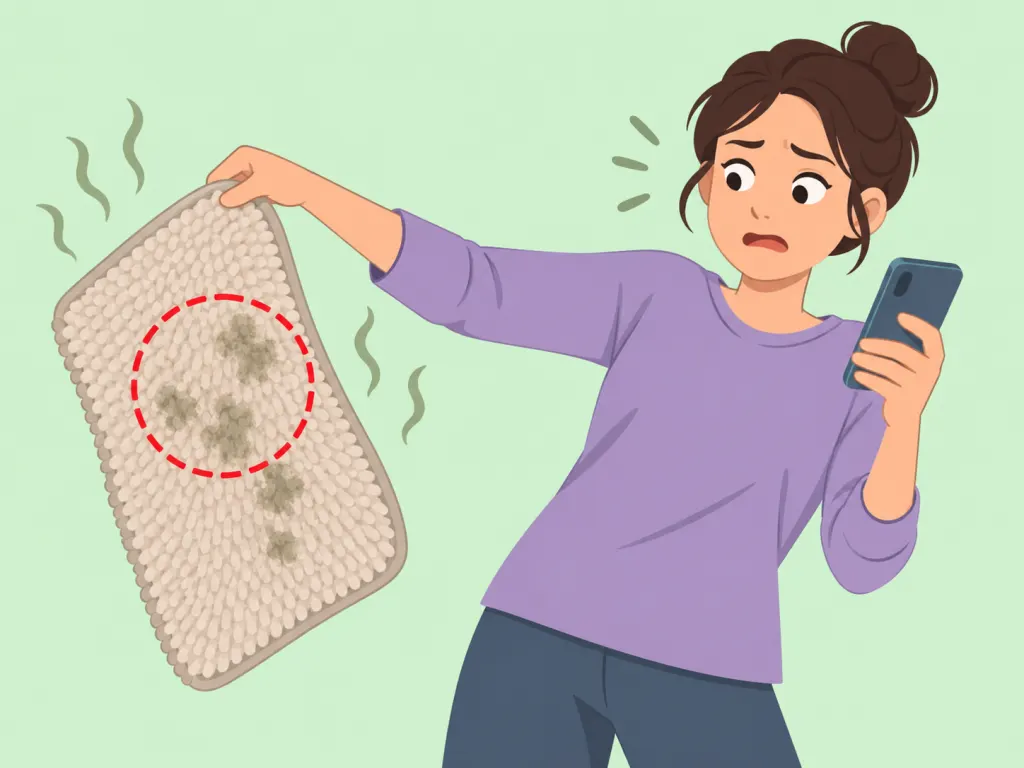
If the mat was soaked by floodwater, has visible mold that returns, or cannot be cleaned and dried fully, discard it or ask a qualified cleaner for help. The CDC advises extra caution during mold cleanup, especially for people with allergies, immune suppression, or lung disease; stop cleaning and contact a doctor or qualified health professional if you develop concerning symptoms.
Wrap-Up
The bottom line: read the label, use a gentle wash method, avoid high heat on rubber backing, and do not return a bath mat to the floor until both sides are completely dry.
Frequently Asked Questions
- → Can I put a bath mat in the washing machine?
- Usually, but only if the care label allows machine washing and the backing is still intact. If the mat is oversized, stiff, cracked, or labeled for hand washing, use a tub or sink instead.
- → Should I use hot water on bath mats?
- Use the water temperature on the care label. Cold water is often enough for ordinary laundry soil, while hot water can be hard on some fibers and rubber-backed mats.
- → Can rubber-backed bath mats go in the dryer?
- Air drying is the safer choice for most rubber-backed mats. High dryer heat can weaken rubber and shorten the mat's life, so use low heat only when the label clearly allows it.
- → How often should I wash a bath mat?
- There is no single schedule that fits every bathroom. Wash it whenever it smells musty, looks soiled, stays damp between showers, or has been used heavily for several days.
- → What should I do if the backing is peeling or crumbling?
- Replace the mat. Loose backing can shed in the washer, leave residue on the floor, and make the mat less stable underfoot.
- → Is bleach safe for bath mats?
- Only use bleach if the care label says it is safe for that mat. Many rubber-backed or colored mats do better with mild detergent, and cleaning products should never be mixed.
References
This content was developed and refined using reliable sources.
- https://www.iso.org/standard/74401.html?browse=tc
- https://site.extension.uga.edu/textiles/textile-basics/understand-your-fibers
- https://site.extension.uga.edu/textiles/care/products
- https://www.energystar.gov/products/clothes_washers
- https://www.cdc.gov/mold-health/communication-resources/8-tips-to-clean-mold.html
- https://www.epa.gov/mold/brief-guide-mold-moisture-and-your-home