 Save
The short answer: do not assume that leaving a key in the lock overnight makes your home safer. In many homes, a better routine is to lock the door fully, remove the key, and keep it in a fixed, reachable place away from the door, windows, and letterbox. Police.uk advises that modern multi-locking and uPVC doors only work properly when you lift the handle, lock, and remove the key, and the U.S. Fire Administration says every household should know and practice how to get out quickly in a fire https://www.police.uk/cp/crime-prevention/protect-home-crime/door-window-lock-advice/ https://www.usfa.fema.gov/prevention/home-fires/prepare-for-fire/home-fire-escape-plans/.
Why the Overnight Key Habit Feels Reassuring
Leaving a key in the inside of the lock feels orderly. The key is visible, you know where it is, and the door looks ready for the morning. For some people, especially in an unfamiliar home or during a stressful period, that small visual cue can feel like control. The problem is that home security is not only about whether a key is easy to find. It is also about whether the lock is being used as designed, whether someone outside can reach the key, whether every resident can enter and leave normally, and whether an emergency exit can be used without confusion.
The Better Question Is How Your Door Works
There is no single rule for every door. A wooden door with a night latch, a euro cylinder on a uPVC door, a multipoint locking system, an apartment door, and a door with glass or a letterbox nearby can behave differently. That is why the safest answer is practical rather than superstitious: learn how your exact lock is meant to be used, then build a repeatable night routine around that design. Police.uk specifically notes that modern multi-locking and uPVC doors rely on hooks and latches that work when the handle is lifted and the key is turned and removed https://www.police.uk/cp/crime-prevention/protect-home-crime/door-window-lock-advice/.
A Key in the Lock Can Be Too Close to the Outside
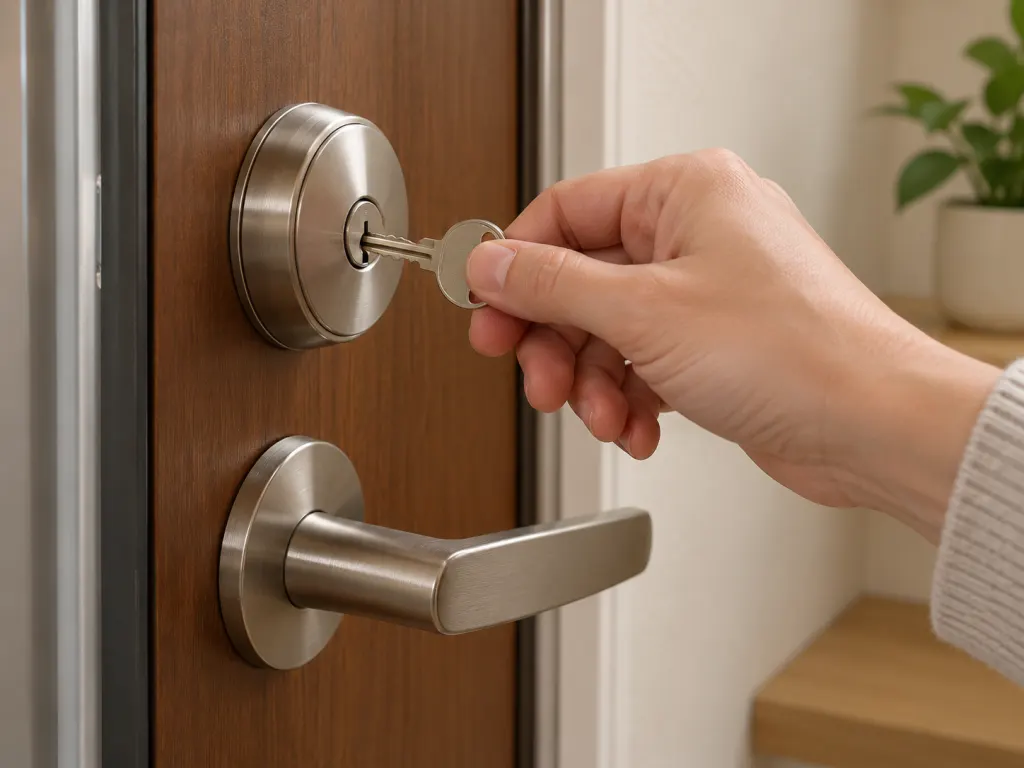
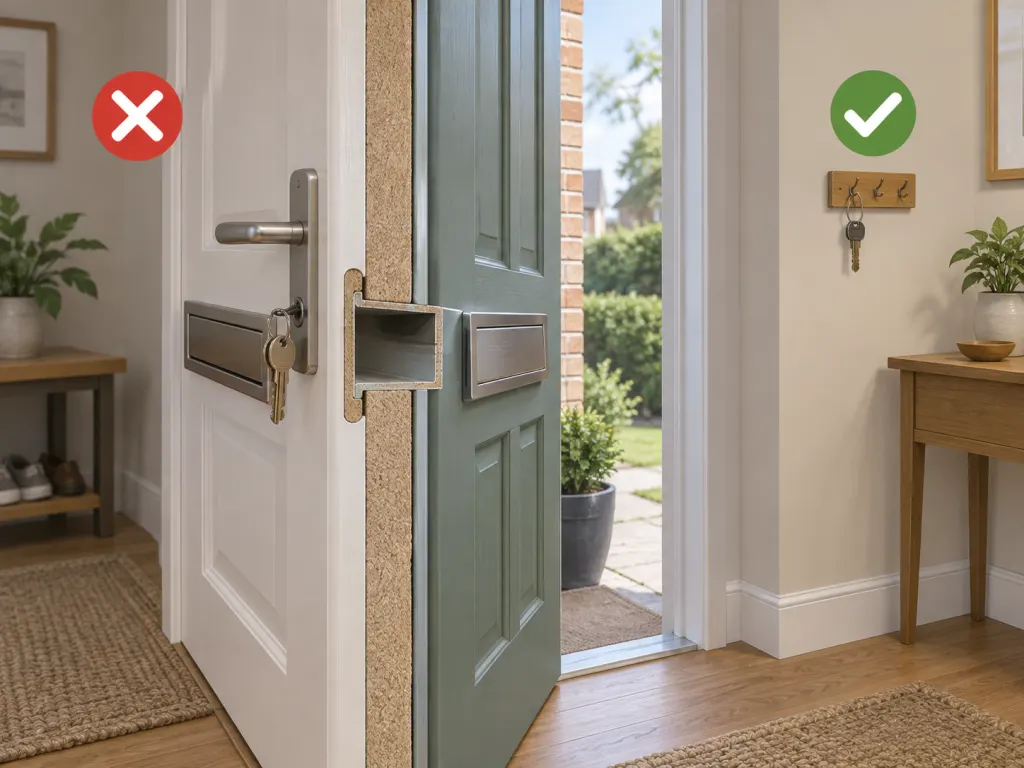
The most obvious risk is reach. If a door has a letterbox, a glass panel, a pet flap, a thin curtain beside the door, or a nearby window, a visible key can become part of the door's vulnerability. Northern Ireland's public services site warns that if a letterbox is near the lock and keys are left in the lock, a burglar could reach through and unlock the door https://www.nidirect.gov.uk/articles/securing-doors-and-windows. Even when the exact layout is different, the principle holds: keys should not be displayed or stored where someone outside can see, hook, or reach them.
A good night setup balances access for residents with concealment from outside. Before bed, look at the door from the outside during daylight and again after dark if you can do so safely. Ask whether a key, fob, car key, handbag, or wallet is visible through glass or reachable through an opening. The Police Service of Northern Ireland advises keeping house and car keys safe and away from doors and windows, and it also stresses that security improvements should not prevent quick escape in a fire https://www.psni.police.uk/safety-and-support/keeping-safe/protecting-your-home/house-security.
What to Check Tonight
- Lock the door exactly as the manufacturer or installer instructed.
- Remove the key if the lock is designed to be locked and then cleared of the key.
- Keep the key on a small hook, tray, or drawer that adults can reach quickly.
- Place that storage spot away from windows, the letterbox, and the door glass.
- Make sure every responsible resident knows the location.
- Keep car keys separate from the front door area, especially if the car is parked nearby.
Emergency Exit Matters as Much as Burglary Prevention
Night security should never trap the people inside. The U.S. Fire Administration advises households to make a home escape plan, identify two ways out of every room, keep doors and windows from being blocked, and practice the plan with everyone in the home. It also notes that residents may have less than two minutes to escape once a smoke alarm sounds https://www.usfa.fema.gov/prevention/home-fires/prepare-for-fire/home-fire-escape-plans/. That does not mean a key must sit in the lock. It means the key, latch, thumb turn, or exit hardware must be easy for the right people to use under pressure.
Why Nearby Is Often Better Than Inserted
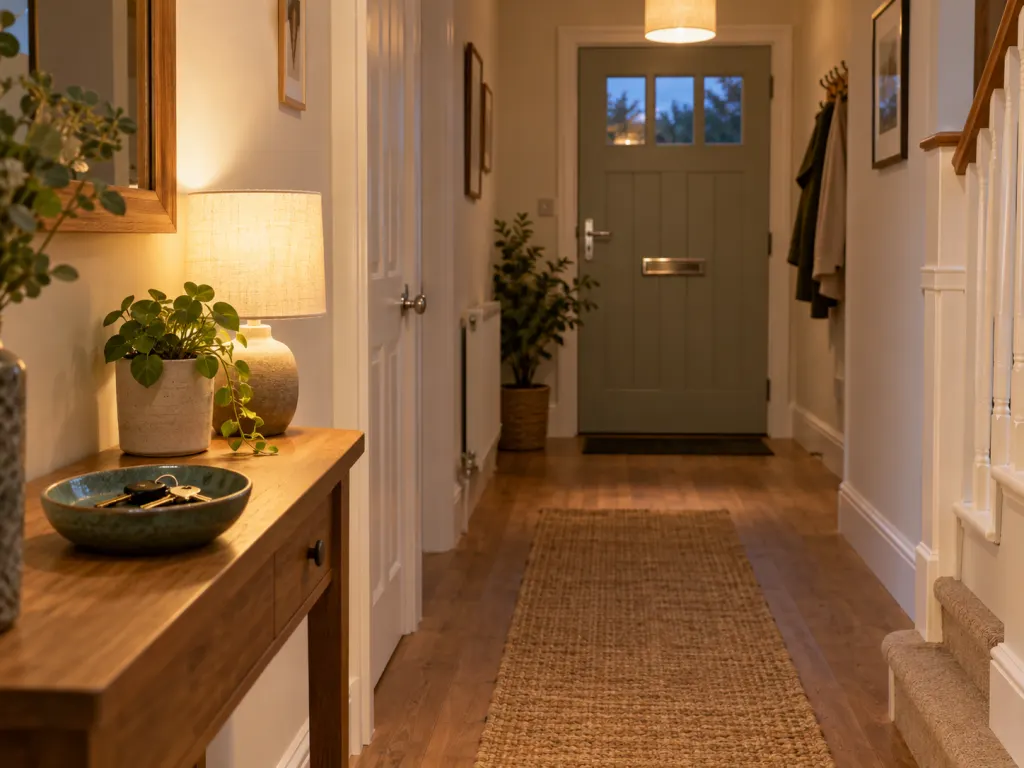
A key that is nearby but not inserted often gives you the useful part of the habit without the downside. It can be kept in the same place every night, close enough for a calm adult to find fast, but not visible or reachable from outside. It also avoids the common problem of a dangling keyring being bumped, twisted, or loaded with unnecessary weight. A door key does not need to carry a full collection of loyalty cards, garage remotes, bottle openers, and decorative tags while it sits beside the exit.
For households with children, visitors, older relatives, or anyone who may be confused during the night, the storage spot should be simple but deliberate. A high hook may be sensible in a home with toddlers. A labeled drawer may help an adult household, but avoid visible labels near glass doors. If a resident has limited mobility or reduced vision, practice the route in realistic lighting and decide whether a thumb-turn lock, a code-compliant replacement, or a different key station would be safer. The U.S. Fire Administration's fire-safety materials for public buildings include the same broad principle: deadbolt locks used on exits should be easy to unlock from inside without a key, especially for children and people with disabilities https://www.usfa.fema.gov/prevention/arson/houses-of-worship/.
Apartment Doors and Local Rules May Be Different
Renters and apartment residents should be especially careful about changing hardware or adding locks. Local fire codes, lease terms, and building rules may limit what can be installed on an apartment door. New York City's housing department tells residents to make sure apartment doors open from the inside without a key and warns that double-cylinder locks on apartment doors can trap residents during a fire https://www.nyc.gov/site/hpd/services-and-information/fire-safety.page?articleSlug=tenant-rights-in-nyc-that-landlords-must-comply-with&blogCategorySlug=renters. Rules vary by location, but the safety idea is widely useful: the people inside must be able to get out quickly.
The Myth of One Perfect Anti-Burglary Trick
Leaving a key in the lock is sometimes promoted as if it defeats every break-in method. That is too simple. Burglary prevention is layered. Doors and frames need to be strong, locks need to meet suitable standards for the door, windows should be secured, lighting can reduce hiding places, and keys should be controlled. Police.uk recommends upgrading euro cylinder locks to 3-star TS007-rated products when changing locks because they protect against several common attack methods, including snapping, drilling, and bumping https://www.police.uk/cp/crime-prevention/protect-home-crime/door-window-lock-advice/. A key left inside is not a substitute for a suitable lock and a solid door.
When Leaving a Key In the Lock May Seem Necessary
There are homes where a resident feels safer with a key already inserted because the lock is stiff, the hallway is dark, or the key is easy to misplace. Treat that feeling as useful information, not as proof that the habit is best. A stiff lock may need maintenance or replacement. Poor lighting may need a motion night light. A frequently misplaced key may need a dedicated key station. If the only way to leave quickly is to keep a key inserted, it is worth asking a qualified locksmith, landlord, or local fire-safety contact whether the door hardware is right for the household.
A Practical Night Routine
The safest routine is the one people can repeat when tired. Keep it short, visible to household members, and easy to audit. A practical routine can look like this: close the door fully, lift the handle if your door requires it, lock the door, remove the key if the lock is designed for that, place the key in its assigned interior spot, check that windows and accessible doors are secured, and confirm that exits are not blocked. The PSNI's home-security advice makes the same balance clear: keep keys safe and away from doors and windows, but keep appropriate keys nearby in case of emergency https://www.psni.police.uk/safety-and-support/keeping-safe/protecting-your-home/house-security.
When to Ask for Professional Advice
Ask for help if the door cannot be locked without leaving a key in place, if another resident is frequently locked out, if the lock sticks, if the key has to be forced, if there is glass or a letterbox close to the lock, or if anyone in the home cannot operate the exit confidently. A locksmith can explain whether a cylinder has an emergency function, whether a thumb-turn model is suitable and lawful for your setting, and whether the door and frame are strong enough for the lock. Renters should contact the landlord or property manager before changing hardware.
The Sensible Rule
For most homes, the goal is not to hide the key so well that no one inside can find it, and it is not to leave the key exposed in the lock all night. The goal is a middle ground: the door is properly locked, the key is off the lock, the key is out of sight and reach from outside, and everyone who should be able to leave knows exactly how to do so. That is calmer, more repeatable, and better supported by official home-security and fire-escape guidance than relying on a single overnight habit.
Wrap-Up
Leaving keys in the lock at night can create avoidable problems when the key is visible or reachable from outside, when a multipoint door is designed for the key to be removed, or when an emergency exit depends on a confusing key routine. A safer default is to lock the door correctly, remove the key when appropriate, and store it in a consistent interior place that responsible residents can reach quickly. Check your exact lock, avoid keeping keys near glass, letterboxes, or windows, and make sure your security setup still allows a fast exit in an emergency.
Frequently Asked Questions
- → Is it always unsafe to leave a key in the lock overnight?
No. The risk depends on the lock, door design, local rules, and who lives in the home. However, it is usually better to avoid making an inserted key your default safety plan. Lock the door as designed and keep the key nearby, out of sight, and away from outside reach.
- → Where should I keep my front door key at night?
Choose one consistent interior spot that adults can reach quickly but that cannot be seen or reached through a letterbox, glass panel, pet flap, or nearby window. A small tray, hook, or drawer away from the door often works better than leaving the key in the lock.
- → What if I need the key for a quick fire escape?
Build the routine around quick escape, not guesswork. Everyone who may need to leave should know how the door opens, where the key is, and what the household escape plan is. If the exit feels confusing or slow, ask a qualified locksmith, landlord, or local fire-safety contact about safer hardware.
- → Can leaving a key inside stop someone from unlocking the door from outside?
Some locks behave differently when a key is left inside, but that is lock-specific and should not be treated as a universal security feature. If another resident is being locked out or the lock behaves unpredictably, check the manufacturer's instructions or ask a qualified locksmith.
- → Should renters change the lock if they dislike the current setup?
Renters should not change door hardware without checking the lease, landlord rules, and local requirements. Apartment doors may have fire-safety rules, and some buildings restrict certain lock types. Start with the landlord or property manager, then use a qualified professional if hardware needs attention.
References
This content was developed and refined using reliable sources.
- https://www.police.uk/cp/crime-prevention/protect-home-crime/door-window-lock-advice
- https://www.usfa.fema.gov/prevention/home-fires/prepare-for-fire/home-fire-escape-plans
- https://www.nidirect.gov.uk/articles/securing-doors-and-windows
- https://www.psni.police.uk/safety-and-support/keeping-safe/protecting-your-home/house-security
- https://www.usfa.fema.gov/prevention/arson/houses-of-worship
- https://www.nyc.gov/site/hpd/services-and-information/fire-safety.page?articleSlug=tenant-rights-in-nyc-that-landlords-must-comply-with&blogCategorySlug=renters