 Save
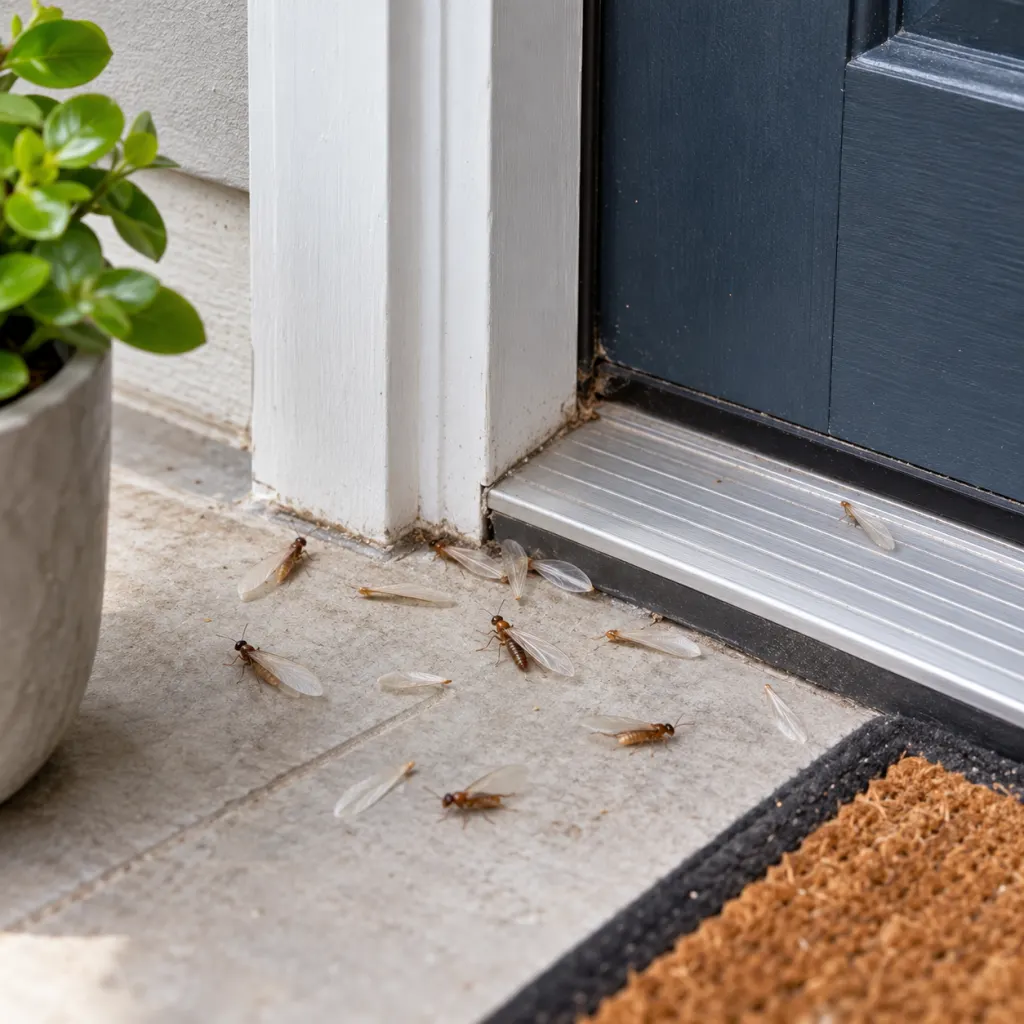
If you found a sudden cluster of winged insects and loose wings by the front door, your house is not automatically in trouble, but the finding deserves a careful check today. The most important question is whether the insects are termite swarmers or winged ants. Termite swarmers are reproductive termites that leave a mature colony to pair and start new colonies; they are often noticed near doors, windows, and lights. Flying ants can look similar at first glance and may also shed wings after mating. The practical answer is simple: preserve the evidence, compare the body shape, look for other signs around the threshold and foundation, and arrange a professional inspection if the insects match termite features or if the swarm happened indoors.
First answer: treat it as a clue, not a verdict
A pile of wings near a front door is a clue, not a final diagnosis. The U.S. Environmental Protection Agency says many people first notice termites only after seeing a swarm or finding damage during construction, and it also warns that ant swarms are sometimes mistaken for termite swarms (EPA). That is why the next step is not panic spraying or tearing open trim. It is identification. If the bugs have termite traits, the finding may mean a colony is nearby, either in the structure, under the slab, in a porch post, in landscaping wood, or in soil close to the house. If they have ant traits, the response may be different, especially if they came from outdoors and were drawn to porch lights.
How to tell termite swarmers from winged ants
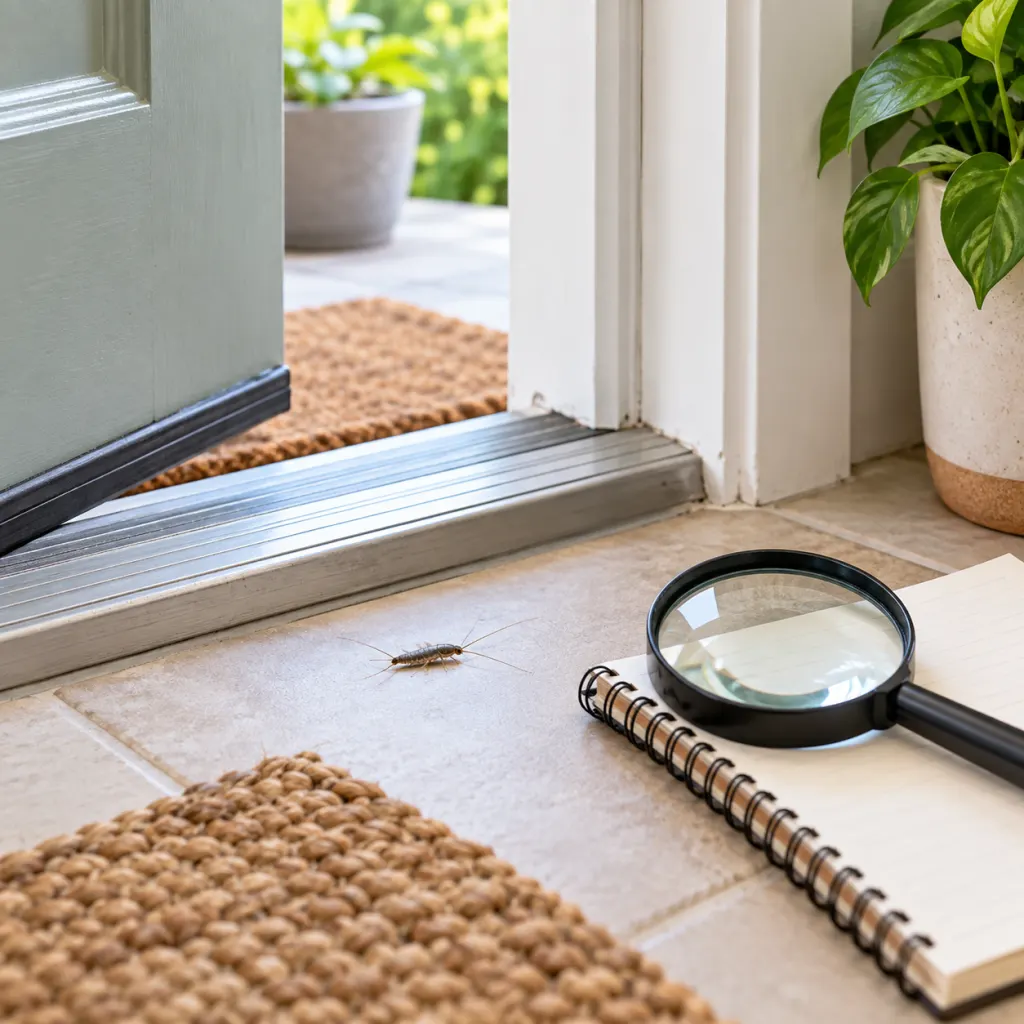
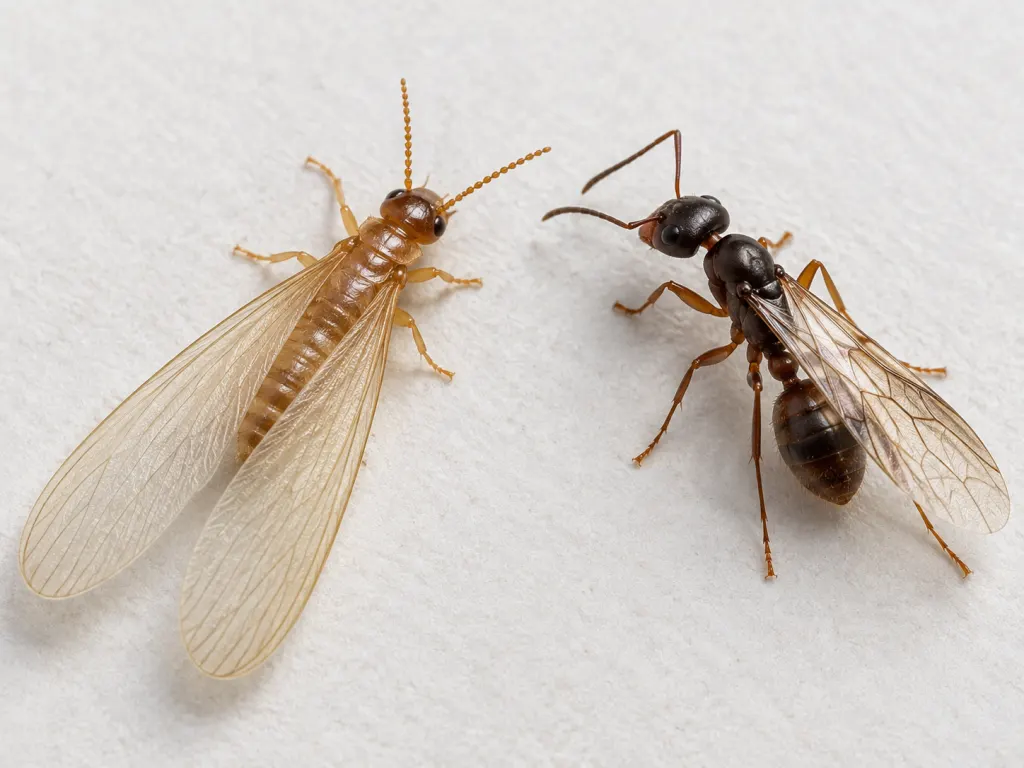
Use a phone camera, a magnifying glass, or a clear jar to inspect one intact insect. Termite swarmers tend to have a more rectangular body with no pinched waist, straight or slightly drooping antennae, and two pairs of wings that are roughly equal in length. Winged ants tend to have a narrow waist, elbowed antennae, and hind wings that are shorter than the front wings. University of Minnesota Extension gives the same comparison and adds that termite wings fall off easily and are often found near where the insects emerge (University of Minnesota Extension). UC IPM also lists the three main differences as waist shape, wing length, and antenna shape (UC IPM Ants).
- Waist: broad and straight suggests termite; narrow and pinched suggests ant.
- Antennae: straight or beadlike suggests termite; bent or elbowed suggests ant.
- Wings: four similar wings suggest termite; larger front wings and smaller back wings suggest ant.
- Loose wings: piles of same-sized, delicate wings near a door or window can fit termite swarmers, but ants may shed wings too.
Why they collect by a door
Doors are natural collection points for several reasons. Porch lights and indoor light leaking through glass can draw flying insects toward the threshold. The bottom of a door also has cracks, weatherstripping gaps, trim seams, and nearby soil or mulch, all of which can make it a visible landing zone. Subterranean termites often move through hidden soil connections and shelter tubes, while drywood termites live above ground in wood. UC IPM notes that correct management depends on the termite type and where it is found, with subterranean termites nesting in soil and drywood termites nesting in relatively dry wood (UC IPM Termites). So the front door location helps you decide where to inspect, but it does not identify the insect by itself.
What a pile of loose wings can mean
Loose wings can mean that winged insects entered, landed, crawled around, and shed their wings after a mating flight. For termites, the winged form is called an alate or swarmer. UC IPM explains that termite colonies produce winged reproductives that leave the nest in swarms to mate, disperse, and establish new colonies; timing varies by species and location, and some flights occur after rain or near lights (UC IPM Termites). One indoor swarm is more concerning than a few dead insects outside, but even an indoor pile does not tell you whether the colony is in the door frame, under the porch, in a wall, or nearby outdoors. The value of the wings is that they point you toward a timely inspection before hidden activity goes unnoticed for longer.
A calm inspection you can do today
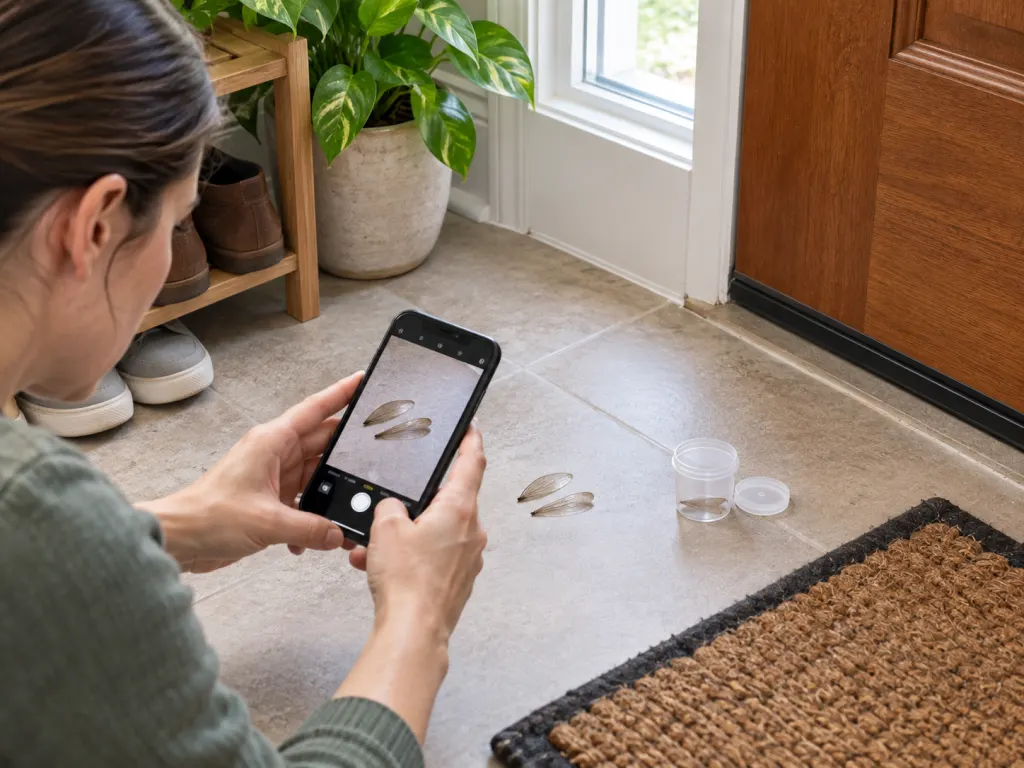
Start with the area you can see without damaging the house. Sweep a few insects and wings into a small bag or container, then photograph the threshold, door trim, baseboard, porch, foundation edge, and any place where the insects seem to have gathered. Look slowly instead of randomly. The EPA suggests probing exposed wood for hollow spots and watching for swarms, and UC IPM lists shelter tubes, tunneling in wood, darkening or blistering of structural wood, and live termites in wood as signs that deserve attention (EPA) (UC IPM Termites).
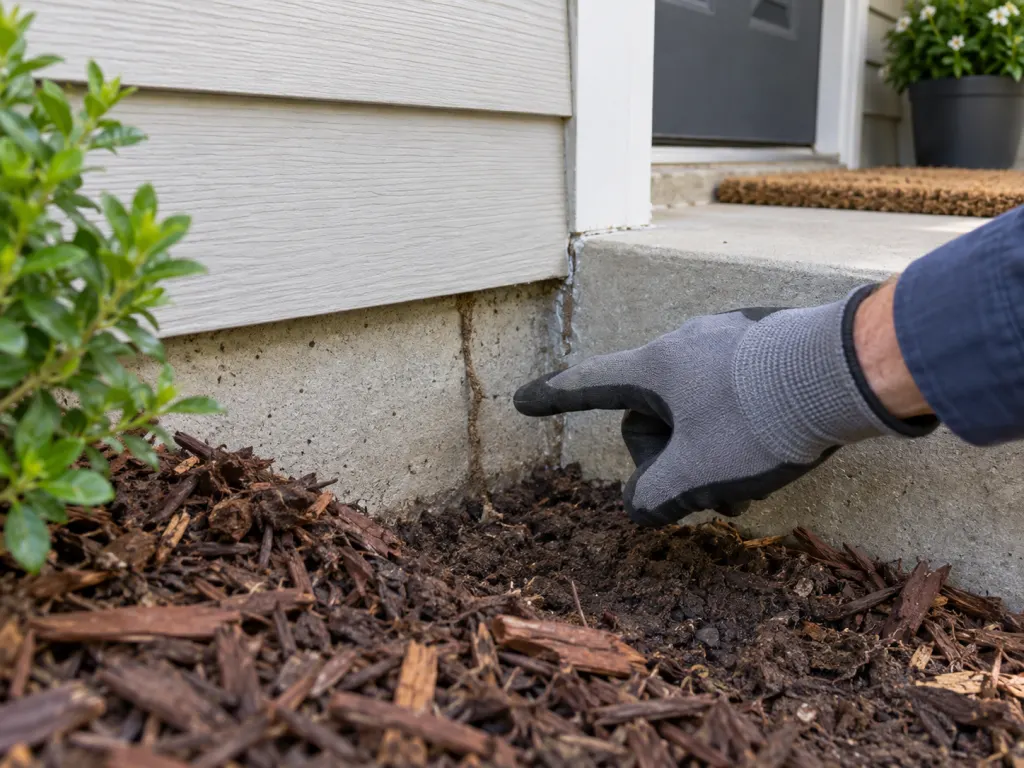
- Check exterior foundation edges for pencil-width mud tubes or earthen lines.
- Look at the underside of porch steps, deck boards, door casing, and sill plates where visible.
- Note any soft, blistered, stained, or easily punctured wood around the entry.
- Look for tiny pellets below wood openings, which can be associated with drywood termite activity in some regions.
- Check gutters, downspouts, grading, and splash areas for moisture that stays near the foundation.
- Keep mulch, stacked wood, cardboard, and scrap lumber from resting against the house.
When to call a professional
Call a licensed pest management professional if the insects have a broad waist, straight antennae, and equal-length wings; if you found a large indoor swarm; if loose wings reappear after cleanup; or if you see mud tubes, damaged wood, or recurring activity around the same doorway. UC IPM says seeing flying termites does not always mean a building is infested, but a professional inspection is usually needed to confirm an infestation (UC IPM Termites). The EPA also notes that many termiticide applications are properly performed only by trained pest management professionals and advises choosing a licensed company carefully (EPA). Ask the inspector to identify the insect, inspect likely entry points, explain the evidence, and separate confirmed findings from possibilities.
What a professional is looking for
A good termite inspection is more than a glance at the front mat. The inspector may check the foundation perimeter, crawlspace, basement, garage, porch attachments, deck connections, plumbing penetrations, attic areas, and interior trim near moisture sources. The goal is to determine whether there is an active termite infestation, old evidence, another wood-infesting insect, or simply winged insects that came from outside. UC IPM describes subterranean termite signs such as shelter tubes and tunneling, and it notes that hidden habits can leave homeowners unaware until a significant clue appears (UC IPM Termites). A careful report should tell you what was seen, where it was seen, which areas could not be inspected, and what treatment or monitoring options fit the actual evidence.
Treatment decisions should match the insect and the building
Termite treatment is not one-size-fits-all. Subterranean termites, drywood termites, dampwood termites, carpenter ants, and ordinary household ants call for different responses. For subterranean termites, management may involve moisture correction, removal of wood-to-soil contact, baiting systems, or professional soil treatments. Drywood termite work may focus on infested wood, localized treatment, heat, or, in widespread cases, whole-structure fumigation. The EPA lists several termite treatment categories, including liquid soil-applied termiticides, termite baits, building materials with termiticides, and wood treatments (EPA). The right choice depends on species, structure, access, local rules, and the extent of the evidence. Be cautious with any plan based only on killing the insects you can see; visible swarmers are usually not the hidden workers that cause the structural concern.
How to reduce future risk around the entry
The best prevention habits make the entry area drier, less cluttered, and less connected to soil or decaying wood. EPA prevention guidance includes keeping soil around the foundation dry through grading and drainage, fixing leaks, reducing openings, keeping vents clear, avoiding shrubs against exposed wood, keeping firewood and wood debris away from the house, and inspecting periodically (EPA). UC IPM similarly recommends keeping foundation areas ventilated and dry, removing wood in contact with soil, and inspecting structural or foundation wood for termite signs (UC IPM Termites). Around a front door, that can mean extending downspouts, correcting splashback, pulling mulch back from siding, sealing obvious cracks after inspection, repairing rotten trim, and moving stacked wood off the porch.
If the insects are ants instead
If the insects are winged ants, the house may still need attention, but the concern changes. Many ants nest outdoors and enter for food, water, warmth, or shelter. UC IPM says ants can appear suddenly indoors when food sources or weather conditions change, and it recommends exclusion, cleanup, and bait-based approaches rather than routine indoor sprays (UC IPM Ants). Carpenter ants deserve special attention because they excavate wood for nesting, although they do not eat wood as termites do. University of Minnesota Extension says carpenter ants have narrow waists, bent antennae, and unequal wings when wings are present, and large numbers of winged ants indoors can be a strong sign of an indoor nest (University of Minnesota Extension). If the insects are ants, look for trails, food sources, moisture, rotten wood, and repeated sightings rather than assuming termite treatment is needed.
Bottom line for the front door
Your front-door pile is a reason to slow down and document, not a reason to assume the worst. The strongest termite clues are broad-waisted insects, straight antennae, equal-length wings, repeated loose wings indoors, mud tubes, soft or blistered wood, and activity emerging from the structure. The strongest ant clues are pinched waists, elbowed antennae, unequal wings, visible trails, and food or moisture attraction. Either way, cleanup should come after you save evidence. If the insects look like termites or the signs repeat, a licensed inspection is the sensible next move. If the evidence points to ants, focus on identification, entry points, moisture, sanitation, and nest location. The earlier you sort the insect correctly, the less likely you are to waste money on the wrong treatment or miss a problem that should have been checked.
Wrap-Up
Winged bugs and loose wings by a front door most often call for identification. Termite swarmers have straight antennae, a broad waist, and equal-length wings; winged ants have bent antennae, a pinched waist, and shorter hind wings. Save samples, photograph the area, check for mud tubes and wood changes, reduce moisture and wood contact near the entry, and call a licensed pest professional when termite traits or repeated indoor swarms are present.
Frequently Asked Questions
- → Does a pile of wings mean termites are already eating my house?
Not automatically. Loose wings can mean termite swarmers or winged ants landed and shed their wings. It becomes more concerning when the insects match termite features, the swarm happened indoors, wings reappear, or you also see mud tubes, soft wood, blistering, or live termites in wood.
- → Should I spray the winged bugs right away?
Save a few intact insects first. Spraying visible swarmers may destroy the evidence without addressing the hidden colony, if one exists. Identification and inspection are more useful than treating the doorway at random.
- → Why are the insects near my front door and not somewhere else?
Front doors combine light, cracks, trim seams, weatherstripping gaps, porch materials, mulch, and nearby soil. That makes the area a common place to notice insects that were drawn by light or that emerged near an entry point.
- → Can flying ants also leave loose wings?
Yes. After mating flights, winged ants can shed wings too. That is why the body matters: ants usually have a pinched waist, bent antennae, and smaller hind wings, while termite swarmers usually look straighter through the body and have equal-length wings.
- → What should I keep for an inspector?
Keep several insects and wings in a small bag or container, plus clear photos of the door, floor, threshold, exterior foundation, porch, and any mud tubes or wood changes. Also note the date, weather, time of day, and whether lights were on.
References
This content was developed and refined using reliable sources.
- https://www.epa.gov/safepestcontrol/termites-how-identify-and-control-them
- https://extension.umn.edu/garden-and-home/home-maintenance/household-insects/ants
- https://ipm.ucanr.edu/home-and-landscape/subterranean-and-other-termites
- https://ipm.ucanr.edu/home-and-landscape/ants
- https://extension.umn.edu/garden-and-home/home-maintenance/household-insects/carpenter-ants