 Save
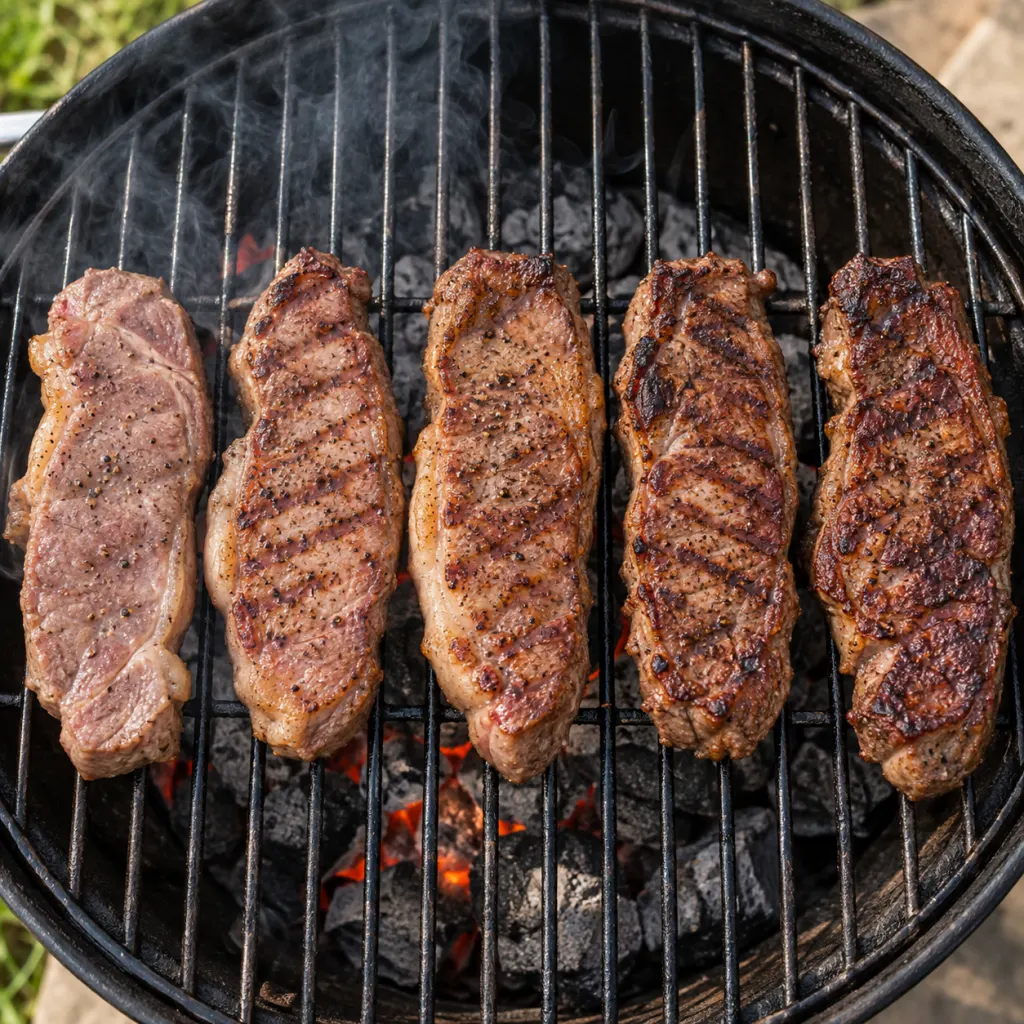
The same cut of meat can taste different on the grill because the grill changes the surface, the fat, the smoke exposure, and the final texture in ways that are easy to overlook. Two ribeyes, pork chops, burgers, or chicken thighs may share a label, but they rarely share the exact same thickness, marbling, surface moisture, starting temperature, seasoning pattern, heat exposure, flare-up history, or resting time. Those small differences decide how quickly browning begins, how much moisture is lost, how smoke clings, and whether the bite feels juicy, chewy, crisp-edged, or dry. Food scientists commonly point to the Maillard reaction, the heat-driven reaction between amino acids and reducing sugars, as a major reason grilled meat develops browned color and savory aroma; Texas A&M Meat Science describes it as responsible for browning in barbecue, while University of Arkansas Extension notes that high grill heat helps create the color and flavor grill cooks prize (Texas A&M Meat Science; University of Arkansas Extension).
The short version: grilling magnifies small differences
A grill is less like an oven and more like a set of moving conditions. One steak may sit above a hotter grate bar. One burger may drip more fat and trigger a brief flare. One chop may have a wetter surface because it was unwrapped later. One chicken thigh may be slightly thicker near the bone. Even when the meat came from the same package, those details change the surface temperature minute by minute. Browning needs a hot, relatively dry surface. Smoke needs airflow and fuel. Tenderness depends on both the muscle fibers and the connective tissue. Juiciness depends on how far the meat is cooked, how long it rests, and how it is sliced. That is why sameness on the label does not guarantee sameness on the plate.
The biggest variables usually fall into a few practical buckets:
- Surface moisture: a wetter surface steams longer before it browns.
- Thickness and shape: thicker pieces spend more time on the grill and develop a different crust-to-center ratio.
- Fat and marbling: melting fat carries aroma and can feed flare-ups.
- Heat pattern: direct heat, indirect heat, hot spots, and lid position all change the cooking path.
- Smoke and fuel: gas, charcoal, and wood create different aroma environments.
- Final temperature: color alone is not a reliable guide, so a thermometer matters for repeatable results.
Browning is chemistry, not just grill marks
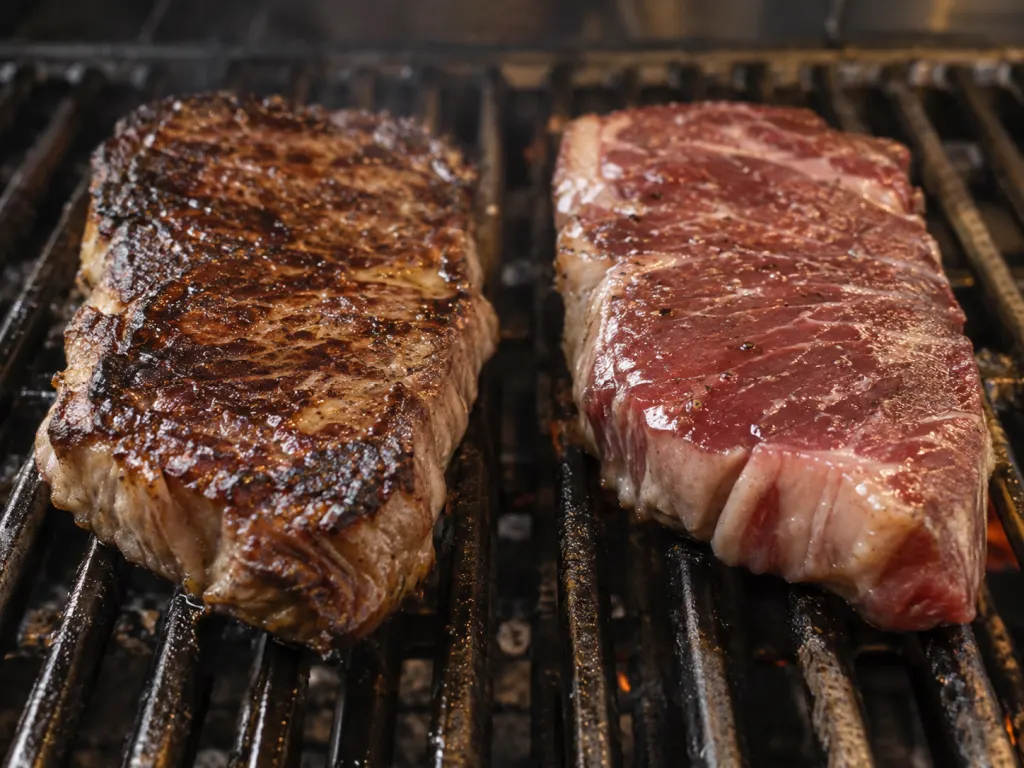
Grill marks are visible, but they are only one sign of a deeper chemical process. The savory, roasted flavor many people associate with grilled meat comes largely from surface browning. Texas A&M Meat Science explains that the Maillard reaction happens when amino acids react with reducing sugars to produce browned cooked color (Texas A&M Meat Science). University of Arkansas Extension gives a practical cook’s version of the same idea: at high heat, amino acids and sugars react and create Maillard browning, while frequent basting can lower the surface temperature enough to slow that reaction (University of Arkansas Extension). This is why a steak patted dry before grilling can taste more deeply browned than one set on the grate while still damp. The dry one can move into browning sooner; the wet one must spend energy driving off water first.
Moisture decides whether the surface browns or steams
Surface moisture is one of the quiet reasons two matching cuts taste different. If meat is salted early and left uncovered in the refrigerator for a while, its surface may become tackier and drier, which helps browning. If it sits in a wet marinade and goes straight to the fire, the extra liquid can delay browning and encourage more steaming at first. That is not automatically bad; marinades can bring flavor and change the eating experience. Iowa State University Extension notes that acidic marinade ingredients can affect meat tissues, while oils, herbs, spices, sauces, salt, and sweeteners add their own flavor cues (Iowa State University Extension). The tradeoff is that wet surfaces brown differently. For a more pronounced crust, lift meat from the marinade, let excess drip away, and blot the surface before it meets the grate.
Fat, muscle, and thickness change the bite
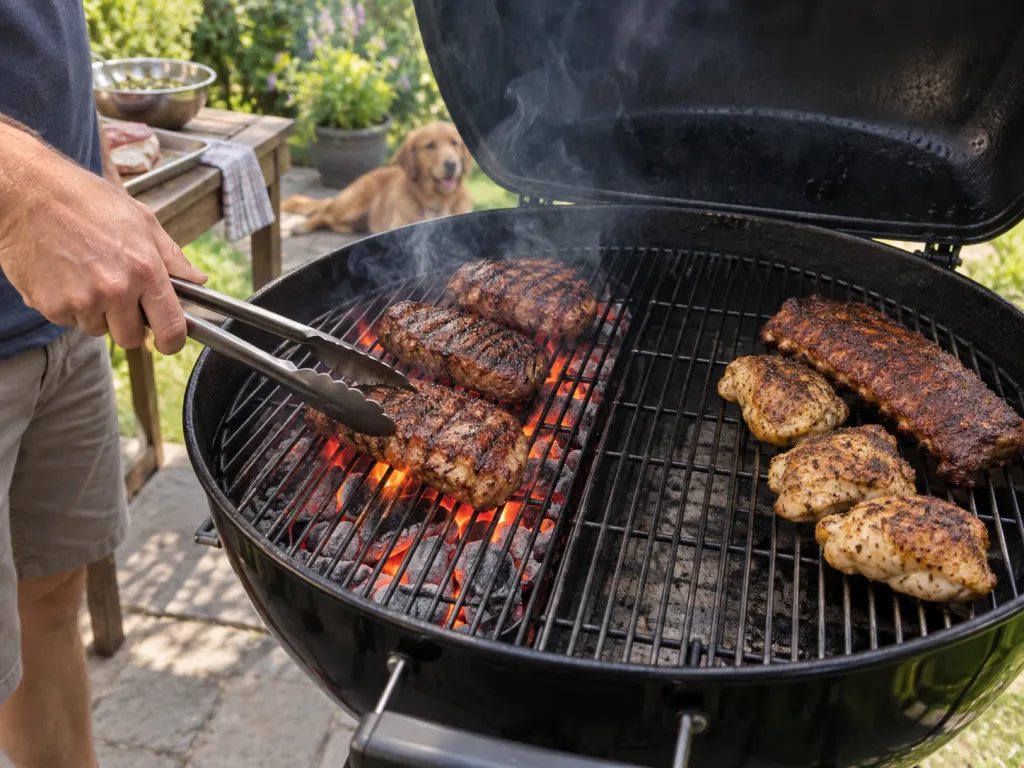
A cut name can hide a lot of variation. One strip steak may have more edge fat, another more fine marbling, and another a thicker cap or a denser section of muscle. Fat does more than make meat feel rich. As it warms, it melts, moves, drips, browns at the edges, and carries aroma. Dripping fat can also vaporize when it hits hot surfaces below the grate, sending flavorful compounds back upward. University of Arkansas Extension describes this as juices falling into the flame, vaporizing, rising, and contributing complex flavor and aroma (University of Arkansas Extension). Thickness matters just as much. A thin chop may brown and cook through quickly, leaving little time to build a deeper crust. A thick chop can spend longer near heat, developing more surface flavor while the center climbs gradually. That same extra time can also dry the meat if the heat is too aggressive, which is why two-zone grilling is useful.
Smoke is a separate flavor system
Smoke flavor depends on fuel, airflow, fat drips, moisture, and time. A gas grill can brown meat beautifully, but it usually gives a different aroma than charcoal or wood because the cooking environment is different. University of Arkansas Extension explains that grilling and low-and-slow smoking create different flavor profiles, and that smoke from burning wood interacts with meat during smoking (University of Arkansas Extension). Texas A&M Meat Science also notes that barbecue smoke rings involve nitric oxide from burning wood interacting with myoglobin, which is why the same meat cooked without that smoke source looks and tastes different (Texas A&M Meat Science). This does not mean smoke must be heavy. Too much smoke can make a cut taste harsh. The most balanced grilled flavor often comes from enough airflow to keep the fire clean and enough time for gentle smoky notes to settle on the surface.
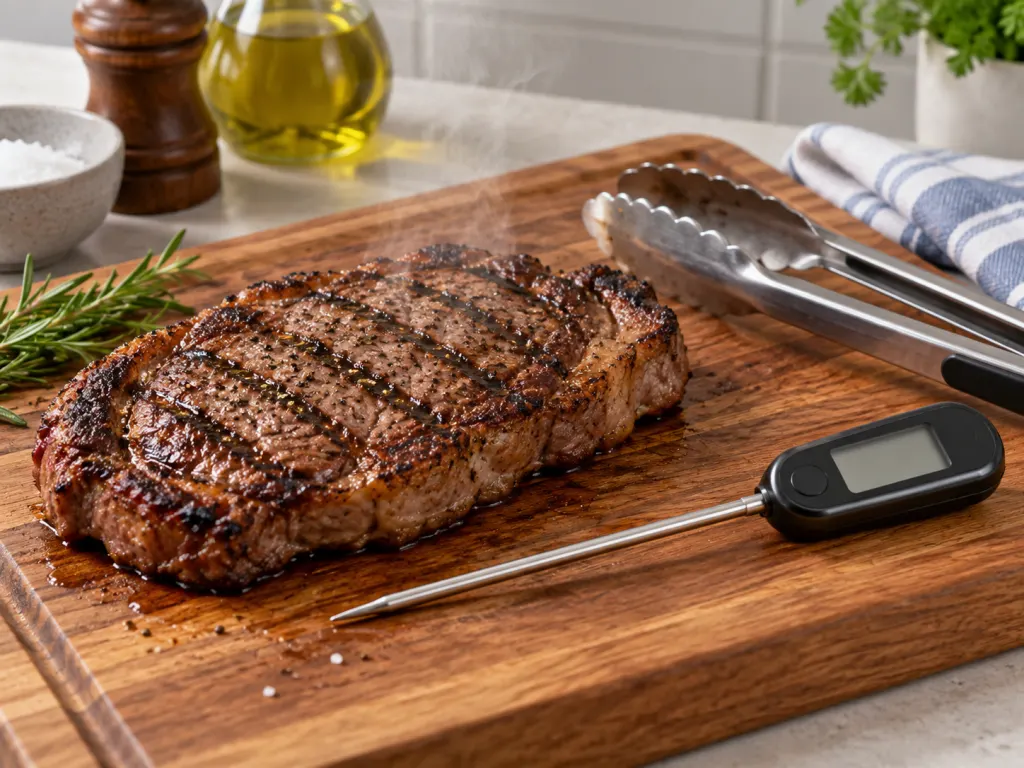
Seasoning changes both flavor and browning
Salt, sugar, pepper, spices, sauces, and marinades do not simply sit on meat as decoration. Salt changes how the surface holds moisture over time. Sugar can brown quickly and may move from pleasant caramel-like notes to bitterness if the heat is too direct for too long. Pepper and ground spices can bloom in fat, but they can also scorch when pressed hard against very hot metal. Sauce adds water, sugar, acid, and seasonings all at once, so timing matters. A sweet sauce brushed on early over direct heat may darken before the center is where you want it; the same sauce brushed near the end can glaze instead of burn. If two cooks use the same cut but one salts an hour ahead, one salts at the grate, one uses a sugary rub, and one bastes repeatedly, the finished flavor will be noticeably different even before smoke and doneness enter the picture.
Safe temperature and repeatable texture go together
For repeatable grilling, a food thermometer is more reliable than color, firmness, or a fixed number of minutes. FoodSafety.gov lists 145 degrees F with a 3-minute rest for whole cuts of beef, bison, veal, goat, lamb, pork, and ham; 160 degrees F for ground meat and sausage; and 165 degrees F for poultry (FoodSafety.gov). George Washington University’s Institute for Food Safety & Nutrition Security likewise recommends checking final cooking temperature with a thermometer and keeping raw and cooked items separate during grilling (George Washington University). This matters for flavor because final temperature changes texture. A whole steak pulled earlier within safe guidance can feel juicier and softer than one carried much farther. A burger, because it is ground, needs a different target than an intact steak. When people say the same cut tasted different, they are often tasting a different endpoint.
Resting, slicing, and serving can undo good grilling
The last few minutes matter. Whole cuts benefit from a short rest because heat continues to even out and juices settle before slicing. If you cut immediately, the eating experience can seem drier even if the cook was otherwise careful. Slicing direction also changes tenderness. Cutting across the grain shortens muscle fibers, making each bite feel easier to chew; slicing with the grain leaves longer fibers and can make the same piece seem tougher. Serving temperature matters too. Meat that sits too long uncovered can lose its best texture and aroma. For gatherings, it helps to grill in batches, rest whole cuts briefly, slice only what will be served right away, and keep cooked food on clean platters that never held raw meat.
How to make the same cut taste more consistent
Consistency comes from controlling the variables you can see. Choose pieces with similar thickness, trim ragged edges that would burn before the center cooks, and dry the surface before grilling. Salt with a plan: either shortly before grilling or far enough ahead that the surface has time to reabsorb moisture and dry again. Build two heat zones so you can brown over direct heat and finish more gently away from the strongest fire. Keep the lid position consistent from batch to batch, because closing the lid traps heat and smoke differently than open-grate cooking. Use a thermometer in the thickest useful part of the meat, away from bone when possible. Rest whole cuts, slice across the grain, and take notes if you are trying to repeat a result. The goal is not to make every piece identical; it is to understand which differences are flavor-building and which ones are accidental.
Wrap-Up
The same cut of meat tastes different on the grill because grilling amplifies small changes in surface moisture, thickness, fat, seasoning, fire behavior, smoke, and final temperature. Browning comes from heat-driven reactions at the surface, while smoke, drippings, marinades, and fat add separate aroma layers. For better repeatability, start with similarly sized pieces, dry the surface, season intentionally, manage direct and indirect heat, check doneness with a thermometer, and rest whole cuts before slicing. Once you understand those variables, the mystery becomes manageable: the grill is not changing the name of the cut, but it is changing the route that cut takes to the plate.
Frequently Asked Questions
- → Why does one steak taste better than another from the same package?
Even steaks from the same package can differ in thickness, marbling, surface moisture, shape, and placement on the grill. A slightly drier surface browns faster, a fattier edge can create more aroma, and a thicker piece may spend more time building crust before the center reaches the target temperature.
- → Does charcoal always make meat taste better than gas?
Not always. Charcoal and wood can add smoke and fire aromas that gas may not produce in the same way, but gas can still brown meat well when the grate is hot and the surface is dry. The better choice depends on the flavor you want, how much smoke you enjoy, and how carefully you manage heat.
- → Why does marinated meat sometimes brown less?
A wet marinade can leave extra moisture on the surface. That moisture has to evaporate before browning becomes intense, so the meat may steam at first. For deeper browning, let excess marinade drip off and blot the surface before grilling.
- → Are grill marks the same as good flavor?
Grill marks show where meat touched very hot metal, but they are not the whole story. Good grilled flavor usually comes from broader, even browning, balanced smoke, controlled heat, and the right final temperature. A piece with dramatic stripes but pale spaces between them may taste less browned than one with a more even crust.
- → What is the simplest way to make grilled meat more consistent?
Use pieces of similar thickness, dry the surface, set up direct and indirect heat zones, and check the final internal temperature with a food thermometer. Those habits remove much of the guesswork and make flavor differences easier to understand.
References
This content was developed and refined using reliable sources.
- https://meat.tamu.edu/texas-bbq/bbq-science
- https://www.uaex.uada.edu/media-resources/news/2021/july2021/07-01-2021-Ark-Grilling%20Magic.aspx
- https://blogs.extension.iastate.edu/answerline/2018/06/21/marinating-for-summer-grilling
- https://www.uaex.uada.edu/media-resources/news/2026/may/05-20-2026-ark-bbq-science.aspx
- https://www.foodsafety.gov/food-safety-charts/safe-minimum-internal-temperatures
- https://ifsan.gwu.edu/grilled-protection