 Save
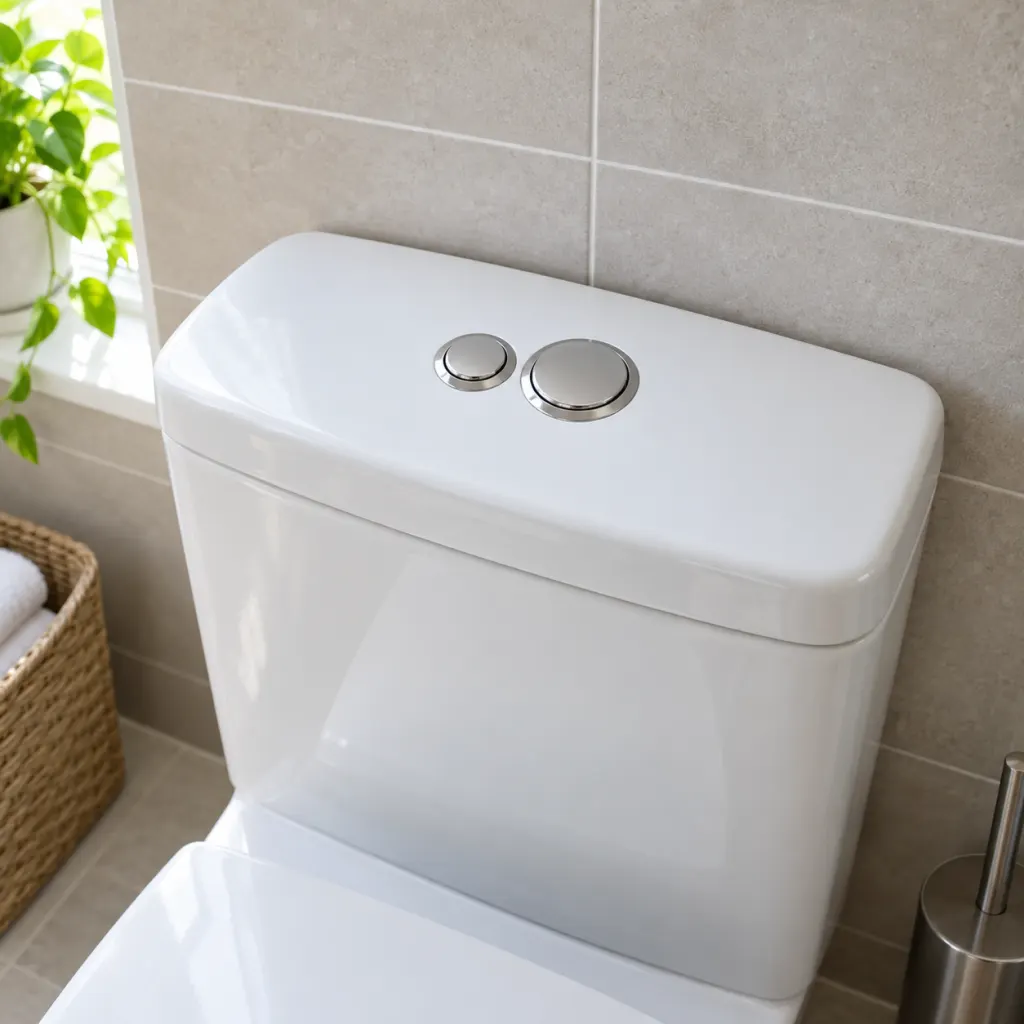
The two buttons on a dual-flush toilet are not just a design detail: the smaller button usually releases less water for liquid waste, and the larger button releases more water for solid waste. The EPA WaterSense product search describes dual-flush toilets as having a full flush for solids and a reduced flush for liquids (EPA WaterSense Product Search). Used correctly, the buttons help a household avoid sending more water through the toilet than the job requires.
Why Dual-Flush Toilets Have Two Buttons
A standard single-flush toilet gives the same flush every time. That is simple, but it treats every bathroom visit as if it needs the highest water volume. A dual-flush toilet changes that choice. It gives the user two flush options, usually shown as two separate buttons on top of the tank or as a split button with one small half and one larger half.
In most designs, the smaller button or smaller half of the button is the low-volume flush. It is meant for liquid waste and toilet paper amounts that the reduced flush can clear. The larger button is the full-volume flush. It is meant for solid waste, when the bowl and drain need the stronger, longer release of water. Some buttons use symbols instead of size: one dot or a single droplet usually means reduced flush, while two dots or a larger droplet usually means full flush. If the buttons are equal in size, the markings on the button, the tank lid, or the owner’s manual matter more than size alone.
What Happens When You Press the Small Button
The small button opens the flushing mechanism for a reduced release of water. On many models, that lower flush is roughly half the full flush, although the exact amount depends on the toilet. Australia’s Water Efficiency Labelling and Standards program gives common examples: a 6L/3L dual-flush toilet is a typical 3-star toilet, while a 4.5L/3L dual-flush toilet is a typical 4-star toilet (Water Rating: WELS star ratings). Those numbers mean the full flush and reduced flush can vary by model, so the buttons are a control system, not a universal fixed measurement.
The reduced flush is useful because liquid waste usually does not need the same water volume as solid waste. When the toilet is designed, installed, and working properly, the smaller flush should clear the bowl without requiring a second flush. If you regularly need to flush twice after using the reduced button for its intended purpose, the toilet may need adjustment, cleaning, repair, or a different operating habit. Repeated double-flushing can erase the savings that the dual-flush design is supposed to provide.
What Happens When You Press the Large Button
The large button releases the full flush volume for that toilet. It sends more water through the bowl and trapway, which helps move solid waste and toilet paper into the drain line. EPA WaterSense notes that modern efficient toilets are designed not only around lower water use but also around performance, including bowl cleaning and waste transport requirements for labeled models (EPA Residential Toilets).
It is tempting to use the large button every time because it feels more certain. The tradeoff is that doing so turns a dual-flush toilet into something closer to a single-flush toilet in daily use. The hardware may still be efficient compared with a much older toilet, but the household loses much of the behavioral advantage: choosing the lower flush when a lower flush is enough.
How to Tell Which Button Is Which
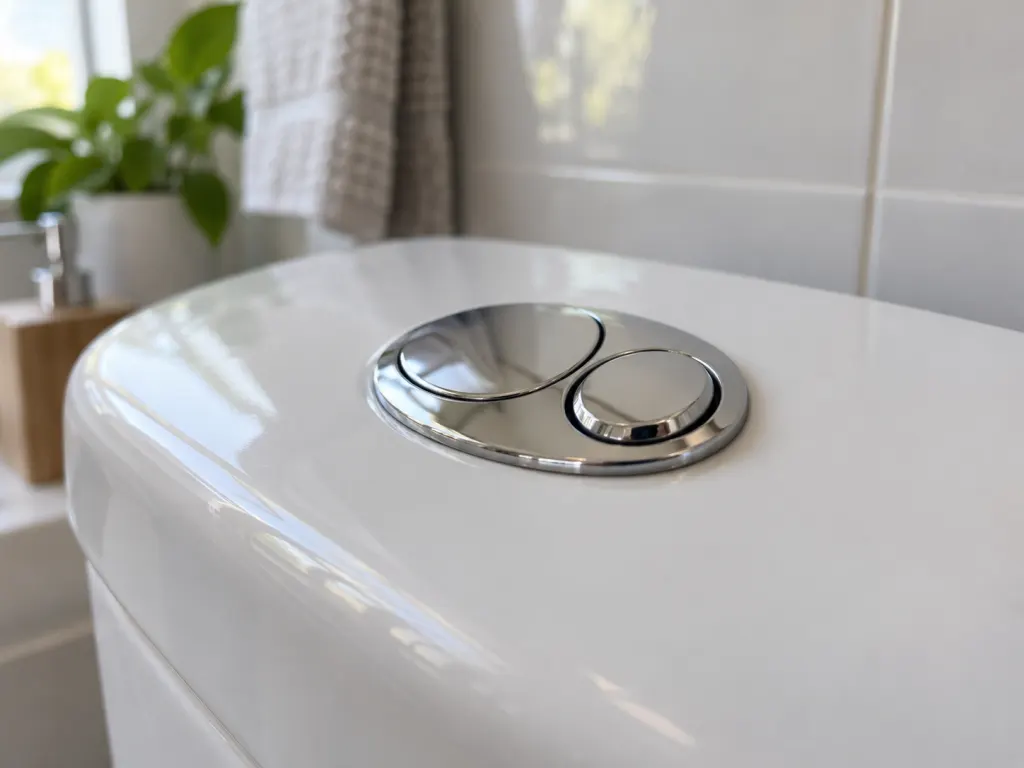
The easiest clue is usually size. On many dual-flush toilets, the small button is the reduced flush and the larger button is the full flush. If the button is a round split design, the smaller crescent or half usually controls the smaller flush. On some models, however, both buttons may look similar or the button may have icons instead of an obvious size difference.
Use these quick checks when you are unsure:
- Look for size: smaller button usually means reduced flush; larger button usually means full flush.
- Look for symbols: one dot, one droplet, or a narrow mark usually means reduced flush; two dots or a larger mark usually means full flush.
- Check the tank lid: some manufacturers print the flush volumes or icons near the button.
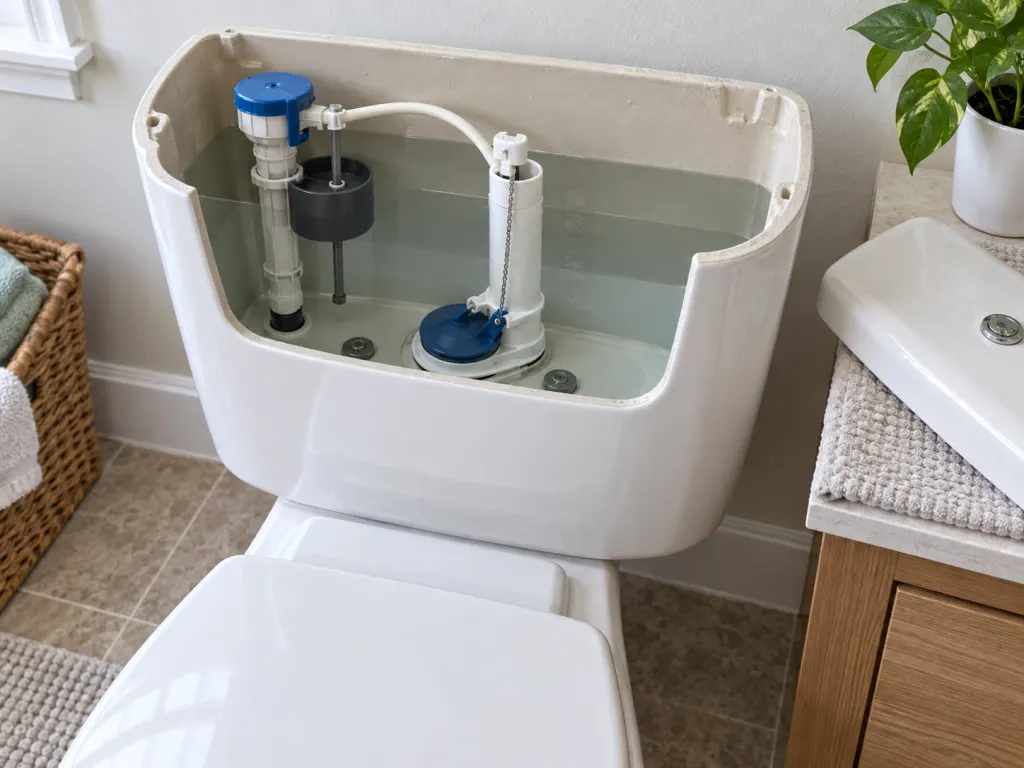
- Look under the lid only if it is safe: the flush mechanism may label the half-flush and full-flush sides.
- Search the model number: the number inside the tank or on the fixture can help you find the manufacturer’s instructions.
Why Using the Right Button Saves Water
Toilets are a major part of indoor household water use. EPA WaterSense says toilets account for nearly 30 percent of an average home’s indoor water consumption, and older inefficient toilets may use as much as 6 gallons per flush (EPA Residential Toilets). A dual-flush toilet helps by reserving the bigger flush for moments when it is actually needed.
The savings are not about one dramatic flush. They come from repetition. EPA’s WaterSense calculator assumptions use an average of 5.05 flushes per person per day, and the calculator compares the flush volume of a WaterSense toilet with older toilets installed in different eras (EPA WaterSense Calculator). In a household with several people, even small differences in gallons or liters per flush can add up over weeks and months.
Why the Numbers on Toilets Differ by Country and Model
You may see dual-flush toilets described in liters, gallons, stars, or gallons per flush. That can make the topic seem more confusing than it is. In the United States, toilet efficiency is commonly discussed in gallons per flush. EPA WaterSense says labeled toilets use 1.28 gallons per flush or less and are independently certified for efficiency and performance (EPA Residential Toilets). In Australia, WELS labels use star ratings and liters, with examples such as 6L/3L and 4.5L/3L dual-flush toilets (Water Rating: WELS star ratings).
The important point for daily use is simpler than the labeling system: your toilet’s two buttons are calibrated for different flush volumes. The reduced setting uses less water than the full setting. The exact amount depends on the model, the local standard, and the way the toilet was designed. When buying a replacement toilet, efficiency labels are more reliable than guessing from appearance alone.
What If the Small Flush Does Not Clear the Bowl?
If the reduced flush often leaves waste behind, first make sure the button is being used for the right situation. The small flush is not intended to do every job. If it struggles even with liquid waste, the toilet may have a maintenance issue. Mineral buildup under the rim, a worn seal, a misadjusted flush valve, low tank water level, or an incorrect replacement part can all affect performance.
A toilet that used to work well but now flushes weakly is usually a repair question, not a sign that the dual-flush idea has failed. Check whether the tank refills to the marked waterline, whether the buttons move freely, and whether the flush valve closes cleanly after each flush. If the toilet is in a rental, shared building, or public facility, report persistent weak flushing instead of trying to modify the mechanism yourself. Adjustments that raise water use beyond the model’s design can reduce efficiency and may cause other problems.
Common Mistakes With Dual-Flush Buttons
The most common mistake is pressing both buttons at once. On many toilets, that triggers the full flush, so it defeats the purpose of having two settings. Another common mistake is assuming the small button means “short press” and the large button means “long press.” Usually, the button itself selects the flush volume; holding it down may not improve the flush and may waste water depending on the mechanism.
A third mistake is judging the toilet only by sound. A reduced flush may sound lighter or shorter, but a quieter flush is not automatically a failed flush. What matters is whether the bowl clears properly and refills normally. Conversely, a loud flush is not proof of better performance. Modern efficient toilets can use less water while still meeting performance criteria when they are certified and installed correctly.
Buying or Replacing a Dual-Flush Toilet
If you are choosing a new toilet, do not rely only on the presence of two buttons. Look for recognized efficiency labeling, clear flush-volume information, and a model that fits your bathroom’s plumbing. EPA’s WaterSense product search explains that only listed product combinations have earned the WaterSense label, which matters because some high-efficiency toilets are sold as separate tanks and bowls (EPA WaterSense Product Search).
Also consider the people who will use the bathroom. A button that is stylish but confusing may lead everyone to use the large flush by default. For a family bathroom, guest bathroom, or workplace restroom, clear button markings can be as important as the rated flush volume. A toilet saves the most water when ordinary users can understand it without studying the tank lid.
The Bottom Line
The two buttons on a dual-flush toilet are a simple water-use choice built into the fixture. Use the smaller button for liquid waste when the reduced flush is enough. Use the larger button for solid waste or when the toilet clearly needs the full flush. If you are unsure which is which, check the size, symbols, tank markings, or model instructions.
That small choice matters because toilets are used many times a day. A dual-flush toilet does not require a complicated routine; it only asks you to avoid using the full flush automatically. When the toilet is well maintained and the buttons are used correctly, the design can reduce unnecessary household water use while still keeping the bathroom practical.
Wrap-Up
A dual-flush toilet has two buttons because different bathroom uses need different amounts of water. The smaller button is generally the reduced flush for liquid waste, while the larger button is the full flush for solid waste. Labels, symbols, and model instructions are the best way to confirm the buttons on a specific toilet. Using the right button, keeping the mechanism in good condition, and choosing certified efficient models when replacing a toilet are the practical steps that make the feature worthwhile.
Frequently Asked Questions
- → Which button should I press on a dual-flush toilet?
In most cases, press the smaller button for liquid waste and the larger button for solid waste. If the buttons are the same size, look for one-dot versus two-dot symbols, droplet icons, printed flush volumes, or the model instructions.
- → Does pressing both buttons save more water?
Usually no. On many dual-flush toilets, pressing both buttons activates the full flush or interferes with the intended mechanism. Use one button at a time: reduced flush when appropriate, full flush when needed.
- → Why does the small button sometimes seem weak?
The reduced flush uses less water by design, so it may sound lighter. It should still clear liquid waste when the toilet is working properly. If it regularly fails, check the tank waterline, button movement, and flush valve, or ask a plumber or building manager to inspect it.
- → Are all dual-flush toilets the same size and water volume?
No. Dual-flush toilets vary by model and country. Some are described in gallons per flush, while others use liters and efficiency star ratings. The shared idea is that one setting uses less water than the full setting.
- → Is a dual-flush toilet worth using if I already have one?
Yes, if it works properly and people use the buttons correctly. The savings come from choosing the reduced flush when it is enough instead of using the full flush automatically every time.