 Save
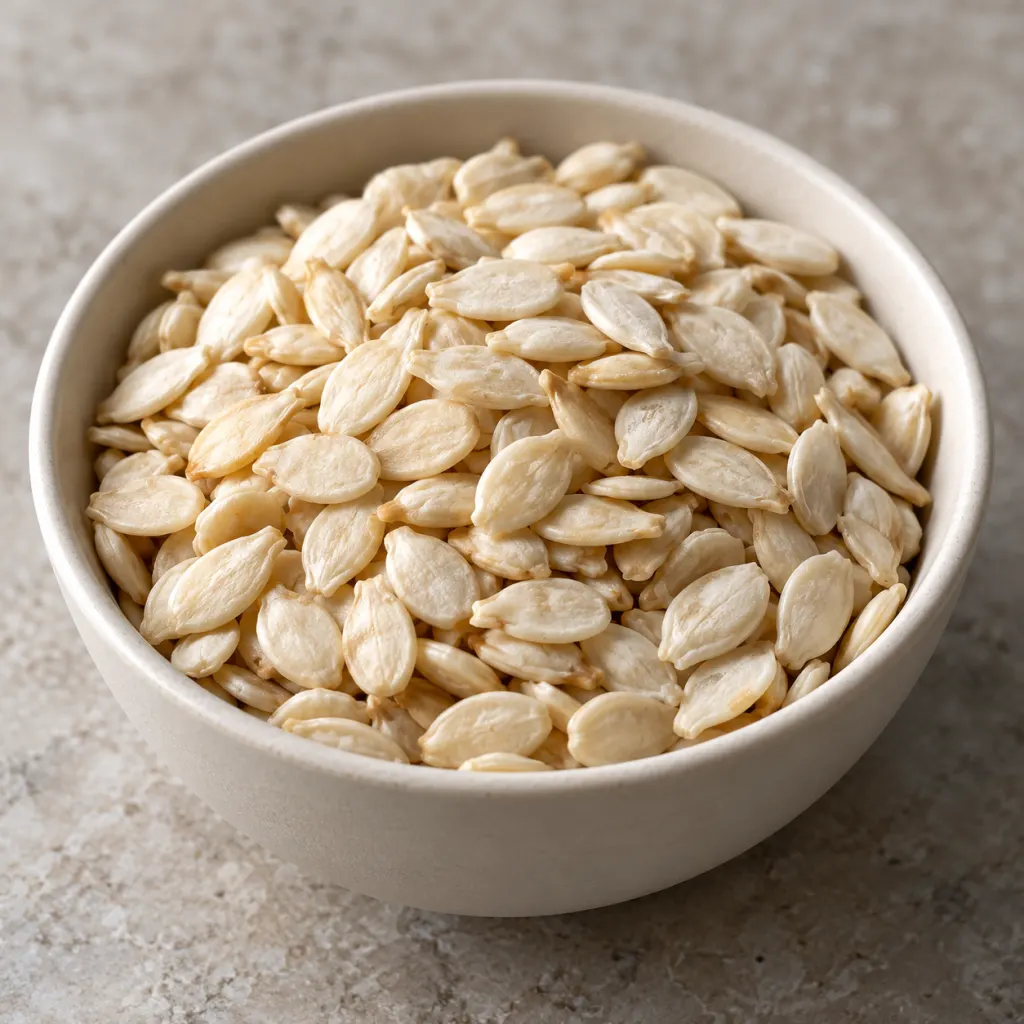
What is inside watermelon seeds? The edible inner kernels contain protein, magnesium and unsaturated fats. The important detail is their form: dried kernels are a different food from juicy watermelon flesh or whole black seeds swallowed while eating the fruit. Nutrition figures need to describe the food actually on your plate. University of Rochester; Cleveland Clinic.
The useful question is what a realistic portion contributes. This explainer separates food composition from nutrient functions, then considers portions, salt and the information needed to compare packaged products fairly.
First, identify which part of the seed you mean
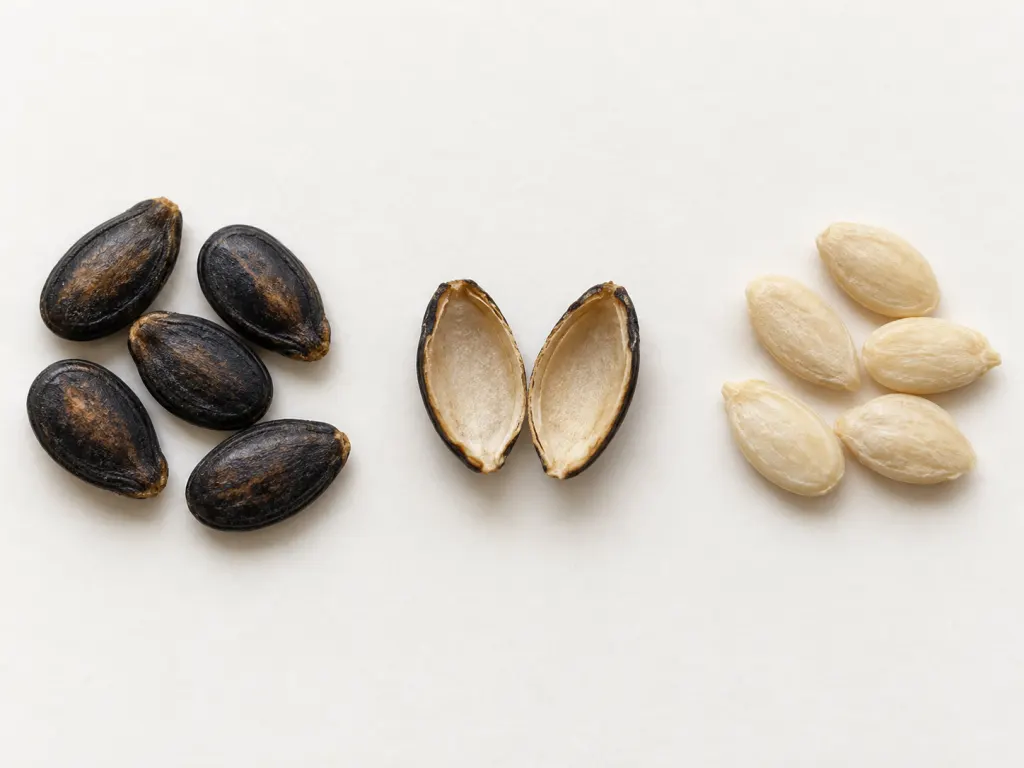
A whole mature watermelon seed has an outer seed coat surrounding its inner kernel. Here, hulled kernels means the edible inner pieces with that hard outer covering removed. The nutrition record discussed below is explicitly for dried watermelon seed kernels; it should not be read as a measurement of shell-on seeds. Check the food description before comparing any numbers. University of Rochester food record.
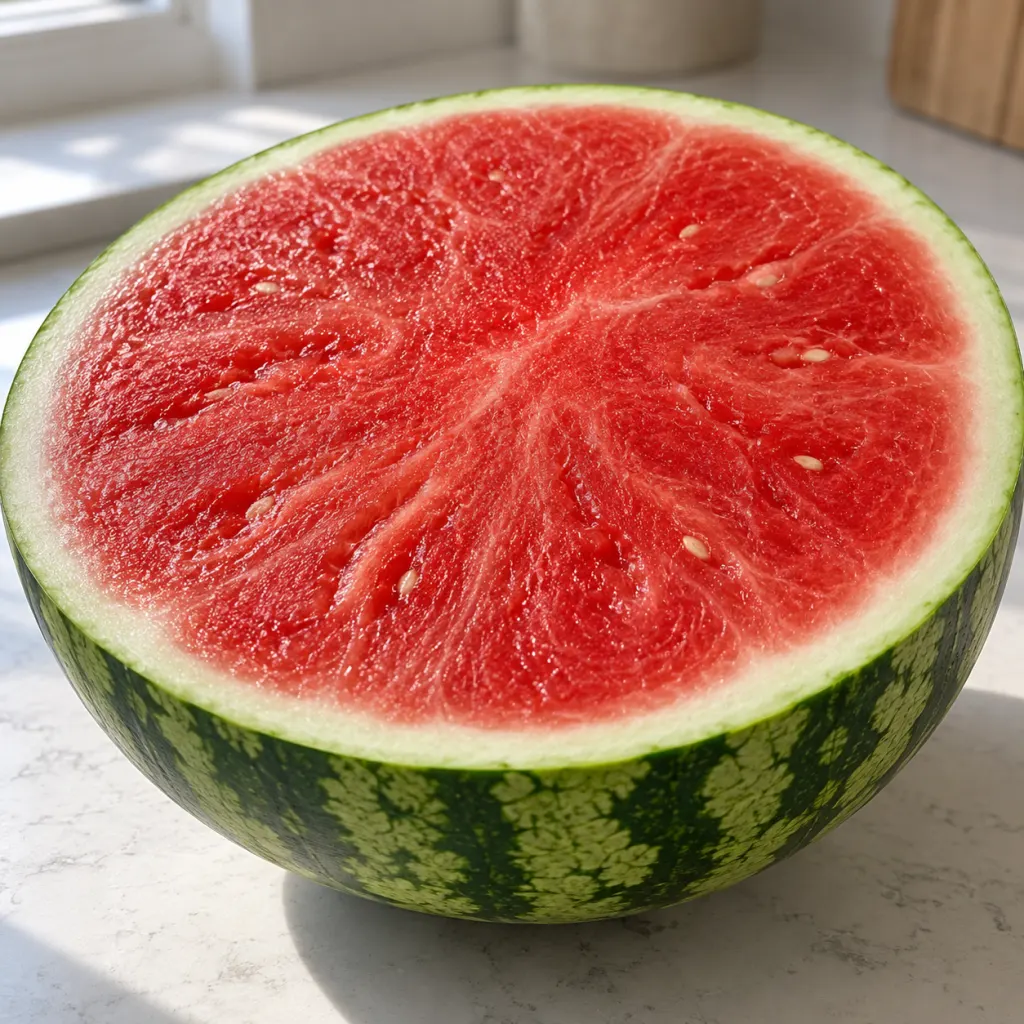
There is another distinction within the fruit itself. USDA explains that the familiar black seeds are developed seeds, while the small white structures found in seedless watermelon are seed coats that did not develop fully. A few whole black seeds swallowed with fruit are not equivalent to a measured portion of dried, hulled kernels. Nothing in that comparison establishes how much nutrition someone obtains from individual swallowed seeds. USDA watermelon explainer.
What’s in watermelon seeds? Protein, magnesium and unsaturated fats
For a clearly identified example, dividing Rochester’s one-cup figures by four gives approximately 7.7 grams of protein, 139 milligrams of magnesium and 150 calories per quarter cup of dried kernels. This is arithmetic from a reference entry, not a measured serving of a particular brand or a recommended daily amount. The entry also lists both monounsaturated and polyunsaturated fats, alongside some saturated fat. These figures belong to dried kernels, not fresh fruit, shell-on seeds or an unspecified handful. Rochester nutrient figures.
Magnesium supports normal muscle function
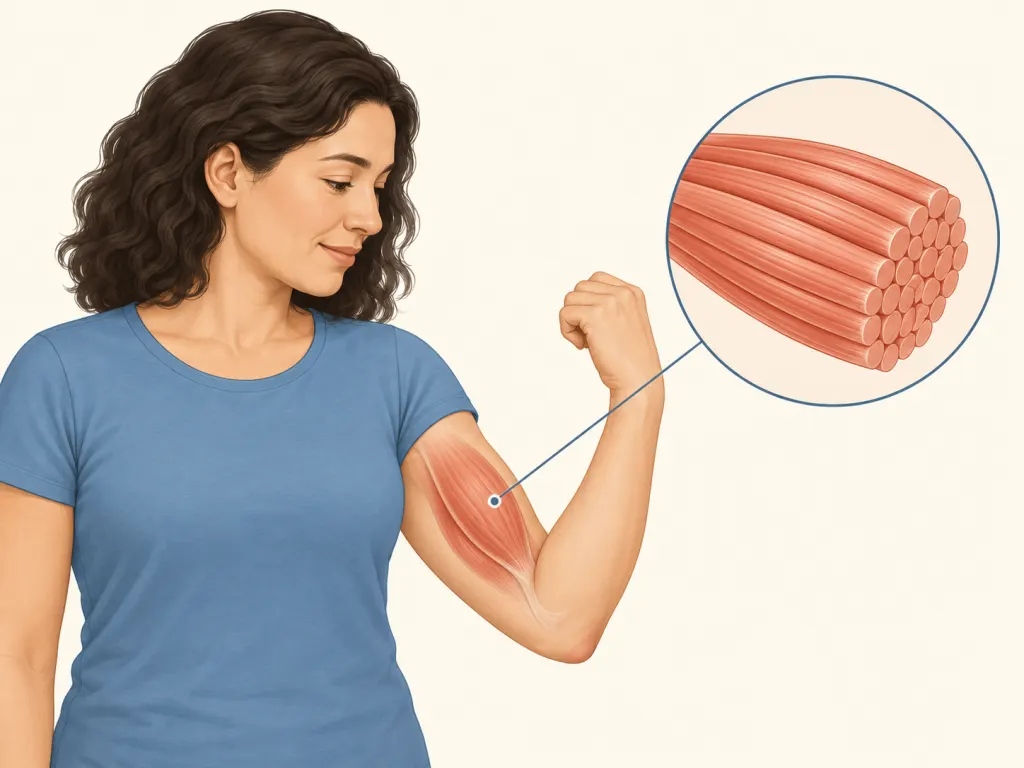
Magnesium supports normal muscle function. NIH’s Office of Dietary Supplements describes its role in muscle and nerve function, energy production and many enzyme reactions. That makes a concise muscle-function statement appropriate when discussing the nutrient. It does not establish a measurable change in muscle size or exercise performance from eating this particular food. Keep the explanation focused on magnesium’s established function. NIH magnesium fact sheet.
Watermelon kernels are one possible contribution within a much wider selection of magnesium-containing foods. NIH also identifies leafy vegetables, legumes, nuts, other seeds and whole grains as sources. Its intake reference values vary with age and sex, so a single amount is not a universal personal target. For everyday food choices, the practical aim is variety across meals rather than assigning the entire task to one snack. A photograph of seeds or a muscle illustration cannot show whether someone’s overall intake is adequate. NIH guidance on magnesium sources and requirements.
Protein contributes to the whole day
Protein supplies amino acids used by the body to maintain and make cells. MedlinePlus includes nuts and seeds among plant protein sources, alongside foods such as beans and soy products. The useful perspective is the combined contribution of foods throughout the day. The presence of protein in an ingredient does not tell you whether a small sprinkle provides enough for the meal you have planned. MedlinePlus explanation of protein.
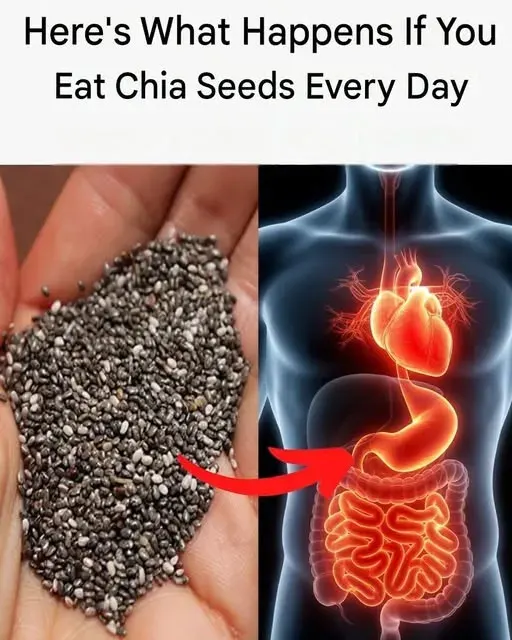
For example, you might choose kernels as a topping for a bean salad rather than expect the topping to carry the meal’s entire protein contribution. That is a meal-planning suggestion, not a tested nutritional formula. MedlinePlus explains that protein needs relate to overall calorie needs and that the balance of amino acids across the day matters. You can explore another seed-focused discussion in our article about eating chia seeds, while keeping each food’s composition and portion separate. MedlinePlus protein guidance.
Unsaturated fats need context
Monounsaturated and polyunsaturated fats are the two main categories of unsaturated fat. Harvard’s Nutrition Source emphasizes fat type and recommends choosing foods with unsaturated fats while limiting foods high in saturated fat. Its examples include seeds, nuts, vegetable oils and fish. This is guidance about an overall eating pattern, not evidence of a unique advantage belonging to watermelon kernels. Harvard Nutrition Source guidance.
The comparison also depends on what changes elsewhere in the meal. Choosing one topping in place of another is a different decision from adding an extra snack without changing anything else. Harvard’s discussion stresses the importance of replacement foods when considering dietary fat. Ask what role the kernels will play: an alternative topping, part of a snack, or an ingredient you enjoy. That question gives the fat discussion a practical setting without attaching an individual health outcome to one food. Harvard discussion of food substitutions.
Use a modest portion as a starting point
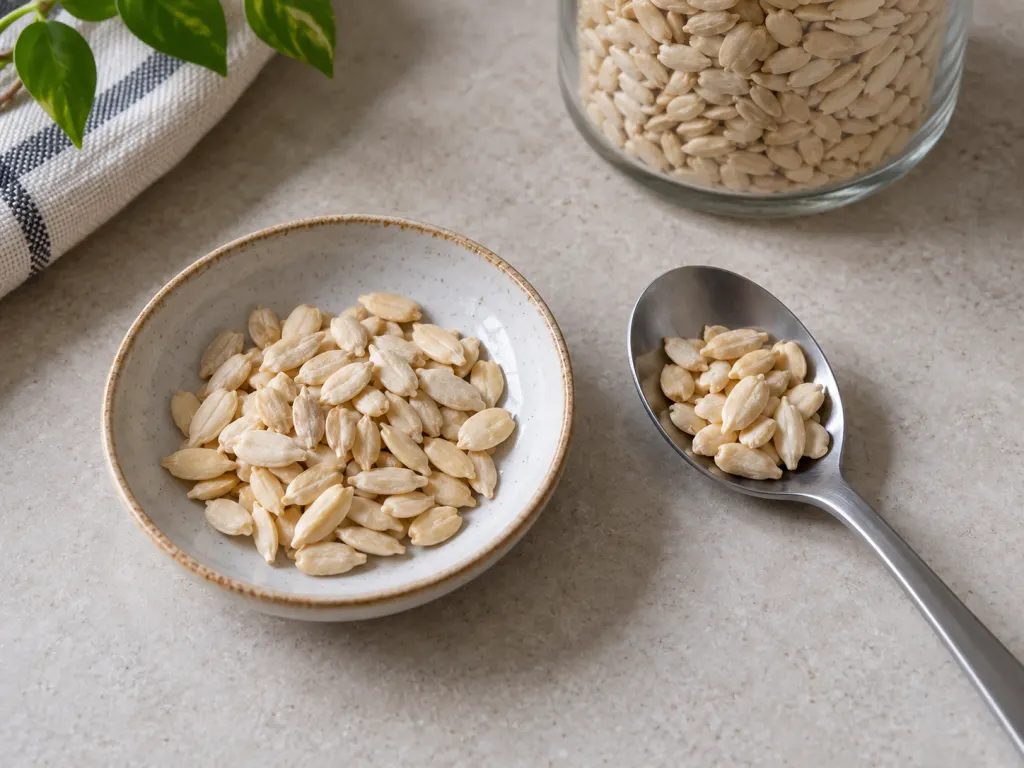
The American Heart Association suggests a small handful, about one ounce, of unsalted nuts and seeds as a general snack example. That is useful context for portion awareness, although its advice covers the food group rather than establishing a special watermelon-seed serving. You can also choose a smaller amount when the kernels are a topping instead of the main snack. American Heart Association nuts-and-seeds guidance.
For a practical trial, put your chosen amount into a small dish before eating. If you want a repeatable portion, compare that amount with the package’s gram weight rather than assuming every handful is identical. AHA’s advice favors unsalted choices and places nuts and seeds within a broader eating pattern. The decision need not become a rigid daily rule: choose a portion that fits the meal or snack you are actually having. AHA guidance on food choices and portions.
Read serving information before nutrient totals
On a US Nutrition Facts label, serving size describes an amount people typically consume; it is not a recommendation for how much you personally should eat. FDA also notes that a package may hold more than one serving, and some labels show both per-serving and per-package columns. Start there before assessing any nutrient number. FDA serving-size explanation.
Imagine a package that lists two servings. Eating the whole package means using the two-serving totals, or doubling the one-serving figures when an entire-package column is absent. Likewise, comparing two products requires checking the gram amounts first. If their listed servings differ, the displayed protein or calorie totals are not automatically comparable. This is especially useful when one package describes a small snack portion and another uses a larger household measure. Read the units as carefully as the prominent numbers. FDA guidance on applying serving information.
Compare the product you will actually buy
FDA explains that the upper section of a Nutrition Facts label contains product-specific serving, calorie and nutrient information. That is why a generic database entry and a packaged snack should not be treated as interchangeable. A useful comparison begins with the exact product description and its own label. FDA guide to the Nutrition Facts label.
- Identify the form: check whether you are buying hulled kernels or seeds still in their shells.
- Match the amount: compare the listed gram weights before comparing nutrient totals.
- Read beyond protein: consider calories, total fat, saturated fat and sodium together.
- Check what you will eat: account for the number of servings in your chosen portion.
- Accept missing information: if magnesium is not shown, an unrelated database figure is not a verified value for that package.
This checklist is an application of FDA’s label-reading approach. It helps prevent a single attractive number from standing in for the full product description. FDA label-reading guidance.
Salt deserves its own comparison
Salt and sodium are related but different: sodium is one component of table salt. FDA advises checking sodium on the label because similar foods can have substantially different amounts, and taste alone is an unreliable guide. For packaged seeds, compare sodium at equivalent serving weights. FDA sodium guidance.
FDA’s general label guide considers 5% Daily Value or less per serving low in sodium and 20% or more high. It also explains that “unsalted” and “no salt added” describe processing; they do not necessarily mean sodium-free. Those distinctions are useful when choosing among plain and seasoned products. If you want seasoning without adding salt yourself, FDA suggests herbs, spices and no-salt seasoning blends. Keep the portion in view, because eating several servings changes the sodium total as well. FDA explanations of sodium percentages and package claims.
Keep the fruit and the seed snack separate
Fresh watermelon flesh has its own nutritional profile. Cleveland Clinic describes it as approximately 91% water and provides a separate nutrient breakdown for raw, seedless flesh. That composition should not be replaced with figures for dried kernels simply because both come from watermelon. A bowl of fruit and a bowl of kernels represent different food choices. Cleveland Clinic watermelon overview.
For culinary inspiration, the fruit appears in our watermelon, feta and blueberry salad. Adding a separately measured kernel topping would be a personal variation, rather than evidence that the original dish has the kernel values discussed here. Keep the ingredient descriptions separate when planning meals, writing a shopping list or explaining a food photograph. This simple distinction is more useful than combining every part of the plant into one nutrition claim.
What the evidence can tell you
Different sources answer different questions. A food-composition record describes the nutrients assigned to a specified food and amount. A nutrient fact sheet explains established physiological roles. Broad food guidance discusses choices within an eating pattern. Those forms of evidence should remain distinct when interpreting an ingredient. NIH nutrient-function evidence; Harvard dietary-fat guidance.
For a stronger claim, ask for stronger matching evidence: Was the actual food studied? Was the preparation the same? Was the amount realistic? Was the claimed outcome measured in people? These are questions for evaluating a claim, rather than additional benefits to attach to the seeds. The sources cited here support composition, normal nutrient functions and practical food comparisons. Their inclusion does not mean that the institutions reviewed or endorsed this article.
Wrap-Up
Choose watermelon kernels with a clear idea of their role in your meal. Identify the food form, use a realistic portion and compare the exact package label. Keep three questions separate: what the food contains, what a nutrient normally does, and what evidence would be needed for a specific outcome.
Frequently Asked Questions
- → Can I use dried-kernel nutrition figures for whole seeds swallowed with watermelon?
No. The reference entry describes dried inner kernels, not whole seeds swallowed with fruit. It does not measure the nutrients obtained from individual swallowed seeds. Rochester food description.
- → Are the white structures in seedless watermelon the same as mature black seeds?
USDA explains that the white structures are seed coats that did not fully develop, whereas black seeds are developed seeds. They should not be counted as a portion of dried kernels. USDA watermelon explainer.
- → Does the serving size on a packet tell me how much I should eat?
No. FDA says serving sizes reflect amounts people typically consume, rather than personal recommendations. Check servings per container and the amount you choose. FDA serving-size guidance.
- → Does an unsalted label mean there is no sodium?
Not necessarily. FDA explains that unsalted means no salt was added during processing; the product may still contain sodium. Check its Nutrition Facts panel. FDA explanation of sodium claims.
- → Do I need to choose watermelon seeds over every other seed?
The cited food guidance gives no reason to make that a rule. AHA discusses a range of nuts and seeds within an eating pattern. Taste, price, availability and the product label can guide your choice. AHA nuts-and-seeds guidance.
References
This content was developed and refined using reliable sources.
- https://www.urmc.rochester.edu/encyclopedia/content?contentid=12174-1&contenttypeid=76
- https://ods.od.nih.gov/factsheets/Magnesium-HealthProfessional
- https://health.clevelandclinic.org/benefits-of-watermelon
- https://www.heart.org/en/healthy-living/healthy-eating/eat-smart/fats/4-ways-to-get-good-fats-infographic
- https://nutritionsource.hsph.harvard.edu/what-should-you-eat/fats-and-cholesterol
- https://www.fda.gov/food/nutrition-facts-label/how-understand-and-use-nutrition-facts-label
- https://medlineplus.gov/ency/article/002467.htm
- https://www.fda.gov/food/nutrition-facts-label/serving-size-nutrition-facts-label
- https://www.fda.gov/food/nutrition-education-resources-materials/sodium-your-diet
- https://www.usda.gov/sites/default/files/documents/vegu-radio-august-2-watermelon-weddings-and-other-melon-mysteries-mp3.pdf