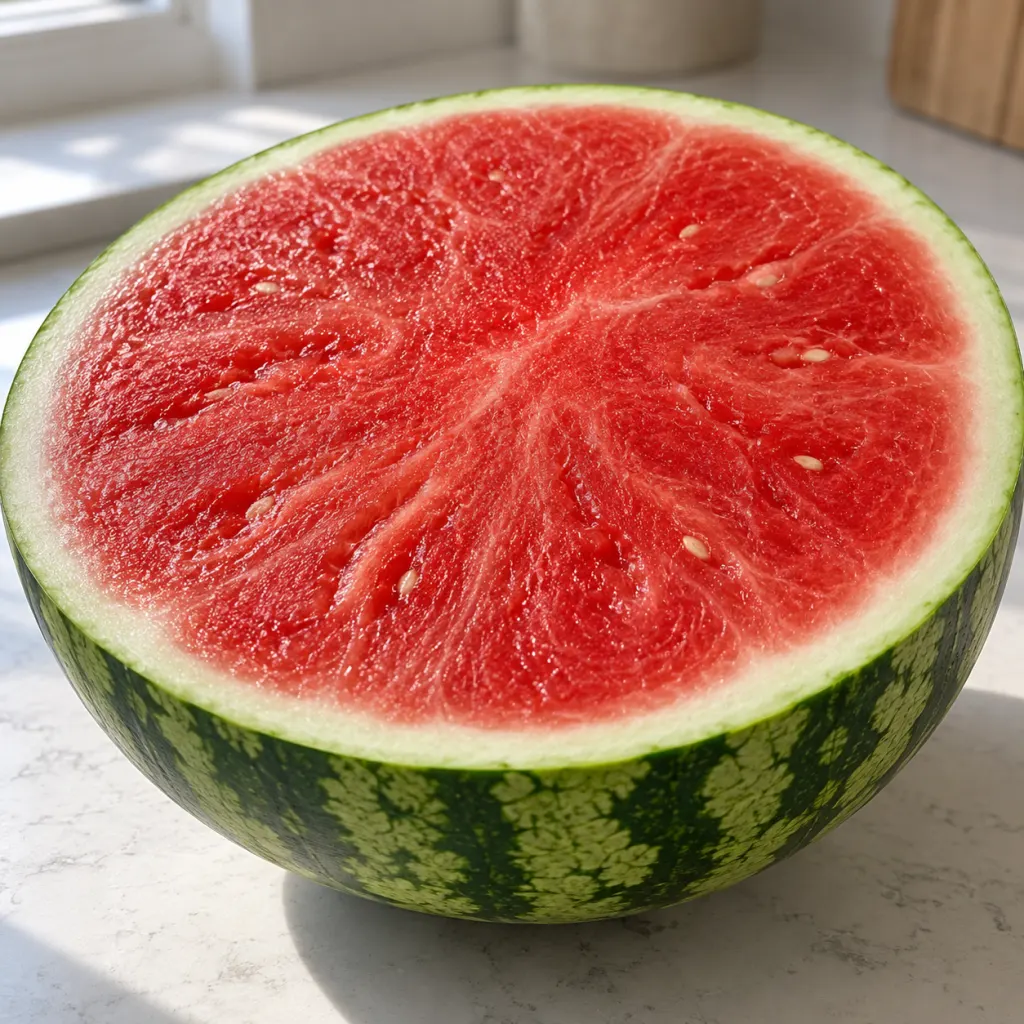
 Save
Yes, seedless watermelon can be organic. Seedlessness describes a plant characteristic, while organic describes compliance with production and handling standards. Neither word establishes the other: a seedless melon needs its own organic claim, and a seeded melon does too. USDA explains that organic labeling concerns approved production methods, rather than the presence of seeds. USDA organic standards.
For shoppers, the useful questions are separate: How was this variety developed? Was this particular crop produced under organic standards? And how much watermelon will your household actually use? Keeping those questions distinct makes both the science and the supermarket display easier to understand.
How breeding produces a seedless watermelon
Ordinary seeded watermelons have two chromosome sets, described as diploid. Breeders produce seedless watermelon seed by crossing a female parent with four sets, called tetraploid, with a diploid pollen parent. The resulting seed has three chromosome sets, making it triploid. When planted, it grows into the plant that bears seedless fruit. University of Georgia Extension describes this crossing process and explains that the uneven chromosome sets interfere with normal reproductive development. University of Georgia Extension's breeding explanation.
The breeding history includes a deliberate chromosome-doubling step to establish tetraploid parent plants. This is separate from the crossing that produces commercial triploid seed. The distinction answers an apparent puzzle: seedless watermelon plants can begin as actual seeds, even though their own fruit generally does not develop normal mature seeds. The parent generation and the fruit-bearing generation have different reproductive roles. University of Georgia Extension.
Hybrid breeding and genetic engineering describe different processes
Hybrid breeding combines parent plants through a cross. Genetic engineering uses different tools; FDA describes methods that can copy a gene carrying a desired trait and introduce it into another organism. Its educational overview discusses traditional crossbreeding, genetic engineering, and genome editing as distinct approaches. FDA's comparison of crop modification methods.
The triploid crossing described above is conventional hybrid breeding. Calling the result a hybrid does not, by itself, mean it was genetically engineered. Equally, the fact that breeders deliberately changed a plant's inherited characteristics is too broad a description to identify a particular technique. Ask which process was used instead of treating every reference to genetics as interchangeable. FDA's distinctions provide a clearer vocabulary for that conversation. FDA.
Why seedless plants still need a pollen source
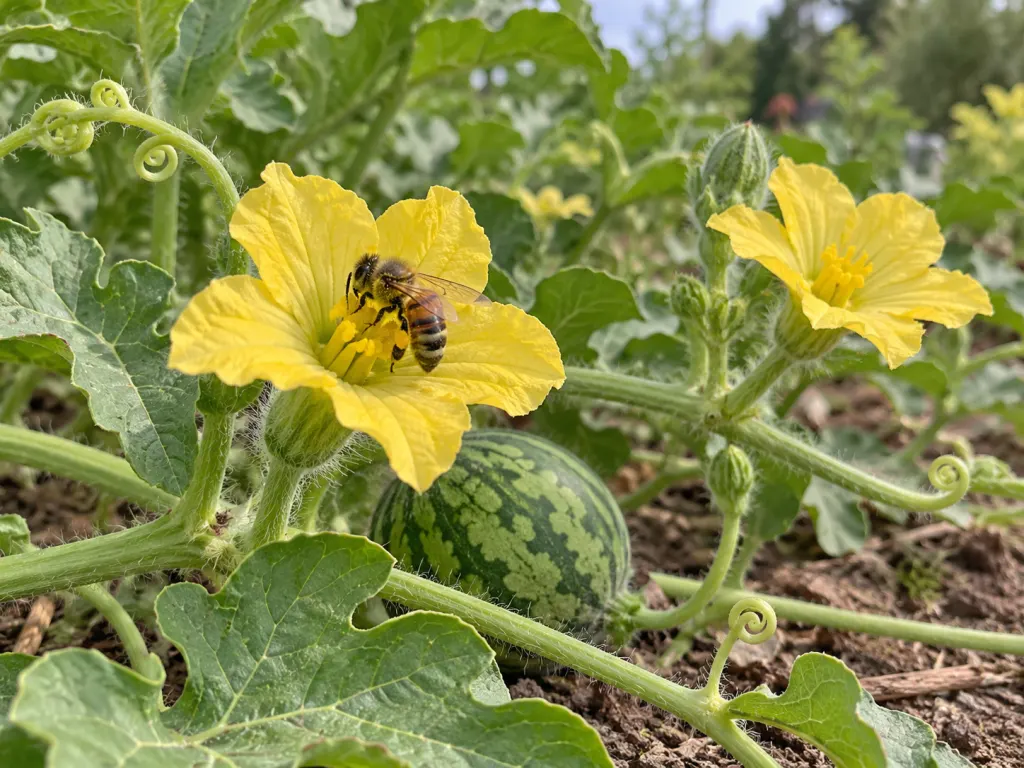
Fruit production still requires pollination support. Texas A&M's crop guide calls for standard diploid watermelon plants within a seedless planting to supply pollen, and includes bees among its production requirements. These companion plants are often called pollenizers; the insects transferring pollen are pollinators. A field containing both seeded and seedless plants therefore has a practical explanation. Texas A&M's seedless watermelon crop guide.
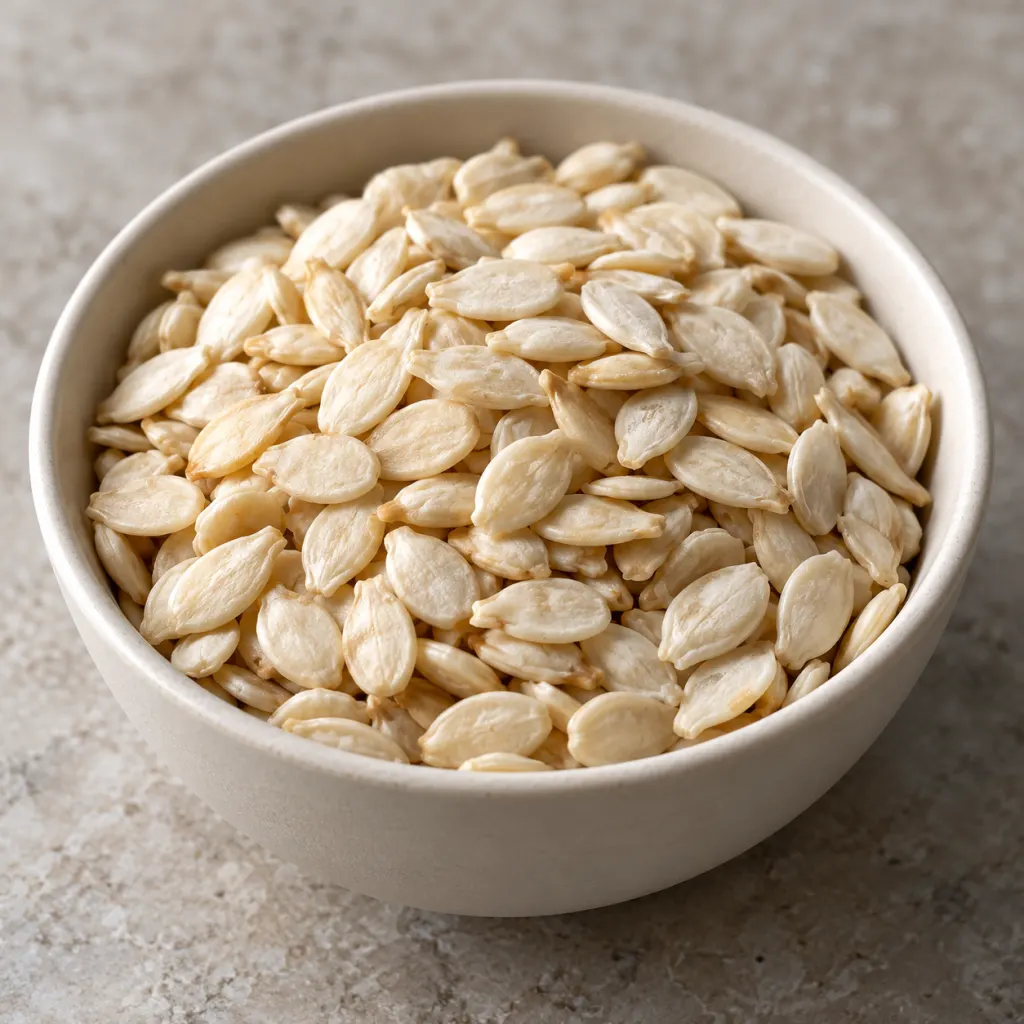
Seedless also does not promise that every slice will contain absolutely no seed structures. The same guide notes immature white seeds and the possibility of a few true seeds, particularly in the first fruit set. An occasional developed seed is therefore compatible with a seedless variety. Counting visible seeds is not a useful way to establish how the crop was certified. Texas A&M.
What USDA organic standards actually cover
In the United States, organic crop standards address the production system. USDA requires land to have received no prohibited substances for at least three years before an organic harvest. The standards also cover soil management, crop rotations, planting materials, and approaches to managing weeds and crop pests. Genetic engineering is prohibited in organic production. USDA's crop standards overview.
Those requirements explain why a conventionally bred triploid variety can fit within organic production. Its seedlessness does not remove the farm's obligations, and having mature seeds does not satisfy them. The relevant assessment concerns the applicable standards across production and handling. This article discusses USDA rules specifically; when shopping under another country's organic system, check that system's requirements rather than assuming every labeling detail is identical. USDA organic standards.
Organic seed rules have a documented exception
USDA requires organic seed when an equivalent organic variety is commercially available. When it is unavailable, a producer may use conventionally grown seed under specified conditions. USDA says the farmer must document the lack of organic availability, establish that the variety is not genetically engineered, and verify that the seed was not treated with prohibited materials. USDA's seeds and planting stock practice standard.
This is a controlled exception, not a general permission to choose any seed. USDA's explanation considers characteristics such as variety, maturity, and other growing requirements when assessing equivalence. It also treats annual transplants separately: seedlings used for an annual organic crop generally must themselves have been organically grown. A seed packet and an established transplant therefore raise different compliance questions. USDA's planting-material requirements.
For shoppers, the practical implication is modest: a simplified story about where the original seed came from cannot establish the status of the harvested melon. For growers, keep the seed documentation and transplant requirements separate when discussing a crop plan with a certifier.
Organic does not mean that no production inputs were used
Another useful distinction concerns permitted materials. USDA explains that synthetic substances are generally prohibited in organic crop production unless specifically allowed on the National List. Nonsynthetic substances are generally allowed unless specifically prohibited. The rules are therefore more specific than a blanket division between natural and manufactured materials. USDA's explanation of crop-production substances.
Some materials used for soil management and crop protection are permitted under those rules. Consequently, avoid translating an organic claim into a promise that no inputs were used or that the crop grew without management. If your purchasing concern involves a particular production practice, ask about that practice directly. A broad label and a specific farm-management question do different jobs. USDA's allowed and prohibited materials overview.
A practical way to check the display
USDA describes organic certification as a system involving accredited certifiers, inspections, and records that trace products through the supply chain. Its organic seal is a regulated mark. These are stronger foundations for an organic claim than an impression based on a melon's appearance. USDA's organic basics.
- Identify the exact item: make sure the shelf sign refers to the melon or package you are buying.
- Read the two descriptions separately: look for an organic claim as well as the variety description.
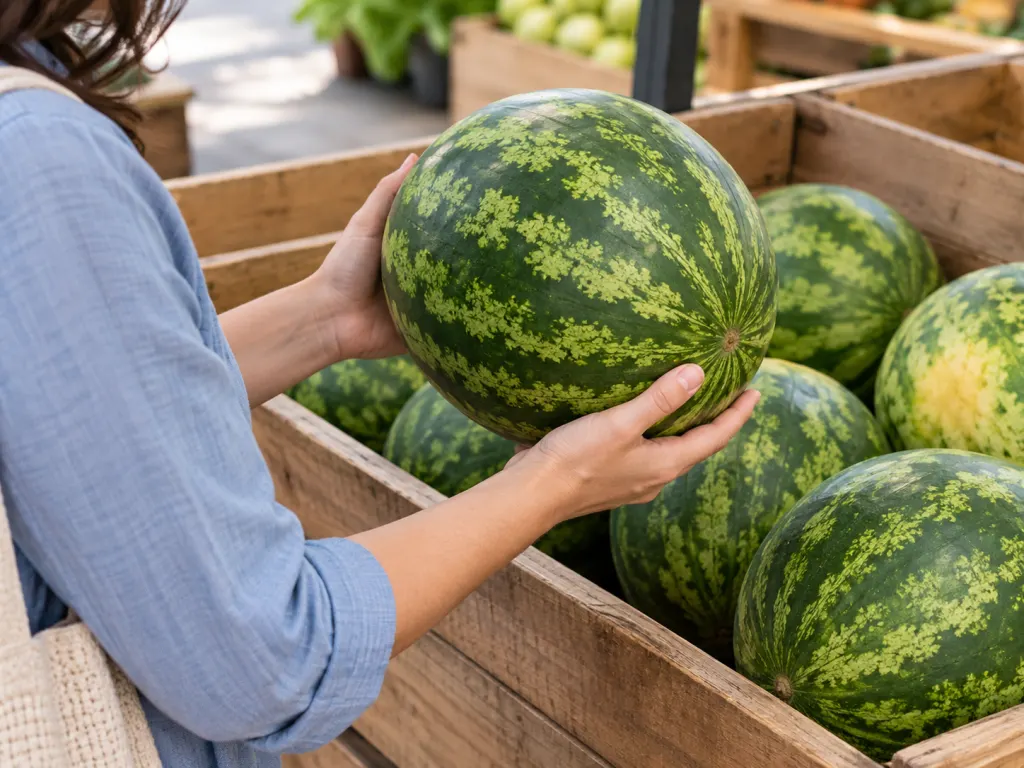
- Resolve a mixed display: ask staff which bin or package matches the organic price sign.
- Ask a precise question: if buying directly from a grower, ask whether this particular crop is certified organic and which certifier handles it.
- Make the purchase fit your priorities: decide how certification, price, size, and convenience matter to you before comparing options.
For example, if a large sign spans several crates, ask which crate it describes before choosing a melon. You do not need to identify chromosome sets at the checkout. You need a clear match between the product and its stated production claim.
Growing seedless watermelon involves more than buying a packet
For gardeners, seedless watermelon presents a separate practical challenge. University of Maryland Extension explains that triploid seed is less vigorous than standard diploid seed and needs particular germination conditions. Its commercial guidance emphasizes controlled warmth, careful moisture management, and timely movement from germination conditions into the greenhouse. University of Maryland Extension's transplant guidance.
The useful lesson for a home grower is to plan the propagation stage before ordering. Decide whether you can manage the recommended conditions or would prefer to obtain suitable transplants. Ask the supplier about the variety's growing requirements and the accompanying pollenizer plan. Treat a commercial production document as background for informed questions, rather than assuming every recommendation transfers unchanged to a small garden. The Maryland guidance focuses on transplant production, which is only one part of the full growing season. University of Maryland Extension.
Choose an amount you have a plan to use
At home, make quantity a separate decision from certification. As a planning exercise, suppose four people each want about one cup of cut watermelon. Start by planning four cups, then adjust for what else you are serving and whether you want leftovers. This is an example for organizing a meal, not a prescribed serving amount. You can use smaller bowls, offer seconds, or choose wedges if measuring would make a casual meal unnecessarily fussy.
Before buying a whole melon, name its intended uses: a bowl for today's table, a container for another meal, or an ingredient for a planned dish. If you cannot name a use for the remainder, consider a smaller purchase. Compare the amount you expect to use with the total price, rather than letting the largest fruit decide the menu.
For help with the next shopping decision, see How to Choose a Sweet Watermelon. If you already intend to make a frozen dessert, the watermelon sorbet recipe offers a specific use to plan around.
Handle organic and conventional melon with the same care
FDA recommends choosing undamaged produce and buying precut watermelon only when refrigerated or surrounded by ice. Keep purchased precut produce refrigerated. At home, wash your hands before preparation and keep produce and its utensils separate from raw meat, poultry, and seafood. FDA's produce-handling guidance.
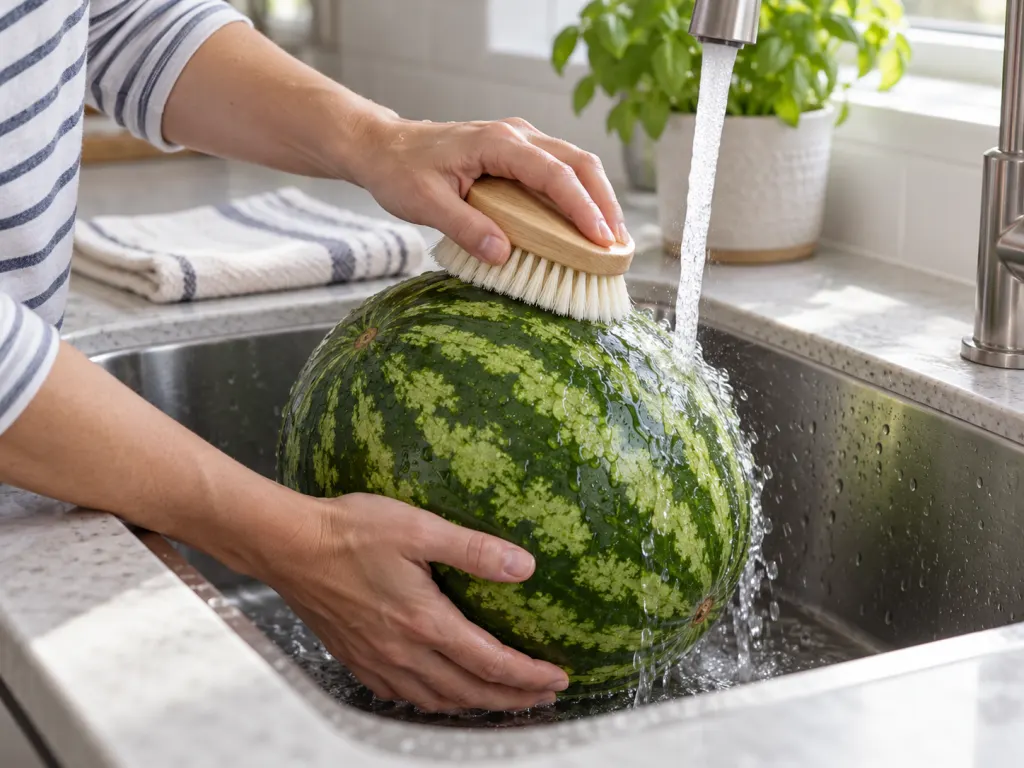
Wash a whole watermelon under running water before cutting, even though you will discard the rind. FDA explains that cutting can transfer dirt and bacteria from the outside to the inside. Scrub firm produce such as melons with a clean produce brush, then dry it with a clean towel. FDA advises against using soap, detergent, or commercial produce wash on produce. These preparation instructions belong alongside the buying decision; an organic label does not change the handling routine. FDA.
Wrap-Up
Use breeding information to understand the variety and the organic claim to assess its production status. Then choose a quantity with a clear place in your meal plans. Questions about certification, growing requirements, and kitchen use are easier to answer when each is asked separately.
Frequently Asked Questions
- → Does the word hybrid establish whether a watermelon is organic?
No. Hybrid describes a breeding relationship. Organic status depends on compliance with production and handling requirements, so check the product's organic claim separately. USDA organic standards.
- → Can a seedless watermelon contain a developed seed?
Yes. Texas A&M notes that some fruit can contain a few true seeds as well as immature white seeds. Seedless is not an absolute promise of zero seed structures in every fruit. Texas A&M crop guide.
- → Where can I check the name of an organic operation?
USDA's organic basics page points readers to its Organic INTEGRITY Database, which contains information about organic operations. Ask the seller for the operation's name so you have a specific business to check. USDA organic basics.
- → What should I ask before buying seedless watermelon plants?
Ask about the variety, transplant readiness, local growing conditions, and the pollenizer arrangement. If organic production is your goal, also ask for documentation of the transplants' organic status; USDA distinguishes annual seedlings from seeds in its requirements. USDA planting-material standard.
References
This content was developed and refined using reliable sources.
- https://site.extension.uga.edu/gardener/2022/06/what-do-seedless-watermelons-and-mules-have-in-common
- https://www.ams.usda.gov/grades-standards/seeds-and-planting-stock-practice-standard
- https://www.ams.usda.gov/services/organic-certification/organic-basics
- https://aggie-horticulture.tamu.edu/vegetable/watermelon/seedless-watermelon-crop-guide
- https://www.fda.gov/food/buy-store-serve-safe-food/selecting-and-serving-produce-safely
- https://www.fda.gov/food/agricultural-biotechnology/types-genetic-modification-methods-crops
- https://www.ams.usda.gov/grades-standards/organic-standards
- https://extension.umd.edu/resource/tips-starting-seedless-watermelon-transplants
- https://www.ams.usda.gov/grades-standards/synthetic-substances-crop-production