 Save
Yes, you can often wash household towels in one load, but it is not an automatic yes. A mixed towel load works best when the towels are similarly colored, made from sturdy washable fabric, not heavily soiled, and washed with detergent on the recommended setting, then dried completely. The load deserves more care when kitchen towels have touched raw meat juices, someone in the home has vomiting or diarrhea, towels smell musty after drying, or you plan to use bleach or a laundry sanitizer. Public-health guidance from the CDC says laundry items such as towels should be washed with detergent and the recommended water temperature, then dried completely, and that hands should be washed after handling dirty laundry CDC.
The Practical Answer: Mix by Risk, Not by Room
The old habit of separating every bath towel from every kitchen towel is easy to understand, but the better rule is more specific: sort towels by what they have been used for, how dirty they are, what the fabric label allows, and whether the wash setting can do a good job for the whole load. A dry bath towel used after a normal shower is different from a damp kitchen towel that wiped up raw poultry juices. A decorative guest towel with fringe is different from a stack of white cotton dish cloths. The room where the towel lives matters less than the residue, moisture, color, and care instructions it brings into the washer.
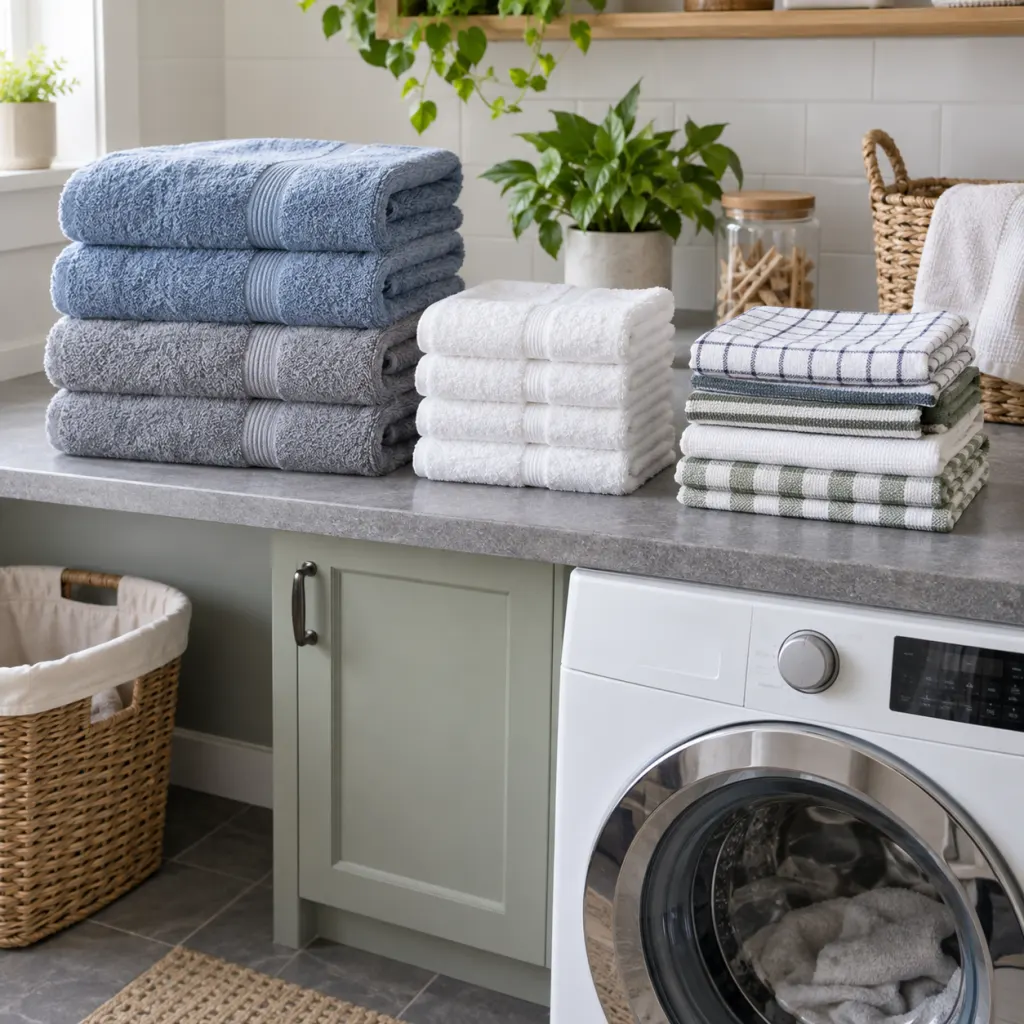
For a normal household week, one towel load might include bath towels, hand towels, washcloths, and kitchen hand towels that were used only for drying clean hands. That load should still be roomy enough for agitation and rinsing. Towels are absorbent, and an overfilled washer makes it harder for water and detergent to move through the pile. If the washer is tightly packed, divide the load even if the towels are otherwise compatible.
- Good candidates for one load: sturdy cotton towels of similar colors, lightly soiled hand towels, bath towels used after bathing, and kitchen towels used only for clean hands or clean dishes.
- Better in a separate load: towels used during raw meat handling, towels with vomit or stool, towels with heavy grease, cleaning rags, pet towels, and towels with mildew odor that remains after drying.
- Sort for fabric care: keep white bleach-safe towels away from dark towels, lint-attracting fabrics, delicate trims, and anything labeled for cold or gentle washing only.
Kitchen Towels Need the Most Honest Sorting
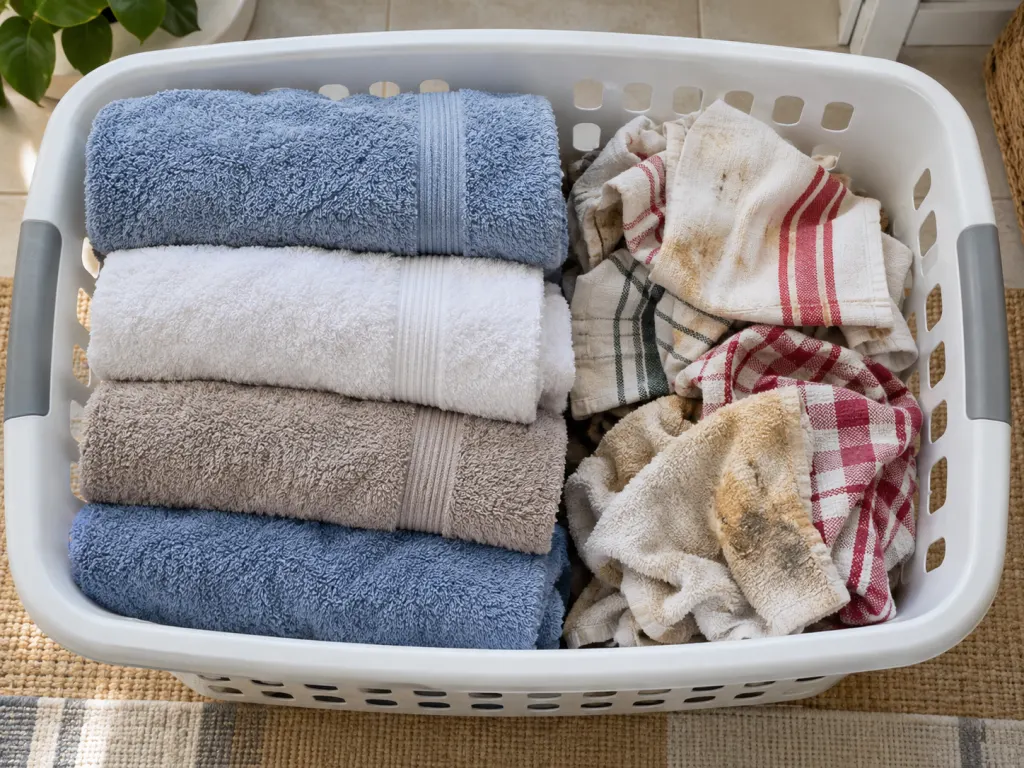
Kitchen towels are not all the same. A towel hanging by the sink for clean hand drying is a lower-risk laundry item than a cloth used to wipe a cutting board, mop up meat juices, or dry a counter during food preparation. The University of Minnesota Extension notes that kitchen towels can transfer pathogens back onto clean food-contact surfaces, and it advises using single-use towels or clean cloth towels for hand drying in food-preparation settings University of Minnesota Extension. That does not mean every kitchen towel needs dramatic handling. It does mean you should know what the towel touched before tossing it into a shared towel load.
If a kitchen towel was used only after washing clean hands, it can usually join a towel load that matches its color and fabric instructions. If it wiped counters, soaked up food residue, sat damp in the sink, or helped clean after raw meat or eggs, put it in a separate wash. Illinois Extension gives straightforward food-safety advice for home kitchens: cloth towels or sponges should be washed in the hot cycle of the washing machine, and raw meats should be kept separate from other foods during kitchen work Illinois Extension. A separate load keeps heavier soil from being redistributed through otherwise lightly used bath towels.
Bath Towels Bring Moisture, Lint, and Body Soil
Bath towels usually carry moisture, skin oils, soap residue, and lint. That is normal laundry soil rather than an automatic reason to isolate them. The main issue is drying: a towel that stays damp in a hamper can develop a stubborn musty smell, and that smell can spread through a mixed load. Before washing, let wet towels dry over a rack or the side of a basket if you cannot wash them right away. After washing, move them to the dryer or drying rack promptly. CDC household guidance emphasizes drying laundry items completely, which matters as much for towels as for clothing CDC.
Water Temperature Is About the Item, Not a Universal Number
There is no single temperature that makes every mixed towel load correct. The CDC advises using detergent and the recommended water temperature for laundry items, while also using the warmest appropriate setting for washable soft items such as rugs or drapes when cleaning is needed CDC. In practical terms, read the care labels first. Sturdy white cotton towels may tolerate hot water and chlorine bleach when the label allows it. Dark towels, microfiber towels, decorative towels, and some bamboo or specialty textiles may need cooler water or gentler products to avoid fading, shrinkage, damage, or loss of absorbency.
When Illness Changes the Laundry Plan
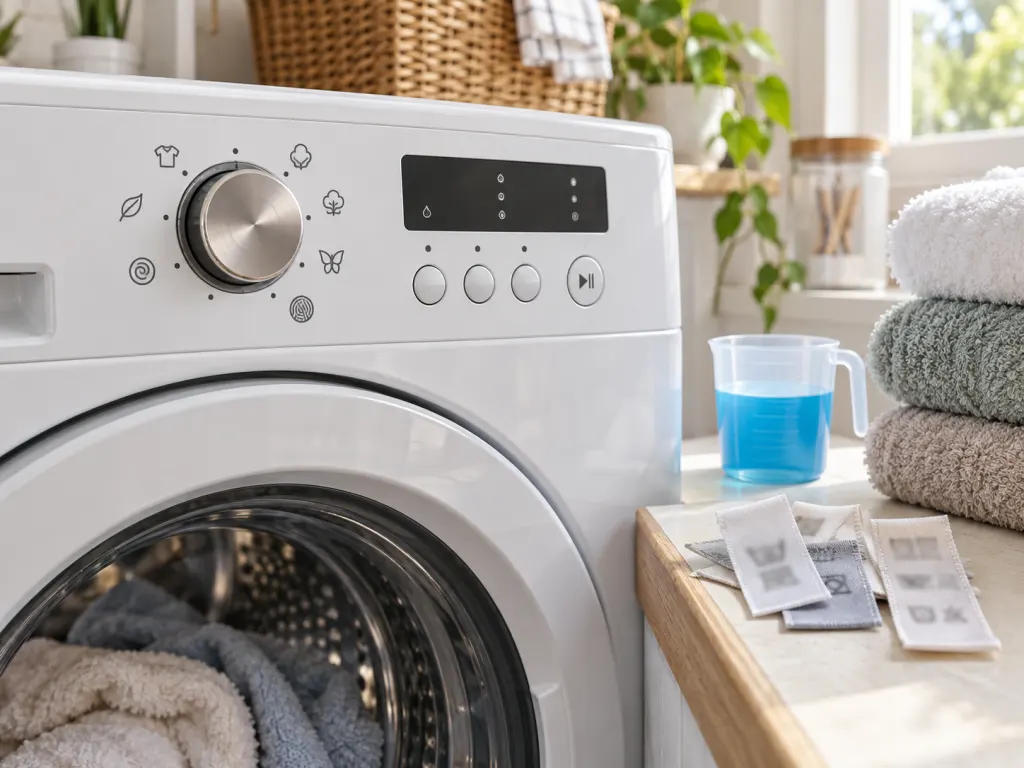
When towels or linens may contain vomit or stool, treat the load differently. CDC norovirus guidance says to remove and wash affected clothing or linens immediately, handle them carefully without shaking, wash with detergent and hot water at the maximum available cycle length, and machine dry at the highest heat setting the items can tolerate CDC Norovirus. The same page also advises wearing rubber or disposable gloves and washing hands afterward. If the towels cannot tolerate those settings, follow the care label and consider whether the item should be retired from kitchen or shared bathroom use.
CDC household guidance also says it is safe to wash dirty laundry from a sick person with other people’s items when ordinary home laundering is being done CDC. That statement is useful, but it should not be stretched into a reason to mix every contaminated towel with every towel in the house. If a towel is visibly soiled, strongly odorous, or connected with vomiting or diarrhea cleanup, a dedicated load is simpler, cleaner, and easier to run on the longest suitable cycle. It also keeps the rest of the basket from needing a more aggressive setting than the fabric would normally require.
Laundry Additives: Read the Label Before You Trust the Claim
Detergent is the baseline for routine towel washing. Sanitizers and disinfectants are more specific product categories. The EPA explains that cleaning removes dirt and organic matter, sanitizing reduces bacteria on surfaces, and disinfecting is intended for viruses and bacteria on surfaces; EPA-registered products should be used according to the label, including the contact time EPA. For laundry, that means a bottle that smells strong or says “fresh” is not the same as a product with directions for sanitizing laundry. If you choose a laundry sanitizer, use one whose label says it is meant for laundry and follow the product directions exactly.
Be careful with homemade laundry chemistry. The CDC says bleach solutions can be effective when properly diluted for suitable surfaces, but bleach products require ventilation, label directions, and safe handling; CDC also warns not to mix household bleach or disinfectants with other cleaners or disinfectants because dangerous vapors can be released CDC Bleach Guidance. This matters in laundry rooms where people may be tempted to combine bleach, vinegar, ammonia-based cleaners, stain removers, or fragrant additives. MedlinePlus similarly warns that mixing chlorine bleach and ammonia cleaners can cause serious injury or death MedlinePlus.
Drying Is Part of the Cleaning Decision
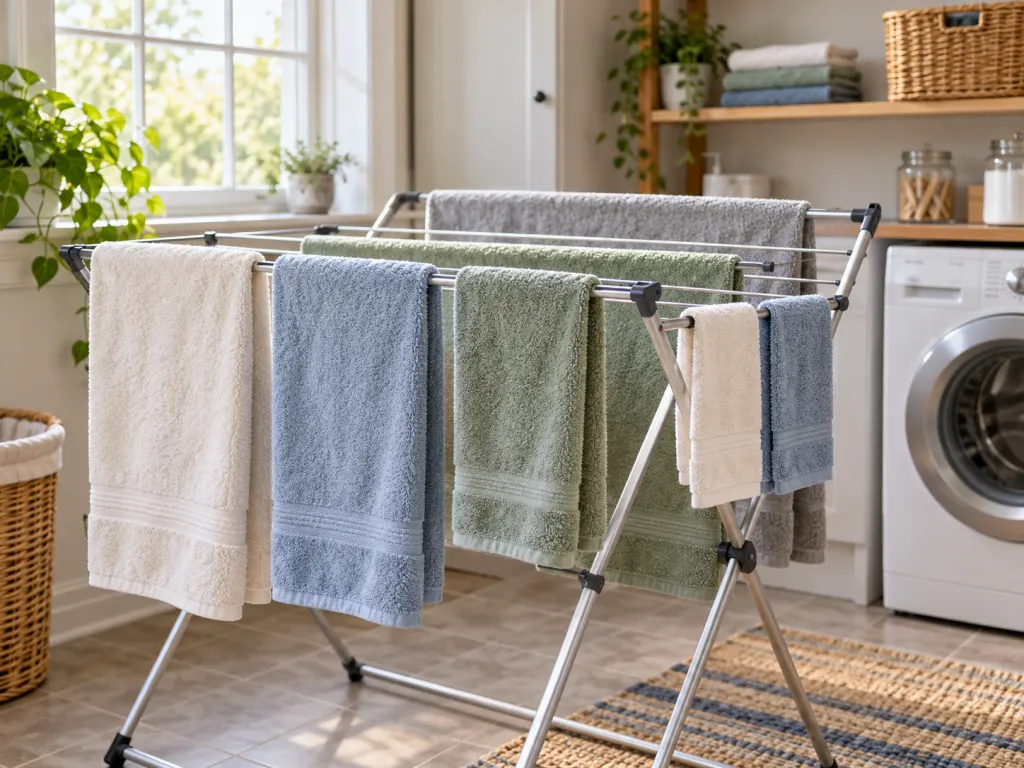
A towel is not really finished until it is fully dry. Damp towels left in a washer can sour quickly, and damp towels folded into a closet can make an entire stack smell stale. For routine mixed loads, use the dryer setting allowed by the towel labels, or air-dry towels with enough spacing and airflow for the thickest pieces to dry all the way through. For towels connected with vomiting or diarrhea cleanup, CDC norovirus guidance calls for machine drying at the highest heat setting the items can tolerate after washing CDC Norovirus. For ordinary bath towels, complete drying is still the key habit.
Color, Lint, and Fabric Softener Can Decide the Load
Even when sanitation is not the main concern, towels can still be poor laundry companions. New towels shed lint. Dark towels can dull lighter towels. White towels may be candidates for chlorine bleach when the label allows it, while colored towels may not be. Microfiber cloths can lose performance when washed with heavy cotton lint or coated with softening products. If absorbency matters, be cautious with routine fabric softener use; it can leave residues on fibers and make towels feel less thirsty over time. For more on that related laundry habit, see Why Fabric Softener Is Bad for Your Laundry.
The same sorting logic applies to temperature habits. A default warm or hot cycle may be unnecessary for a lightly used, dark towel load and too mild for a separate load of heavily soiled kitchen cloths. The goal is not to chase one perfect setting. The goal is to match the load to the dirtiest appropriate item without damaging the rest. If you often wash everything at one temperature, the related guide Why 40°C Should Not Be Your Default Laundry Setting explains why one default can be too blunt for real household laundry.
A Simple Household Towel System
The easiest system is to keep towel types visually distinct. Use one color for kitchen hand towels, another for bathroom hand towels, and a separate stack for cleaning cloths. Keep a small bin for high-soil kitchen cloths so they do not disappear into the bath towel basket. Hang towels so they dry between uses, and avoid stuffing damp towels into a closed hamper. If laundry dries indoors, make sure the room has enough ventilation; the site’s guide on how to reduce humidity when drying laundry indoors can help with that part of the routine.
For most homes, the mixed-load decision can be made in under a minute. Ask four questions: Did any towel touch raw meat juices, stool, vomit, heavy grease, pet mess, or harsh cleaner? Do all towels tolerate the same wash temperature and additives? Are colors compatible? Can the whole load move freely and dry completely? If the answer to all four is yes, a combined towel load is usually reasonable. If one answer is no, split the load. That small pause saves you from overwashing delicate items, underwashing soiled cloths, or using a chemical product in a way the label does not support.
Bottom Line
Mixing towels is not careless when the towels are ordinary, compatible, and washed well. It becomes a problem when the load hides a high-soil kitchen cloth, a towel from illness cleanup, a color that bleeds, a delicate trim, or a chemical plan that does not match the label. A practical home routine is simple: wash lightly used bath and hand towels together when their care labels agree; isolate towels with food-prep contamination, visible soil, or illness-related mess; use detergent and the warmest suitable setting for that load; and dry every towel completely before storage. That approach is calmer than rigid rules and more reliable than tossing every towel into the same basket.
Wrap-Up
You can wash many household towels together, especially sturdy bath towels, hand towels, washcloths, and clean-use kitchen towels of similar colors. Separate towels that touched raw food residue, vomit, stool, heavy grease, pet mess, mildew odor, or incompatible chemicals. Use detergent, choose a setting the fabrics can tolerate, follow labels on bleach or sanitizing products, avoid mixing cleaners, and dry towels completely before folding or storing.
Frequently Asked Questions
- → Can bath towels and kitchen hand towels go in the same load?
Often, yes. If the kitchen towel was used only for clean hands or clean dishes, and the towels are similar in color and care instructions, they can usually share a load. Keep out any towel that touched raw food residue, heavy grease, pet mess, or bathroom illness cleanup.
- → Should towels used around raw meat be washed separately?
Yes, that is the more practical choice. A towel used around raw meat juices or heavily soiled food-prep areas should be kept out of a routine bath towel load and washed on the hottest suitable cycle for that fabric with detergent. Wash hands after handling the dirty towels.
- → Do I need bleach every time I wash towels?
No. Routine towels usually need detergent, a suitable wash setting, and complete drying. Bleach or laundry sanitizing products are special-use decisions based on the towel, label, color, and situation. Never mix bleach with vinegar, ammonia cleaners, or other disinfecting products.
- → What if towels still smell musty after washing?
A musty smell usually means moisture lingered too long or the load was too crowded, under-rinsed, or slow to dry. Rewash the towels in a smaller load with detergent, avoid excess product, and dry them completely right away. If the odor keeps returning, separate those towels from kitchen and guest use.
- → Can I wash towels with regular clothes?
Sometimes, but towels are linty, bulky, and absorbent. They often wash and dry better with other towels. Avoid washing new towels with dark clothing, lint-attracting fabrics, delicate garments, or items that need a very different cycle.
References
This content was developed and refined using reliable sources.
- https://www.cdc.gov/hygiene/about/when-and-how-to-clean-and-disinfect-your-home.html
- https://www.cdc.gov/norovirus/prevention/index.html
- https://www.cdc.gov/hygiene/about/cleaning-and-disinfecting-with-bleach.html
- https://www.epa.gov/pesticide-registration/selected-epa-registered-disinfectants
- https://www.epa.gov/coronavirus-and-disinfectants/whats-difference-between-products-disinfect-sanitize-and-clean
- https://medlineplus.gov/cleaningdisinfectingandsanitizing.html
- https://medlineplus.gov/ency/article/002488.htm
- https://extension.umn.edu/about/our-stories/news/cottage-food-connection/sink-essentials-for-your-home-kitchen
- https://extension.umn.edu/food/preparing/cooking-at-home/sanitizing-equipment-and-food-contact-surfaces
- https://extension.illinois.edu/cottage-food/food-safety