 Save
Sleeping on your right side is not automatically dangerous. For many people, it is just a comfortable position. The main risk is that it may worsen nighttime reflux or heartburn in people who are prone to it, because evidence suggests the left side is often more favorable for acid clearance during sleep. Right-side sleeping can also aggravate shoulder, neck, hip, or back discomfort if your pillow or mattress leaves your body twisted. If you snore, gasp, wake often, or feel very sleepy during the day, the bigger issue may be sleep quality or sleep apnea rather than the right side itself.
The practical answer is to watch patterns. If you wake with burning in the throat, sour taste, hoarseness, aching joints, numbness, or unrefreshing sleep after spending much of the night on your right side, it is reasonable to test a left-side or better-supported side position for a few nights. If you feel well and sleep soundly, there is no strong reason to fear the right side.
The Short Answer: Right Side Sleeping Is A Risk For Some, Not A Rule For Everyone
The problem with many sleep-position claims is that they turn a small, real detail into a sweeping warning. Sleep position can influence comfort, reflux, snoring, and pressure on joints, but it is only one part of sleep health. The National Heart, Lung, and Blood Institute notes that enough good-quality sleep supports mental health, physical health, safety, and daytime function, while poor sleep can affect attention, reaction time, mood, and daily performance https://www.nhlbi.nih.gov/health/sleep-deprivation/health-effects. That means the best position is the one that helps you breathe comfortably, stay asleep, and wake rested.
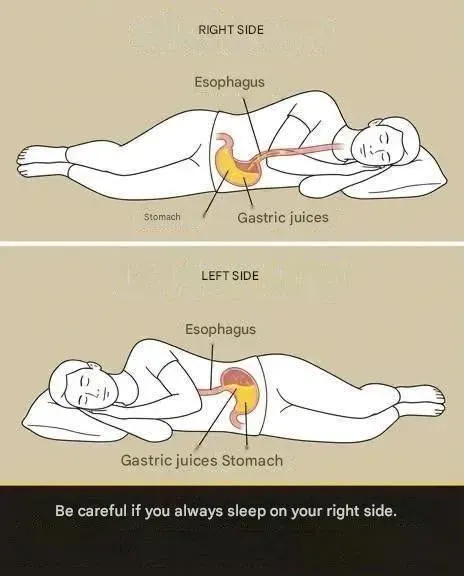
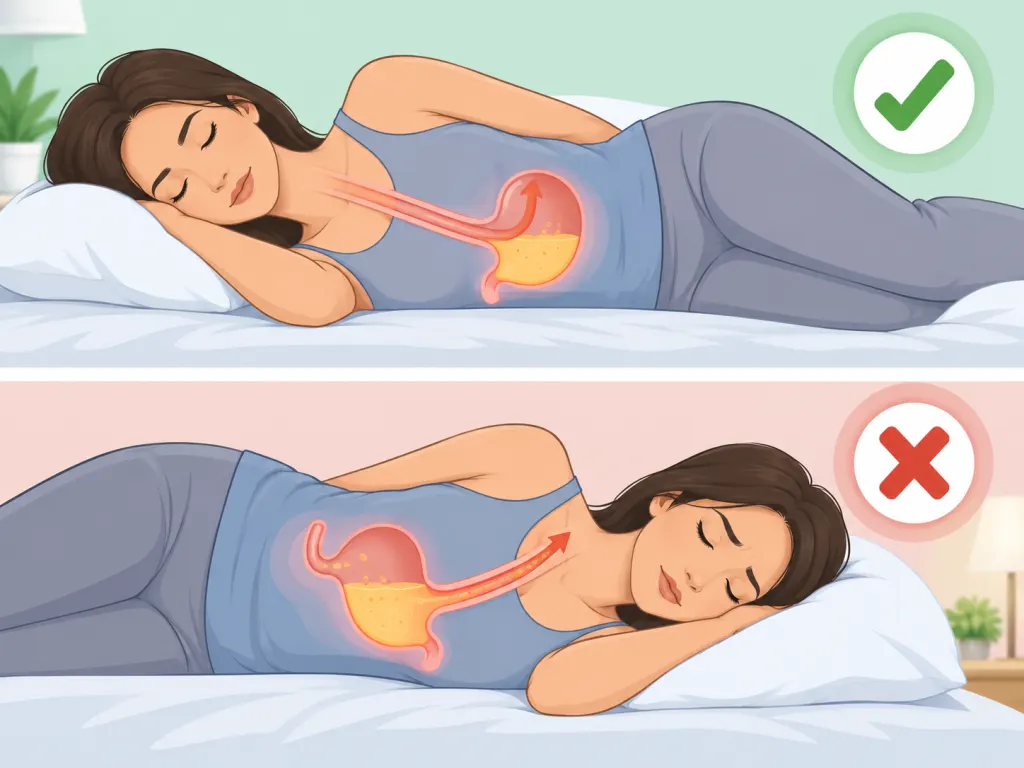
For right-side sleeping specifically, the strongest everyday concern is reflux. If stomach contents move back toward the esophagus, lying down can make symptoms more noticeable. MedlinePlus explains that reflux can feel like acid coming up into the throat and that GERD is more likely when reflux is frequent or damaging https://www.medlineplus.gov/gerd.html. This is where side choice may matter: left-side sleeping has been associated with less nighttime acid exposure than right-side sleeping in some research. That does not mean every right-side sleeper has a problem; it means people with nighttime reflux have a clear reason to experiment with the left side.
Why Reflux Is The Clearest Right-Side Issue
Reflux is the best-supported reason to reconsider sleeping on the right side. MedlinePlus lists several practical steps that may help GERD symptoms, including avoiding lying down for at least 2 to 3 hours after eating, raising the head of the bed, and sleeping on the left side https://www.medlineplus.gov/gerd.html. A PubMed-indexed study that measured sleep position along with esophageal pH and impedance in 57 patients found shorter acid exposure time and faster acid clearance in the left lateral position compared with the right lateral and back positions https://pubmed.ncbi.nlm.nih.gov/34928874/.
The useful takeaway is modest but practical: if you often notice heartburn, sour taste, coughing, hoarseness, or a burning feeling after lying on your right side, try shifting to the left side and consider the timing of dinner. A heavy meal close to bedtime can matter more than the side itself. Clothing that compresses the abdomen, alcohol, smoking, and individual trigger foods can also affect reflux symptoms. The position is one lever, not the whole machine.
Signs That Your Right-Side Habit May Be Working Against You
Because sleep is personal, the best clue is what happens repeatedly. One uncomfortable night does not prove much. A pattern does. Watch for symptoms that show up after right-side sleep and ease when you change position, adjust pillows, or leave more time between dinner and bed. A simple sleep note on your phone can help: bedtime, last meal timing, main position, wake-ups, reflux symptoms, and morning comfort.
- Reflux pattern: burning in the chest or throat, sour taste, coughing, or hoarseness after lying down.
- Pressure pattern: sore right shoulder, hip, ribs, or jaw on waking.
- Alignment pattern: stiff neck, low back discomfort, or tingling that improves when pillows support the knees, waist, or head.
- Breathing pattern: loud snoring, gasping, pauses in breathing noticed by someone else, or marked daytime sleepiness.
- Sleep-quality pattern: frequent wake-ups, unrefreshing sleep, or needing to change position repeatedly to get comfortable.
When Right-Side Sleeping Is Mostly A Comfort Question
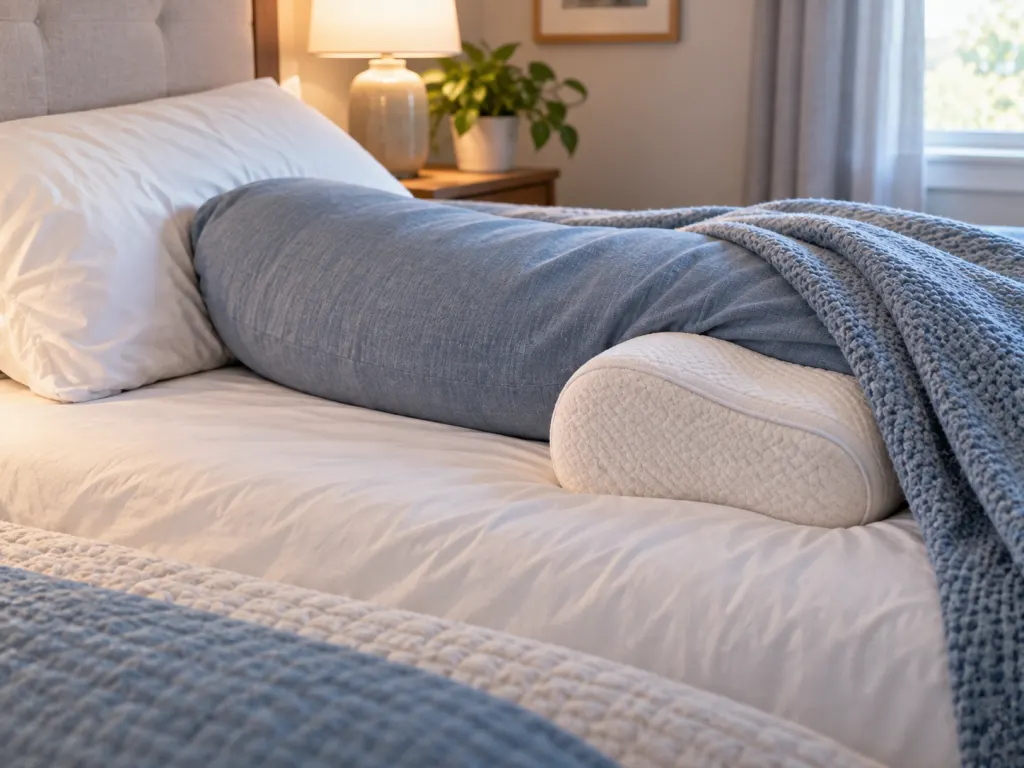
For people without reflux symptoms, right-side sleeping is often a matter of pressure and alignment. Mayo Clinic advises side sleepers to draw the legs slightly toward the chest and place a pillow between the legs to help align the spine, pelvis, and hips https://www.mayoclinic.org/diseases-conditions/back-pain/in-depth/sleeping-positions/art-20546852. The side itself may be less important than whether the head, neck, shoulders, ribs, pelvis, and knees are stacked comfortably.
A common problem is letting the upper shoulder collapse forward while the lower shoulder carries too much pressure. Another is using a pillow that is too high or too flat, which bends the neck toward one shoulder for hours. If your waist sinks into a soft mattress or your hip presses into a very firm one, the right side can feel fine at bedtime and unpleasant by morning. A pillow between the knees, a small support at the waist, or a pillow hugged to the chest can make side sleeping more even.
Breathing, Snoring, And Sleep Apnea Concerns
For breathing, the bigger comparison is usually side sleeping versus back sleeping, not right versus left. NHLBI says that for sleep apnea, a healthcare provider may recommend sleeping on the side rather than on the back because side sleeping can help keep the airway open during sleep https://www.nhlbi.nih.gov/health/sleep-apnea/treatment. MedlinePlus also notes that sleeping on the back can contribute to airway narrowing or blockage in obstructive sleep apnea https://medlineplus.gov/ency/article/000811.htm.
This matters because someone may blame the right side when the true pattern is back sleeping after rolling over. If you begin the night on the right side but wake on your back with dry mouth, snoring, or morning headache, a side-support pillow or positional habit may be more useful than forcing a specific side. However, loud snoring with gasping, breathing pauses, frequent nighttime waking, or strong daytime sleepiness deserves professional evaluation. NHLBI lists breathing that starts and stops, frequent loud snoring, gasping for air, tiredness, and daytime sleepiness among sleep apnea symptoms https://www.nhlbi.nih.gov/health/sleep-apnea/symptoms.
What To Change Before Blaming One Side
If right-side sleeping seems linked with poor sleep, make the smallest useful changes first. Start with meal timing if reflux is the issue. MedlinePlus suggests avoiding lying down for at least 2 to 3 hours after eating and raising the head of the bed for GERD symptoms https://www.medlineplus.gov/gerd.html. For comfort, look at pillow height, knee support, mattress pressure, and whether your shoulder is rolled forward. For snoring, notice whether symptoms are worse on your back. For broader sleep quality, bedtime consistency, caffeine timing, room temperature, and light exposure may matter as much as body position.
A fair trial is simple: spend one week making only one or two changes, then compare. For example, if reflux is the main concern, eat earlier and begin on the left side. If shoulder discomfort is the main issue, keep the right side but add a knee pillow and a chest pillow so the top arm does not drag the torso forward. If the pattern improves, you have a clue. If nothing changes, the right side may not be the main problem. Readers comparing positions may also find Best Sleeping Position for Digestion and What Sleeping Position May Reveal About Comfort useful for related context.

When To Take Symptoms Seriously
Most right-side sleeping discomfort is not urgent. Still, some symptoms should not be explained away as posture. MedlinePlus advises getting medical help right away for chest pain with shortness of breath or pain in the jaw or arm because those can be signs of a heart problem https://www.medlineplus.gov/gerd.html. Sudden severe pain, fainting, new weakness, trouble breathing, or symptoms that feel unusual for you should be handled promptly.
For non-urgent but persistent problems, bring a clear pattern to a clinician: how often symptoms happen, whether they follow meals, whether they appear on the right side only, whether you snore or gasp, and what you have tried. That is more useful than simply saying one sleep position is bad. It helps separate reflux, musculoskeletal strain, sleep apnea concerns, and ordinary restless sleep.
Bottom Line
The risk of sleeping on your right side is usually specific, not universal. If you have nighttime reflux, the left side may be worth trying because both patient guidance and clinical research point in that direction. If you snore or have possible sleep apnea symptoms, staying off your back may matter more than choosing left over right. If you wake sore, improve alignment before declaring the position wrong. The best sleep position is the one that supports steady breathing, less reflux, comfortable joints, and enough restful sleep to function well the next day.
Wrap-Up
Right-side sleeping is not automatically harmful, but it can be a poor fit for people with nighttime reflux, certain pressure points, or unsupported side-sleeping posture. The clearest evidence favors left-side sleeping for people with reflux symptoms. For snoring and sleep apnea concerns, side sleeping generally may be better than back sleeping, but symptoms such as gasping, breathing pauses, or strong daytime sleepiness need qualified evaluation. A calm one-week trial of left-side sleeping, better pillow support, earlier meals, or head-of-bed elevation can help you see whether the right side is truly part of the problem.
Frequently Asked Questions
- → Is sleeping on the right side bad for everyone?
No. Many people sleep well on the right side without a problem. The concern is strongest for people who notice reflux, heartburn, sour taste, coughing, or throat irritation after lying down. If you sleep comfortably and wake rested, the right side by itself is not a reason to worry.
- → Why might the left side feel better for reflux?
Research in people being evaluated for reflux has found shorter acid exposure and faster acid clearance in the left-side position compared with the right side or back. MedlinePlus also includes left-side sleeping among practical steps that may help GERD symptoms. Meal timing and head-of-bed elevation can matter too.
- → Can right-side sleeping cause shoulder or neck pain?
It can contribute if your pillow, mattress, or arm position leaves your shoulder compressed or your neck bent for hours. A pillow between the knees, a pillow hugged at the chest, and a pillow height that keeps the neck level with the spine may make side sleeping more comfortable.
- → Is right-side sleeping worse for snoring?
The more important issue is often whether you roll onto your back. Back sleeping can make airway narrowing more likely in obstructive sleep apnea, while side sleeping may help some people keep the airway more open. Loud snoring, gasping, breathing pauses, or marked daytime sleepiness should be discussed with a qualified health professional.
- → How can I tell if my sleep position is the problem?
Track a simple pattern for a week: last meal time, starting sleep position, wake-ups, reflux symptoms, snoring reports, and morning comfort. Then change one thing, such as starting on the left side or adding pillow support. If the pattern improves, position may be playing a role.
References
This content was developed and refined using reliable sources.
- https://www.nhlbi.nih.gov/health/sleep-deprivation/health-effects
- https://www.medlineplus.gov/gerd.html
- https://pubmed.ncbi.nlm.nih.gov/34928874
- https://www.mayoclinic.org/diseases-conditions/back-pain/in-depth/sleeping-positions/art-20546852
- https://www.nhlbi.nih.gov/health/sleep-apnea/treatment
- https://medlineplus.gov/ency/article/000811.htm
- https://www.nhlbi.nih.gov/health/sleep-apnea/symptoms