 Save
Yes, wash pineapple before cutting it, even though you will discard the rind. Cutting or peeling can transfer dirt and bacteria from the outside to the edible flesh. The FDA recommends washing produce before cutting, including fruit whose skin will not be eaten. For pineapple, make that rinse part of preparation before removing the top, bottom or rind. FDA produce-handling guidance.
The rind and the flesh share a preparation process
The important distinction is between discarding the outside and handling it. Removing a rind does not mean the outside has stayed separate from everything you eat. A knife, your hands and the preparation surface can connect those stages. The National Pesticide Information Center recommends washing fruit even when you do not intend to eat its skin. Applied to pineapple, that means washing the intact exterior before you begin trimming. National Pesticide Information Center guidance.
Produce can acquire contamination during growing, harvesting, transport, storage or handling. Another possible route is contact with raw meat, poultry, seafood or their juices in a shopping cart, refrigerator or kitchen. This is why the preparation question extends beyond whether the pineapple looks dusty. Washing the fruit and keeping it separate from raw animal foods address different opportunities for contamination. Health Canada explains produce contamination.
Use cool running water and a clean produce brush
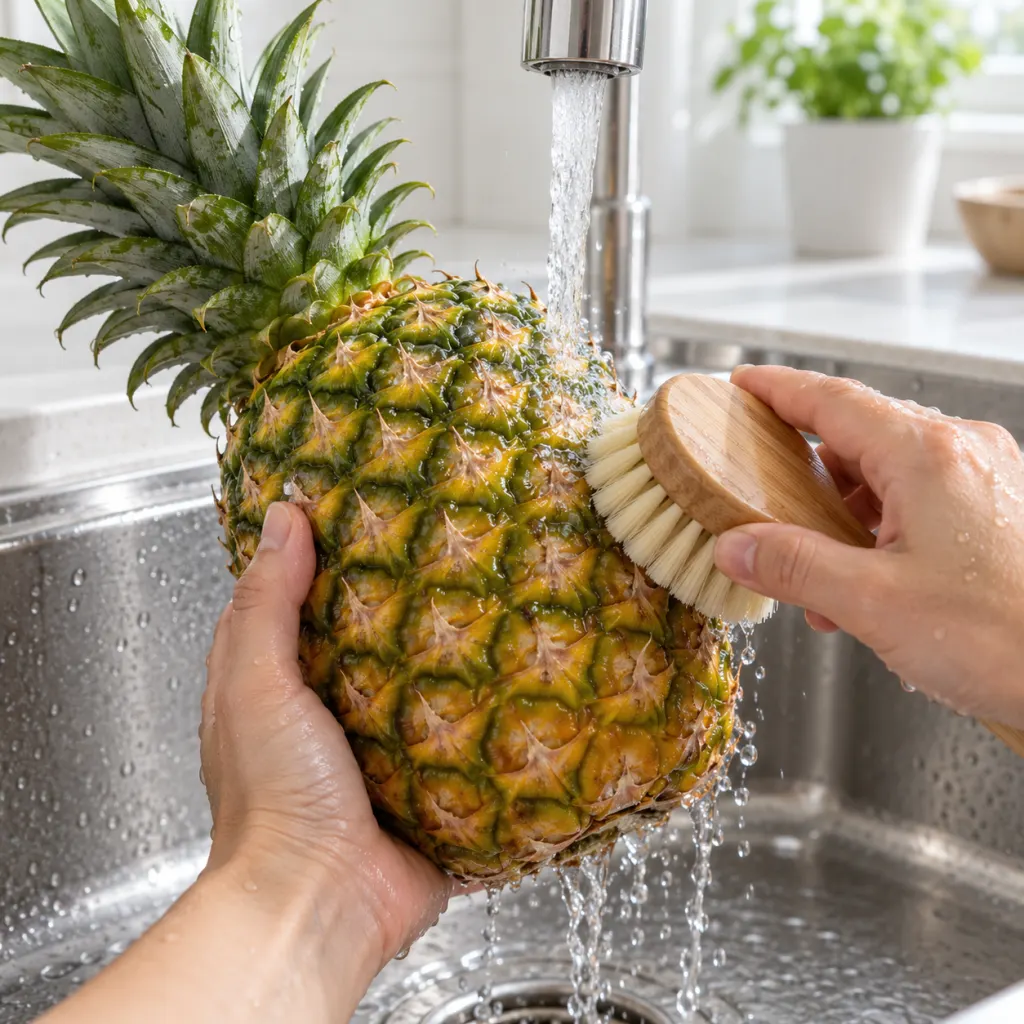
Hold the pineapple under cool running water and turn it so you can wash the exterior thoroughly. Use a clean produce brush to scrub the firm rind. University of Minnesota Extension recommends brushing thick-skinned produce, including tropical fruits, even when it will be peeled. It also advises cleaning the brush after use. Choose a brush reserved for produce, and put it somewhere you will remember to clean it rather than returning it immediately to a drawer. University of Minnesota Extension washing guidance.
Let fresh water run over the surface as you work rather than simply dunking the pineapple in a bowl. The National Pesticide Information Center describes washing and rubbing under running water as more effective than dunking for removing surface residues. Think of the brush as an aid to washing the rind, not as a reason to scrub aggressively or damage the fruit. NPIC on running water and rubbing.
Skip soap and elaborate soaking mixtures
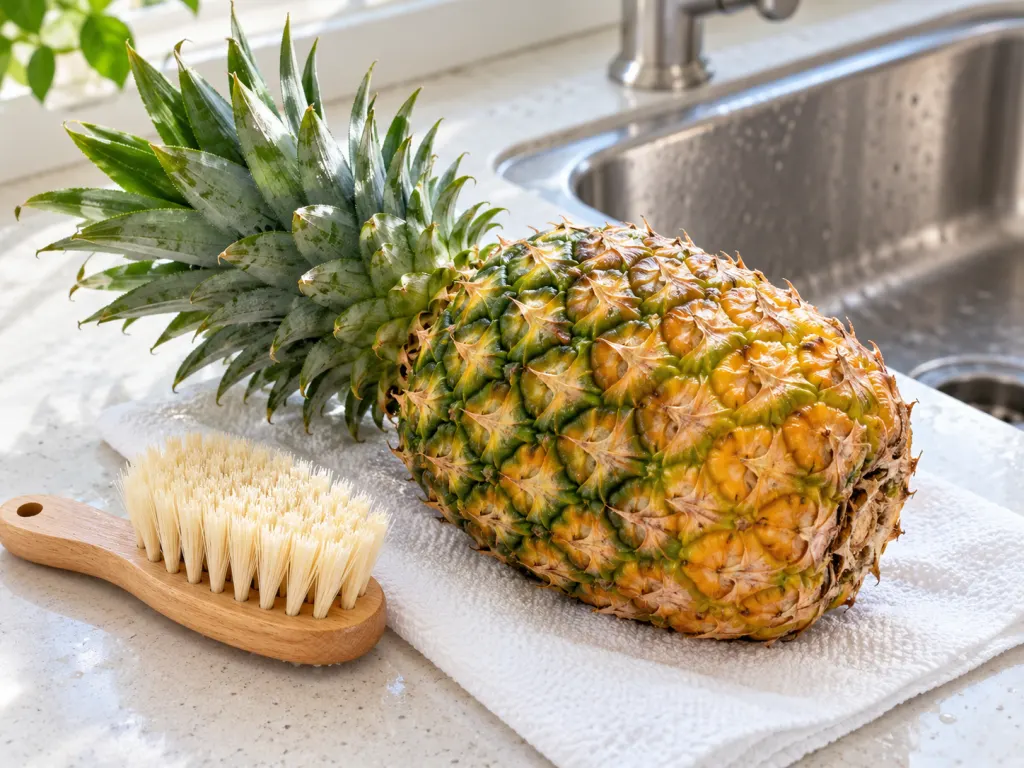
Dish soap, detergent and commercial produce washes are not recommended by the FDA for washing fruit. Keep the distinction clear: soap is for your hands and appropriate kitchen equipment; running water is for the pineapple. After rinsing, dry the rind with a clean cloth or paper towel. Washing can reduce bacteria, but it does not eliminate them, so a washed pineapple still needs clean handling. FDA recommendations on washing and drying.
A long soak is not part of the recommended routine. University of Minnesota Extension advises against soaking produce and notes that vinegar or baking soda can affect its flavor. For an ordinary pineapple preparation session, there is no need to invent a mixture, calculate a concentration or wait for a soaking timer. Wash when you are ready to prepare the fruit, then move on to drying and cutting. University of Minnesota Extension on soaking and washing time.
Set up the workspace before reaching for the knife
The FDA organizes home food safety around cleaning, separating, cooking and chilling. For pineapple preparation, the following equipment and handling checks are especially useful. They support the rinse rather than replacing it. FDA Food Safety at Home.
- Wash your hands with soap and warm water for at least 20 seconds before and after handling food.
- Start with a cutting board, knife, dishes and counter cleaned with hot soapy water.
- Keep raw meat, poultry, seafood and eggs away from the fruit and its preparation area.
- Have a clean container ready before you begin, so the finished pieces have somewhere to go.
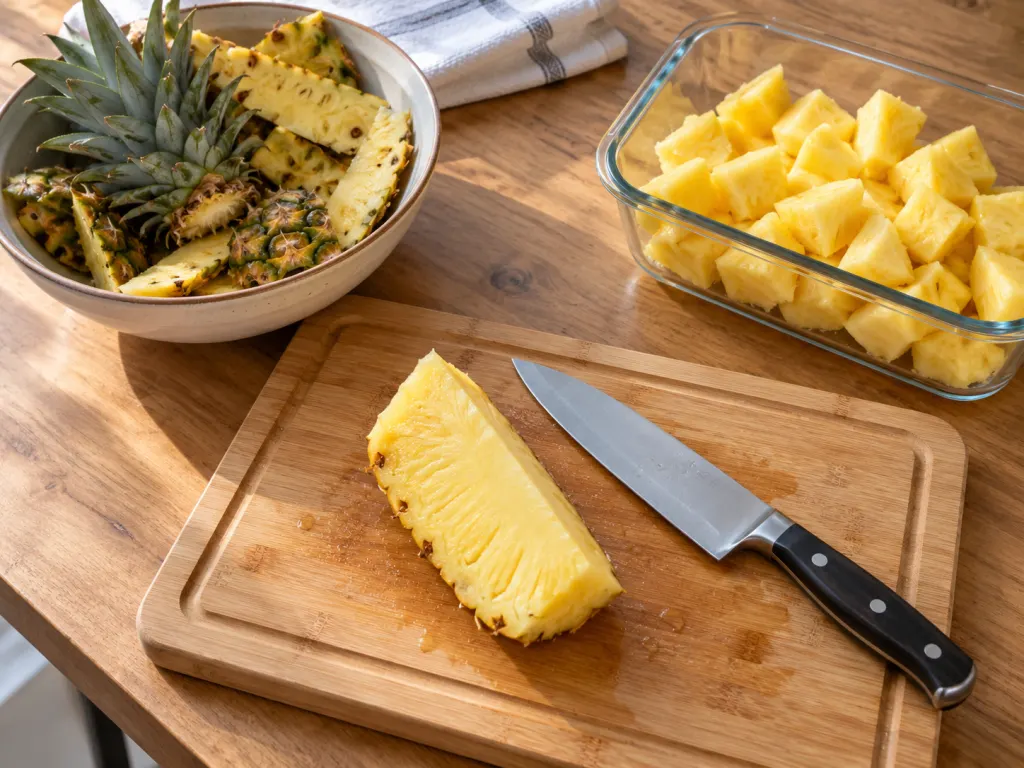
Health Canada recommends a separate cutting board for produce and placing peeled or cut fruit on a clean plate or in a clean container. Arrange your workspace around that distinction: one place for the untrimmed pineapple and discarded rind, another for the edible pieces. You do not need an elaborate kitchen layout. A cleared counter, a waste bowl and a prepared container can make the intended separation easier to maintain. Health Canada on preparation surfaces and containers.
Keep the trimming stage separate from the finished fruit
Once the pineapple is washed and dried, proceed with your preferred cutting method. Mississippi State University Extension describes removing the crown, trimming the top and bottom to create a flat surface, then quartering, coring, peeling and cutting the flesh into chunks. Its pineapple guidance explicitly includes washing before cutting. The exact shape you choose can depend on the meal: chunks for a bowl, longer pieces for skewers or slices for another preparation. Mississippi State University Extension pineapple guidance.
Make cleanup a deliberate transition between trimming and arranging the finished fruit. Remove the rind scraps, wash equipment as needed and bring out the clean serving dish. The FDA recommends washing cutting boards, knives and other food-contact equipment with hot soapy water after working with each food item. If another ingredient needs preparation next, pause to clean rather than letting one crowded board become the workspace for everything. FDA guidance on cleaning equipment between foods.
A pesticide ranking does not change the washing routine
If you encountered pineapple on a shopping list labeled “Clean Fifteen,” keep the practical question separate: what should you do with this fruit before cutting it? Do not treat a list label as a guarantee that an individual pineapple is pesticide-free or sterile. EPA guidance recommends washing and scrubbing fresh produce under running water and states that washing cannot remove every pesticide residue. That supports a straightforward washing habit without making promises about the particular pineapple on your counter. EPA guidance on washing and pesticide residues.
There is also no home washing method that removes all pesticide residues, according to the National Pesticide Information Center. The useful takeaway is modest: water and rubbing help remove material from the surface, and peeling is another preparation step. Neither gives you a measurement of what remains on a specific piece of fruit. Keep washing as a routine handling practice rather than treating it as a test of purity. NPIC explains the limits of washing.
Choose portions around the meal you are planning
Before cutting, decide what the pineapple is for. If tonight's plan is grilled pineapple with brown sugar, set aside the pieces needed for that recipe and plan storage for the remainder. If you are preparing fruit for pineapple chicken wings glaze, check the ingredient list before deciding how finely to cut it. These are planning choices, not prescribed serving sizes. A useful division might be one container for the current meal, one for tomorrow and a separate portion intended for freezing. Set the containers out first so those decisions do not get postponed until every surface is covered with fruit.
Refrigerate cut pineapple promptly
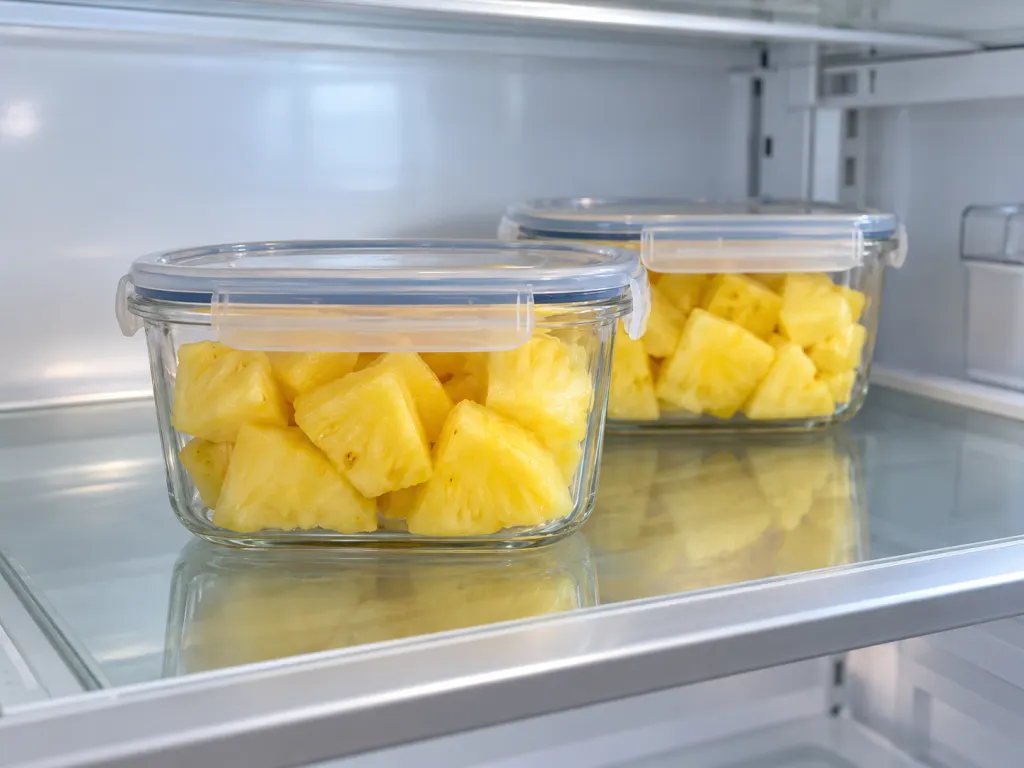
Once produce has been peeled, cut, chopped or sliced, the Academy of Nutrition and Dietetics recommends refrigerating it within two hours. It also advises discarding cut produce left at room temperature longer than that. For pineapple, put away the portion you are saving instead of leaving the whole batch out while you finish dinner or clear the kitchen. The two-hour boundary is a limit, not a suggested waiting period. Academy guidance on cut produce.
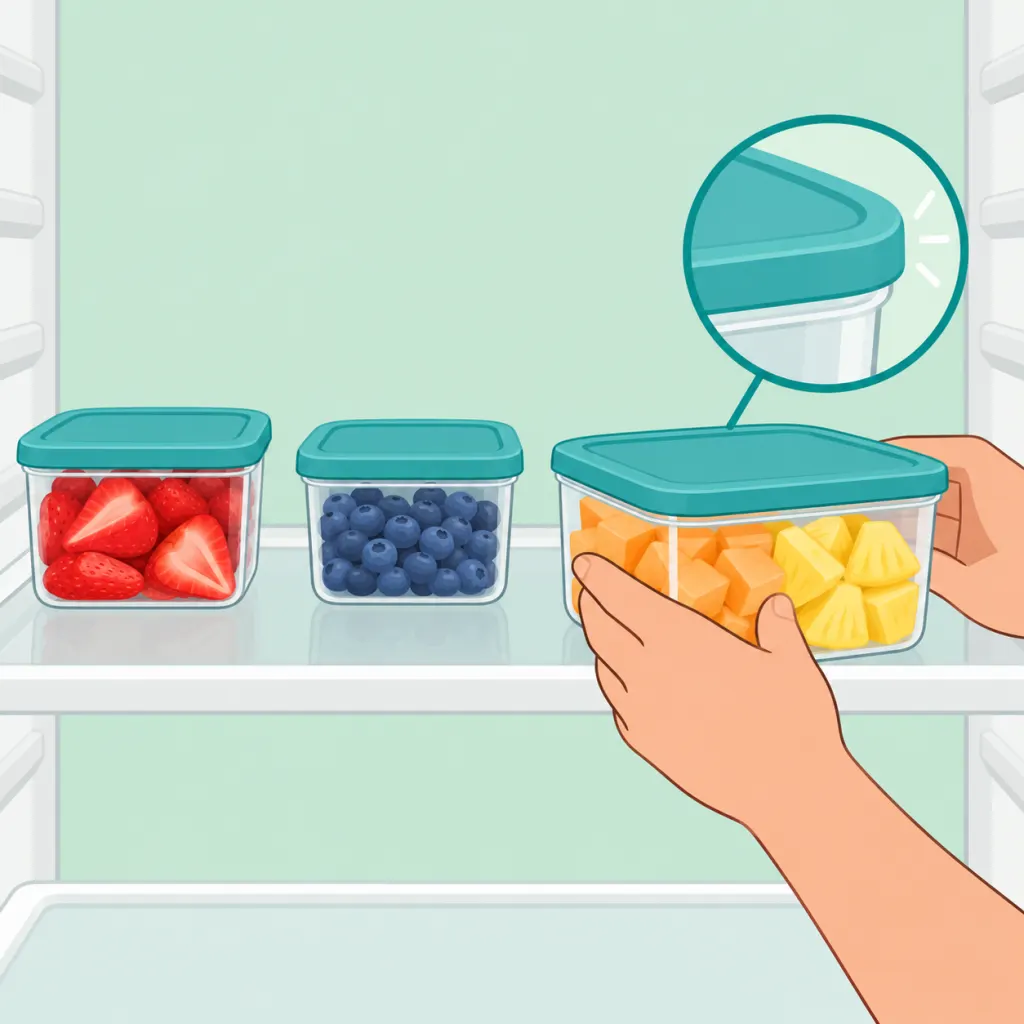
Keep the refrigerator at 40°F or below and check it with a refrigerator thermometer. The FDA recommends that temperature for refrigerated produce. Use a clean covered container for your cut pineapple, and make its place in the refrigerator part of your preparation plan. A container waiting beside the board is more useful than one you still need to find after cutting. FDA refrigeration guidance.
Hot conditions shorten the time available. The FDA's general chilling guidance uses a one-hour limit when the outdoor temperature is 90°F or hotter. For an outdoor meal, a practical approach is to keep the main supply chilled and bring out a smaller serving bowl. Note when it comes out rather than relying on memory once guests arrive. FDA chilling limits for hot weather.
Freeze extra pineapple while it is still in good condition
Freezing is an option when your plans call for less pineapple than you have prepared. Mississippi State University Extension recommends spreading pineapple chunks on a baking sheet, freezing them and then transferring them to a freezer bag. For household organization, divide the frozen pieces into amounts that match how you expect to use them. One larger bag may suit frequent cooking, while several smaller packages may fit separate planned meals. Mississippi State University Extension freezing instructions.
Freezing preserves fruit; it does not replace washing or careful preparation. University of Minnesota Extension explains that freezing at 0°F or below stops bacterial growth but does not kill bacteria already present. It recommends safe handling before freezing and leaving space around packages so cold air can circulate while they freeze. Prepare the fruit properly first, then package it for storage. Do not move a questionable batch into the freezer as a way to avoid deciding whether it should be discarded. University of Minnesota Extension on freezing fruit safely.
Use inspection and handling history together
Inspect produce at purchase and again before preparation. The Academy of Nutrition and Dietetics recommends checking for mold and damaged areas; minor bruises may sometimes be cut away. Inspection is one part of the decision, while time outside refrigeration is another. A forgotten bowl of cut pineapple still needs to be assessed against the handling guidance, even if the pieces remain attractive. Buying only what you expect to use also reduces the chance that produce will spoil before you get to it. Academy advice on inspection, shopping and storage.
For your next pineapple, try making three decisions before starting: where the rind scraps will go, which dish will receive the prepared fruit, and how you will divide the leftovers. Those questions turn a general instruction into an ordinary kitchen routine. They also leave room to adapt: a pineapple prepared for a family meal may need a different container arrangement from one divided between several lunches. The goal is a clear plan you can follow during preparation, serving and cleanup.
Wrap-Up
Make washing the rind the beginning of pineapple preparation. Then give the edible pieces a clean destination and a storage plan. A prepared container, a place for scraps and a decision about how much to serve make the routine easier to repeat.
Frequently Asked Questions
- → Do I need to wash pineapple again if I already rinsed it before storing it?
Make washing part of preparation immediately before cutting. University of Minnesota Extension recommends waiting to wash most produce until you are ready to prepare or eat it, unless it is visibly dirty. Extension washing guidance.
- → Do packaged pineapple chunks need the same rind-washing routine?
No rind is present to wash. Follow the package instructions; produce labeled prewashed or ready-to-eat can be used without further washing, according to the FDA. Keep the fruit refrigerated. FDA guidance on prewashed produce.
- → Can I prepare pineapple ahead for a gathering?
Yes. Plan clean containers and refrigerator space before preparing it, then keep the cut fruit chilled until serving. The Academy recommends refrigerating peeled or cut produce within two hours. Academy storage guidance.
- → Should I thaw frozen pineapple on the counter?
Thaw it in the refrigerator. University of Minnesota Extension recommends refrigerator thawing to keep fruit cold. For easier planning, freeze separate packages in the quantities you expect to use. Extension freezing and thawing guidance.
References
This content was developed and refined using reliable sources.
- https://www.fda.gov/food/buy-store-serve-safe-food/selecting-and-serving-produce-safely
- https://www.eatright.org/food/home-food-safety/safe-food-storage/keeping-your-produce-safe
- https://www.canada.ca/en/health-canada/services/general-food-safety-tips/produce-safety.html
- https://extension.umn.edu/food/preparing/cooking-at-home/food-preservation/freezing/freezing-fruit
- https://www.epa.gov/safepestcontrol/pesticides-and-food-healthy-sensible-food-practices
- https://extension.umn.edu/food/preparing/cooking-at-home/washing-fresh-fruits-and-vegetables
- https://ace.orst.edu/info/npic/faq/fruitwash.html
- https://www.fda.gov/media/120100/download
- https://extension.msstate.edu/publications/happyhealthy-fact-sheet-pineapple