 Save
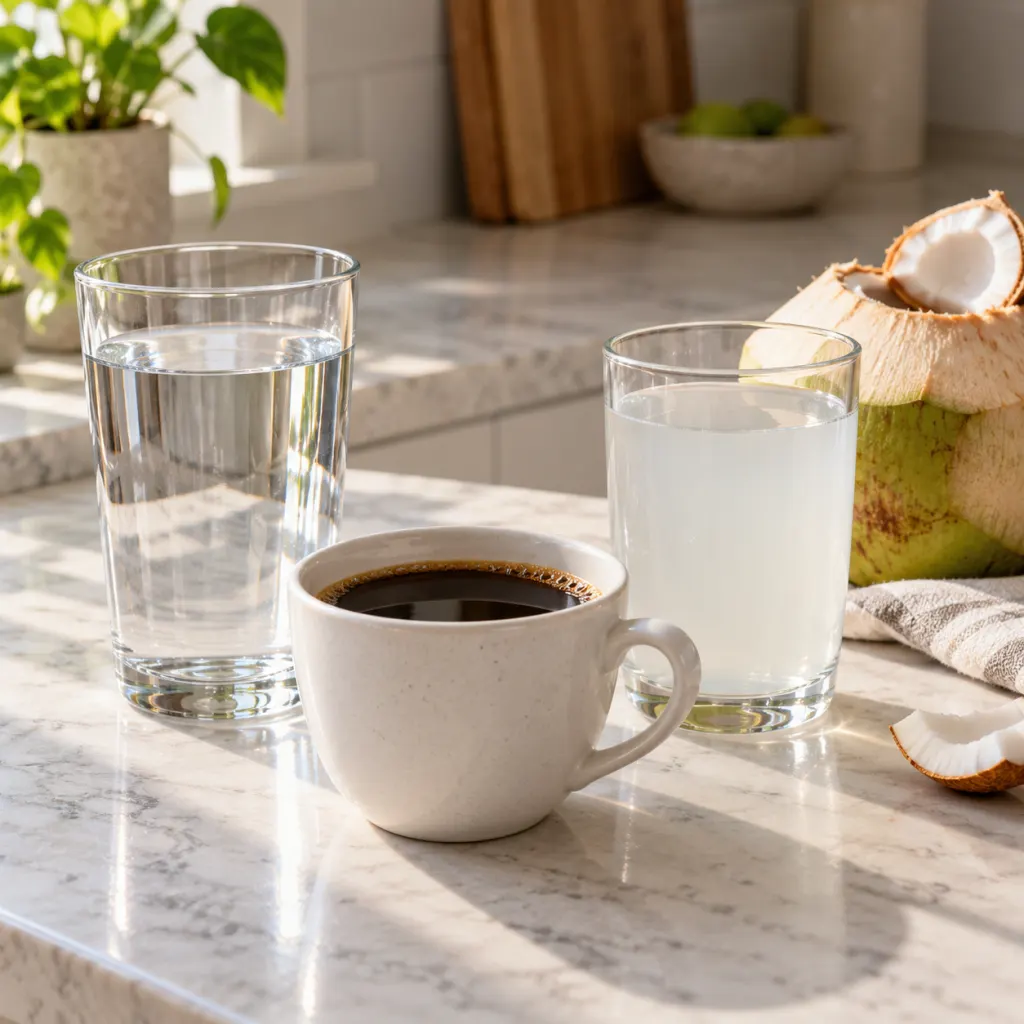
Plain water is a practical starting point for morning hydration, coffee counts toward fluid intake, and coconut water is optional. You do not need a universal sequence of all three. The NHS includes coffee among drinks that contribute fluid, while Mayo Clinic finds no special hydration advantage for coconut water over plain water.
The useful comparison is about what each drink brings to your morning: accessible fluid, caffeine, flavor, sugars, minerals and cost. An ordinary breakfast at home also deserves a different conversation from prolonged exercise or a clinician-directed fluid plan.
Compare the drinks by purpose
Start with the question you actually want answered. Are you looking for something to drink with breakfast, choosing a coffee you enjoy, or deciding whether a carton of coconut water deserves a place on your shopping list? Those are different decisions. A drink can contribute fluid while also bringing ingredients or practical considerations you would rather limit.
Separate three questions when comparing them: how much you will drink, what else the drink contains, and whether it fits your circumstances. This keeps a pleasant morning preference from turning into an elaborate rule. You can enjoy coffee without treating every cup as a hydration calculation, and you can buy coconut water for its taste without assigning it a special role.
Plain water makes an uncomplicated everyday choice
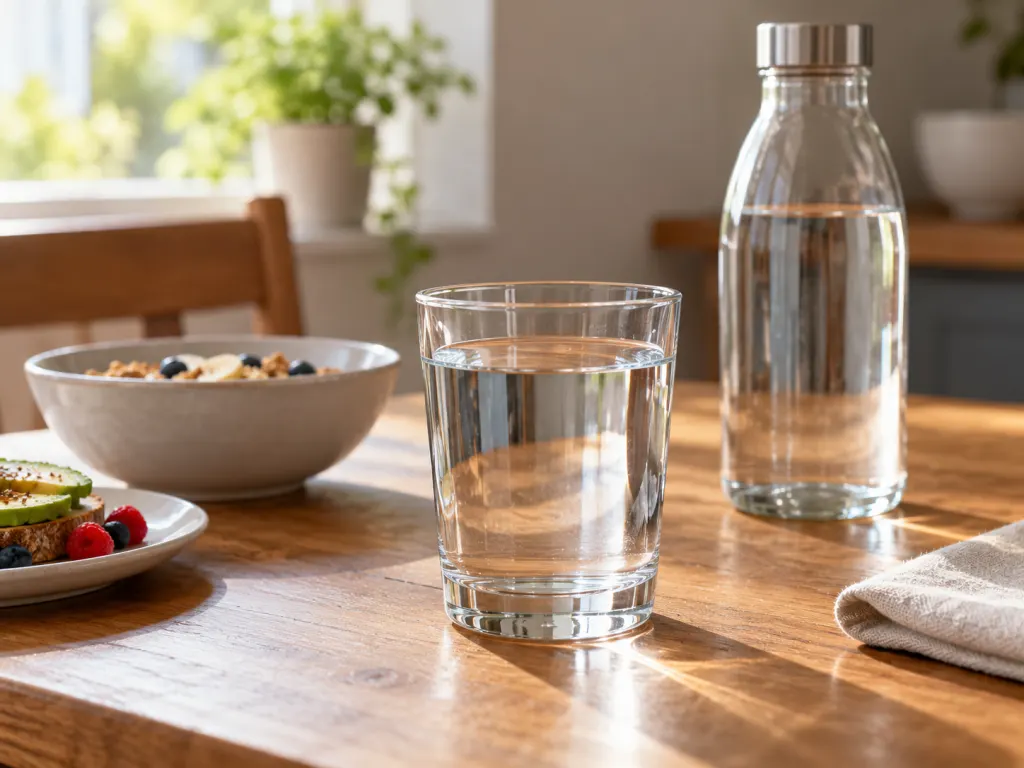
Water has no calories, and the CDC recommends practical habits such as carrying a reusable bottle and serving water with meals. It also notes that water needs vary with activity and other individual factors. Food, particularly water-rich fruits and vegetables, contributes to total water intake too.
For a morning routine, convenience can guide the setup. Put a glass beside your breakfast place, fill a bottle before leaving home, or keep a jug where you normally prepare drinks. Choose a temperature you enjoy. These are ways to make water available, rather than a prescription to finish a particular amount before doing anything else.
If cost matters, compare your local drinking-water options with the price of packaged beverages. A special morning drink creates a recurring purchase; a familiar glass may already meet your preference. Our guide to morning lemon water offers another perspective on keeping flavored-water routines realistic.
Coffee contributes fluid, even though it contains caffeine
The NHS explicitly counts tea and coffee toward daily fluid intake. Its guidance emphasizes drinking regularly and recognizing differences in caffeine sensitivity. For everyday planning, a morning coffee belongs among the beverages you have consumed.
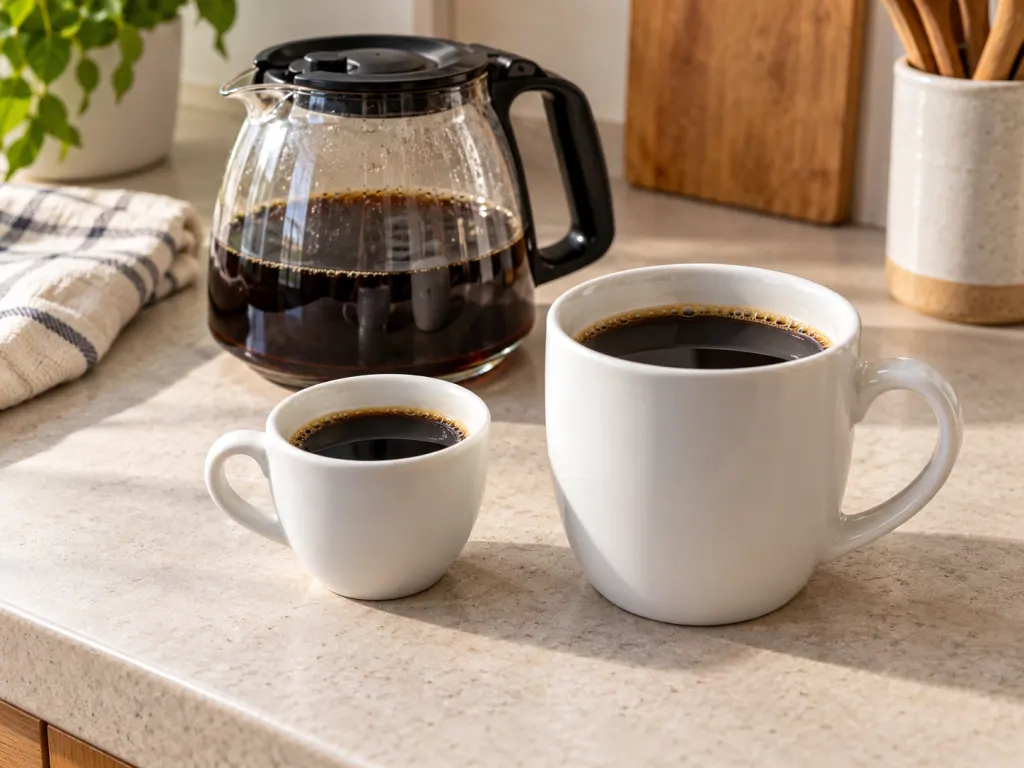
That does not make every coffee order interchangeable. Think about the actual drink in front of you: its size, preparation and additions. A small cup at home and a large purchased drink may occupy the same place in your routine while being quite different products. If you track drinks, record what you actually have rather than relying on the word “cup.”
There is no need to turn breakfast into a compensating ritual of coffee followed by a prescribed glass. Having water alongside coffee can simply be convenient. For a broader discussion of the beverage, see what morning coffee really does.
Caffeine sensitivity is a separate consideration
The FDA explains that people differ in caffeine sensitivity and how quickly they clear it. Caffeine content also varies between products. Too much can bring jitters, anxiety or sleep disruption, so another person's comfortable coffee habit is a poor personal benchmark.
When reconsidering your coffee, gather specifics: the drink size, available caffeine information, other caffeinated products you consume, and what you notice afterward. A short record can make a conversation with a qualified health professional more concrete. It should describe your experience without assuming that coffee explains every change in how you feel.
Decaffeinated coffee contains less caffeine, but it still contains some, according to the same FDA guidance. That distinction matters if you are particularly sensitive. Choosing decaf is a product choice worth understanding, rather than a guarantee about how you will respond.
Think about bedtime as well as breakfast
The European Food Safety Authority notes that caffeine can affect sleep duration and patterns in some adults, particularly close to bedtime. It also explains that coffee's caffeine concentration depends on factors including the beans, preparation and manufacturing process.
Consider your whole schedule when reviewing a morning habit. A drink called “morning coffee” may sit close to bedtime for someone finishing a night shift. A breakfast coffee followed by repeated refills also deserves a different review from one isolated drink.
A useful record pairs the time of each caffeinated drink with your intended sleep period. This provides clearer information than a fixed clock rule copied from someone with different working hours. The sources here do not establish a single waiting period after waking that every reader must follow. Choose timing around your circumstances, and discuss persistent sleep concerns with a qualified health professional.
Coconut water brings flavor and minerals, but is optional
Coconut water is the clear liquid inside coconuts. It is different from coconut milk. Mayo Clinic describes its electrolytes, including potassium and sodium, and notes that amounts vary by brand. Electrolytes are charged minerals involved in fluid balance.
Those ingredients can explain the product's appeal without making it essential at breakfast. Treat coconut water as a beverage you might enjoy, with a composition worth checking. Its name alone does not describe the contents of every carton.
At the shop, decide whether you want the flavor enough to justify the price and packaging. Buy an amount that suits how you intend to use it rather than assuming a large bottle is automatically a better choice. For more detail on the beverage itself, read our coconut water guide.
Read the label before comparing cartons
Use the FDA's Nutrition Facts guidance to check serving size, servings per container, total sugars, added sugars, sodium and potassium. Total sugars includes naturally occurring and added sugars; added sugars is part of that total. A zero on the added-sugars line therefore does not mean zero total sugar.
- Check the basis: Is the information per serving or per container?
- Match the volume: Compare equivalent amounts of two products.
- Read both sugar lines: They answer different questions.
- Check minerals separately: Compare potassium and sodium rather than relying on an electrolyte claim.
For a hypothetical calculation, suppose a bottle contains two servings and lists 8 grams of total sugars per serving. The whole bottle contains 16 grams. These are invented numbers to illustrate arithmetic, not values for a particular brand. Apply the same serving calculation to the other nutrients when planning to drink the entire container.
Potassium and fluid restrictions need individual advice
People with kidney disease may need a different approach from general beverage guidance. The National Institute of Diabetes and Digestive and Kidney Diseases explains that chronic kidney disease can affect potassium handling and that some people need fluid limits. Recommendations depend on the person.
If you have been given a potassium restriction, ask your clinician or renal dietitian how coconut water fits that plan before making it a regular drink. Bring the product label and describe the amount you would actually pour. “One bottle” is less useful information when bottle sizes differ.
Do not interpret this as a blanket restriction for everyone with kidney disease. Equally, general encouragement to drink more does not override an individual fluid plan. Ask which beverages count toward your allowance and how to distribute them through the day. That conversation is more useful than choosing solely from a beverage's front-label description.

Build a routine around the morning you actually have
A workable routine begins with access and preference. For example, someone eating breakfast at home might set out water with the meal and prepare coffee afterward because that suits the kitchen routine. Someone commuting early might take a filled bottle and buy coffee later. Someone who enjoys coconut water might choose it occasionally with breakfast and include it on the shopping list.
These examples describe organization, not competing health protocols. You do not need to reproduce someone else's sequence. Choose one practical change at a time: put the bottle by your bag, use a glass you like, or check your usual carton before buying a replacement.
If your current setup is inconvenient, identify the actual obstacle. Perhaps the bottle is difficult to clean, the office water point is far away, or you routinely leave your drink on the counter. Solving that concrete problem is a clearer task than purchasing a more elaborate assortment of beverages. Keep any personal clinical instructions at the center of the plan.
A hot or active morning changes the context
The CDC notes that more water is needed in hot climates and during greater physical activity. A quiet breakfast and a long outdoor training session therefore should not be treated as identical situations.
Before an active morning, consider where drinks will be available, what you can carry and how long you expect to be out. An electrolyte label alone cannot answer all those planning questions. If you need an individualized exercise hydration strategy, seek suitable professional guidance rather than extending an everyday breakfast comparison into an endurance plan.
Recognize when this is no longer a beverage-choice question
Seek urgent medical advice if dizziness on standing does not go away, you are passing much less urine than usual, or you have unusually marked tiredness in a situation where dehydration is possible. Confusion, difficulty breathing or difficulty waking require emergency help. These boundaries follow NHS dehydration guidance; use the urgent-care or emergency service appropriate to your location.
This comparison is intended for ordinary daily choices. Significant symptoms deserve assessment rather than an experiment with a different morning drink.
Wrap-Up
Choose morning drinks by their purpose, ingredients and fit with your routine. Make water convenient, understand your coffee order, and read coconut water labels before deciding whether to buy it regularly. A practical routine can be simple and flexible; an individual caffeine, potassium or fluid plan deserves advice specific to you.
Frequently Asked Questions
- → Do I have to drink water before my first coffee?
The NHS hydration guidance includes coffee in fluid intake and emphasizes regular drinking rather than a required breakfast sequence. Water first can be a convenient preference. It is not a universal prerequisite for enjoying coffee.
- → Is coconut milk interchangeable with coconut water?
No. Mayo Clinic distinguishes coconut water, the clear liquid inside coconuts, from coconut milk, which includes grated coconut. Check the product name and label rather than assuming that coconut-based drinks have the same composition.
- → What if a coffee shop does not list caffeine content?
Ask whether product information is available and identify the size and preparation you usually order. The FDA notes that caffeine amounts vary and encourages asking businesses about their products. An unavailable figure should remain an uncertainty rather than becoming an invented estimate.
- → Can breakfast food contribute to water intake too?
Yes. The CDC explains that food contributes water, especially water-rich fruits and vegetables. A drink-only tally does not capture the entire picture. That does not mean you need to calculate every bite; it simply helps put beverage comparisons in context.
References
This content was developed and refined using reliable sources.
- https://www.nhs.uk/live-well/eat-well/food-guidelines-and-food-labels/water-drinks-nutrition
- https://www.mayoclinic.org/healthy-lifestyle/nutrition-and-healthy-eating/expert-answers/coconut-water/faq-20207812
- https://www.cdc.gov/healthy-weight-growth/water-healthy-drinks
- https://www.fda.gov/consumers/consumer-updates/spilling-beans-how-much-caffeine-too-much
- https://www.efsa.europa.eu/en/topics/topic/caffeine
- https://www.fda.gov/food/nutrition-facts-label/how-understand-and-use-nutrition-facts-label
- https://www.niddk.nih.gov/health-information/kidney-disease/chronic-kidney-disease-ckd/healthy-eating-adults-chronic-kidney-disease
- https://www.nhs.uk/conditions/dehydration