 Save
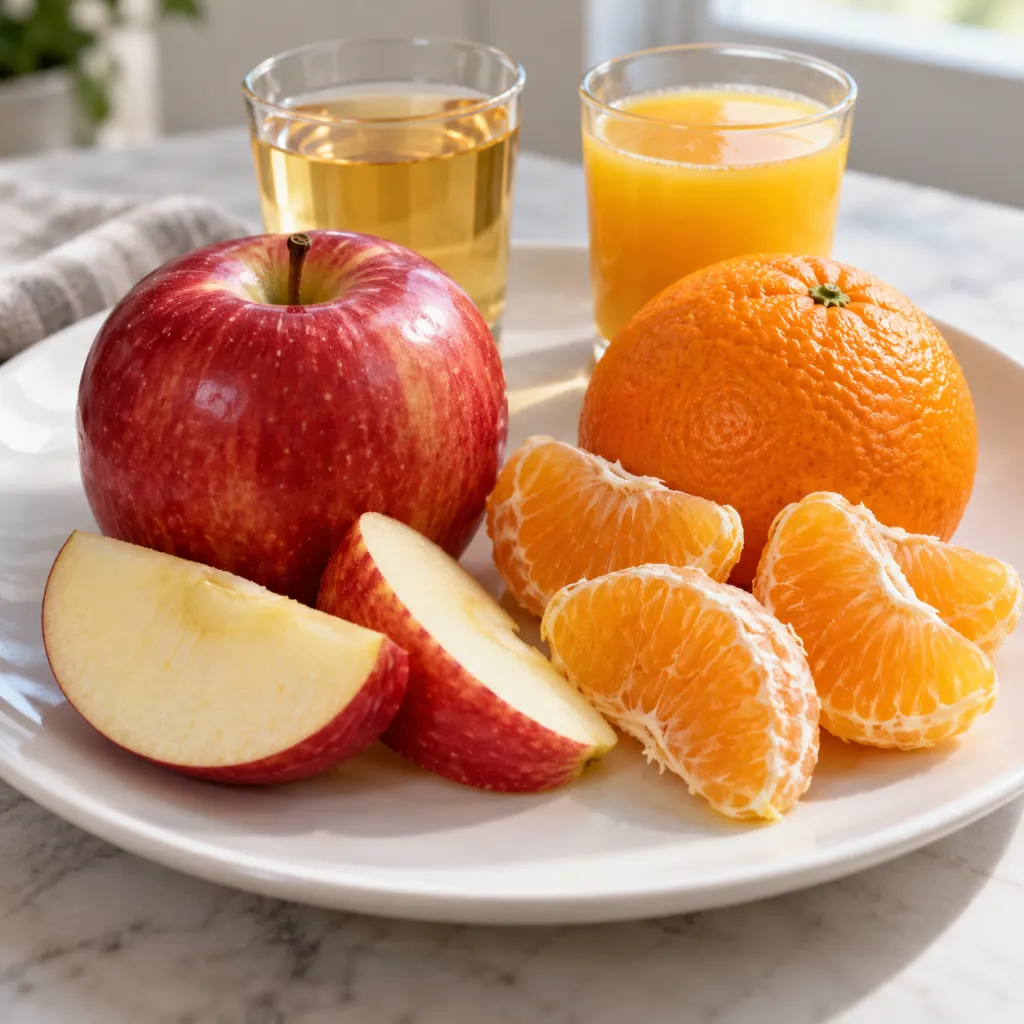
Whole apples and oranges generally provide more fiber than their strained juices because the edible solids remain in the fruit. A smoothie is different: blending fruit does not automatically remove its fiber when the edible pulp stays in the drink. That distinction matters more than whether a machine is powerful or a drink looks fresh. New Mexico State University describes the fiber difference between fruit and juice, while Tufts University explains juicing versus blending.
The useful comparison has three parts: what went into the serving, what was removed, and how much you actually eat or drink. These questions make an ordinary apple, a small glass of orange juice, and a blended drink easier to assess without turning breakfast into a contest.
Fiber is part of the fruit, not a feature of its flavor
Dietary fiber is a carbohydrate found in plant foods. Fruit is one source, alongside vegetables, whole grains, nuts, and seeds. Fiber contributes bulk and can help you feel full; the amount in a food is therefore useful information beyond its sweetness or vitamin content. MedlinePlus also distinguishes soluble and insoluble fiber, both of which occur in foods. You do not need to identify each type before choosing a piece of fruit. MedlinePlus: Dietary Fiber.
For this comparison, follow the edible material. Was it eaten, blended into the drink, or left in a strainer? That practical question helps separate three preparations that may begin with the same fruit but end up in different forms.
An apple shows why keeping the skin can matter
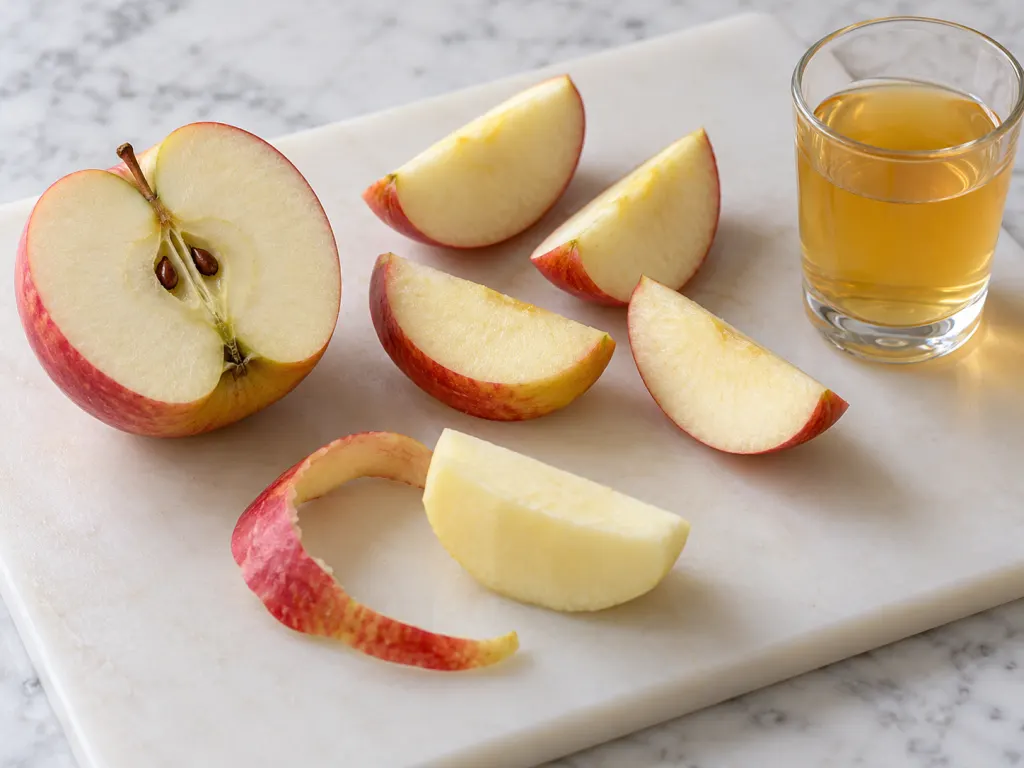
An apple eaten with its skin retains the edible flesh and peel. Harvard's Nutrition Source lists both soluble and insoluble fiber in apples and gives approximately 3 grams of fiber for a medium apple. It also explains that removing the skin removes a substantial share of the fiber, while clear apple juice processing removes most of it. These figures describe a representative apple, rather than an exact amount guaranteed for every size or variety. Harvard Nutrition Source: Apples.
At the table, this suggests a simple option: offer washed apple wedges with the skin when that texture suits the person eating them. Peeling remains a preparation choice, but it changes what is retained. Likewise, do not assume that a glass of clear apple juice reproduces the composition of the apple beside it. The ingredients may share a name while the edible material differs.
An orange makes the pulp difference visible
With an orange, compare the edible segments with the liquid squeezed from them. Tufts gives an illustrative comparison of about 2.7 grams of fiber in a medium orange and about 0.2 grams in four fluid ounces of orange juice. Those are different serving sizes, so the example is not an equal-weight comparison. Its useful message is narrower: the whole orange retains substantially more fiber than that small juice serving. Tufts University: whole fruit, juice and blending.
When evaluating a particular juice, use its own fiber declaration rather than borrowing a number from another product. A pulpy appearance is a reason to inspect the label, not a measurement. Also keep the comparison honest: one orange and one tall glass are convenient household units, but they are not automatically equivalent portions.
A smoothie keeps what you put into it
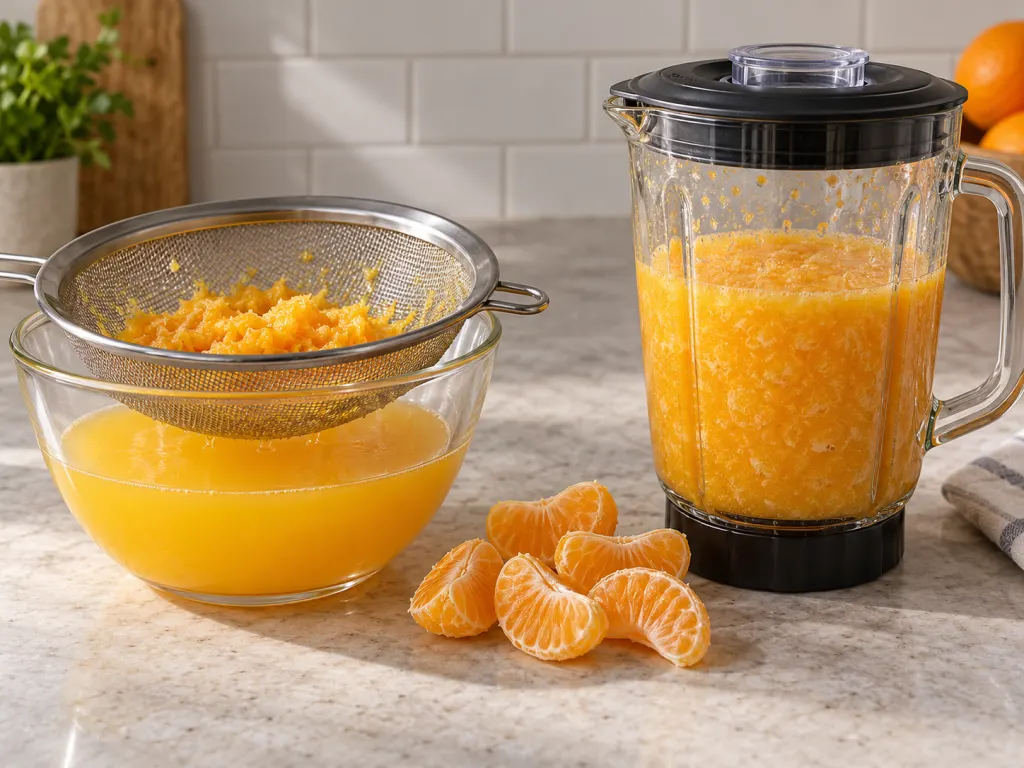
A blended drink can include the juice and pulp together. Utah State University Extension describes smoothies as a possible source of fiber and other nutrients, while emphasizing that their nutritional value depends on their ingredients. That makes the contents of the blender more informative than the word smoothie alone. Utah State University Extension: Smoothies.
For a practical comparison, write down the fruit before blending and the number of servings afterward. If a jug is divided between two people, assess each person's share rather than treating the entire jug as one portion. Also distinguish a drink made from edible fruit from one assembled mainly from bottled juice. Ask whether the mixture was strained after blending. These questions describe the preparation clearly without assuming that every smoothie has the same composition or that the finished glass is equivalent to one piece of fruit.
The UK's 150 ml guidance applies to juice and smoothies together
Under the UK's NHS 5 A Day guidance, the combined daily amount of fruit juice, vegetable juice, and smoothies should be limited to 150 ml. Together, these drinks count as no more than one 5 A Day portion. The NHS also advises having them at mealtimes. This is UK public-health guidance, not a universal serving requirement for every country. NHS: 5 A Day portion sizes.
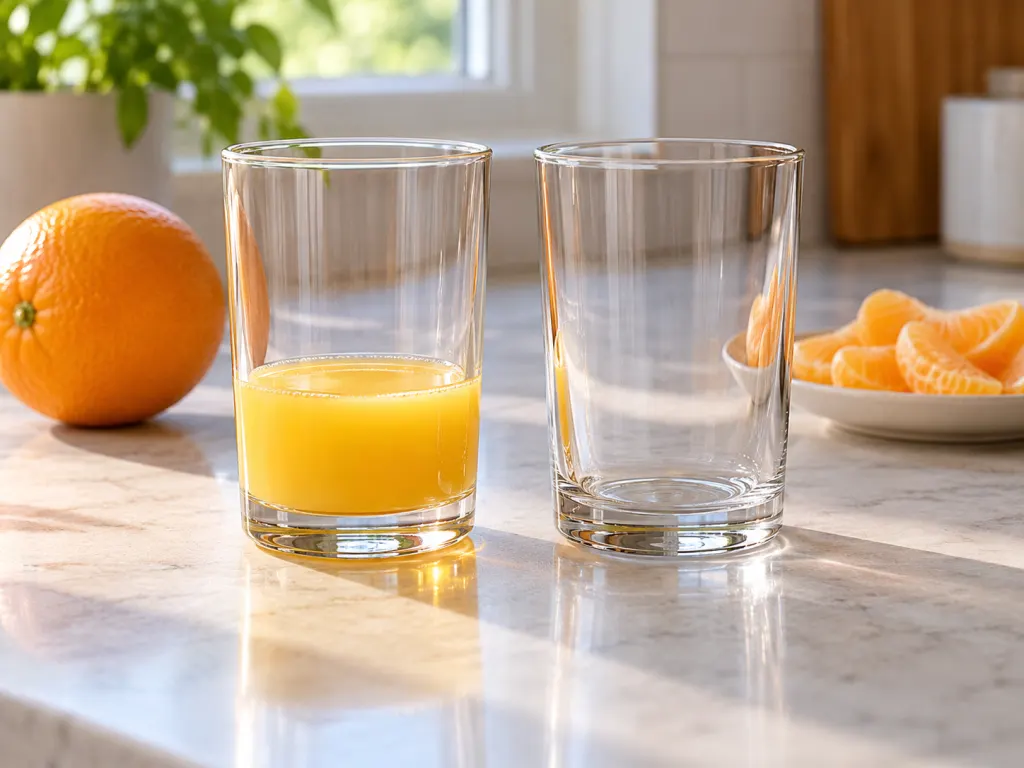
If you use that guidance, measure 150 ml into your usual glass once to see what it looks like. A glass's capacity and the amount poured into it are separate things. Remember the combined total: having juice at breakfast and a smoothie later does not create two separate allowances. The guidance concerns the drinks across the day, rather than each individual product or occasion.
Read the label using the amount you actually pour
On a US Nutrition Facts label, begin with serving size and servings per container. The FDA explains that serving size reflects an amount people typically consume; it is not a recommendation. Nutrient figures apply to the stated serving. Total Sugars includes naturally occurring and added sugars, while Added Sugars identifies the added portion. Consequently, zero added sugars does not mean zero total sugars. FDA: Understanding the Nutrition Facts label.
- Check the volume: compare the listed serving with your actual pour.
- Find dietary fiber: use the stated amount rather than the picture on the package.
- Read both sugar lines: total and added sugars answer different questions.
- Compare equal amounts: avoid judging two products using different serving sizes.
For example, a hypothetical bottle containing two servings supplies twice the listed nutrients if you drink the whole bottle. That is straightforward label arithmetic, not evidence that the bottle is intended as your personal portion.
Choose a form that fits the meal and your routine
Whole fruit is a useful regular choice when fiber and a satisfying snack are the priorities. The CDC recommends whole fruit over juice and notes that many juices contain little or no fiber. It also recognizes frozen and canned fruit as useful alternatives to fresh fruit, advising choices without added sugar or syrup. CDC: Tips for including fruit and vegetables.
Make the practical decision specific. For a lunchbox, you might choose an apple or a container of orange segments. At breakfast, you might serve fruit alongside the rest of the meal rather than automatically pouring a large drink. If fresh fruit frequently goes unused, consider whether frozen fruit or an appropriate canned option would fit your shopping routine better. Convenience is a reasonable part of the decision.
For other fruit-focused reading, see our guides to bananas and kiwi nutrition and portions. Use them to broaden your choices rather than searching for a single fruit that must appear every day.
Handle the fruit carefully before cutting or blending
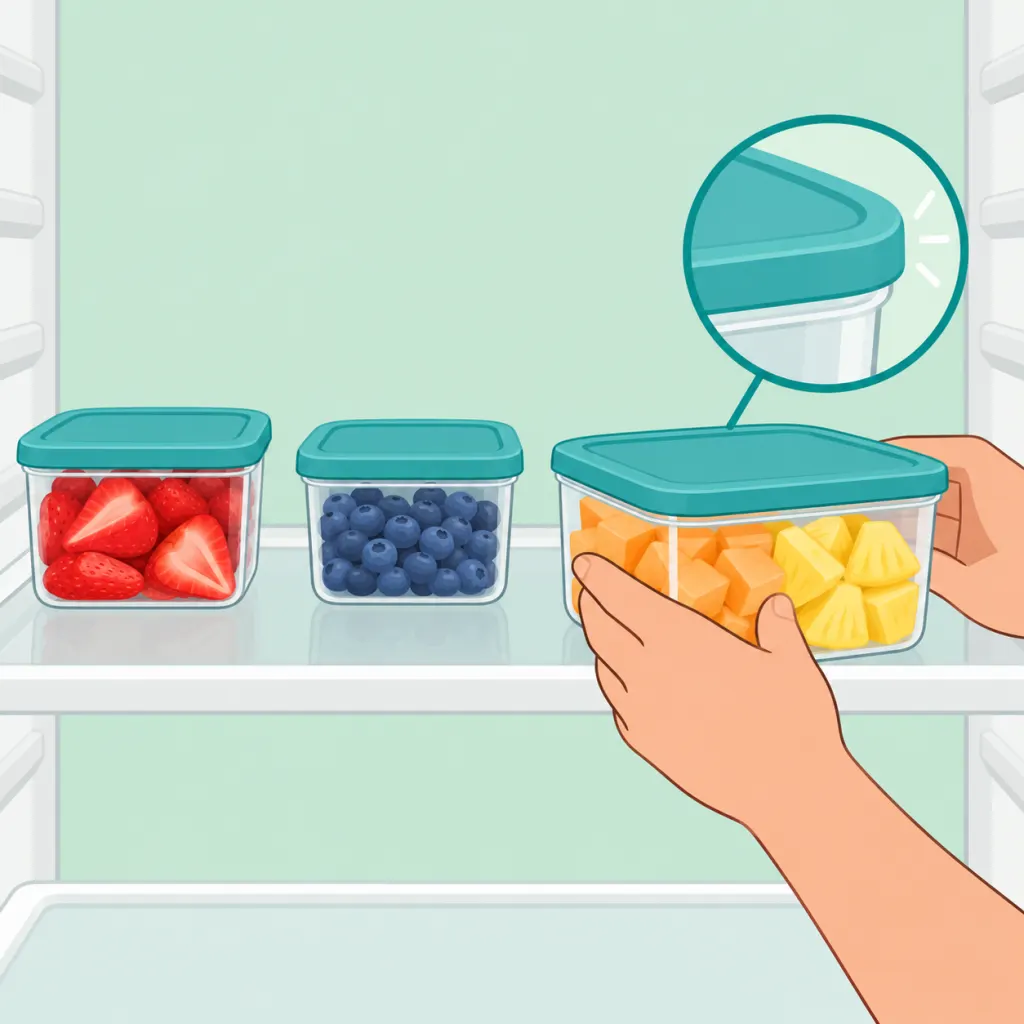
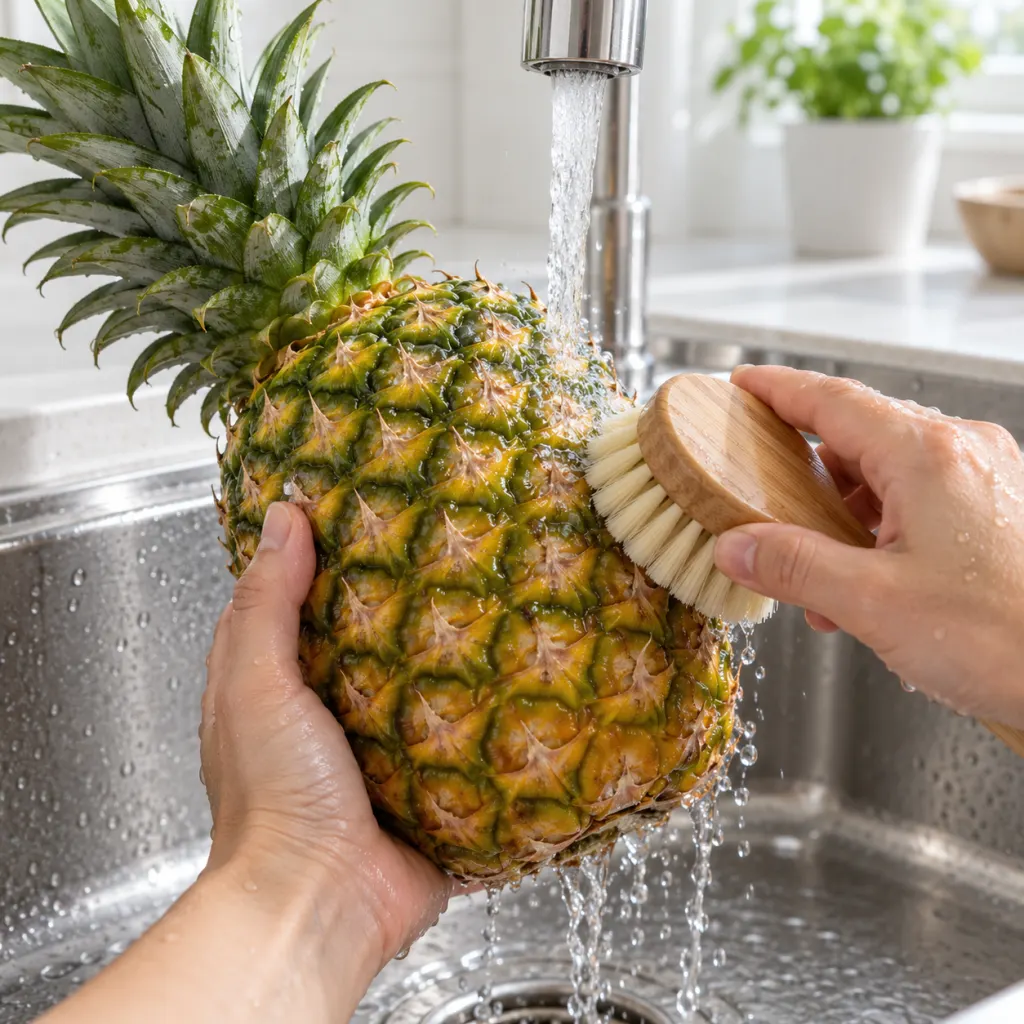
The FDA advises washing hands for at least 20 seconds before and after preparation and rinsing produce thoroughly under running water. Wash fruit even when you plan to remove its skin, since cutting or peeling can transfer material from the surface. Use clean utensils, keep ready-to-eat fruit separate from raw meat and its equipment, and refrigerate purchased pre-cut produce. The FDA recommends a refrigerator temperature of 40°F, approximately 4°C, or below for perishable produce. FDA: Selecting and Serving Produce Safely.
These habits belong to the comparison because preparation happens before either eating or drinking. Set out a clean board and container first, then handle the fruit. A tidy photograph, an expensive blender, or an attractive serving glass cannot tell you whether those preparation steps occurred.
Freshly squeezed and treated for safety are different descriptions
For purchased juice, check whether it has been pasteurized or otherwise treated for safety. The FDA explains that bacteria from raw produce can enter juice and that untreated juice can be contaminated. A refrigerated display does not by itself establish that a product has been treated. If the information is unclear, ask the seller. FDA: What You Need to Know About Juice Safety.
Keep this question separate from fiber content. One asks how the product was handled; the other asks what edible material remains. Check both rather than treating the word fresh as a complete description. At a juice counter, a useful question is simply, “Has this juice been treated for safety?”
Keep the comparison focused on composition
Juice can supply nutrients even though its fiber content is low. New Mexico State University's fruit-group guide makes both points: fruit and juice can contribute to food intake, while whole or cut fruit supplies more fiber. The sensible distinction is therefore about composition and portions, rather than declaring every sip nutritionally empty. New Mexico State University: Focus on Fruits.
For an everyday decision, identify your purpose first. Are you choosing fruit to eat, a drink to enjoy with a meal, or a blended preparation? Then check the amount and what remains in it. Avoid extending a comparison about fiber into promises about personal health outcomes. A serving description can explain what is on the plate; it cannot determine everything that will happen after someone eats it.
Wrap-Up
For a practical default, keep whole fruit in your regular rotation and assess drinks by their ingredients, preparation, and serving size. Whole fruit generally retains more fiber than strained juice, as New Mexico State University explains. When comparing options, ask three concrete questions: what fruit was used, what was discarded, and how much is in this serving? Those answers are more useful than an appealing product name.
Frequently Asked Questions
- → Does blending an apple automatically remove its fiber?
No. Blending edible apple flesh and skin into a drink retains their fiber when the mixture is not strained. Removing solids afterward changes what remains. Tufts explains the distinction.
- → Does a smoothie made with several fruits count as several UK 5 A Day portions?
No. NHS guidance counts juice and smoothies together as a maximum of one portion and recommends a combined limit of 150 ml daily. Blending several fruits does not change that counting rule. NHS portion guidance.
- → Can frozen or canned fruit be an everyday alternative?
Yes. The CDC identifies frozen and canned fruit as useful options alongside fresh fruit. Look for versions without added sugar or syrup, and choose a format you will actually use. There is no need to restrict your shopping list to fresh produce alone. CDC fruit guidance.
- → Should I replace every fruit serving with a smoothie?
There is no need to make that an all-or-nothing choice. Consider the ingredients, serving size, and how the drink fits your meals. Utah State University emphasizes that smoothie composition varies with what goes into the blender. Keep that information visible when deciding how often to have one. Utah State University Extension.
- → Does washing fruit make homemade juice equivalent to treated juice?
No. Washing produce can reduce bacteria but does not eliminate them, according to the FDA. It is a preparation step, rather than evidence that homemade juice has undergone a validated safety treatment. FDA produce guidance.
References
This content was developed and refined using reliable sources.
- https://medlineplus.gov/dietaryfiber.html
- https://www.nhs.uk/live-well/eat-well/5-a-day/portion-sizes
- https://www.fda.gov/food/buy-store-serve-safe-food/selecting-and-serving-produce-safely
- https://pubs.nmsu.edu/_e/E141
- https://nutritionsource.hsph.harvard.edu/food-features/apples
- https://www.nutritionletter.tufts.edu/general-nutrition/q-i-have-a-new-blender-that-will-take-a-whole-fruit-and-turn-it-into-juice-is-there-a-loss-of-nutrients-when-i-do-this-am-i-destroying-the-fiber
- https://extension.usu.edu/nutrition/research/smoothies-helpful-or-harmful
- https://www.fda.gov/food/nutrition-facts-label/how-understand-and-use-nutrition-facts-label
- https://www.cdc.gov/healthy-weight-growth/healthy-eating/fruits-vegetables.html
- https://www.fda.gov/food/buy-store-serve-safe-food/what-you-need-know-about-juice-safety