 Save
Mango provides provitamin A carotenoids that the body can convert into vitamin A as needed. Vitamin A supports normal vision: that is the useful nutritional connection between mango and eye function. The NIH Office of Dietary Supplements identifies mango among foods providing vitamin A, while Oregon State University explains how conversion is regulated.
For everyday eating, the practical questions are broader: how much fruit is in your bowl, what else a mango product contains, and how you prepare it. This guide separates nutrient function from expectations about personal eyesight and turns the research into useful shopping and serving decisions.
What a cup of mango actually provides
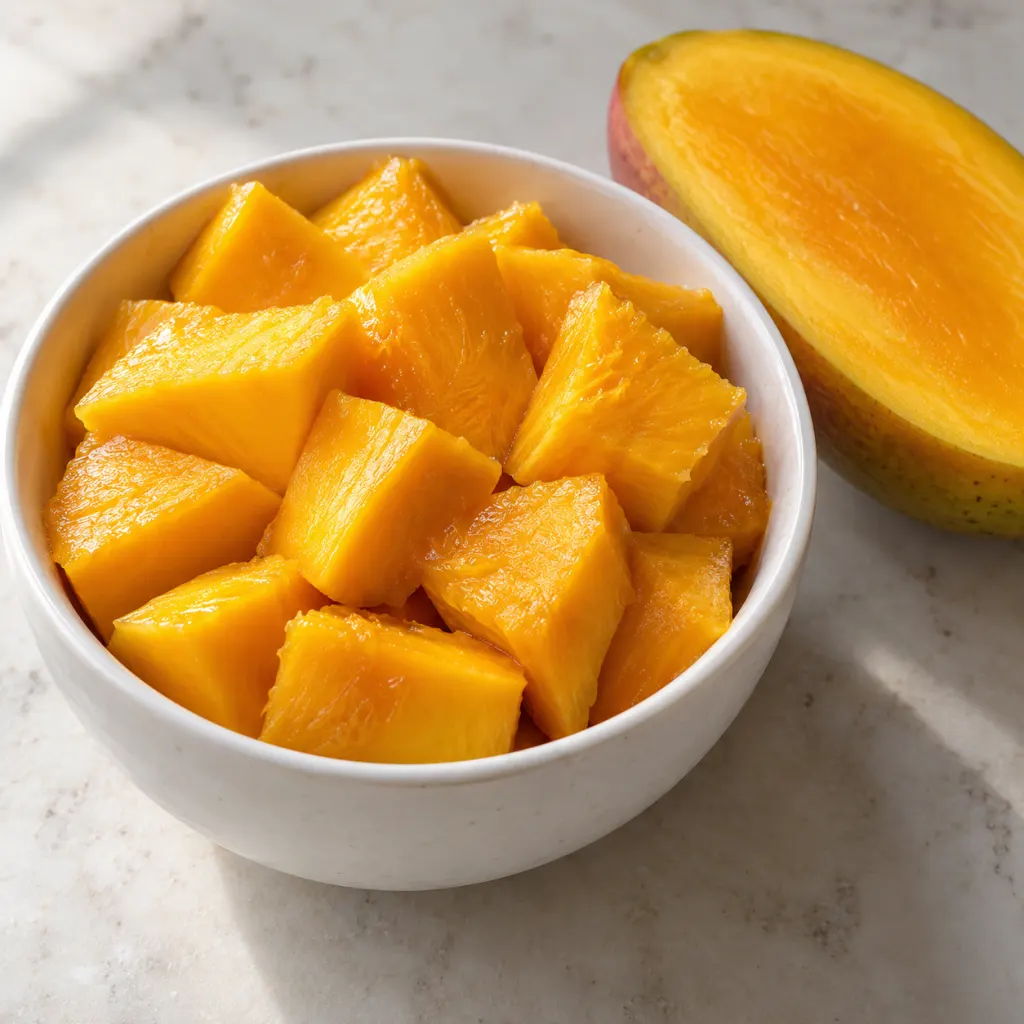
According to Cleveland Clinic’s mango nutrition breakdown, one cup of chopped mango contains approximately 99 calories, 2.6 grams of fiber, 1.35 grams of protein, 0.62 grams of fat and 22.6 grams of naturally occurring sugar. It also supplies several micronutrients, including vitamins A and C, folate and potassium. These figures describe a specified amount of chopped fruit; they should not automatically be assigned to one whole mango.
The numbers are most useful as a description of the food. Mango contributes fruit, sweetness and some fiber, while its protein and fat amounts are relatively small. For a serving idea, spoon some over plain yogurt or add pieces to an existing lunch bowl. Those are ways to use the fruit, rather than reasons to make it the central ingredient in every meal.
Provitamin A means a starting material
The word provitamin describes a substance the body can turn into a vitamin. The NIH vitamin A fact sheet distinguishes preformed vitamin A, found in certain animal foods, from provitamin A carotenoids in plant foods. Beta-carotene is a familiar example of the latter.
This distinction makes a mango’s vitamin A contribution easier to understand. The fruit supplies starting materials for conversion, rather than only a ready-made form of the vitamin. Carotenoids also contribute yellow, orange and red colors to foods. In conversation, saying that mango “provides vitamin A” is convenient shorthand, but explaining the conversion step gives a more accurate account of what happens after eating it.
What “converted as needed” really means
Conversion is regulated rather than occurring at one fixed rate in everyone. Oregon State University’s carotenoid review explains that vitamin A status influences this process, with conversion decreasing when vitamin A stores are high. “Converted as needed” is a useful plain-language description of that regulation.
It is not a way to calculate exactly how much vitamin A a particular person will obtain from lunch. The food’s structure and the conditions of absorption also matter. A nutrition figure is therefore useful for comparing foods, while remaining an estimate of their contribution rather than a personal measurement.
How vitamin A participates in normal vision
Vitamin A has a specific role in the eye’s handling of light. Oregon State University’s vitamin A review describes how a vitamin A derivative participates in visual pigments in the retina. Light-sensitive cells use these pigments in the sequence of events that produces visual signals. Rod cells are particularly involved in low-light vision, while cone cells contribute to color vision.
That biological role supports the wording “vitamin A supports normal vision.” It does not establish a predictable change in someone’s eyesight after eating a serving of mango. The nutrient-function statement and a claim about an individual visual result require different evidence. For this article, the established function is the relevant takeaway.
Why vitamin A figures use unfamiliar units
You may see vitamin A expressed as micrograms of retinol activity equivalents, abbreviated mcg RAE. This unit accounts for differences between preformed vitamin A and carotenoids that require conversion. As Oregon State University explains, the weight of beta-carotene is not interchangeable with the same weight of retinol. When comparing figures, match both the unit and the serving amount before deciding that one food supplies more.
Choose a portion you can describe
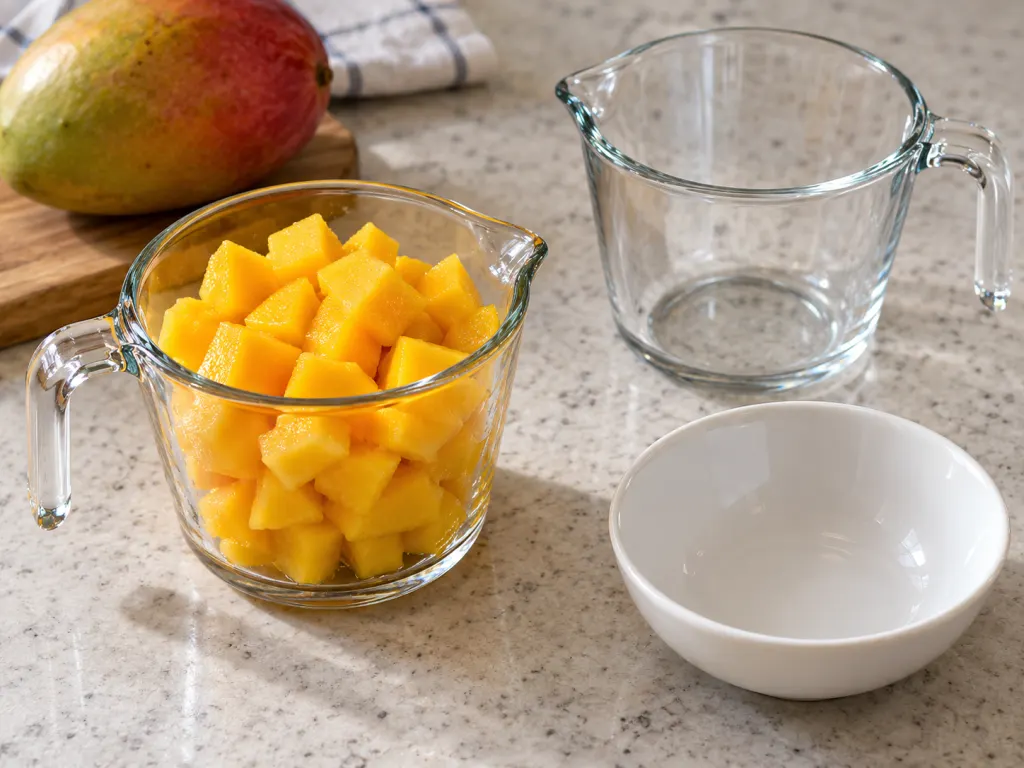
The NHS portion guide uses 80 grams as an adult fruit or vegetable portion within its 5 A Day framework. It also gives two mango slices, each described as 5-centimeter slices, as a practical example. This is a public-health counting convention, rather than a requirement to eat mango in precisely that amount.
For your own kitchen, a small bowl or a measured amount of chopped flesh may be easier to repeat than “one mango.” If you want to compare your bowl with a per-cup nutrition listing, measure it once. If you use the NHS framework, weigh the edible flesh. Keep those two systems distinct: a cup-based nutrition listing and an 80-gram fruit portion are different reference amounts. Neither needs to become a daily weighing exercise.
A normal meal is enough context for carotenoids
Carotenoids are absorbed with help from fat in a meal, as described in Oregon State University’s review. This makes mango easy to include alongside ordinary foods, without an elaborate preparation ritual.
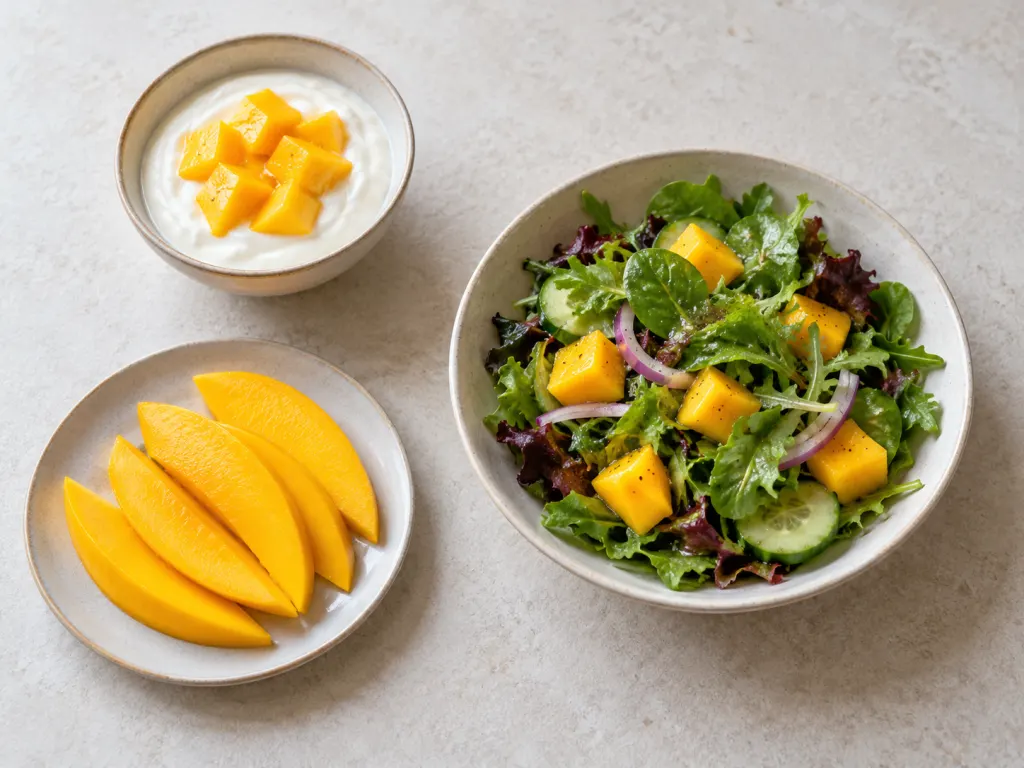
For example, you might serve it with yogurt, include it in a salad with dressing, or eat it after a mixed meal. Choose the pairing because you enjoy it and it fits the meal. There is no need to turn the bowl into a calculation about maximizing every component.
Fresh, frozen and canned options serve different routines
Fresh fruit is one option, rather than the only useful format. New Mexico State University’s fruit-group guide includes fresh, frozen, canned and dried fruit. It recommends choosing frozen fruit without added sugars or sauces. It also distinguishes whole or cut fruit, which supplies fiber, from fruit juice, which contains little or none.
Let the intended use guide the purchase. Fresh pieces may suit a bowl you are serving today; a bag of frozen mango may be convenient when you want to use small amounts on separate occasions. For canned fruit, inspect the packing liquid and follow the label’s storage directions. The useful comparison is between products you would realistically buy and use, not between an idealized fresh fruit and every packaged alternative.
A simple shopping check can keep those decisions focused:
- Decide whether you want pieces to eat, fruit to blend, or an ingredient for a meal.
- Read the ingredient list before relying on the picture on the package.
- Compare similar amounts when looking at nutrition panels.
- Check whether a product needs refrigeration before or after opening.
- Buy a quantity that fits your next few planned uses.
These are practical comparison steps, not a ranking of every mango product. A product that works well for one purpose may be awkward for another.
Natural sugar and added sugar are separate label questions
The FDA explains that total sugars include both naturally occurring sugars and any added sugars. Added sugars are identified separately on the Nutrition Facts label. The word “includes” means that the added-sugar amount is already part of the total; the two numbers should not be added together.
For a mango product, read the ingredient list alongside these figures. Plain fruit, fruit in syrup and a sweetened mango drink can have different compositions. A label showing zero added sugars may still show naturally occurring sugars under total sugars. Conversely, a mango picture on a drink container tells you little about the complete ingredient list. Compare the products using the same serving basis, then choose according to the use you have in mind.

Keep smoothies in their own serving category
A smoothie is another way to use mango, but the NHS counts drinks differently from pieces of fruit. Its 5 A Day guidance limits fruit juice and smoothies to a combined total of 150 milliliters a day, counting as a maximum of one portion. It recommends having them at mealtimes because crushing fruit releases sugars that can affect teeth.
If you enjoy a mango smoothie, use a small glass and consider the complete drink rather than just the featured fruit. Adding several kinds of fruit does not create several countable portions under this framework. For a straightforward alternative, serve mango pieces alongside a meal and keep your usual drink separate. The point is to recognize the format you are choosing, not to attach extra benefits to blending.
Wash the outside before cutting
The FDA’s produce-handling guidance recommends washing produce under running water before preparation, including fruit whose skin will not be eaten. Cutting or peeling can transfer material from the outside to the flesh. Wash your hands before preparation, use clean utensils and dry the washed fruit with a clean towel. Plain running water is the recommended washing approach.
Choose refrigerated pre-cut fruit and keep it refrigerated. The FDA advises a refrigerator temperature of 40°F, about 4°C, or below, and keeping ready-to-eat produce separate from raw meat, poultry, seafood and their utensils. For purchased mango pieces, follow the package’s storage and use instructions. At home, make room for a clean preparation area before opening the container or cutting the fruit. These handling habits belong alongside nutrition considerations whenever fruit is served raw.
Food choices are one part of looking after your eyes
The National Eye Institute’s guidance covers a broader picture than individual foods: eye examinations, a varied eating pattern, sunglasses and protective eyewear when appropriate. It highlights leafy greens among its food suggestions. Mango can sit within that wider pattern without becoming the organizing principle for eye care.
If you have questions about your own vision, discuss them with an eye-care professional. A fruit’s nutrient content cannot establish what your eyes need. Keep the kitchen decision practical, whether you enjoy mango and how it fits your meals, and take personal vision questions to an appropriate appointment.
Use variety to keep the advice useful
New Mexico State University suggests using fruit in familiar foods such as salads and yogurt, offering several ways to include it in meals. Its fruit-group guide is a useful reminder that fruit choices can be varied and practical.
For related reading, explore our guide to kiwi nutrition and portions or our article on sweet potatoes. You do not need to combine every suggestion in one meal. Choose one idea that suits your shopping, budget and preferences, and leave room for other foods you enjoy.
Wrap-Up
The practical takeaway is to treat mango as a versatile fruit with a defined nutritional contribution. Use a clear serving amount when comparing figures, check the complete product label, and prepare it with clean hands and equipment. Enjoy its flavor in meals you already like, while keeping personal questions about vision separate from everyday food choices.
Frequently Asked Questions
- → Is one whole mango the same as one fruit portion?
Use a defined amount rather than assuming they are equivalent. The NHS adult portion guide uses 80 grams and gives two 5-centimeter mango slices as an example. That reference amount differs from a cup-based nutrition listing.
- → Does zero added sugar mean a mango product contains no sugar?
No. The FDA distinguishes naturally occurring sugars from added sugars. Both are included under total sugars, so read the two lines together.
- → Is frozen mango a reasonable option?
Yes. New Mexico State University includes frozen fruit in the fruit group and recommends options without added sugars or sauces. Follow the package’s preparation instructions.
- → Why not compare beta-carotene and vitamin A numbers directly?
They describe different things. Beta-carotene requires conversion, while vitamin A figures expressed as RAE account for differences in vitamin A activity. Oregon State University explains these units. Compare matching units and serving amounts.
- → Can a smoothie with several fruits count as several portions?
Under the NHS framework, juices and smoothies together count as a maximum of one daily portion, with a combined 150-milliliter limit.
References
This content was developed and refined using reliable sources.
- https://ods.od.nih.gov/factsheets/VitaminA-Consumer
- https://health.clevelandclinic.org/mango-benefits
- https://www.nhs.uk/live-well/eat-well/5-a-day/portion-sizes
- https://www.fda.gov/food/buy-store-serve-safe-food/selecting-and-serving-produce-safely
- https://pubs.nmsu.edu/_e/E141
- https://lpi.oregonstate.edu/mic/vitamins/vitamin-A
- https://lpi.oregonstate.edu/mic/dietary-factors/phytochemicals/carotenoids
- https://www.nei.nih.gov/eye-health-information/healthy-vision/how-eyes-work/keep-your-eyes-healthy
- https://www.fda.gov/food/nutrition-facts-label/added-sugars-nutrition-facts-label
- https://www.nhs.uk/live-well/eat-well/5-a-day/5-a-day-what-counts