 Save
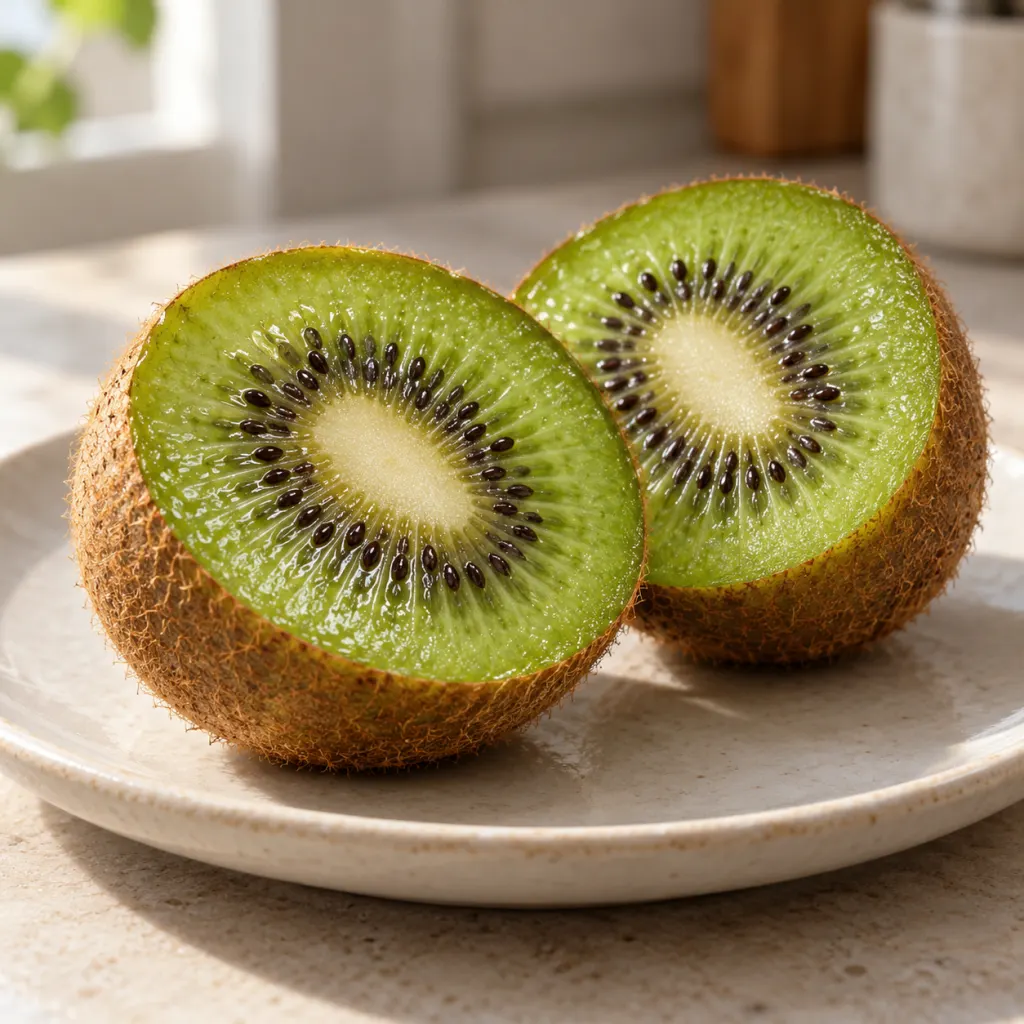
Yes, kiwi supplies vitamin C, which your body uses to form collagen, a structural protein found in skin and other tissues. MedlinePlus identifies both this function and kiwi as a vitamin C source. This explains a normal nutrient role; it does not establish that eating kiwi will make skin look younger.
The useful everyday questions are more practical: how much fruit fits your meal, whether you enjoy the skin, how to prepare it, and what to do if it causes an unexpected reaction. Kiwi can be an enjoyable choice without becoming the centerpiece of every nutrition decision.
What vitamin C contributes to collagen formation
Collagen is a protein used in structures including skin, tendons and ligaments. Vitamin C contributes to its formation, and the body cannot make vitamin C itself. Food therefore supplies an essential nutrient used in this normal process. Eating kiwi supplies vitamin C rather than ready-made collagen. These distinctions follow from the functions and food sources described by MedlinePlus.
Keep the wording precise: “provides vitamin C used in normal collagen formation” describes a nutrient function. A claim about changing someone’s appearance would require evidence measuring that separate outcome.
When reading a nutrition headline, ask which question it actually answers. Identifying a nutrient in food, explaining that nutrient’s biological role, and demonstrating a noticeable result in people are three different tasks. Evidence for the first two should not silently stand in for the third.
Be especially cautious when an ordinary food description becomes a timetable, a guaranteed result, or a claim that a larger serving produces a larger cosmetic effect. This article does not establish those outcomes. You can choose kiwi for its flavor and nutritional contribution without assigning it a job that the available evidence has not demonstrated.
Fiber is another useful part of the fruit
Kiwi contains dietary fiber; Cleveland Clinic’s overview identifies fiber as one of its nutritional features. Fiber is a carbohydrate found in plants. Fruit, vegetables, whole grains, nuts and seeds are among its food sources, according to MedlinePlus.
Fiber contributes to normal digestion, but increasing it suddenly can bring gas, bloating or cramps. MedlinePlus advises making increases gradually. If you are changing several meals at once, a manageable approach is to introduce one change before adding another, rather than treating a large fruit bowl as an achievement in itself. Read the dietary fiber guidance.
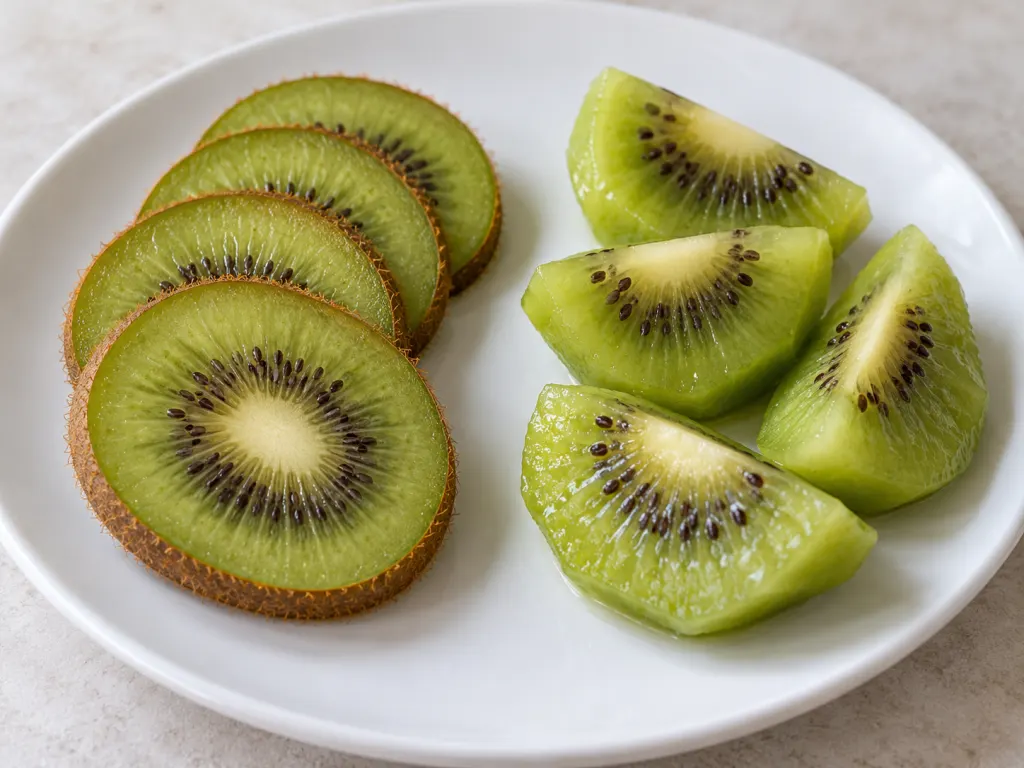
The skin is edible and contributes fiber, as Cleveland Clinic explains. Whether you eat it can also be a texture preference. Some people enjoy thin, skin-on slices; others prefer peeled pieces or scooping the flesh from a halved fruit.
Choose the form you will actually enjoy. There is little practical value in turning breakfast into a test of whether you can tolerate a fuzzy texture. Peeling is a preparation choice, and washed, peeled kiwi remains a reasonable way to serve the fruit. Washing still comes first, whichever presentation you choose.
A portion guide is a reference, not a required serving
The NHS adult 5 A Day guide gives 80 grams as a standard fruit or vegetable portion and lists two kiwi fruit as a practical example of a small-fruit portion. These are useful planning references, rather than a promise that every pair of fruit weighs exactly the same.
One kiwi can still be the amount you choose to eat. A portion used for counting fruit and vegetables is different from the amount you put on a plate at a particular sitting. The NHS guidance also emphasizes variety across the day; its counting example is not an instruction to eat two kiwis every morning.
For a concrete comparison, imagine two breakfasts. At the first, you slice one kiwi over a bowl of oats. At the second, you serve two small kiwis alongside toast. Both are ordinary ways to include the fruit. The difference is the amount served, not whether one breakfast follows a special kiwi rule.
If you prepare a shared fruit bowl, set aside your own portion before adding it to the larger dish. That makes the amount easier to picture than repeatedly taking pieces from a communal bowl. You do not need to count every slice; the purpose is simply to connect a portion description with something visible.
Keep kiwi within a varied eating pattern
No single fruit provides every nutrient needed across an eating pattern. Cleveland Clinic emphasizes variety, and New Mexico State University Extension recommends varying fruit choices because their nutrient contents differ.
Think of kiwi as one option in a rotating selection. You might buy it one week, choose pears the next, and use frozen berries when those are more convenient. Variety can also mean changing vegetables and other foods rather than building an elaborate fruit bowl. There is no need for every breakfast to contain several fruits or for every shopping trip to include kiwi.
These serving ideas are about convenience and flavor, rather than a special formula:
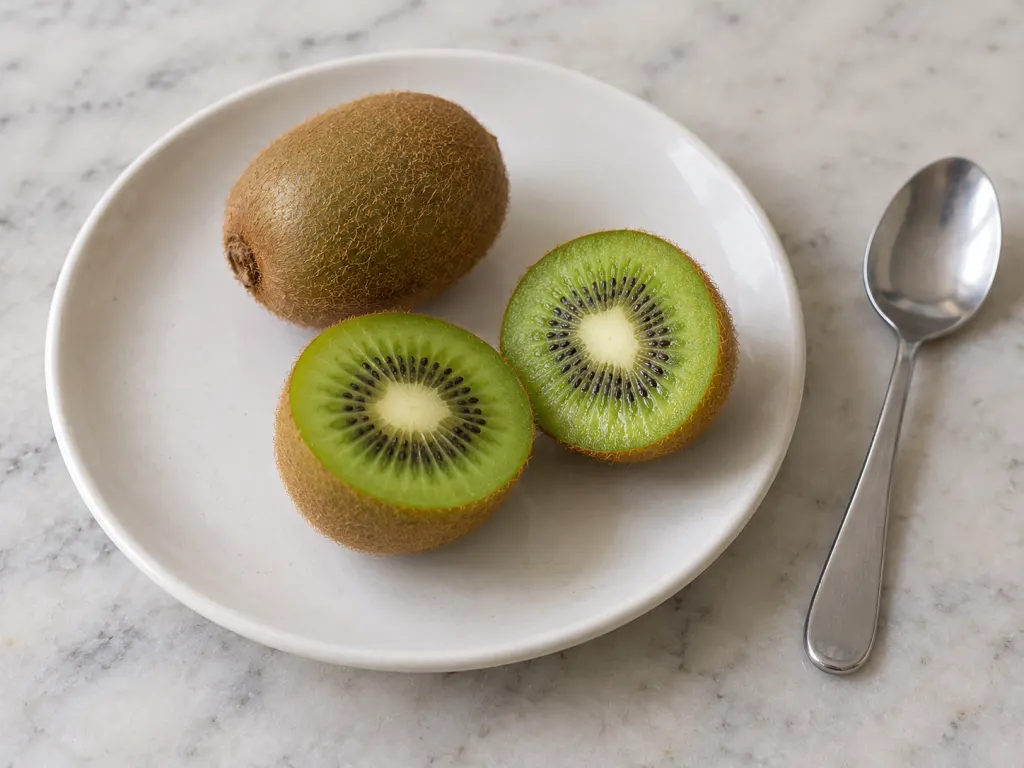
- At breakfast: arrange kiwi slices over oats, or serve a halved fruit beside your usual breakfast with a spoon.
- At lunch: add a few pieces to a small fruit container instead of preparing a separate large fruit salad.
- For a snack: serve peeled wedges on a plate if that is easier than eating the skin.
- For a shared meal: offer kiwi separately so people can choose it, leave it, or select another fruit.
Pick the option that fits your routine. An elaborate presentation is optional; a washed fruit, a small plate and a spoon may be all you need.
Vitamin C offers plenty of room for alternatives
Kiwi is not the only way to obtain vitamin C. The NHS vitamin C guide lists sources including peppers, strawberries, citrus fruit, broccoli and Brussels sprouts. It advises obtaining vitamin C through a varied, balanced diet.
This gives you flexibility when kiwi is expensive, unavailable or simply unappealing. Rather than searching for a fruit that wins a nutrient contest, look at the foods you enjoy across your meals. The relevant question is whether your overall pattern includes suitable sources, not whether one fruit has a more impressive headline than another.
Whole fruit and juice also deserve separate consideration. New Mexico State University Extension explains that whole or cut fruit supplies fiber, while fruit juice contains little or none. A strained kiwi drink should therefore not be assumed to have the same composition as the fruit that went into it.
For other everyday fruit comparisons, see our guides to bananas’ nutritional benefits and watermelon nutrition and portions. Use them to explore different foods and serving habits, rather than to assemble a ranking of supposedly essential fruits.

Wash kiwi before peeling or cutting
Wash the outside under running water even if you plan to discard the skin. The FDA explains that cutting or peeling can transfer dirt and bacteria from a fruit’s surface. It recommends running water rather than soap, detergent or commercial produce wash, followed by drying with a clean towel.
Begin with clean hands and clean utensils. Keep ready-to-eat fruit separate from raw meat, poultry and seafood and the equipment used for them. Choose undamaged produce, discard fruit that looks rotten, and buy pre-cut fruit only when it is refrigerated or surrounded by ice. The FDA also advises refrigerating purchased pre-cut produce. Washing reduces surface bacteria but does not eliminate them. See the FDA’s produce guidance.
Take possible allergy reactions seriously
Any food can cause an allergy, and raw fruit can cause an itchy mouth or throat in some people. The NHS food allergy guide describes these reactions and advises seeing a doctor if you suspect a food allergy. If kiwi repeatedly causes an unexpected reaction, seek an assessment rather than using repeated tastings to investigate it yourself.
Sudden swelling of the mouth, tongue or throat, difficulty breathing, difficulty swallowing, or fainting can signal a serious allergic reaction. Call your local emergency number immediately; in the UK, call 999. The NHS lists these emergency warning signs. These boundaries matter more than finishing a serving or meeting a fruit target.
Read kiwi claims with a clear evidence boundary
A useful food article should explain what is in the food, how the information applies to an ordinary serving, and where the evidence stops. Before accepting a dramatic claim, check whether the source studied kiwi itself, a nutrient, an extract or a different product. Then check whether the measured outcome matches the headline.
For this topic, the practical takeaway is modest: kiwi is a fruit option with vitamin C and fiber, and normal nutrient functions should be described accurately. Personal medical decisions require a separate conversation with a qualified professional. For a broader discussion of the food-and-collagen connection, our guide to fruit and collagen offers related reading.
Wrap-Up
Enjoy kiwi in a form and amount that suits your meals. Its vitamin C contributes to normal collagen formation, as MedlinePlus explains, while food variety remains important. Keep the everyday choices straightforward: select fruit you enjoy, use a portion guide as a reference, wash before preparation, and take unexpected reactions seriously. A food can be useful without needing an extraordinary promise attached to it.
Frequently Asked Questions
- → Do I need to eat kiwi every day?
No particular fruit is essential to this approach. The NHS vitamin C guide lists several fruit and vegetable sources and emphasizes a varied, balanced diet. Choose kiwi when you enjoy it, and use other suitable foods when you prefer them.
- → Does one kiwi count as a whole 5 A Day portion?
The NHS adult guide lists two kiwi fruit as its small-fruit example. One kiwi is still a useful contribution. The counting reference does not require you to eat the full example amount at one sitting.
- → Can I eat kiwi without the skin?
Yes. The skin is edible and contributes fiber, according to Cleveland Clinic, but you can choose peeled slices or scoop out the flesh. Let your preferred texture guide the presentation.
- → Is a kiwi smoothie counted the same way as whole fruit?
Under NHS guidance, fruit juice and smoothies together count as a maximum of one 5 A Day portion, with a combined daily limit of 150 milliliters. A large smoothie therefore does not earn additional portions simply because it contains several fruits.
References
This content was developed and refined using reliable sources.
- https://health.clevelandclinic.org/kiwi-benefits
- https://medlineplus.gov/ency/article/002404.htm
- https://medlineplus.gov/dietaryfiber.html
- https://www.nhs.uk/live-well/eat-well/5-a-day/portion-sizes
- https://www.fda.gov/food/buy-store-serve-safe-food/selecting-and-serving-produce-safely
- https://www.nhs.uk/conditions/food-allergy
- https://www.nhs.uk/conditions/vitamins-and-minerals/vitamin-c
- https://pubs.nmsu.edu/_e/E141