 Save
Pomegranate arils add dietary fiber when you eat the whole edible pieces, including their crunchy seeds. The juicy flesh and seed are both edible, according to Utah State University Extension. Strained juice is a different food: the USDA Food Buying Guide explains that fruit juice contains less dietary fiber than whole fruit.
For everyday eating, the useful questions are straightforward: what are you actually eating, how much goes into your bowl, and how does it fit with the rest of the meal? This guide separates those practical decisions from broader health claims, without turning a colorful ingredient into a daily requirement.
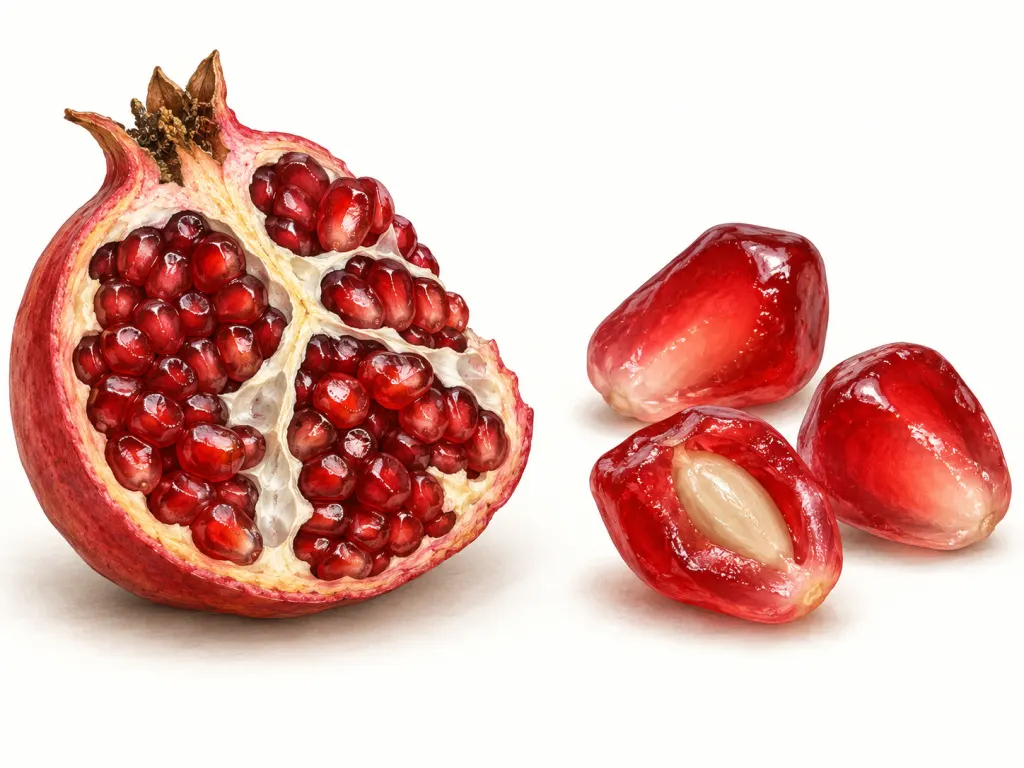
What is inside a pomegranate aril?
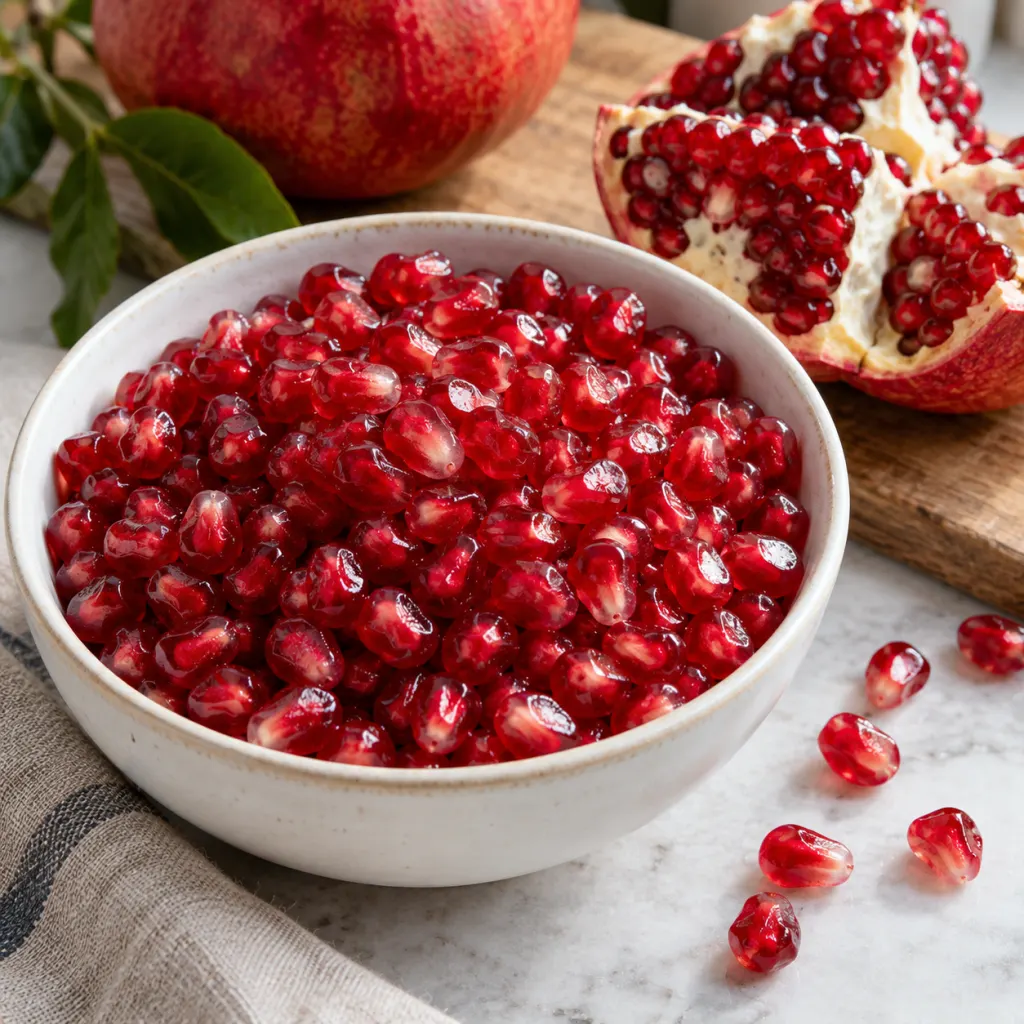
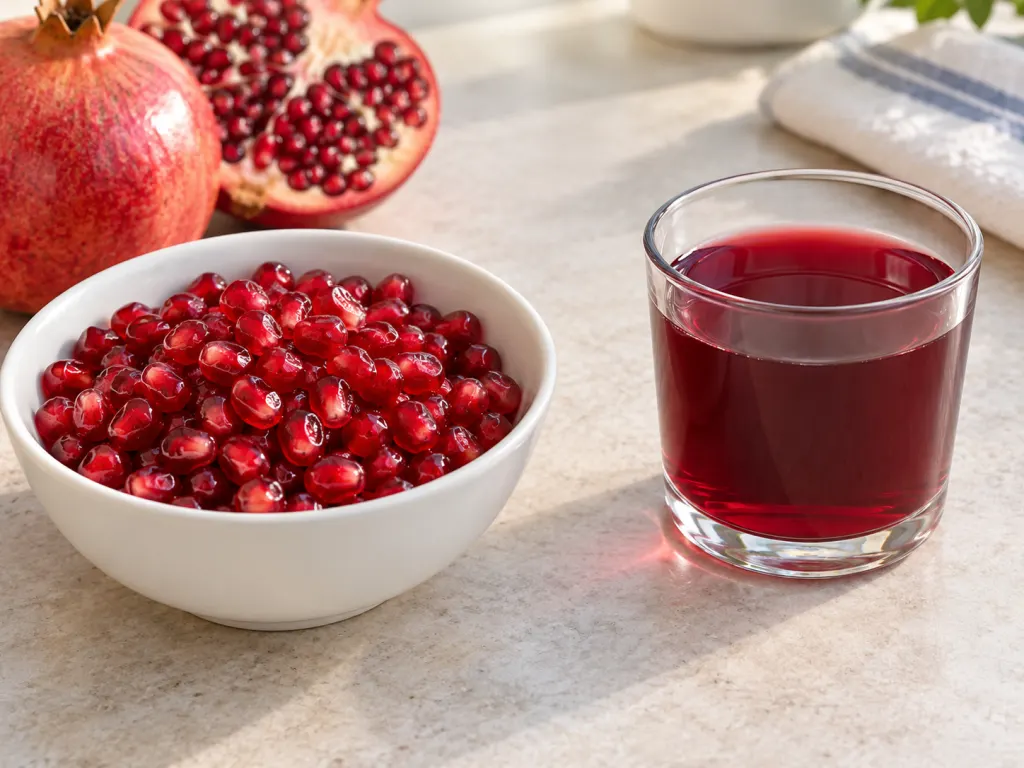
The pieces commonly called arils combine juicy, translucent flesh with a seed inside. That center is part of the edible portion; you do not need to remove it as you would a large fruit stone. Utah State University Extension describes both components as edible.
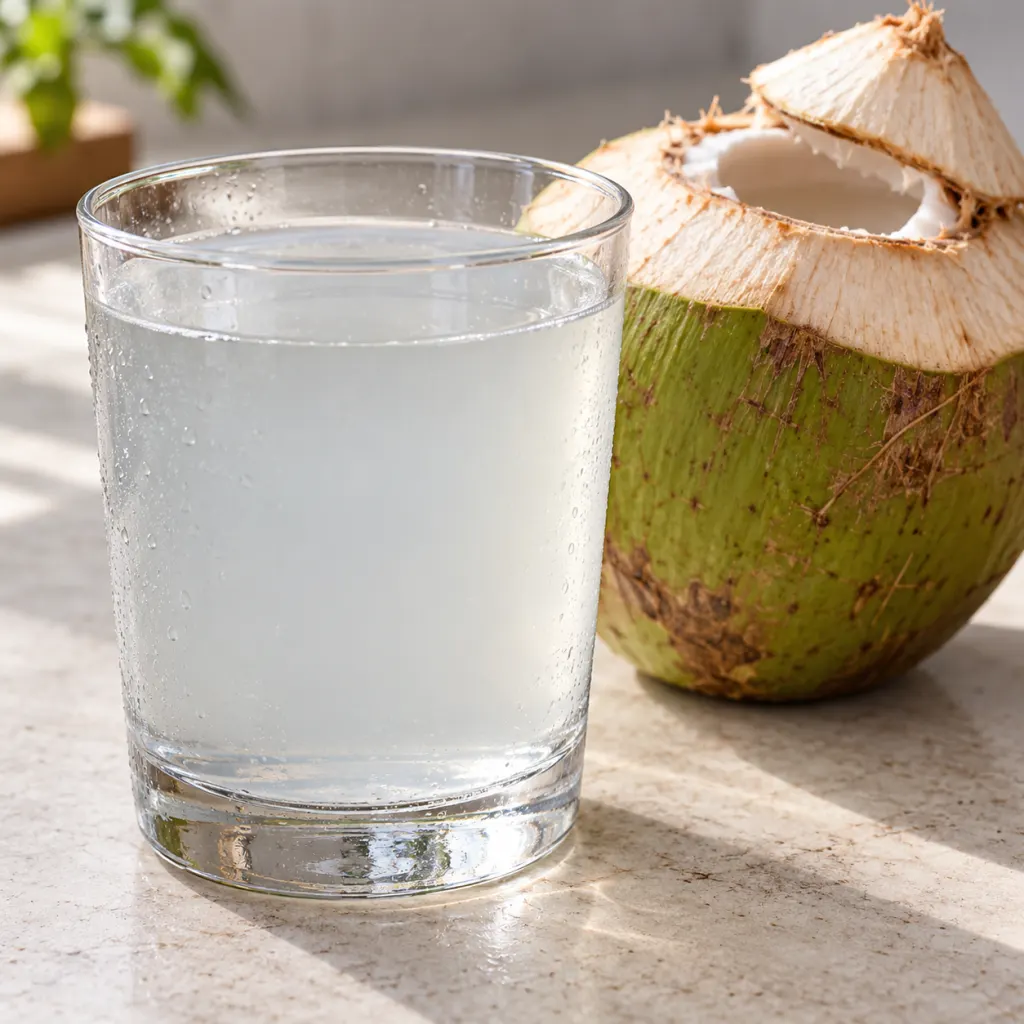
That distinction helps when choosing how to serve the fruit. If you enjoy the complete texture, use intact arils. If you want only their liquid flavor, choose juice. Treat those as different culinary choices rather than assuming that a spoonful of arils and a sip of juice provide the same eating experience or composition.
How dietary fiber relates to digestion
Dietary fiber is a type of carbohydrate found in plant foods. Unlike carbohydrates that are broken down and absorbed, fiber passes through the digestive system relatively intact. Different kinds behave differently: soluble fiber dissolves in water, while insoluble fiber contributes bulk and helps material move through the digestive tract. These are general fiber functions described by Mayo Clinic, rather than a prediction of what one serving of pomegranate will do.
Pomegranate can contribute to a broader pattern of fiber-containing foods. Fruit, vegetables, whole grains, nuts and seeds are among the sources listed by MedlinePlus. Consider the whole day's meals instead of asking one topping to carry the entire job. For example, you might choose arils at breakfast and include other plant foods at lunch and dinner, according to your preferences and needs.
What else does pomegranate contribute?
The University of Rochester Medical Center's raw-pomegranate nutrient listing includes carbohydrates, naturally occurring sugars, dietary fiber, potassium, vitamin C and other micronutrients. A nutrient appearing in a food's composition does not establish that an ordinary serving supplies a large amount, or that the food has a special effect.
This article deliberately avoids attaching a precise nutrient total to an unspecified bowl or fruit. The Rochester entry uses a particular fruit-size description, which should not be silently treated as the weight of the arils on your plate. For a personal food record, match the entry to the edible amount you actually eat. Keep raw arils, bottled juice and mixed dishes separate in that record, rather than borrowing figures from whichever result appears first.
Whole arils and juice answer different needs
For retaining the fruit's fiber contribution, choose whole arils more often than strained juice. The USDA Food Buying Guide identifies juice as lower in fiber than whole fruit and emphasizes variety among fruit choices. The comparison concerns food form; it does not make juice unusable or establish that pomegranate is superior to other fruits.
At the table, decide which form suits the purpose. Choose arils when you want individual pieces to spoon, scatter or chew. Choose a little juice when you want liquid for a dressing or drink. A dish can contain either, but describe it accurately: adding juice to a bowl is different from adding the complete edible arils.
Choose a portion that matches its role
The NHS portion guide uses 80 grams as a general adult fruit or vegetable portion within its 5 A Day framework. Applied here, weigh the edible arils rather than the entire pomegranate with its peel. This is a reference for counting fruit portions, not an instruction that everyone must eat that amount of pomegranate.
A garnish and a fruit portion serve different purposes. If you scatter a tablespoon or two over a shared salad, call it a topping. If you want to understand how much fruit you are serving, weigh the arils once and look at that amount in your usual bowl. You can then make a more informed choice without assuming that every bowl, handful or pomegranate is equivalent.
For juice and smoothies, the NHS gives separate guidance: limit their combined total to 150 milliliters a day, with that amount counting as at most one 5 A Day portion. This is a drinks guideline, not a volume recommendation for whole arils. See the NHS distinction between fruit portions and drinks.
Make arils useful in meals you already enjoy
Start with the meal rather than a rule about when to eat pomegranate. Decide whether you want a topping, a separate fruit dish or an ingredient in a shared bowl. Then serve an amount that makes sense for that role. These are flexible serving ideas, not a prescribed menu:
- Breakfast: spoon some arils over porridge or plain yogurt, leaving the remaining fruit in a separate serving bowl.
- Lunch: scatter them over a salad just before serving, so you can see and choose the amount you add.
- Dinner: offer a small bowl alongside a grain dish, allowing each person to add their preferred quantity.
- Dessert: use a few arils as a finishing ingredient, while keeping the distinction between a garnish and a fruit portion clear.
For a specific meal idea, explore the site's Colorful Halloumi Pomegranate Salad. If you are comparing everyday fruit choices, the kiwi nutrition and portions guide offers another ingredient to consider. Choose variety you enjoy rather than building every meal around the same fruit.
Read the product description before comparing nutrition
A useful shopping comparison starts with like-for-like products. Put plain arils beside plain arils, and juice beside juice. Check the stated serving amount before comparing the dietary fiber line. Otherwise, you may be comparing different quantities as well as different foods. If you need exact figures, use the information for the actual product and portion you plan to eat.
For a mixed dish, keep the ingredients conceptually separate. Pomegranate scattered over yogurt does not tell you the composition of the yogurt, and arils on a dessert do not describe the entire dessert. Likewise, use the ingredient list to understand what a packaged product contains rather than drawing conclusions from a pomegranate picture on the front. These checks make comparisons more transparent without requiring you to rank every product as good or bad.
Prepare the fruit with ordinary produce precautions
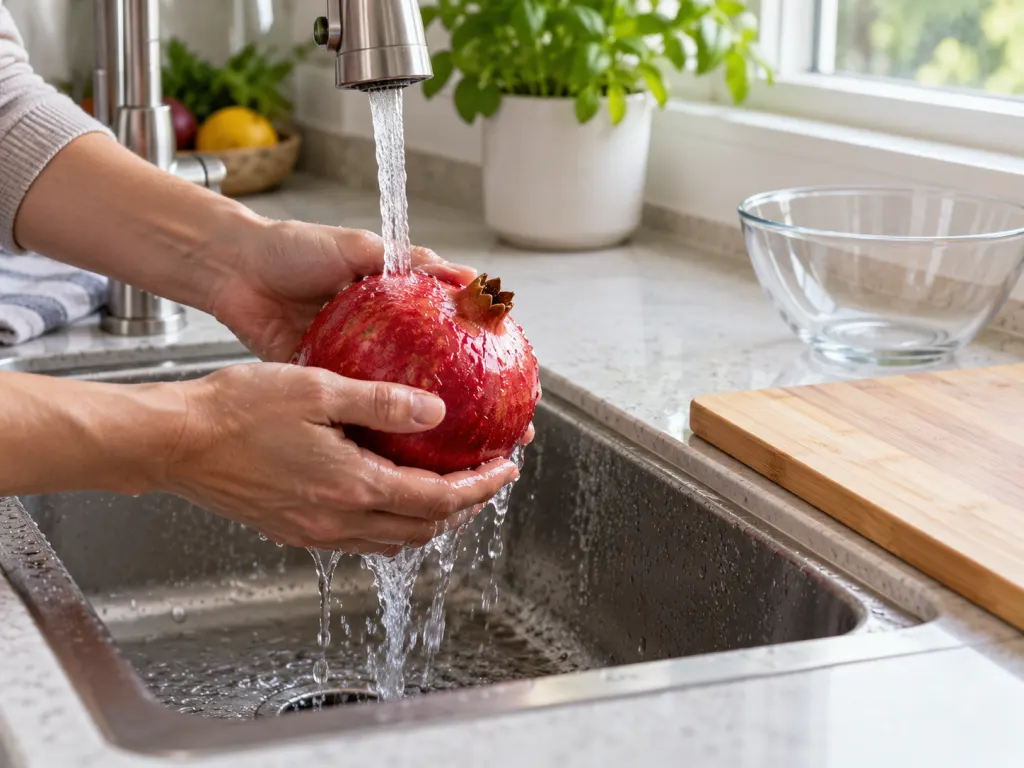
Wash your hands before preparation, and rinse the whole fruit under running water before cutting it, even though you will discard the peel. The FDA explains that washing first helps avoid transferring material from the surface during peeling or cutting. Use clean equipment and keep ready-to-eat produce separate from raw meat, poultry and seafood. These are FDA produce-handling recommendations.
Once the washed fruit is opened, one option is to separate its sections in a bowl of water. Utah State University Extension explains that the edible pieces sink while loose peel and membranes float, allowing them to be skimmed away before draining. Its preparation guide describes this method. Choose a stable work surface and give yourself room for the bowl and drained arils.
Plan storage before opening a large amount
Buy pre-cut or packaged produce from refrigerated displays and refrigerate it at home. Products marked ready-to-eat or pre-washed can be used without additional washing; follow the package instructions. The FDA's produce guide also recommends a clean refrigerator kept at 40°F or below.
For longer storage, Utah State University Extension describes freezing the edible pieces in a single layer before transferring them to freezer containers or bags. See its freezing guidance. As a planning choice, divide your batch according to its intended use: one container for a shared meal, another for smaller toppings. This makes it easier to use the fruit deliberately instead of opening a large quantity without a plan.
Increase fiber gradually and keep individual needs in view
If you are changing your overall fiber intake, build up gradually. MedlinePlus cautions that increasing fiber too quickly can cause gas, bloating and cramps. A sudden large bowl of arils is therefore an unnecessary starting point for someone simply exploring more fiber-containing foods.
Mayo Clinic also advises drinking water alongside fiber and notes that some people receive individualized instructions to eat less fiber. If you already have a specific eating plan, discuss substantial changes with your qualified health professional. Mayo Clinic's fiber guidance explains why personal circumstances matter. An ordinary serving suggestion cannot account for every person's needs.
Keep composition separate from claims about health outcomes
Knowing that pomegranate contains fiber and micronutrients answers a composition question. It does not settle every question about health outcomes. The National Center for Complementary and Integrative Health describes limitations in the research and notes that many studies have examined juice. Findings about one preparation should not automatically be applied to a different product or an unspecified serving of arils.
For your shopping and meal decisions, ask a narrower question: do you enjoy the fruit, does its form suit the dish, and is the portion appropriate for its role? Those questions lead to practical choices without requiring a special health promise.
Wrap-Up
Use pomegranate according to what you want from the meal: whole arils for an ingredient you can spoon and chew, or juice when you want a liquid component. Pay attention to the edible portion, distinguish toppings from substantial servings, and compare matching products. Choose a preparation and storage routine that fits your kitchen, while leaving individualized health decisions with a qualified professional.
Frequently Asked Questions
- → Can I eat the crunchy seed inside each aril?
Yes. Utah State University Extension identifies both the seed and its surrounding juicy flesh as edible. Whether you enjoy that texture is a matter of preference.
- → Does pomegranate juice provide the same fiber as whole arils?
Whole fruit and juice differ in fiber content. The USDA Food Buying Guide explains that fruit juice is lower in dietary fiber than whole fruit. For a specific packaged drink, check its stated serving amount and fiber information.
- → Is a small sprinkle enough to count as a full fruit portion?
Do not assume that a garnish equals a full portion. The NHS adult portion framework uses 80 grams for fruit and vegetables. Weigh edible arils if you want to compare your serving with that reference; exclude the discarded peel.
- → Do packaged ready-to-eat arils need another wash?
Follow the package instructions. The FDA says produce labeled pre-washed or ready-to-eat can be used without further washing. Keep it refrigerated and avoid contact with unclean utensils or surfaces.
- → Do I need to eat pomegranate every day for fiber?
No particular fruit needs to occupy that role every day. MedlinePlus lists several fiber sources, including whole grains, nuts, seeds, fruit and vegetables. Choose a varied selection that suits your preferences and any individual eating guidance.
References
This content was developed and refined using reliable sources.
- https://www.urmc.rochester.edu/encyclopedia/content?ContentID=09286-1&ContentTypeID=76
- https://www.nccih.nih.gov/health/pomegranate
- https://www.nhs.uk/live-well/eat-well/5-a-day/portion-sizes
- https://www.fda.gov/food/buy-store-serve-safe-food/selecting-and-serving-produce-safely
- https://medlineplus.gov/dietaryfiber.html
- https://extension.usu.edu/preserve-the-harvest/research/pomegranates
- https://foodbuyingguide.fns.usda.gov/FoodComponents/ResourceFruits
- https://www.mayoclinic.org/healthy-lifestyle/nutrition-and-healthy-eating/in-depth/fiber/art-20043983