 Save
Cleaning can become a brief mindful pause when you deliberately notice an ordinary task rather than rush through it. A small study of dishwashing suggests possible short-term emotional benefits, but the evidence does not establish lasting changes in stress or anxiety. The useful approach is modest: choose a manageable chore, pay attention without judging yourself, and stop at a practical endpoint. Cleaning that feels compulsory or repeatedly interrupts daily life deserves a different conversation. The dishwashing study offers a starting point for curiosity, rather than a household rule everyone should follow.
Mindful cleaning is about attention, not a spotless result
Mindfulness means attending to the present moment with an accepting, nonjudgmental attitude. It does not require an empty mind or a particular sitting position. Mayo Clinic explains that awareness can be practiced during everyday activities and that brief moments count. A chore is one possible setting for that attention, alongside walking, listening, or sitting quietly.
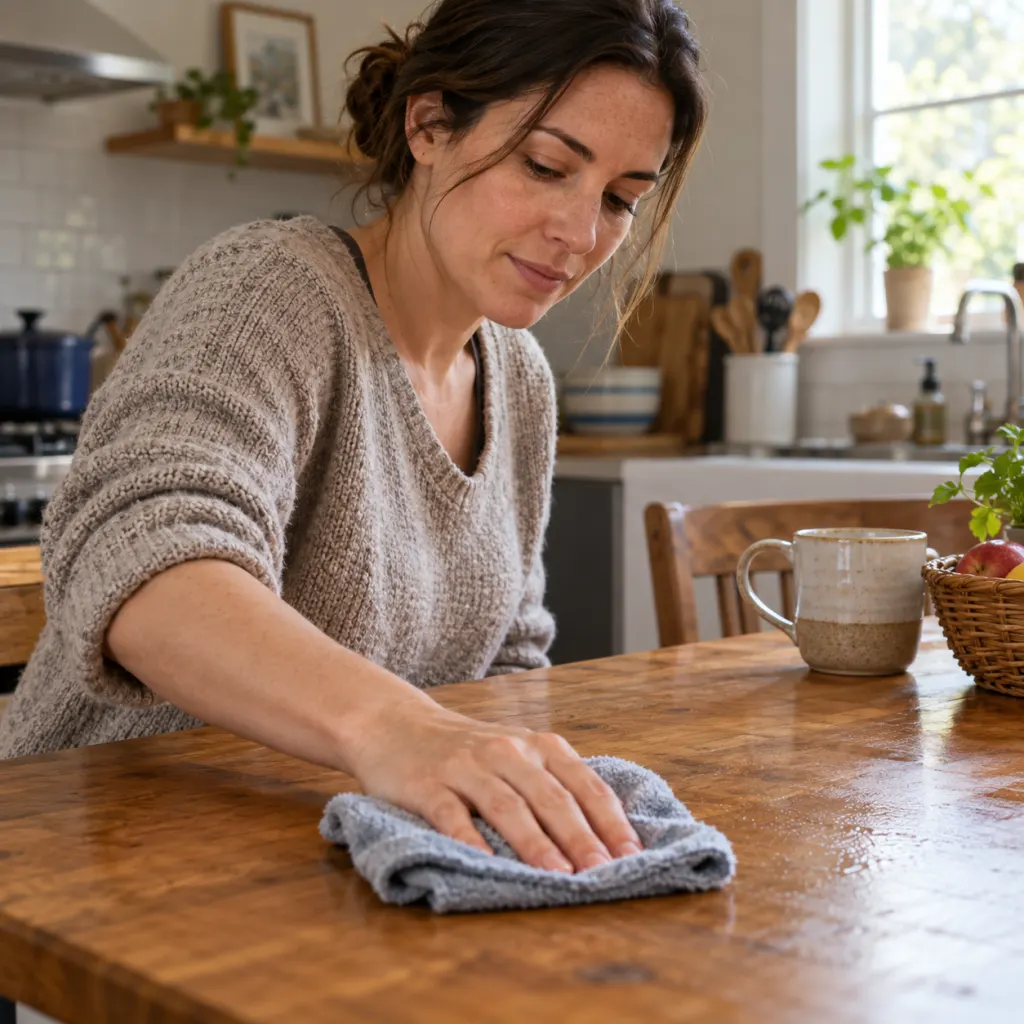
For example, while wiping a table, you might notice the cloth moving beneath your hand and the boundary between the damp and dry surface. When thoughts about tomorrow appear, you can acknowledge them and return to what you are doing. There is no need to criticize yourself for becoming distracted. The task still has an ordinary purpose: making the table usable. Mindful attention does not add a requirement that the table look perfect or that you feel peaceful afterward.
What the small dishwashing study actually found
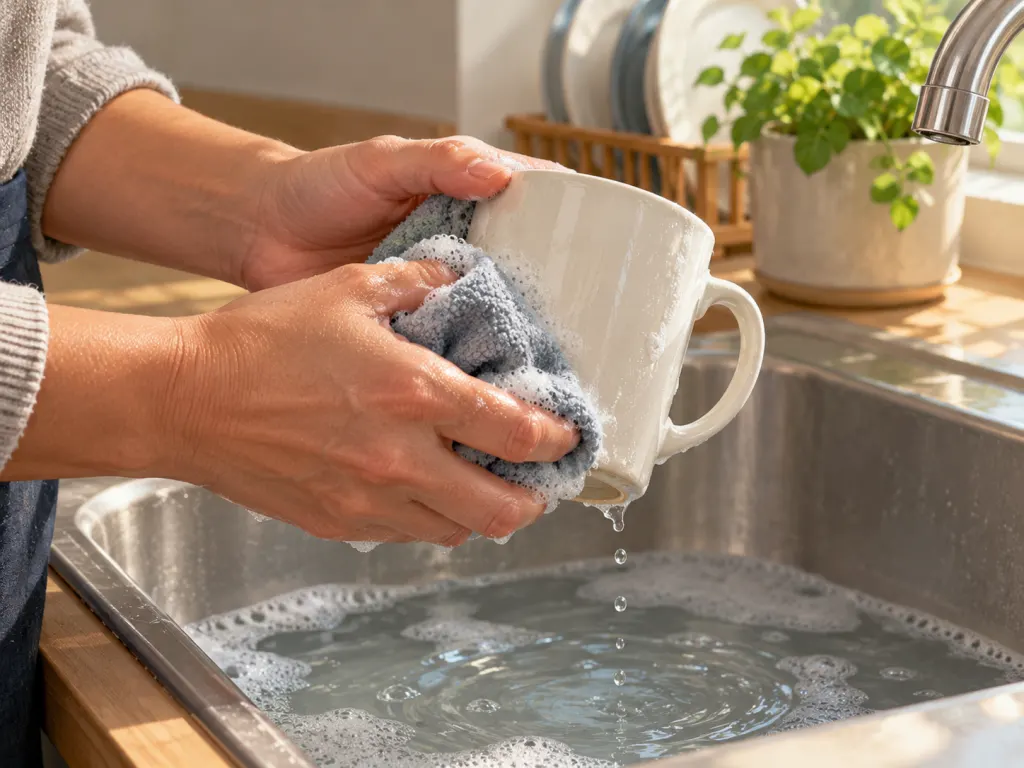
In a study published in the journal Mindfulness, 51 college students took part in either mindful or control dishwashing practice. Participants then completed measures concerning mindfulness, feelings, and their experience of the task. The researchers reported greater state mindfulness, more inspiration, and less nervousness among the mindful dishwashers. These findings are described in the original study abstract.
The limits matter as much as the result. Fifty-one college students are a small and narrow sample. Feelings measured around one activity do not establish what happens over weeks or months, or whether the same experience applies to people with different responsibilities. Both groups washed dishes, so the study also does not show that washing by hand is preferable to using a dishwasher. It suggests that the way someone attends to a familiar activity may matter; it does not establish that more cleaning produces greater emotional benefit.
Broader mindfulness research does not settle the cleaning question
The broader evidence on mindfulness includes many practices, populations, and study designs. The National Center for Complementary and Integrative Health describes potentially useful findings while warning that much of the research has been preliminary or insufficiently rigorous. Different methods and difficulties measuring their effects make broad conclusions challenging.
A structured mindfulness course and a few minutes spent folding towels are different experiences. Findings about one should not automatically be transferred to the other. For this article, the practical implication is to keep expectations proportionate: an ordinary chore may offer a setting for attention, but its emotional effect is uncertain. If you finish with clean towels and your worries remain, the task has not failed. It completed a household job, and you learned something about whether that particular pause suited the moment.
A sense of control can be practical without becoming a promise
Some stressful problems have no immediate solution. A small household task has a more visible boundary: the cups are put away, a chair becomes available, or the mail is gathered in one place. That contrast offers a plausible reason someone might find a chore satisfying. It remains an interpretation of an everyday experience, not proof of a specific psychological mechanism or a prediction about your mood.
Keep the goal connected to how you use the space. Clearing one place at the table gives you somewhere to eat. Returning keys to a familiar bowl makes them easier to find. These are useful outcomes even on a difficult day. By contrast, making emotional comfort depend on every object being aligned creates a much larger demand. A useful question is whether the task serves your next activity, rather than whether it makes the whole home feel completely under control.
Choose a task with an endpoint you can describe
The following are optional planning examples, not a clinically tested routine. Choose something familiar and small enough that you can describe what completion means before beginning. A short time limit may be convenient for some people, but a clock is unnecessary if it adds pressure. The endpoint should concern the task, rather than a requirement to keep going until a feeling changes.
- One small surface: clear the space needed for a meal or a notebook.
- One category: return a few books to their shelf without reorganizing the room.
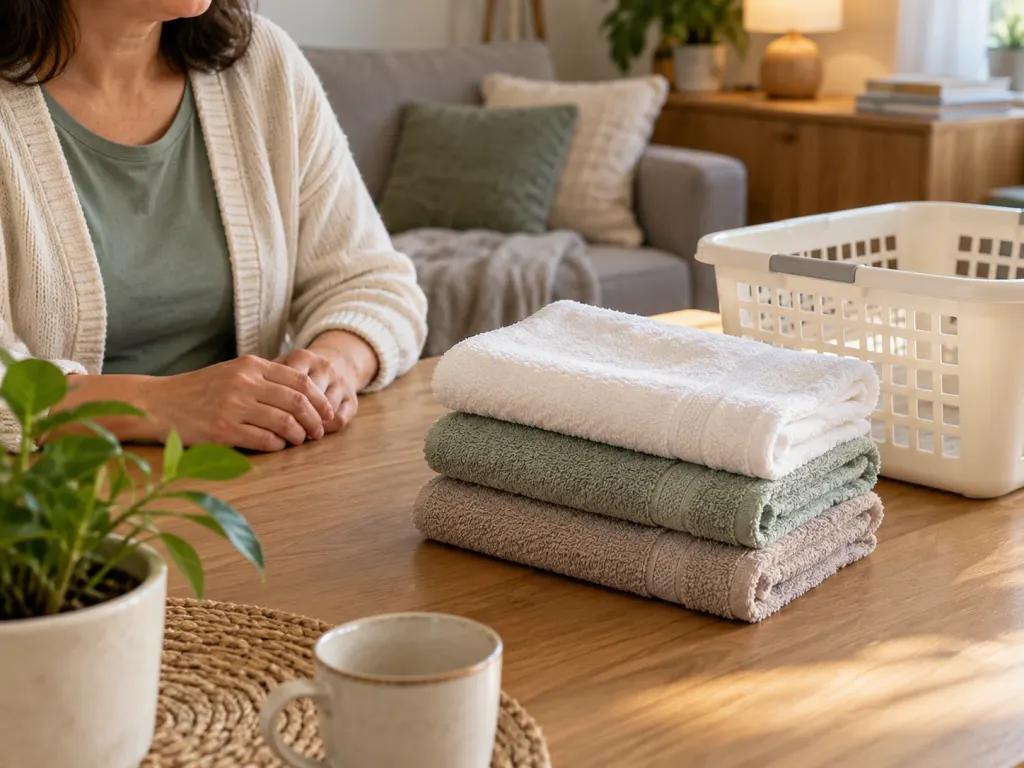
- One contained chore: fold the towels already in a small basket.
- One sensory focus: notice the texture of a cloth or the sound of objects being put away.
- One stopping point: finish the chosen job, put supplies away, and decide what comes next.
A task involving unfamiliar equipment or careful material decisions may suit a separate time. For example, our guide to scratched eyeglasses addresses a specific maintenance question. You do not need to turn a complicated cleaning problem into a mindfulness exercise.
Let the pause end without checking whether it worked
Imagine arriving home with several messages unanswered. You decide to put away the breakfast dishes before sitting down to respond. You notice the weight of a cup and the sound of the cupboard closing. Thoughts about the messages return several times. When the dishes are away, you move on. This is an example of fitting attention into an existing task, without adding another standard to meet.
You might feel more settled, unchanged, or impatient. None of those reactions requires another round of cleaning. Avoid repeatedly testing your mood or restarting the task to obtain a particular feeling. Instead, ask a practical question: what would be useful now? That could be answering one message, resting, eating, or asking someone for help. The pause earns its place by fitting your day, rather than by producing an emotional result on demand.
Notice when cleaning postpones something important
A brief break and an afternoon of postponement can begin with the same action. Perhaps wiping the counter gives you a welcome pause before a difficult phone call. Or perhaps each finished surface leads to another, and the call never happens. This example is a reflection prompt, not a way to diagnose yourself. Look at what the activity makes possible and what it repeatedly displaces.
If a chore is becoming a detour, you could name the next small action before starting: after putting away these cups, I will open the document or send the appointment request. You can also choose to take the break without cleaning. A quiet seat is available even when laundry remains unfolded. Larger jobs, such as the task discussed in our oven-cleaning guide, can have their own place in a maintenance plan instead of expanding an intended short pause.
Enjoying order is different from feeling driven to clean
Liking a tidy home does not establish obsessive-compulsive disorder, or OCD. The National Institute of Mental Health distinguishes ordinary habits from recurring thoughts and repetitive behaviors that are difficult to control and cause distress or interfere with daily life. Excessive cleaning can be one form of compulsion, but OCD is not simply a preference for neatness.
The NHS describes a cycle in which a compulsive action temporarily eases distress, followed by the return of the thought and anxiety. That is why momentary relief alone is not enough to decide whether a cleaning pattern is helpful. Pay attention to interference: repeatedly missing meals, arriving late, or being unable to leave a task despite wanting to stop. If this sounds familiar, discuss the pattern with a qualified mental health professional rather than adding more cleaning exercises.

Make room for different abilities and shared responsibilities
A suggestion to clean can land differently depending on who already does the work. Someone who manages most household chores may need a fairer division of responsibility, not a new way to appreciate the workload. In a shared home, agree on concrete tasks and realistic standards. Taking ownership of a job includes noticing that it needs doing, gathering supplies, completing it, and putting things away.
Match any optional task to the energy and movement available to you. Folding one cloth while seated may be enough; choosing no chore is also reasonable. There is no need to use another household's appearance as your benchmark. Aim for spaces that support the people living there. A basket holding unfinished items can be a deliberate temporary arrangement, rather than evidence that everyone should keep working until the room looks ready for a photograph.
Ordinary cleaning needs ordinary safety boundaries
Mindful attention should remain compatible with normal cleaning precautions. The CDC's household guidance explains that cleaning with suitable soap or detergent removes dirt and germs, while disinfecting is a separate process. The same guidance says to follow product labels, avoid mixing cleaning products, use recommended protective equipment, provide ventilation when using products indoors, and store chemicals away from children and pets.
Choose a familiar task and follow the instructions for the product and surface. Do not deliberately inhale product scents as an attention exercise. Use an ordinary visual or movement detail instead, such as watching a cloth pass across a suitable surface. Household safety tasks still need their appropriate completion; an optional mindfulness pause is not a reason to abandon necessary precautions halfway through.
Know when a different kind of support is needed
If attention exercises make you more distressed, you can stop and choose another activity. NCCIH notes that negative experiences can occur during meditation and that research on possible harms remains limited. More effort is not automatically the right response to an uncomfortable practice.
Seek professional guidance when anxiety or cleaning routines repeatedly interfere with ordinary life. You do not need to decide on a diagnostic label before describing what is happening. Concrete examples help explain the concern: how often tasks repeat, what makes stopping difficult, and which activities are being missed. If you feel unable to keep yourself safe, seek urgent help through local emergency or crisis services. The NHS guidance includes boundaries for seeking immediate support.
Wrap-Up
A familiar household chore can be one place to practice paying attention, provided it remains manageable and optional. Define a useful endpoint, follow ordinary cleaning instructions, and leave room for an unchanged mood. You can appreciate a clear table without making order a condition for rest. When cleaning becomes distressing, difficult to control, or disruptive, the next useful step is a conversation with a qualified professional.
Frequently Asked Questions
- → Should I wash dishes by hand instead of using a dishwasher?
The small dishwashing study compared mindful and control dishwashing practices, not handwashing with dishwasher use. It therefore does not establish a reason to change appliances. If you want an opportunity for attention, you could notice the movements involved in putting clean dishes away.
- → Do I need to remove all clutter before trying mindfulness?
No particular room arrangement is required. Mayo Clinic describes mindfulness as awareness that can fit into everyday activities. You can choose a quiet moment in the space you already have rather than making a full household cleanup a prerequisite.
- → Can music be part of a mindful chore?
You can choose the setting that suits the task. For this optional exercise, try noticing one element at a time, such as the music or the movement of the cloth. Silence is also an option. Neither choice needs to become a rule, and your attention should remain adequate for using equipment safely.
- → How can I explain concerns about someone's cleaning without labeling them?
Describe the effect you have noticed, such as missed plans or visible distress, rather than commenting on whether the home is too clean. Ask how the person experiences the routine and whether they would like support. The NIMH overview emphasizes distress and interference with daily life; neatness alone is not enough to identify OCD.
References
This content was developed and refined using reliable sources.
- https://link.springer.com/article/10.1007/s12671-014-0360-9
- https://www.mayoclinic.org/tests-procedures/meditation/in-depth/mindfulness-exercises/art-20046356
- https://www.nccih.nih.gov/health/meditation-and-mindfulness-effectiveness-and-safety
- https://www.nimh.nih.gov/health/publications/obsessive-compulsive-disorder-when-unwanted-thoughts-or-repetitive-behaviors-take-over
- https://www.nhs.uk/mental-health/conditions/obsessive-compulsive-disorder-ocd/symptoms
- https://www.cdc.gov/hygiene/about/when-and-how-to-clean-and-disinfect-your-home.html