 Save
Sleeping with a phone beside your bed is not automatically dangerous, but it can make sleep easier to interrupt and harder to protect. The best-supported concerns are not dramatic: light from the screen can delay sleepiness, alerts can wake you, late-night checking can keep your mind active, and charging on soft bedding can add an avoidable safety risk. The CDC says adults generally need at least 7 hours of sleep and recommends turning off electronic devices at least 30 minutes before bedtime as part of better sleep habits (CDC). If your phone is your alarm, your music player, your family contact point, and your entertainment source, the goal is not panic or perfection. It is to separate useful functions from the habits that keep your brain, room, and charger active when the rest of you is trying to wind down.
The Real Issue Is Not the Phone Itself
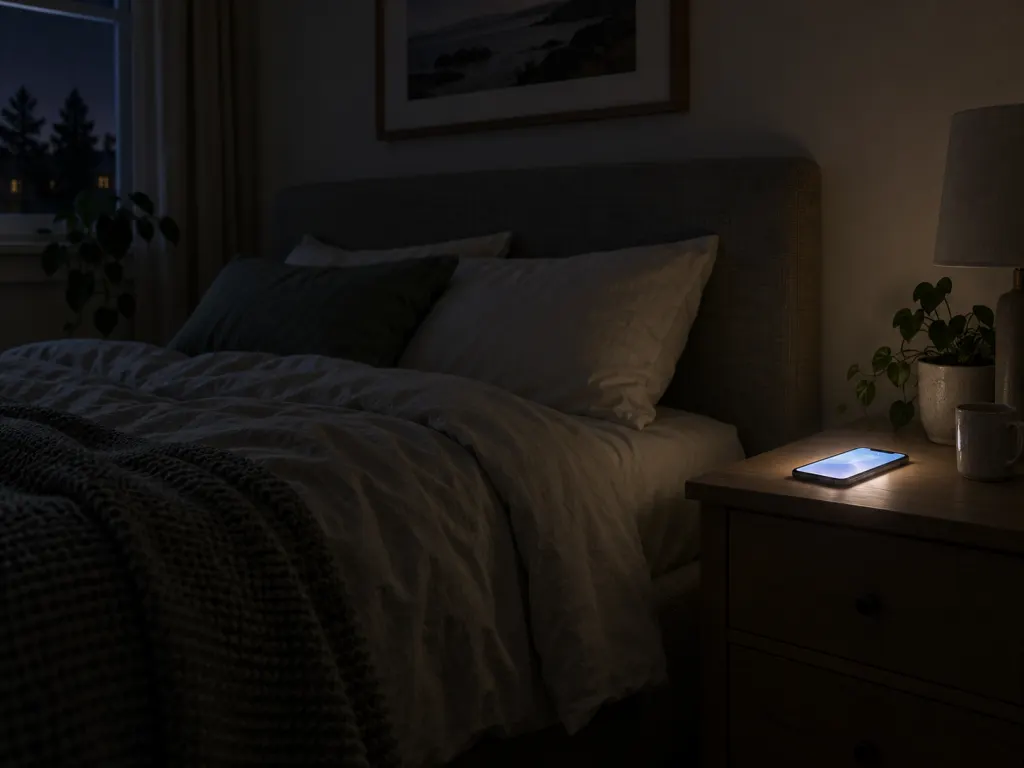
A phone on the nightstand is a tool. The problem starts when it becomes a source of light, sound, decision-making, and emotional input during the time your body is preparing for sleep. Sleep is shaped by a body clock that responds strongly to light and darkness. NHLBI explains that light received through the eyes helps tell the brain whether it is daytime, and that melatonin rises when it gets dark to help prepare the body for sleep (NHLBI). A glowing screen at 11:45 p.m. may feel small, but it is still a bright signal close to your face.
Screen Light Can Push Bedtime Later
The strongest reason to move the phone away from the pillow is light exposure. NHLBI notes that bright artificial light late in the evening, including light from a TV or computer screen, can disrupt the melatonin process and make it hard to fall asleep (NHLBI). The National Center for Complementary and Integrative Health similarly explains that melatonin is produced in response to darkness and that light at night can block its production (NCCIH). This does not mean one text message ruins the whole night. It means repeated checking, bright settings, video, games, and social feeds close to bedtime can make your sleep window drift later without feeling like a deliberate choice.
Alerts Turn a Quiet Room Into an On-Call Room
Even when the screen is face down, the phone can keep the bedroom mentally busy. A ping, vibration, banner, or charging light may be enough to pull attention back to the device. Some people wake fully and answer; others half-wake, check the time, and start thinking about work, family, money, or tomorrow's schedule. CDC describes quality sleep as uninterrupted and refreshing sleep, not just time spent in bed (CDC). A phone that wakes you several times can chip away at that quality even when your total time in bed looks adequate.
There is also the anticipation effect: if the phone is within reach, part of you may stay ready to respond. That can be useful for caregivers, emergency workers, or people waiting for a truly urgent call. For everyone else, it is worth asking which notifications genuinely deserve access to your sleeping hours. Most phones let you allow calls from selected contacts while muting apps, group chats, promotions, and nonurgent alerts. That small boundary often does more than simply promising yourself you will not look.
The Phone Makes Bedtime More Negotiable
The phone's biggest effect may be behavioral. It gives you something rewarding to do at the exact moment when sleep requires boredom, darkness, and repetition. Ten minutes of scrolling can become forty because there is always another message, clip, comment, or headline. NIH MedlinePlus Magazine advises creating screen-free spaces and notes that keeping TVs, computers, and other electronic devices out of bedrooms can support better sleep (NIH MedlinePlus Magazine). For adults, the same principle applies even if the device is smaller and more personal.
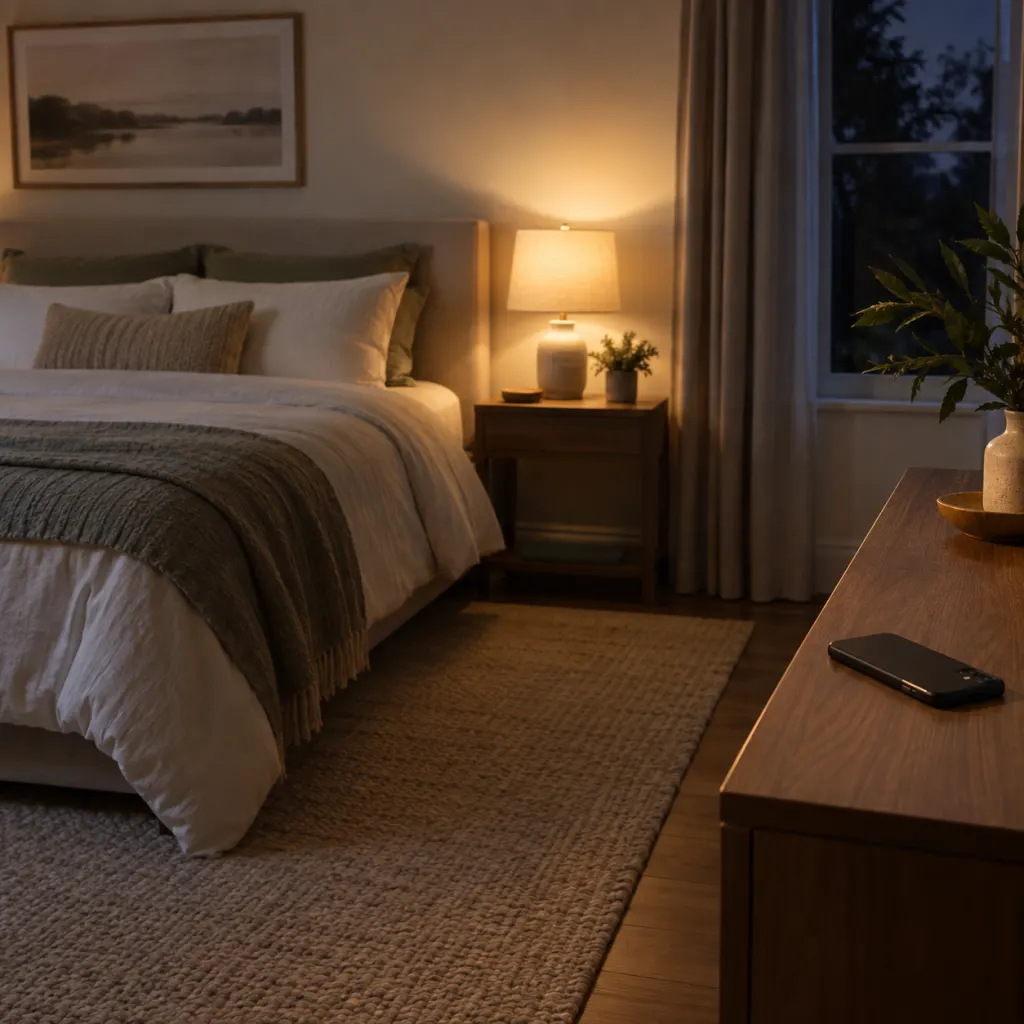
A useful test is to notice whether the phone changes your intended bedtime. If you planned to sleep at 10:30 but regularly put the phone down at 11:20, the issue is not willpower alone; it is the environment. The bed has become a place for entertainment, news, shopping, messaging, and problem solving. Moving the phone to a dresser, across the room, or outside the bedroom adds friction. That friction is not punishment. It is a design choice that makes the healthier action easier.
- Use a charging station away from the bed. Across the room is often enough.
- Set a nightly cutoff. CDC suggests turning off electronic devices at least 30 minutes before bedtime.
- Dim the room before bed. NHLBI recommends avoiding bright artificial light during quiet time before sleep.
- Allow only essential contacts. Use focus, sleep, or do-not-disturb settings instead of leaving every app active.
- Keep the bed for sleep and intimacy. Move scrolling, work messages, and video watching to another chair or room.

Charging Safety Is a Separate Concern
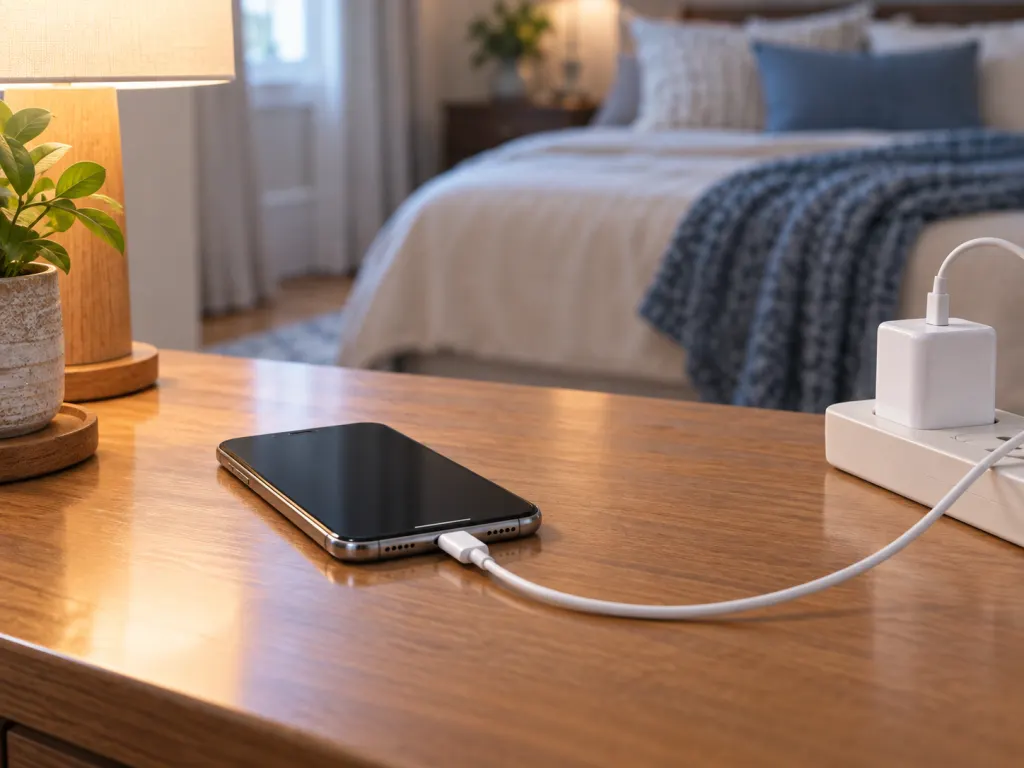
Many people do not just keep the phone beside the bed; they charge it there, sometimes under a pillow, under a blanket, or on a soft mattress. That is a different kind of risk. The U.S. Consumer Product Safety Commission says battery and charger hazards can include overheating, fire, electrical shock from chargers, and thermal burns, and notes that incidents have occurred during battery charging (CPSC). This does not mean a normal phone charger is likely to fail on any given night. It means charging should be treated like a small electrical routine, not an afterthought buried in bedding.
Good charging habits are plain: use a compatible charger from a reputable source, place the phone on a hard and ventilated surface, avoid damaged cables, and stop using a device or accessory that feels unusually hot, swollen, frayed, or visibly damaged. Do not cover a charging phone with pillows, blankets, or clothing. A nightstand, desk, or shelf is a better place than the bed because heat can disperse and the device is less likely to be pressed against fabric.
What About Blue Light Filters and Night Mode?
Blue light filters, night shift settings, and warmer screen tones may reduce some light intensity, but they are not a complete solution if the phone still keeps you awake through content and alerts. CDC sleep guidance recommends avoiding artificial light, especially within a few hours of bedtime, and mentions blue light filters as one possible step for computer or smartphone use (CDC). Think of filters as a backup, not permission to scroll indefinitely. A dimmer, warmer phone can still deliver a stressful email, a lively argument, or an endless feed.
If you must use your phone late, reduce brightness, use a warmer display setting, hold it farther from your face, and keep the session purposeful. Checking tomorrow's alarm is different from opening several apps. Reading a calm saved article is different from jumping between videos and comments. The more interactive and emotionally charged the use, the more likely it is to postpone the mental shift into sleep.
Who May Need a Stricter Phone Boundary?
Some people notice little effect from a nearby phone, especially if it stays silent, dark, and untouched. Others are more sensitive. A stricter boundary may help if you take a long time to fall asleep, wake and check the phone often, feel tired after enough hours in bed, or use the bed as a place to manage work and worry. CDC lists trouble falling asleep, repeated waking, and feeling tired even after enough sleep as signs of poor sleep quality (CDC). Those signs do not prove the phone is the cause, but they are good reasons to test a phone-free bedroom for one or two weeks.
Families may also need clearer rules. Teens naturally tend to fall asleep later than younger children and adults, and NHLBI explains that melatonin timing changes during adolescence (NHLBI). A phone in the bedroom can make that later rhythm even harder to manage, especially when friends, games, and social apps remain available after lights-out. For children and teens, charging devices outside the bedroom can turn a repeated argument into a household routine.
A Practical Nightstand Reset
You do not need to overhaul your life to reduce the downsides. Start with the part that causes the most trouble. If the phone wakes you, silence notifications. If it pulls you into scrolling, charge it across the room. If the charger lives under the pillow, move it to a hard surface tonight. If you need an alarm, use a basic alarm clock or place the phone far enough away that checking it requires getting out of bed. If you need emergency access, allow calls from selected contacts and mute everything else.
It may also help to pair the change with a small replacement ritual. Put tomorrow's clothes out, read a paper book, stretch gently, prepare a glass of water, or write down the task you are afraid of forgetting. NHLBI recommends using the hour before bed for quiet time and keeping the bedroom quiet, cool, and dark (NHLBI). The point is not to create a perfect routine. It is to give your brain a consistent signal that the day is closing.
How This Fits With Other Sleep Habits
A phone beside the bed is only one part of sleep hygiene. Caffeine timing, stress, pain, noise, room temperature, alcohol, irregular schedules, caregiving, shift work, and untreated sleep disorders can all matter. That is why blaming the phone for everything can be misleading. But the phone is often the easiest variable to change because it is visible, adjustable, and under your control. If you are also curious about the role of nighttime light, see Consequences of Sleeping With the Light On. For other common sleep questions, the guides on Causes of Drooling While Sleeping, Why Leg Cramps Happen During Sleep, and What Sleeping Position May Reveal About Comfort can help you sort habit from concern.
The Bottom Line
The main consequence of sleeping with a phone beside your bed is that it keeps stimulation close to sleep. The light can confuse the timing signals your body uses at night, notifications can fragment rest, and easy access can make bedtime stretch later than intended. Charging in bed adds a practical safety concern that is easy to avoid by using a hard, open surface away from pillows and blankets. For many people, the best compromise is not a phone ban; it is a bedroom boundary: phone silenced, face down or out of reach, charging safely, with only true emergency contacts allowed through.
Wrap-Up
A phone beside the bed is common, but it is not neutral when it glows, buzzes, charges under bedding, or invites late-night checking. The evidence-supported concerns are practical: screen light can interfere with the body's darkness signal, alerts can break sleep, and interactive content can delay bedtime. Move the phone away from the pillow, charge it on a hard ventilated surface, mute nonessential notifications, and build a quiet final half hour before sleep. If sleep problems continue despite better habits, discuss them with a qualified health professional.
Frequently Asked Questions
- → Is it bad to sleep with your phone on the nightstand?
It depends on how the phone behaves. A silent, dark phone across the room is usually less disruptive than a bright, buzzing phone within arm's reach. The main concerns are screen light, notifications, late-night checking, and safe charging.
- → How far away should my phone be while I sleep?
There is no single required distance for everyone. A practical target is far enough away that you cannot reach it from bed. Across the room works well because it reduces checking and keeps charging away from pillows and blankets.
- → Is night mode enough if I use my phone before bed?
Night mode may make the screen warmer and dimmer, but it does not remove the effect of messages, videos, games, or stressful content. If sleep is the goal, a shorter session and a clear cutoff usually matter more than the color setting alone.
- → What if I need my phone for emergencies?
Use focus or do-not-disturb settings that allow calls from selected people while muting apps and nonurgent alerts. You can also place the phone across the room with the ringer loud enough for important contacts.
- → Should I stop charging my phone overnight?
If you charge overnight, keep the phone and charger on a hard, open, ventilated surface and away from bedding. Do not use damaged cables or chargers, and do not cover the device while it charges.
References
This content was developed and refined using reliable sources.
- https://www.cdc.gov/sleep/about/index.html
- https://www.nhlbi.nih.gov/health/sleep-deprivation/body-clock
- https://www.nhlbi.nih.gov/health/sleep-deprivation/healthy-sleep-habits
- https://www.nccih.nih.gov/health/melatonin-what-you-need-to-know
- https://www.cdc.gov/heart-disease/about/sleep-and-heart-health.html
- https://magazine.medlineplus.gov/article/7-tips-for-managing-screen-use
- https://www.cpsc.gov/Regulations-Laws--Standards/Voluntary-Standards/Topics/Batteries