 Save
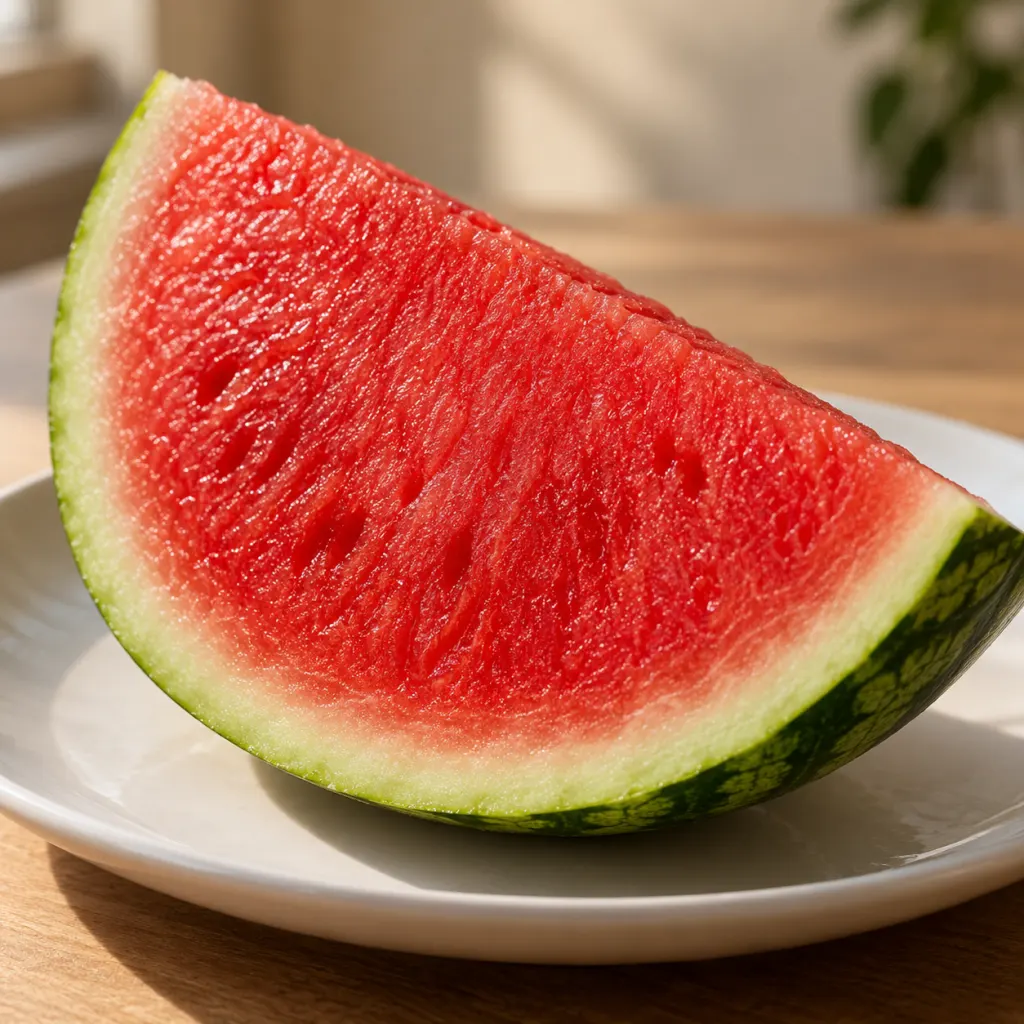
Watermelon: more than water? Yes. It is about 91% water, but it also supplies vitamin C, carbohydrates and small amounts of fiber, according to Cleveland Clinic’s nutrition overview. Its water contributes to fluid intake; the CDC explains that water-rich foods contribute alongside beverages. Keep drinking regularly while enjoying the fruit.
The useful questions are practical: how much are you serving, what does that portion contain, and are you eating watermelon or drinking a sweetened watermelon product? These distinctions make a clearer guide than a long list of ambitious health promises. Start with composition, then consider how the fruit fits your table.
What the nutrition numbers actually describe
For 100 grams of raw seedless watermelon, Cleveland Clinic lists approximately 30 calories, 7.55 grams of carbohydrate, 6.2 grams of sugar, 0.4 grams of fiber and 8.1 milligrams of vitamin C. These are reference values for a stated weight, rather than the contents of every wedge or bowl. Source: Cleveland Clinic.
The distinction matters when comparing a supermarket label with an online description. One may describe 100 grams, another an entire package, and another a loosely defined serving. Before deciding that the numbers disagree, check whether they refer to the same quantity. Also check whether the entry describes plain raw fruit or a prepared product.
A useful habit is to write the food and amount together: “100 grams of raw watermelon,” rather than simply “watermelon.” This keeps the reference clear when you compare foods, plan a shared platter or divide a large container into smaller bowls.
Vitamin C is a contribution, not a complete nutrition profile
Vitamin C has established roles in normal nutrition. MedlinePlus describes its importance for skin, bones and connective tissue, and its role in helping the body absorb iron. It also identifies several other food sources, including citrus fruit, peppers, tomatoes and broccoli. Source: MedlinePlus.
That context is more useful than treating one fruit as the center of every meal. You might enjoy watermelon today and choose an orange or a different vegetable tomorrow. There is no need to build every food choice around a single nutrient number.
Keep the distinction between a nutrient and a food in mind, too. A description of vitamin C’s normal functions explains why the nutrient matters. It does not, by itself, establish a special outcome from eating a particular bowl of watermelon. For everyday shopping, taste, price, convenience and variety remain sensible considerations.
Make the portion visible before judging it
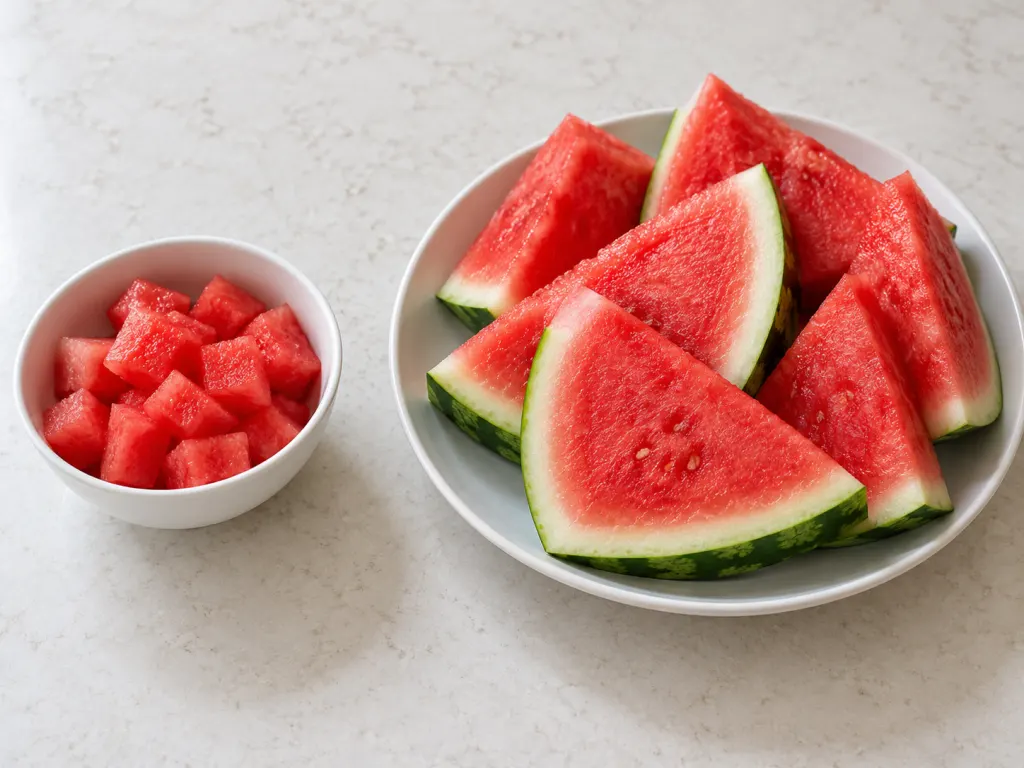
A wedge is an imprecise unit: its thickness and the size of the original melon can vary considerably. For a clearer comparison, place an empty bowl on kitchen scales, reset the reading to zero, then add the edible flesh. Leave the rind out of that measurement when comparing it with figures for the flesh.
The NHS uses 80 grams as an adult fruit or vegetable portion within its 5 A Day framework. That is a public guidance reference, rather than an individually prescribed amount or an upper limit for watermelon. Source: NHS portion guidance.
- For comparing nutrition: use the same weight basis for both foods.
- For serving guests: divide the prepared fruit among bowls before putting out the platter.
- For a packaged product: check the stated serving and the number of servings in the container.
- For an everyday reference: weigh your usual bowl once so you know what you normally mean by a serving.
Measurement here is a clarification tool. You do not need to turn every snack into a calculation to benefit from understanding the reference amount.
How watermelon fits alongside regular drinks
The CDC says daily water intake comes mostly from water and other beverages, with foods contributing as well. It also notes that needs vary and increase with heat and physical activity. A fixed quantity of watermelon therefore cannot tell you everything about your fluid needs for the day. Source: CDC.
The NHS advises drinking regularly throughout the day. Its guide of six to eight cups or glasses of fluid is a general reference, with more potentially needed in hot environments or during prolonged physical activity. Source: NHS hydration guidance.
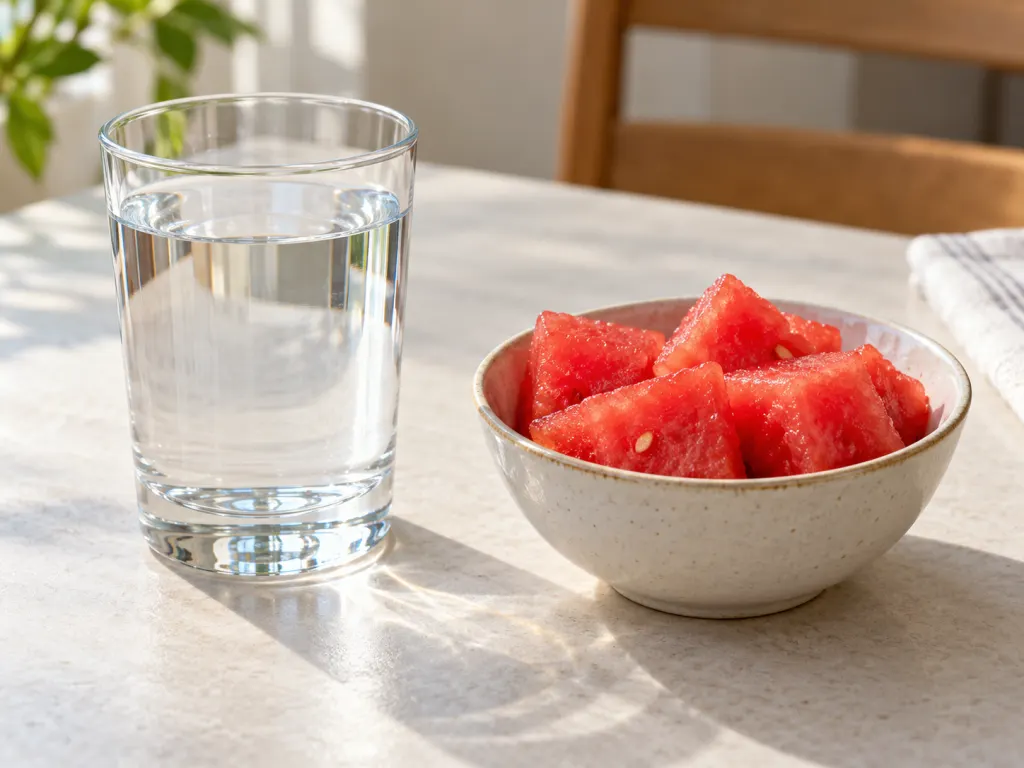
At home, make the two choices easy to see: put a glass of water beside the fruit bowl, or set a refillable bottle near your lunch. For an outing, plan access to drinks separately from the food you pack. This avoids trying to translate a few wedges into permission to skip your usual drink.
You can enjoy watermelon as food while keeping a regular drinking routine. There is no need to calculate an exact beverage subtraction for each bite.
Separate composition facts from ambitious advertising
A food’s water content and vitamin content are measurable characteristics. Broader advertised effects require separate evidence. An illustration, enthusiastic testimonial or impressive list of nutrients cannot establish what eating that food will do for an individual.
NCCIH cautions that eating plans which severely restrict calories or food choices may provide inadequate nutrients. Its evidence review also describes small studies, research-quality problems and missing long-term evidence behind advertised restrictive programs. Source: NCCIH evidence review.
When assessing a watermelon claim, ask three questions: What exactly was measured? Was the research about ordinary fruit, a juice, an extract or an entire eating plan? Does the claim accurately describe those findings? If those details are missing, keep your conclusion limited to what the nutrition information actually establishes.
For a household decision, “I enjoy this fruit and know what my serving contains” is already a useful answer. It needs no additional promise to justify putting watermelon on the table.
Whole fruit, blended fruit and watermelon drinks are different choices
A bowl of cubes, a blended drink and a bottled watermelon beverage should be assessed as separate products. Start by identifying what is actually present. A homemade blend might contain only fruit, while a commercial drink might contain water, other juices, sweeteners or flavorings. Read its ingredient list rather than relying on the fruit pictured on the front.
The NHS recommends limiting fruit juice and smoothies to a combined total of 150 milliliters a day, consumed with a meal. It also explains that these drinks count as a maximum of one 5 A Day portion, regardless of how many different fruits they contain. Source: NHS.
For a practical comparison, consider the entire glass you intend to pour, not just the manufacturer’s reference amount. Note any ingredients you add at home as well. A watermelon drink with syrup and another juice is a different preparation from plain watermelon, even when both begin with the same fruit.
Safe handling begins with the outside of the melon
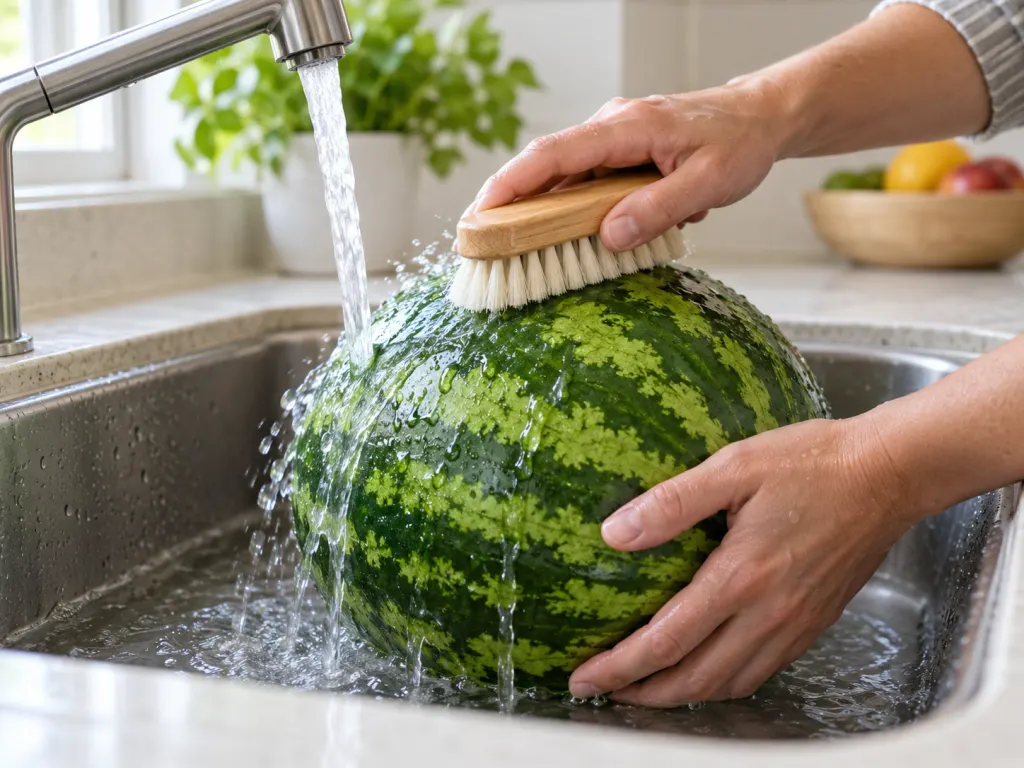
The FDA advises washing produce before cutting it, including fruit whose skin will not be eaten. Rinse the melon under running water, scrub its firm rind with a clean produce brush, and dry it with a clean towel. Use clean hands, utensils and a board kept separate from raw meat preparation. Soap and commercial produce washes are unnecessary. Source: FDA.
For purchased cut watermelon, choose packages held refrigerated or on ice and refrigerate them at home. FDA guidance specifies a clean refrigerator at 40°F, approximately 4°C, or below for perishable produce. Source: FDA.
Before buying a very large melon, check that your refrigerator has room for the prepared fruit. A smaller melon or refrigerated cut portion may fit your household’s plans better. Decide which containers you will use before starting the cutting, especially when preparing several dishes at once. This makes the storage step part of preparation rather than an afterthought.
Use watermelon in meals without turning it into a project
Keep the culinary choices simple. Serve plain cubes beside lunch, offer wedges after dinner, or add a small bowl to a shared outdoor meal. These are serving ideas, not a requirement to eat watermelon every day. Choose a format that suits the occasion and the amount you intend to prepare.
For shopping questions, see How to Pick a Sweet Watermelon. If you prefer a savory presentation, explore Spicy Watermelon with Cilantro. Those pages address choosing or preparing the fruit; use the nutrition reference here for plain watermelon rather than assuming an assembled dish has identical values.
When making a mixed dish, distinguish the watermelon from everything added to it. You can enjoy the finished combination while recognizing that its ingredient list is broader. This is particularly helpful when comparing a plain fruit bowl with a restaurant salad or a prepared supermarket container.
Choose the purchase that matches your household
Consider who will eat the fruit, when you expect to serve it, and how much preparation time you have. A whole melon may suit a gathering; a smaller refrigerated package may suit a single lunch. Compare the amount of usable fruit and the convenience, rather than assuming the largest option is always the best choice.
If you regularly leave a large amount unfinished, buy a smaller quantity next time. If several people share it quickly, plan the bowls and refrigerator space together. These ordinary purchasing decisions are more actionable than seeking a universal daily watermelon target.
Wrap-Up
Use watermelon’s nutrition figures with a clearly stated portion, keep regular drinks part of your day, and distinguish plain fruit from prepared dishes and beverages. Enjoying it can be straightforward: choose an amount that suits your household, prepare it carefully and leave broader advertised claims to evidence that directly addresses them.
Frequently Asked Questions
- → Should I weigh the rind when checking a portion?
For comparison with figures describing raw watermelon flesh, weigh the flesh you intend to eat. Place the empty bowl on the scales first and reset the reading before adding the fruit. Keep the rind separate so the measurement refers to the same food as the nutrition entry.
- → Does a bowl of watermelon provide much fiber?
Cleveland Clinic lists about 0.4 grams of fiber per 100 grams of raw seedless watermelon. That is a small amount, so its water-rich texture should not be mistaken for a high fiber content. Source: Cleveland Clinic.
- → Can I count watermelon juice and another smoothie separately?
Under NHS guidance, juice and smoothies share a combined daily limit of 150 milliliters and count as a maximum of one 5 A Day portion. Changing the fruit or having the drinks at different meals does not create a separate allowance. Source: NHS.
- → Should I choose a whole melon or refrigerated cut fruit?
Choose according to the quantity you need, preparation time and available storage space. For purchased cut fruit, the FDA advises selecting packages that are refrigerated or surrounded by ice and refrigerating them at home. A whole melon still needs washing before cutting. Source: FDA.
References
This content was developed and refined using reliable sources.
- https://health.clevelandclinic.org/benefits-of-watermelon
- https://www.cdc.gov/healthy-weight-growth/water-healthy-drinks/index.html
- https://www.nccih.nih.gov/health/detoxes-and-cleanses-what-you-need-to-know
- https://www.fda.gov/food/buy-store-serve-safe-food/selecting-and-serving-produce-safely
- https://www.nhs.uk/live-well/eat-well/food-guidelines-and-food-labels/water-drinks-nutrition
- https://www.medlineplus.gov/vitaminc.html
- https://www.nhs.uk/live-well/eat-well/5-a-day/portion-sizes